
Norwood 5 Buzz Cut: When Short Hair Still Works
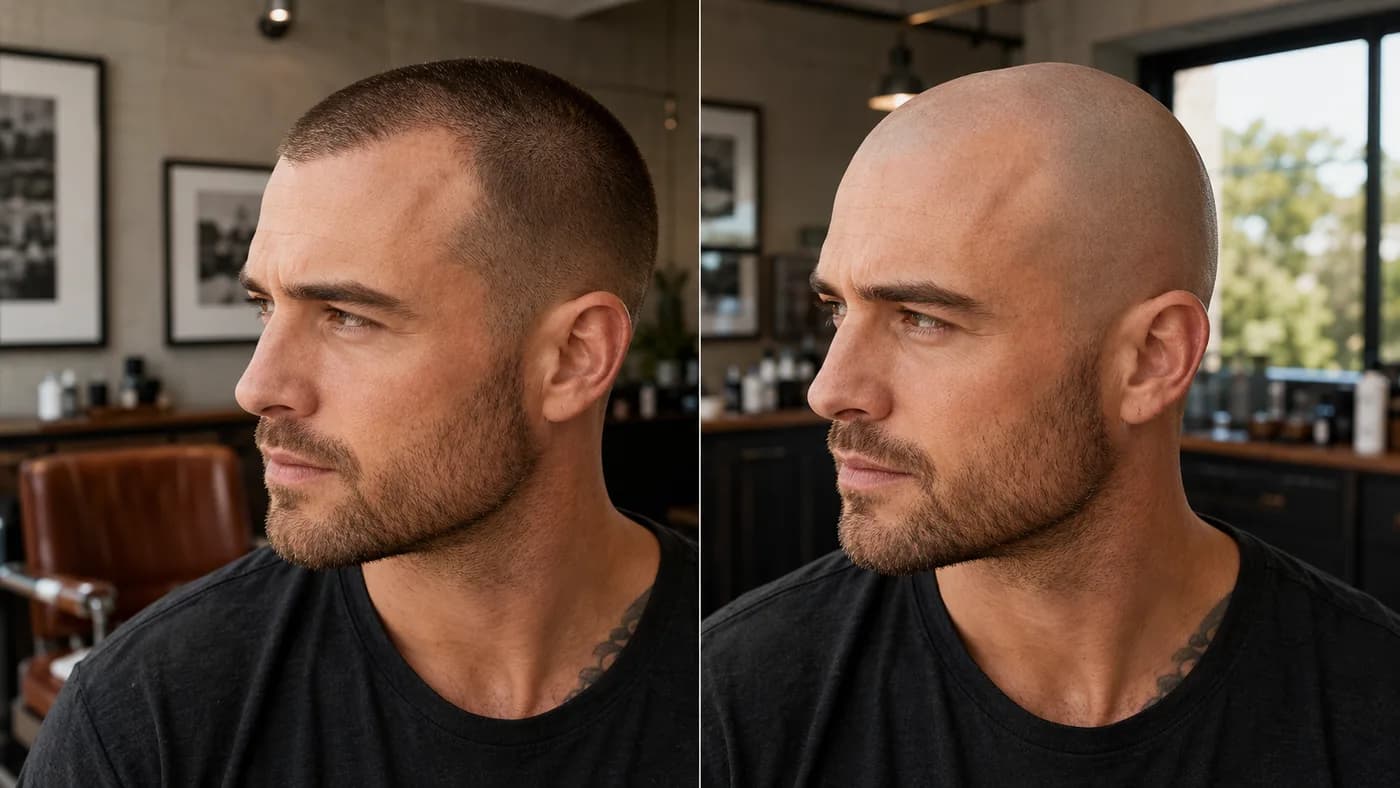
A Norwood 5 buzz cut can still look sharp when the remaining hair is even. See which guard lengths work, when short hair exposes too much loss, and when shaving is cleaner.
11 min read
ReadTips, tricks, and articles for styling and shaving.

A Norwood 5 buzz cut can still look sharp when the remaining hair is even. See which guard lengths work, when short hair exposes too much loss, and when shaving is cleaner.
11 min read
Read

Norwood 5 leaves fewer hairstyle options, but not no options. Compare a close buzz, shaved head, and beard-led look to find the cleanest, most intentional next move.
10 min read
Read
Norwood 3 vertex means crown loss has entered the picture, even if your hairline looks fairly stable. See which short haircuts, buzz lengths, and shaved-head options make sense—and how to judge the crown from every angle.
9 min read
Read
A Norwood 2 buzz cut can look sharp, but it is not automatically the best move. Compare your guard lengths, density, and style options before cutting short.
9 min read
Read
Find your likely Norwood stage with a practical photo-based test for your hairline, temples, crown, and top density—then choose a sensible next style move.
9 min read
Read
The real jump from Norwood 3 to Norwood 4 is not just more recession. It is when crown or bridge loss changes the haircut decision and makes shaving a more practical option.
11 min read
Read
Norwood 4 is usually the stage where hairstyle strategy has to get more honest. These are the cuts that still work, when a buzz cut becomes the strongest option, and when shaved often looks better.
10 min read
Read
A Norwood 3 buzz cut usually works best when the guard length matches the recession pattern. This guide explains when #0, #1, #2, and #3 look strongest, plus when shaving fully starts making more sense.
12 min read
Read
Norwood 2 usually means mild temple recession, but that can describe either a stable mature hairline or the early stage of pattern hair loss. The difference is progression, density, and context over time.
12 min read
Read