
Norwood 2 Hairline: Is It Balding or Just Mature?

If you are searching for Norwood 2, you are probably not asking for a medical label. You are asking a more personal question:
Is my hairline just maturing, or am I starting to bald?
That is exactly why Norwood 2 causes so much anxiety. It sits in the gray zone where the temples may be slightly higher, the corners may be a little more open, and the answer is not always obvious from one mirror check.
The short answer is this: Norwood 2 can be a mature hairline for some men and early recession for others. The difference is not the stage name alone. It is whether the pattern is stable, whether density is changing, and whether the rest of the scalp is joining in.
Quick read
It describes a mild pattern at the temples, but does not automatically mean active balding or an urgent need to shave.
A higher hairline that stays consistent is very different from one that keeps creeping back every few months.
At Norwood 2, shorter structured haircuts usually make more sense than jumping straight to a shaved head.
Quick answer: what does Norwood 2 mean?
On the Hamilton-Norwood scale, Norwood 2 usually means mild recession at the temples. The front corners may look a little more open than a teenage hairline, but the hairline is still far from the stronger recession seen at later stages.
The important part is what the scale does and does not do.
It does describe the current pattern. It does not tell you whether the pattern will stay mild, progress slowly, or stay stable for years. A review in PMC notes that the Hamilton-Norwood system is the standard way to classify male patterned hair loss, but it is still a classification system, not a crystal ball.
That is why two men can both look like Norwood 2 and still be in different situations:
- one may simply have an adult, mature hairline,
- one may be at the early stage of recession,
- and one may be overreacting to bad lighting and a naturally angular hairline.
If you only remember one thing, remember this: Norwood 2 is a description, not a diagnosis.
Norwood 2 vs mature hairline: why people confuse them
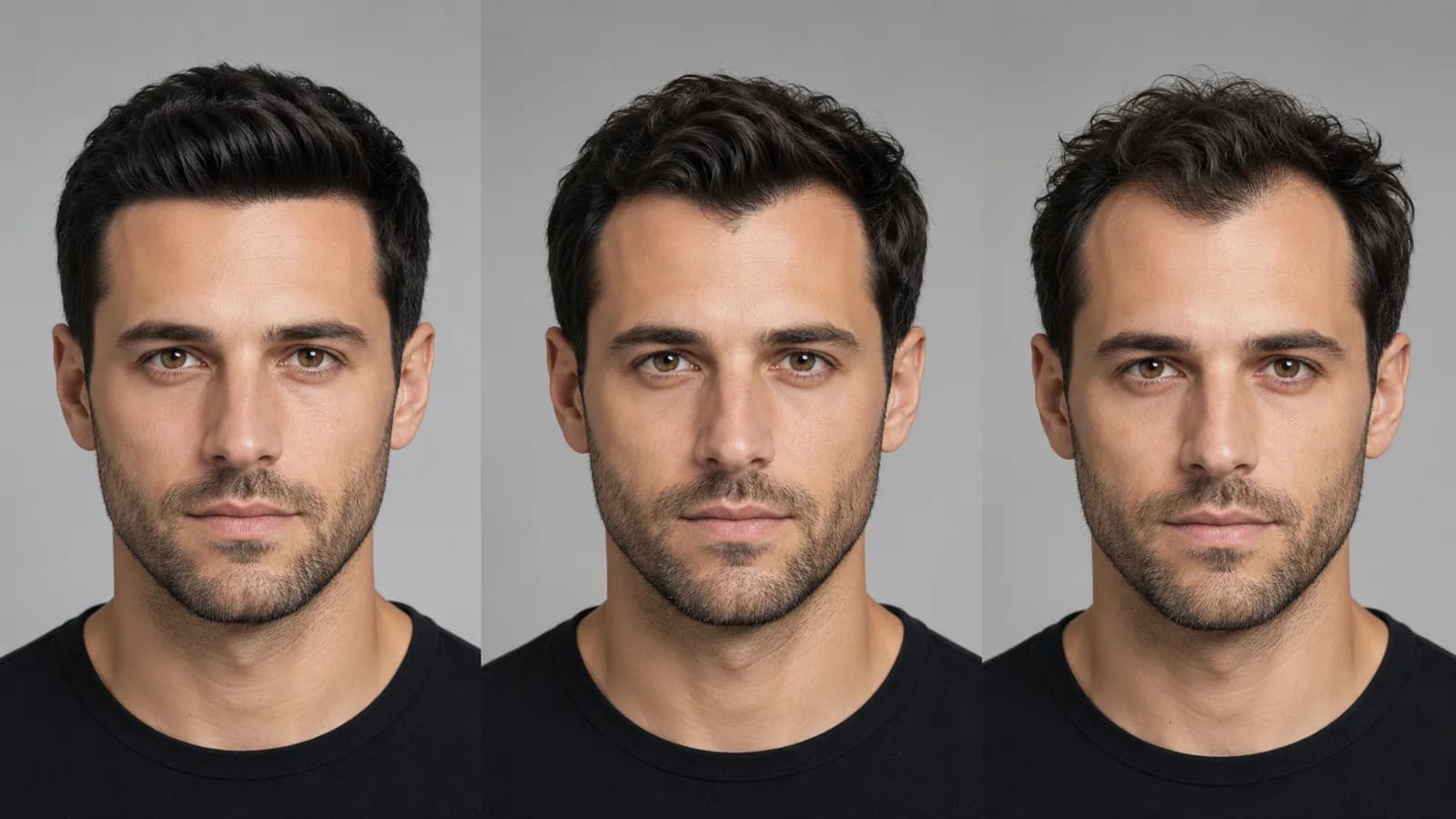
A mature hairline and a Norwood 2 hairline often overlap visually. That is the whole problem.
A mature hairline usually means the lower, rounded teenage hairline has shifted slightly upward into a more adult shape. For some men, that new shape stays there for a long time. For others, it becomes the start of further recession.
The American Academy of Dermatology explains that male pattern hair loss often starts with a noticeable thinning pattern or a receding hairline. The key word is starts. A higher hairline by itself is not enough. What matters is whether you are seeing the beginning of a pattern that keeps moving.
The simplest distinction is:
- a mature hairline usually changes a bit, then stays fairly stable,
- an early receding hairline keeps changing in shape, depth, density, or all three.
If you want the fuller comparison, read Mature Hairline vs Receding Hairline. That page goes deeper on symmetry, density, and the overall pattern. This article focuses specifically on what Norwood 2 usually means in practice.
Do not use your high-school hairline as the only standard
Many adult men have a slightly higher hairline than they did at 16. The useful question is not whether it changed at all. It is whether it is still changing now.
The signs that usually point to stable Norwood 2
If your hairline is around Norwood 2, these signs usually support the idea that it may be stable rather than clearly progressing:
- the temples are only mildly more open than before,
- both sides look fairly symmetrical,
- the density behind the front edge still looks solid,
- the crown does not seem to be changing,
- your haircut still works without strategic hiding,
- progress photos from 6 to 12 months apart look mostly the same.
This is where perspective helps. The Cleveland Clinic describes male pattern baldness as a condition that commonly causes hair to thin and the hairline to move farther back. If the line is not clearly moving farther back, the situation is less urgent than many men assume.
That does not mean "ignore it forever." It means monitor before you catastrophize.
The signs that Norwood 2 may be early balding
Norwood 2 becomes more concerning when the shape is mild but the trend is obvious.
Signs that suggest early recession rather than a settled mature hairline include:
- the temples have clearly deepened across recent photos,
- one side is receding faster than the other,
- the front edge looks finer or more transparent under light,
- your fringe or front styling no longer behaves the same way,
- the crown also looks thinner,
- close relatives followed a similar pattern early on.
The Mayo Clinic notes that hereditary hair loss is the most common cause of baldness and often follows a predictable pattern over time. That is why trend matters more than one stressful mirror moment.
If your temples are slightly higher but the rest of your hair is strong and the pattern is stable, you may be dealing with a normal adult hairline. If the corners keep opening and the density behind them is slipping, the "just mature" explanation becomes less convincing.
Norwood 2 vs Norwood 3
This is where the haircut decision starts to matter.
Norwood 2 is usually a mild stage. Norwood 3 is usually the first stage where recession becomes clearly visible enough that many men seriously compare haircuts, buzz cuts, or shaving.
| Signal | Norwood 2 | Norwood 3 |
|---|---|---|
| Temple recession | Mild, early, or uncertain | Clear and harder to dismiss |
| Haircut pressure | Usually manageable with hair | Often becomes a real style decision |
| Density concern | May still be strong behind the line | More likely to show weaker front support |
| Emotional effect | Anxiety and overchecking | Visible frustration and daily styling compromise |
| Usual next move | Monitor or clean up the haircut | Consider shorter cuts or compare buzz vs shave |
If you are already closer to the right column, Norwood 3 Hairline: Best Hairstyles and When to Shave is the better next read. If you are still closer to the left column, you probably do not need to act like you are already at the shaving stage.
Should you do anything at Norwood 2?
Usually, yes, but not dramatically.
The right move at Norwood 2 is often one of these:
- Track it.
- Improve the haircut.
- Get professional input if the pattern keeps progressing.
That is very different from rushing into a shaved-head decision.
The MedlinePlus Genetics overview of androgenetic alopecia describes the common pattern as hair receding from the front and temples and eventually forming a more pronounced M shape. If you are not there yet, the goal is not panic. The goal is clarity.
Best haircuts for a Norwood 2 hairline
This is one of the most useful parts of the decision because a lot of Norwood 2 stress is actually haircut stress.
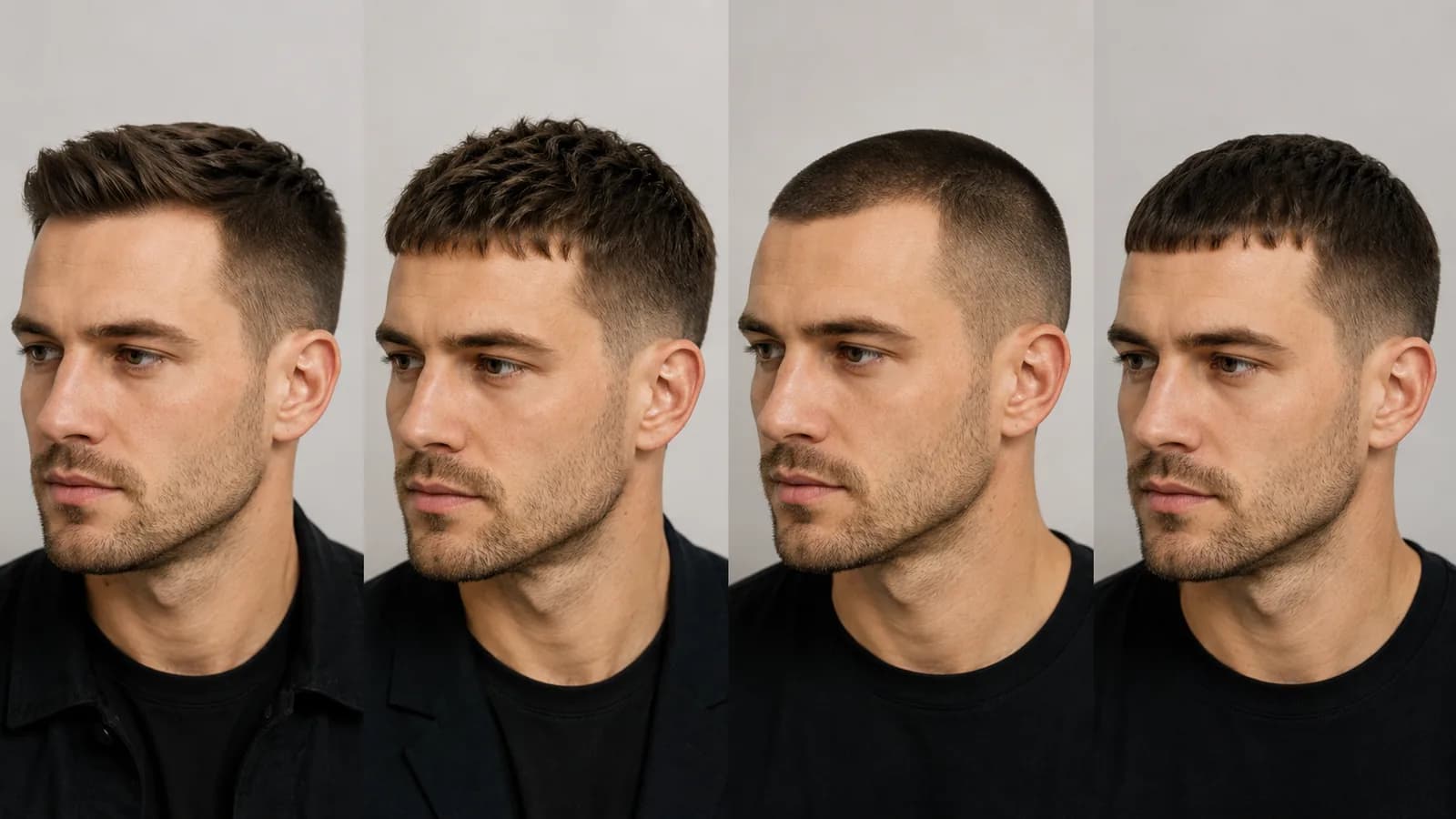
Most men at this stage still look good with hair. The best results usually come from short, honest styles that work with the hairline instead of trying to hide it.
The worst move is usually a hairstyle that asks the front hairline to perform. Long combovers, tall quiffs, and overly styled volume often make mild recession look more fragile, not less.
If you want more options beyond Norwood 2 specifically, Best Haircuts for a Receding Hairline goes deeper.
Should you shave your head at Norwood 2?
For most men, no.
Norwood 2 is usually too early to assume that shaving is the best answer. Many men at this stage still look better with a short haircut than with a fully shaved head, especially if the density on top remains good and the change is mostly at the temples.
That said, there is nothing wrong with being curious about the bald option early. Some men simply prefer a cleaner, lower-maintenance look, and some want a private preview so the fear loses its grip.
That is the right way to think about a shaved-head preview at Norwood 2:
- not as pressure to shave now,
- but as a way to lower uncertainty if the pattern changes later.
If you are curious how you would look if the recession deepened further, BaldLooks Free Analysis can give you an initial read from one photo. If you want more realistic comparisons later, BaldLooks paid plans can show the shaved look from more angles, with different outfits and in different locations.
How to track a Norwood 2 hairline without driving yourself crazy
The best method is boring on purpose.
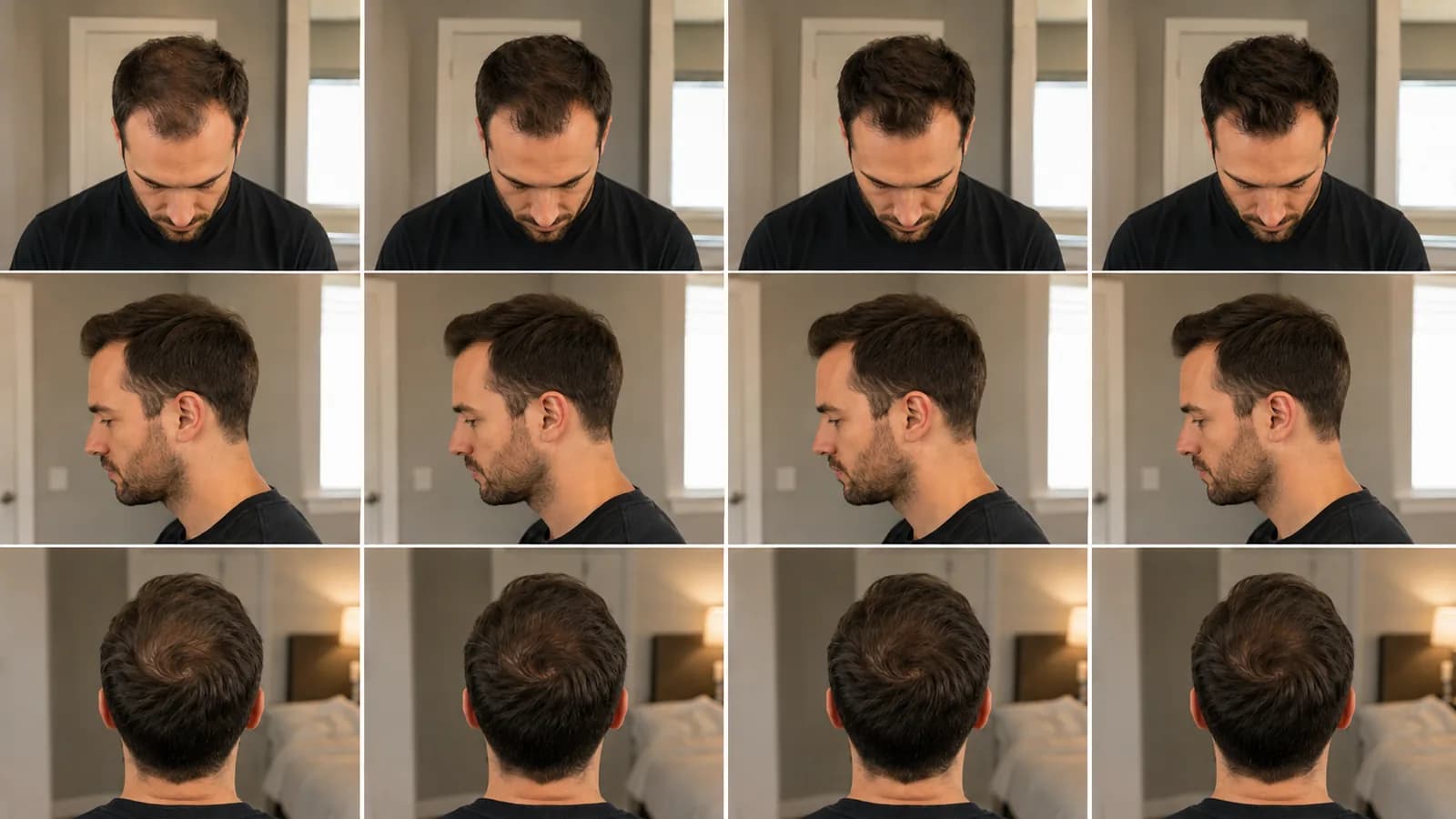
Take one front photo, one temple-angle photo, and one crown photo in similar lighting every 4 to 8 weeks. Keep the hair dry, avoid heavy product, and use the same camera distance when possible. Then stop checking every day.
Daily mirror checking rarely makes the answer clearer. Consistent monthly photos do.
This is the same logic behind the photo-tracking advice in Am I Balding?. Good tracking helps you separate real change from stress, lighting, and imagination.
Final answer: is Norwood 2 balding or just mature?
Sometimes it is mature. Sometimes it is early balding. Norwood 2 by itself is not enough to tell you which one.
The most honest answer is this:
- if the pattern is mild, symmetrical, dense, and stable, it may simply be a mature hairline,
- if it keeps progressing, especially with weaker density or crown change, it is more likely early recession,
- and for most men, the best first move is monitoring plus a smarter haircut, not aggressive shaving.
Norwood 2 is an observation stage more than a crisis stage. Treat it like a clarity problem, not a panic problem.