
Norwood 3 Vertex: Haircuts, Buzz Cuts, and Shaving

If you are searching for Norwood 3 vertex, you are probably not looking for a label just to put on your hair loss. You want to know whether a haircut can still make the whole top look deliberate—or whether a buzz cut or shaved head will be the cleaner option.
The important distinction is this: Norwood 3 vertex is crown-led. It is not simply the familiar Norwood 3 pattern of deeper temple recession. In the vertex variant, thinning at the crown has become part of the decision, even when the front is still relatively calm.
The short answer: start by judging the crown from the top and back, not the bathroom mirror. If the rest of the top is still even, a short crop or #1–#2 buzz may work well. If the crown stays isolated as you go shorter, compare a #0 and a clean shave instead of forcing a longer style.
Quick read
A style has to look balanced from above as well as from the front once the vertex is thinning.
A tight crop or #1–#2 buzz reduces the contrast that can outline a weak crown.
Use the pattern to compare a few honest options; it does not tell you that you must shave.
What Norwood 3 vertex actually means
The Hamilton-Norwood scale is a visual classification system for common male-pattern hair-loss patterns. In the original framework, Type III is the minimum amount of loss considered cosmetically significant, while the Type III vertex variation is marked by more pronounced loss at the crown, with the temple recession no farther than Type III. A clinical review of the classification describes the same crown-and-temple pattern, and a recent review identifies Stage III Vertex as vertex-predominant loss with temporal recession no greater than Stage III (classification review, recent clinical review).
People often use “Norwood 3 vertex” loosely to mean any crown thinning. Use it as a pattern cue, not a diagnosis. A crown swirl, wet hair, or overhead light can make the scalp look more visible. For sudden, patchy, itchy, or concerning loss, speak with a dermatologist.
The vertex is the crown, not the front hairline
The vertex sits at the upper back of the scalp around the crown swirl. A normal front-facing mirror check can miss it entirely; an unflattering top-down photo can exaggerate it. You need both views.
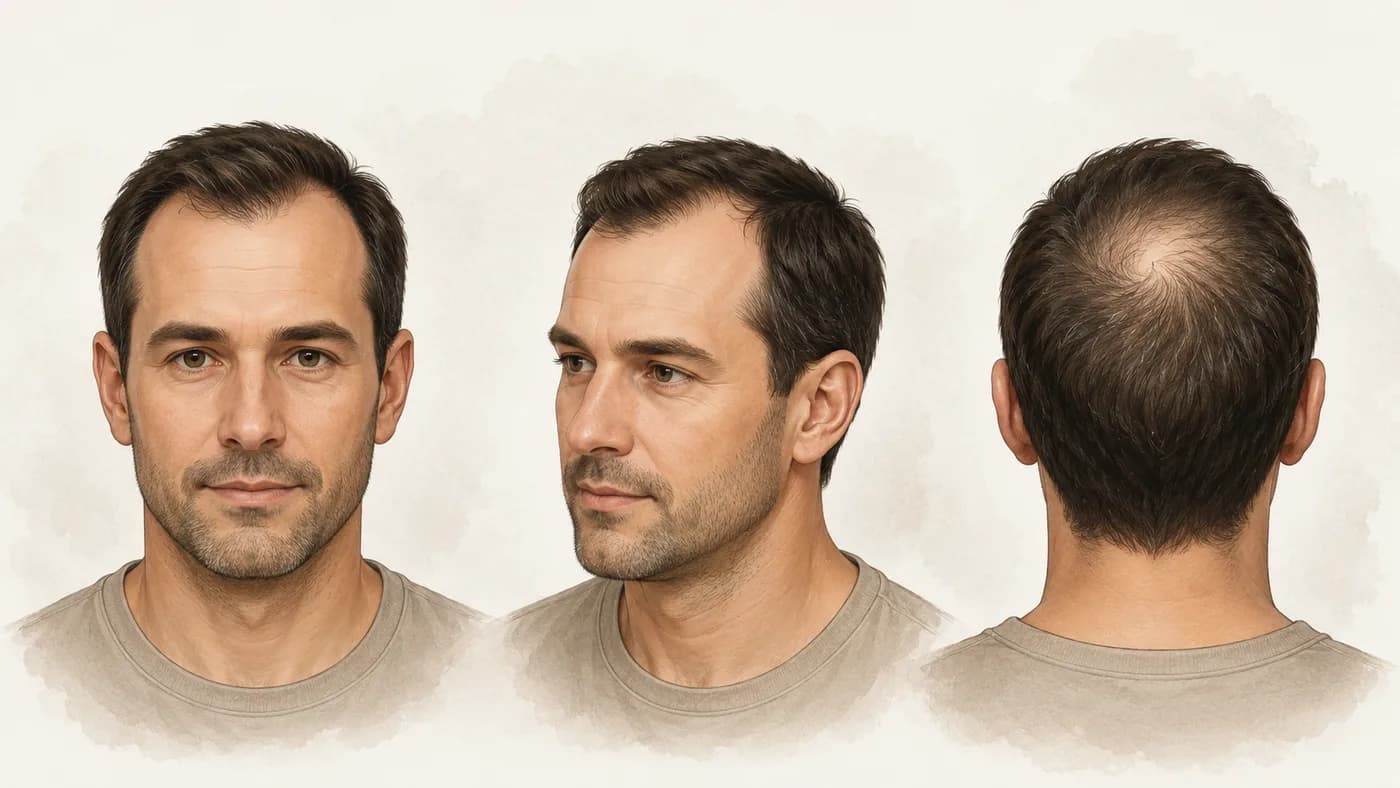
Norwood 3 vertex vs regular Norwood 3 vs Norwood 4
These categories can overlap visually, so do not get caught trying to assign yourself a perfect number. The helpful difference is where the loss is doing the most work.
| Pattern | What you usually see | Haircut implication |
|---|---|---|
| Regular Norwood 3 | Deeper temple recession; crown is mostly stable | Short styles can still be chosen mainly around the front hairline |
| Norwood 3 vertex | Noticeable crown thinning; front recession can be mild to Norwood 3-level | The cut must reduce contrast at the crown and survive top/back angles |
| Norwood 4 | More established front recession plus obvious crown loss, often with a weaker bridge between them | Longer styles become less forgiving; #1, #0, or shaved becomes more relevant |
When the crown joins the conversation, do not choose a cut from a front-facing inspiration photo.
Best Norwood 3 vertex hairstyles when the crown is still mild
If the crown is early and the rest of the top still looks even, keeping some hair can add shape. The goal is to remove the length that lets surrounding hair split and frame the thinning.
Avoid styles that collapse around the swirl. Longer textured tops, combovers, and high-volume products can make the crown the focal point.
Is a buzz cut good for Norwood 3 vertex?
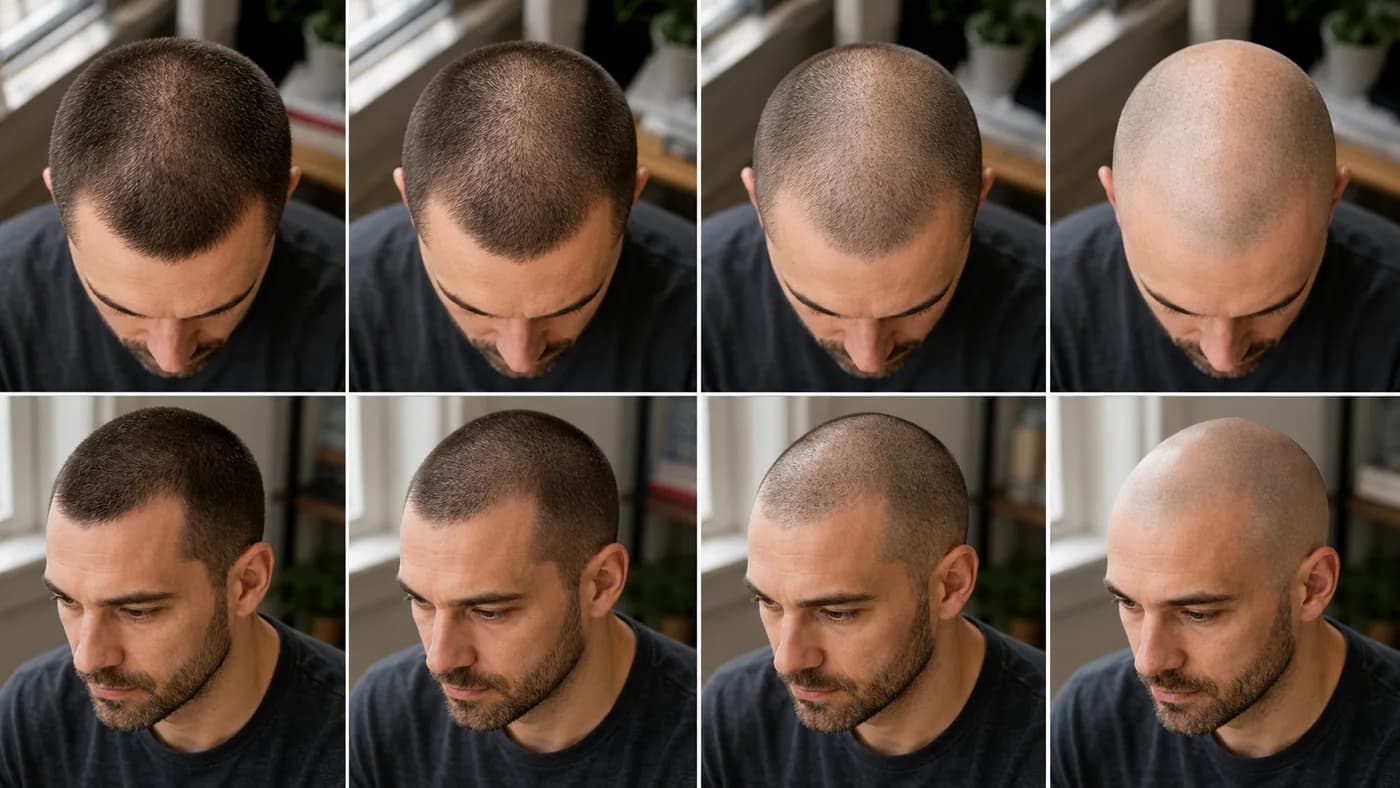
For many men, a Norwood 3 vertex buzz cut is the most useful next test because it reduces the contrast between the crown and the hair around it. It does not create density, so the guard length matters more than the word “buzz.”
| Guard | Usually worth testing when | What to watch for |
|---|---|---|
#2 | Crown thinning is mild and only shows in difficult light | The crown may still look outlined from above |
#1 | The crown is visible in normal light, but the top is not broadly thin | Often the clearest balance between less contrast and some hair texture |
#0 | The crown is a clear spot or the top is also thinning | It may reveal that fully shaved is the stronger final comparison |
The most honest rule: choose the shortest guard that still benefits from having hair. If a #1 makes the crown less isolated, it is doing its job. If a #0 looks cleaner than the #1, do not assume you must stop at buzzed—compare it with shaved too.
For guard-length detail, see Buzz Cut for Balding Crown.
When a shaved head may look cleaner
Norwood 3 vertex does not automatically mean shave. It becomes a strong option when keeping a little hair makes the crown stand out more than it adds shape.
Keep a short crop or buzz while it still improves the frame. When the crown remains the focal point except at very short lengths, a shaved head may look calmer and more intentional.
A low-risk way to decide
Compare a small sequence before making a permanent-feeling change:
- Your current cut in normal daylight, including top-back photos.
- A short crop or
#2if the crown is genuinely mild. - A
#1buzz as the honest contrast test. - A
#0and shaved preview if the crown still dominates.
That sequence gives you evidence from your own face, head shape, beard, and skin tone. BaldLooks Free Analysis is useful for the first photo-based read; paid plans help compare varied angles, outfits, and settings before the real change.

Final answer: what should you do with Norwood 3 vertex?
Norwood 3 vertex means crown loss needs to be part of your haircut decision. It does not mean you have to shave immediately, and it does not predict how fast anything will progress.
If the crown is mild and the rest of the top is even, a short textured crop, tight crew cut, or #2 buzz can still work. If the crown is visible in normal light, a #1 is often the most useful test. If the crown and top keep looking better with less hair, compare #0 and shaved instead of using a longer style to protect the appearance of coverage.
Judge the full pattern—from front, three-quarter, and crown angles—and choose the shortest style that looks balanced. For related decisions, continue with Crown Balding, Buzz Cut for Balding Crown, Norwood 3 vs 4, and How Often Should You Shave Your Head?.