
Norwood 2 Buzz Cut: Too Early or a Smart Move?
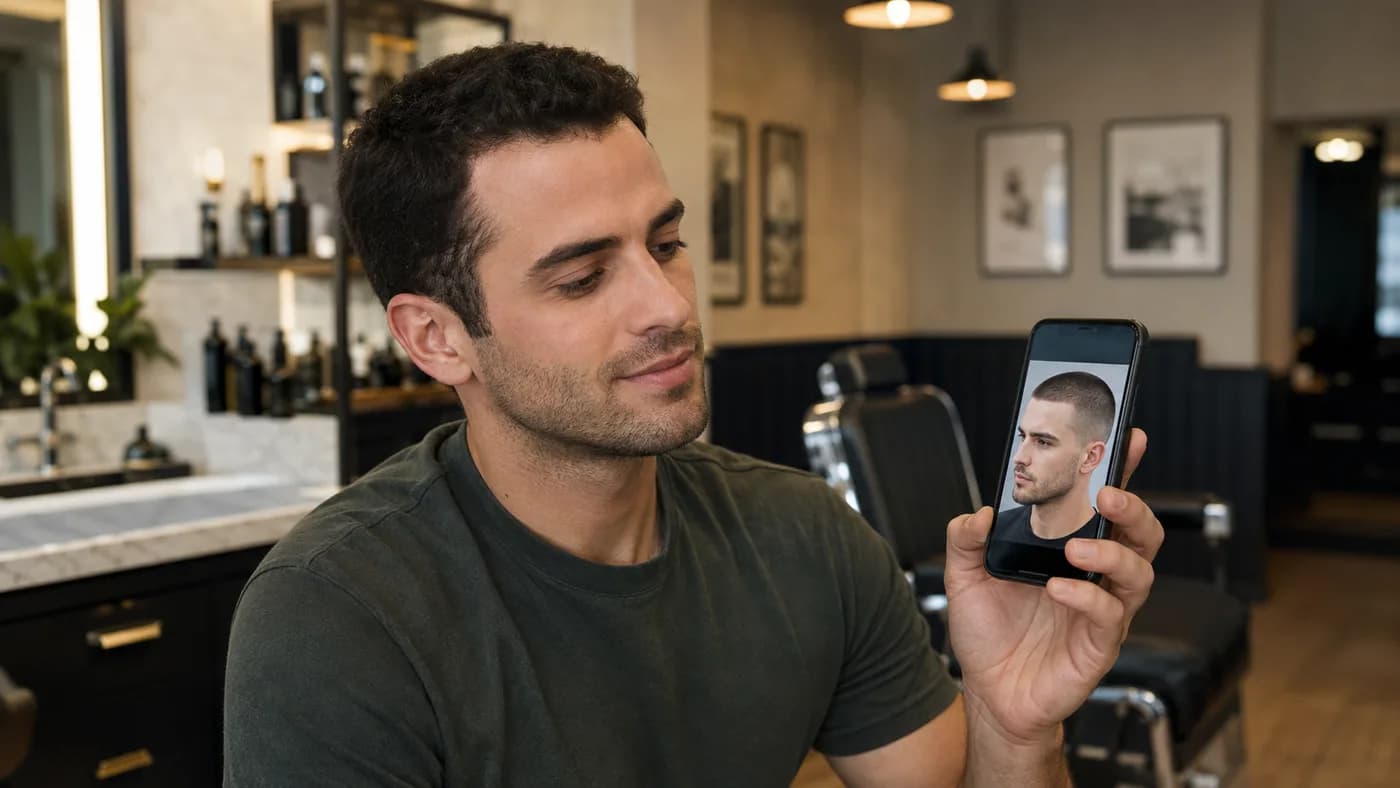
If you are considering a Norwood 2 buzz cut, the answer is simple: it can look sharp, but it is not automatically necessary. With good top and crown density, you can choose a cut for style—not because mild temple recession is an emergency.
Quick read
It often leaves enough density for several good haircut options, including—but not limited to—a buzz cut.
Those lengths simplify the outline while keeping enough coverage to judge the look calmly.
Comparable front, temple, and crown photos reveal more than one harsh-light mirror check.
What Norwood 2 means before you change your haircut
The Hamilton-Norwood scale is a way to describe common patterns of male hair loss. The Cleveland Clinic describes stage 2 as slight hair loss around the temples. That is materially different from stage 3, where temple recession is deeper and often creates a much clearer M or U outline.
That distinction matters. Mild temple corners do not mean your hair is no longer working. With strong density behind the hairline and a stable crown, you can still wear a textured crop, crew cut, or buzz without the haircut becoming a cover-up. The American Academy of Dermatology notes that male pattern loss often develops slowly, so compare the pattern over time rather than labeling one photo.
A haircut is not a diagnosis
This is appearance advice, not medical diagnosis. If hair loss is sudden, patchy, itchy, painful, inflamed, or rapidly worsening, see a dermatologist rather than treating a new haircut as the answer.
Is a Norwood 2 buzz cut too early?
No—if you want the look. Yes—if you only feel forced into it by mild temple recession.
A buzz cut is a good early-stage choice when you prefer low maintenance, want a sharper face-forward look, or find that less length makes a slightly uneven hairline feel calmer. It is not a rescue move: you still have the density to choose based on taste.
It may be too early if your hair is thick, your current cut works in normal light, and the only reason you want to buzz is two over-inspected corners. Shorten gradually and judge the result in photos.
It is more likely to be a smart move when:
- your longer front separates or needs constant product to sit right;
- your temples are mildly uneven and shorter hair makes the outline look more even;
- you want a more athletic, straightforward, low-maintenance style;
- you are curious about shorter hair but do not want to jump to shaving;
- you can judge the result in normal daylight, not only in the barber’s mirror.
Your best Norwood 2 haircut options
The strongest Norwood 2 hairstyles usually work with the hairline rather than trying to redraw it. The right cut depends on density, texture, face shape, and how much daily styling you actually enjoy.
For a wider haircut menu, see the best haircuts for a receding hairline. If you are deciding whether the hairline is actually progressing, start with mature hairline vs. receding hairline instead of trying to answer that question with a clipper guard.
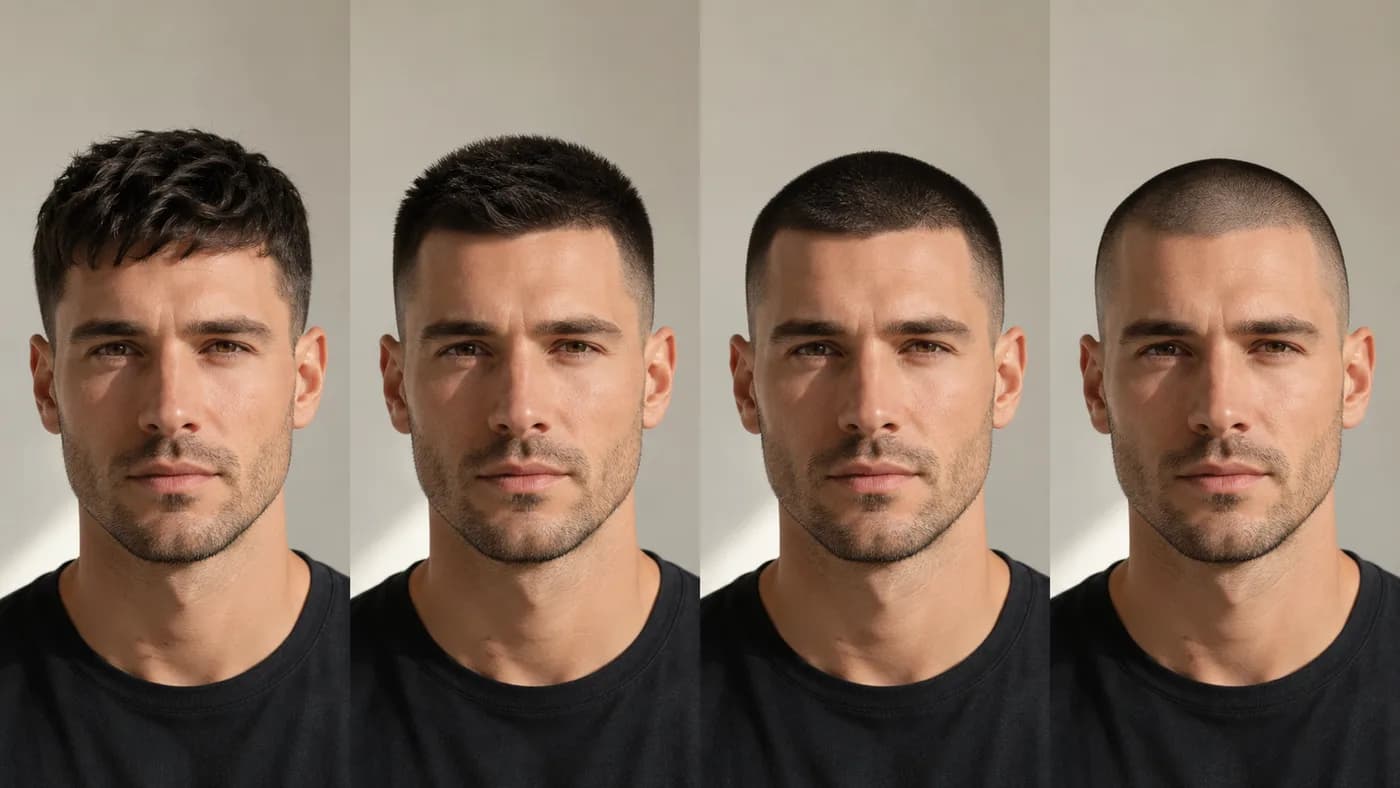
Which buzz-cut guard length works at Norwood 2?
There is no universal best guard length. At Norwood 2, you can still choose mostly on preference rather than trying to conceal a major problem.
| Guard | Usually best for | What to watch |
|---|---|---|
#3 | Thick hair and a mild, stable temple shape | Can leave enough length for the front to grow unevenly or need styling. |
#2 | The safest first buzz for most Norwood 2 patterns | If the top is secretly thinner than it looks, it can expose uneven density in harsh light. |
#1 | A clean, sharper look with minimal styling | More scalp and head shape show, so judge it in regular photos first. |
#0 | Men who already prefer a near-shaved look | It is a style statement, not the usual necessity at Norwood 2. |
Why #2 is often the sensible first test
A #2 keeps softness while removing the longer pieces that can make mild temple recession look fussy. It is an easy visual test: go shorter later if you want more definition.
When #3 is the better choice
Choose a #3 when density is genuinely strong and you want a conservative change. If the front starts to look soft, test a #2 rather than compensating with a harsher fade.
Why #1 is not automatically better
The shortest option is not always the most flattering. A #1 puts more focus on your face and scalp; choose it because you like that direction, not because it resolves uncertainty about thinning.
Mature hairline or early recession: use evidence, not panic
Norwood 2 can describe a settled mature hairline or early pattern loss. Take front, temple, top, and crown photos in the same light, then repeat them every three to six months. Look for consistent change in temple depth, density, or crown visibility. The AAD explains that hereditary loss often begins with a receding hairline or crown spot and different causes need different responses.
A buzz can therefore be a useful future-proof style without becoming a surrender. If preserving hair matters to you, a dermatologist can identify the cause and discuss early treatment options.
How to preview before the barber
The first reaction to short hair can be misleading. Give yourself a better test than a rushed chair decision:
- Take one clear, front-facing photo in daylight with no hat and your hairline visible.
- Preview a
#2or#3first; compare it with your current style rather than with a model’s hairline. - Check the full frame: beard, glasses, skin, clothes, posture, and the angles you appear in most.
- If the buzz looks close, compare it with a fully shaved version before assuming shorter is always better.
- Ask for a gradual, balanced cut rather than an aggressive fade by default.
BaldLooks gives you a quick perspective from one photo. When the decision is close, paid plans add angles, outfits, and locations before the clippers do the work.

Final answer: a buzz cut is an option, not an obligation
A Norwood 2 buzz cut is smart when you want short hair, less styling, and a deliberate outline. Keep length, choose a crop or crew cut, or test a #2 or #3—then preview before the barber, not after.