
Norwood 5 Hairstyles: Buzz Cut or Shaved Head?
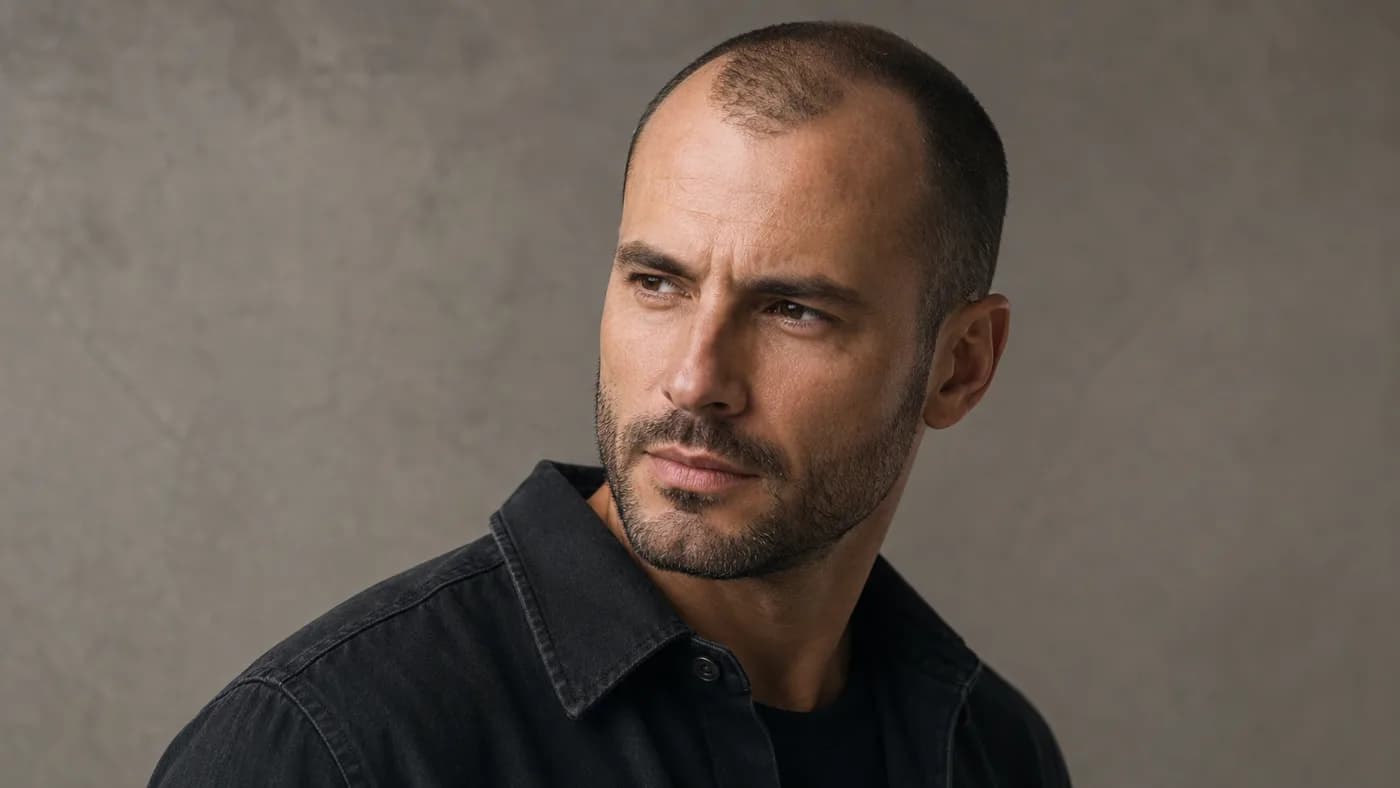
If you are looking for Norwood 5 hairstyles, you have probably reached the point where normal haircut inspiration stops being useful. The models have dense coverage. Your decision is more specific: does the remaining hair on top still improve the look, or would a close buzz or shaved head look more deliberate?
At Norwood 5, the answer is rarely a longer, cleverer hairstyle. Front recession and crown thinning are both established, and the bridge between them is getting narrow. That leaves fewer genuinely flattering options—but it also makes the best direction easier to identify.
The short answer: a close #0 or #1 buzz can still work when the remaining top coverage is even. If the top looks patchy, the front and crown have visually joined, or you are styling around weak zones every day, a shaved head often creates the cleaner overall result. A beard, glasses, and solid grooming can make either short option feel like a complete look rather than a concession.
Quick read
At Norwood 5, a small amount of even-looking hair can still help. Uneven, see-through length usually does not.
A #1 or #0 shows whether the remaining hair adds shape before you decide if fully shaved is stronger.
Facial hair, scalp care, glasses, fit, and photos have more visual weight as the top gets shorter.
What Norwood 5 actually means
The Hamilton-Norwood scale is a shorthand for common male-pattern hair-loss patterns. At stage 5, recession at the front and thinning at the crown are both more pronounced; the hair separating them becomes much less distinct. Cleveland Clinic's stage guide describes stage 5 as the point where hairline recession connects with the bald spot at the crown. A clinical review similarly describes stage V as more evident recession and vertex thinning (review).
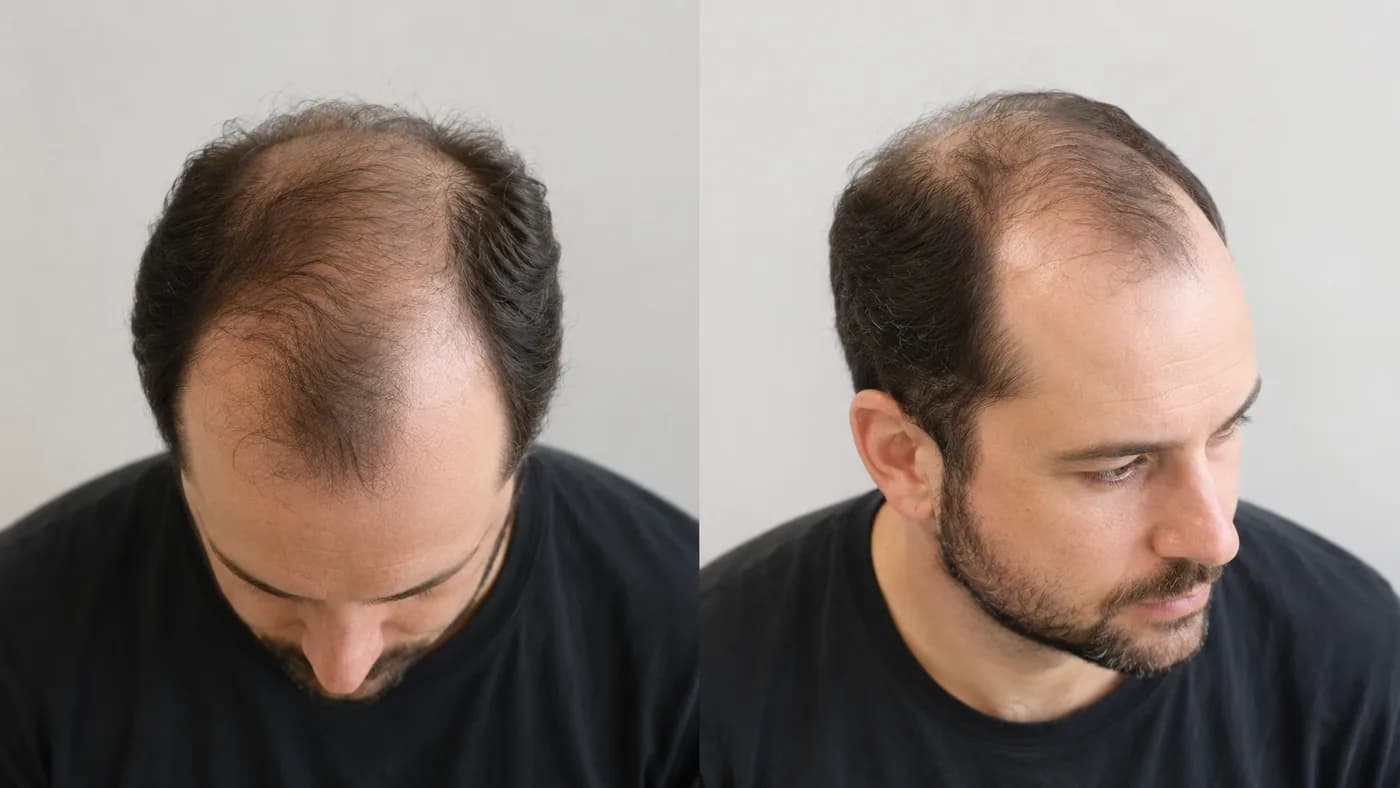
Real heads do not always follow an illustration perfectly. You may retain a narrow band through the middle, have stronger hair at the front than the crown, or have a diffuse pattern that looks lighter everywhere. Hair color, curl, scalp contrast, lighting, and hair length can change how advanced it appears. Treat “Norwood 5” as a way to describe what you see—not a diagnosis or a deadline.
Check the full pattern before you choose a haircut
Take dry-hair photos in normal daylight from the front, both three-quarter angles, and the top-back. A front-facing mirror can make a longer style look acceptable while the crown tells a very different story.
The best Norwood 5 hairstyles are usually very short
“Hairstyle” at Norwood 5 should mean a look that works in ordinary light and from more than one angle—not a way to make the hair loss temporarily disappear. Very short cuts remove the contrast that lets thin hair separate into darker and lighter islands. They also make daily grooming simpler.
Longer combovers, side parts, and tall textured styles are usually the least forgiving choices here. They need length from areas that may be thinning, and they can split under daylight, wind, sweat, or a casual overhead photo. If a style only works after deliberate placement, it is probably not giving you the freedom you want from a haircut.
When a Norwood 5 buzz cut still works
A Norwood 5 buzz cut can be strong when it lowers contrast without exposing a patchwork of scalp. The best result is usually close, even, and understated—not a desperate attempt to preserve the idea of a full head of hair.
Start by asking one question: when you take the hair down to a #1, does it read as a uniform short cut or as hair surrounding empty zones? If it still looks uniform from front, side, and crown angles, a #1 can be your answer. It preserves a little texture while removing the fragile length that draws attention to recession.
A #0 is useful when the #1 is close but not quite settled. It reduces contrast further and lets you feel out a scalp-forward look before shaving. For more guard-length detail, see Norwood 3 Buzz Cut and Buzz Cut vs Bald; the same contrast principle applies, even though Norwood 5 is a more advanced pattern.
Avoid trying to compensate with a very high skin fade. If the sides are taken dramatically tighter while the top is left thin, the density difference can make the top look even more isolated. A short, balanced transition is often more forgiving.
When shaving your head is likely to look cleaner
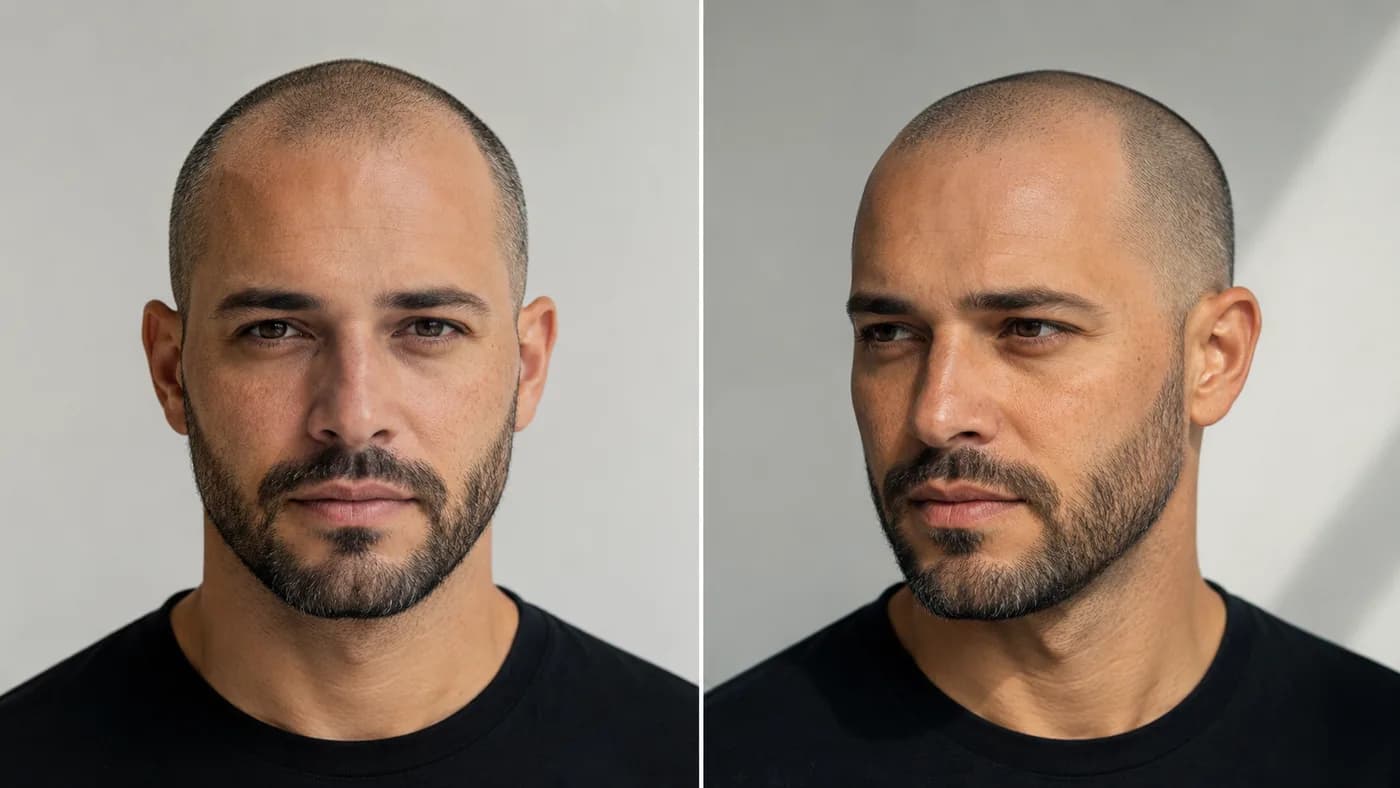
A shaved head becomes the stronger Norwood 5 hairstyle when the remaining hair creates more visual noise than shape. That is not giving up. It is an edit: you stop asking thin areas to perform a job they no longer do well.
Beards are optional, but they can help a close buzz or shaved head feel balanced by adding texture below the face. A short boxed beard, even stubble, or a well-kept goatee can work; the right choice is the one that suits your own growth. Read Bald Men With Beards or Bald With No Beard for two different approaches.
Do not let a style decision replace medical advice
This article is about appearance choices, not a diagnosis. Male-pattern hair loss commonly develops slowly, but sudden shedding, patchy loss, scalp pain, itching, or inflammation deserve a conversation with a dermatologist. The American Academy of Dermatology notes that treatments are available for male-pattern hair loss and that outcomes can be better when treatment starts soon after changes are noticed. Whether treatment, a transplant consultation, or a short cut fits your priorities is personal.
You can pursue treatment and still choose a shaved head. You can keep a #1 while you watch the pattern. You can decide that neither is urgent. The useful part is separating the health question—what is causing the hair loss and what options exist—from the style question—what makes you feel most like yourself now.
A simple way to decide between buzzed and shaved
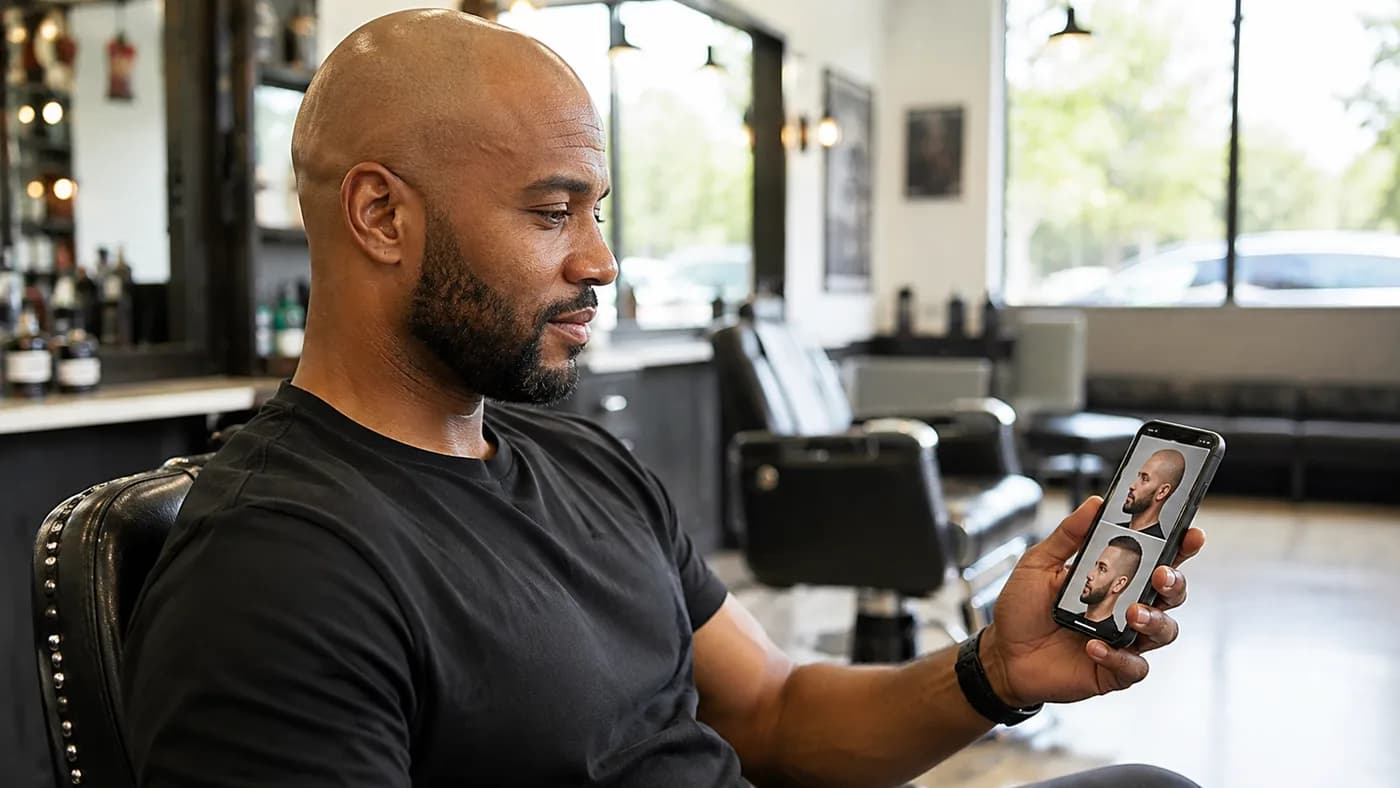
Use a short sequence rather than one all-or-nothing leap:
- Photograph your current hair in ordinary daylight from every useful angle.
- Compare a #1 buzz with a #0 close buzz. Notice which one looks more even, not which one merely leaves more hair.
- Compare the #0 with a shaved preview, ideally with your usual beard, glasses, and clothing.
- Give the result a day or two. The first surprise is often just unfamiliarity.
BaldLooks Free Analysis can give you a fast first read from one photo. If you want to make the decision with more confidence, the paid preview plans let you explore the shaved-head look from different angles, in different outfits and locations. That is especially helpful at Norwood 5, where a front-only result can hide the deciding detail at the crown.
Final answer: is it time to buzz or shave at Norwood 5?
Norwood 5 does not mean you have run out of style. It means the strongest styles are now the honest, low-contrast ones. Try a #1 buzz if your remaining top hair is still even enough to read as a complete short cut. Try a #0 if you want a closer, calmer result. Choose a shaved head when the remaining hair keeps breaking the top into thin zones and less hair makes your overall look feel more intentional.
Keep the decision focused on your face, your crown, your grooming habits, and how you want to feel day to day—not on a stage number alone. For next steps, read Norwood 3 vs 4, How Often Should You Shave Your Head?, and How to Look Good Bald.