
Norwood 5 Buzz Cut: When Short Hair Still Works
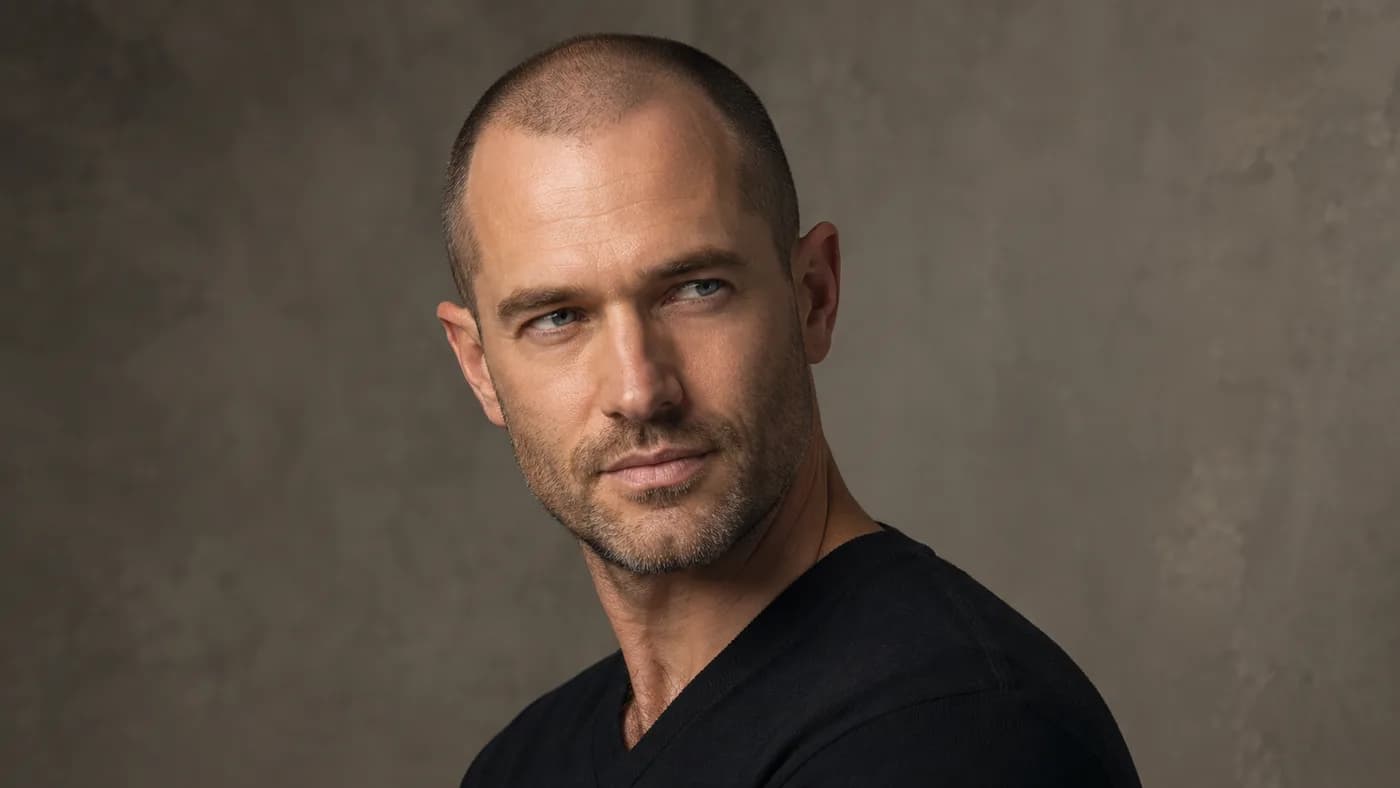
If you are searching for a Norwood 5 buzz cut, you are not looking for a miracle hairstyle. You are trying to answer a much more useful question: does a very short cut make the remaining hair look deliberate, or does it make the thin areas easier to see?
At this stage, the front recession and crown thinning are both established. The goal is not to pretend they are not there. It is to lower the contrast, remove fragile length, and choose a finish that holds up from the front, sides, and crown.
The short answer: a #1 or #0 buzz cut can work at Norwood 5 when the remaining hair reads as even short coverage. If it still separates into a thin bridge, obvious crown opening, or darker side hair around a pale top, fully shaving often looks cleaner.
Quick read
A #1 is usually the fairest first test. It removes unstable length while leaving enough texture to judge whether the remaining coverage helps.
At Norwood 5, a small amount of even hair can look intentional. More hair that breaks into separate zones usually cannot.
A buzz is not a permanent compromise. It is the clearest way to see whether a fully shaved head would simplify the whole pattern.
Quick answer: when a Norwood 5 buzz cut works
A buzz cut for Norwood 5 is worth trying when these are mostly true:
- the short top looks fairly consistent rather than transparent in islands,
- the sides do not look dramatically thicker than the top,
- the crown is thin but does not become a separate bald circle at a #1,
- you like some scalp visibility and want low-maintenance short hair,
- and the look still feels balanced in regular daylight, not just one mirror angle.
The Hamilton-Norwood scale is a description of a common hair-loss pattern, not a diagnosis or a rulebook. At stage 5, the receding hairline and crown loss have become more pronounced, with less separation between them. Cleveland Clinic describes stage 5 as the point where hairline recession connects to the crown bald spot. In real life, hair color, curl, scalp contrast, and lighting can make two men with a similar pattern look very different.
That is why “Norwood 5” alone cannot tell you whether to buzz or shave. Your remaining hair’s evenness is the decision-making detail.
Do not judge the buzz from the front alone
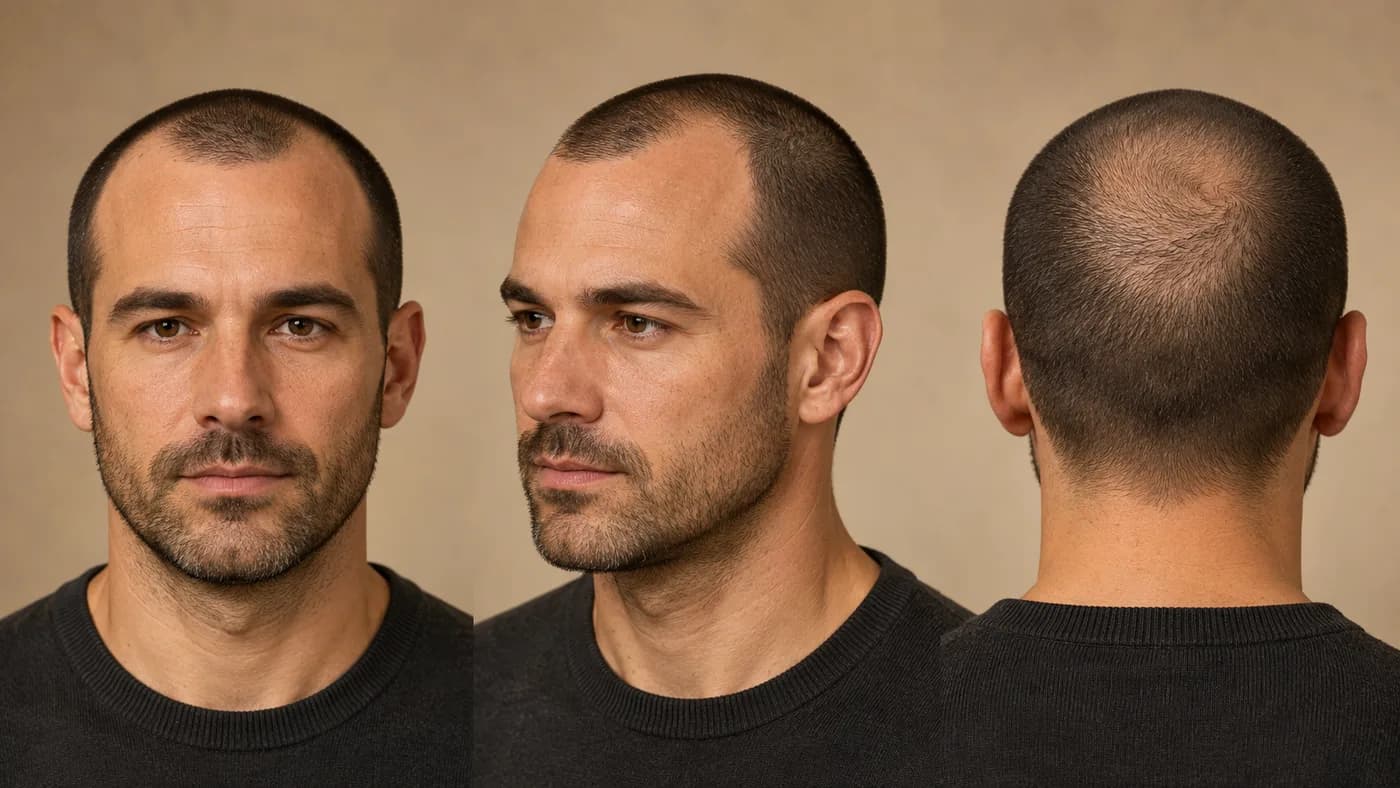
Take dry-hair photos in daylight from the front, both three-quarter angles, and the top-back. A close buzz can look convincing face-on while the crown gives a different answer.
#1 vs #0: the two lengths that matter most
For most men, there is little value in debating a #4, #3, or even #2 at Norwood 5. Those lengths may leave enough hair for the top and crown to split into visible darker and lighter patches. Very short cuts are more useful because they reduce that difference.
| Length | What it can do at Norwood 5 | Watch for |
|---|---|---|
| #1 (3 mm) | The best starting point when you want a real buzz-cut finish with a little texture. It can make mild-to-moderate unevenness look calmer. | A distinct thin bridge or separate crown spot that is still obvious in normal light. |
| #0 / clipper-close | Lowers contrast further and gives a near-shaved read without using a razor. It is a strong bridge if the #1 is close but not settled. | Scalp marks, color variation, and head shape become more visible. |
| Fully shaved | Removes the last remaining hair-versus-scalp contrast when a buzz still looks fragmented. | Requires a scalp-care and shaving routine rather than one periodic clipper cut. |
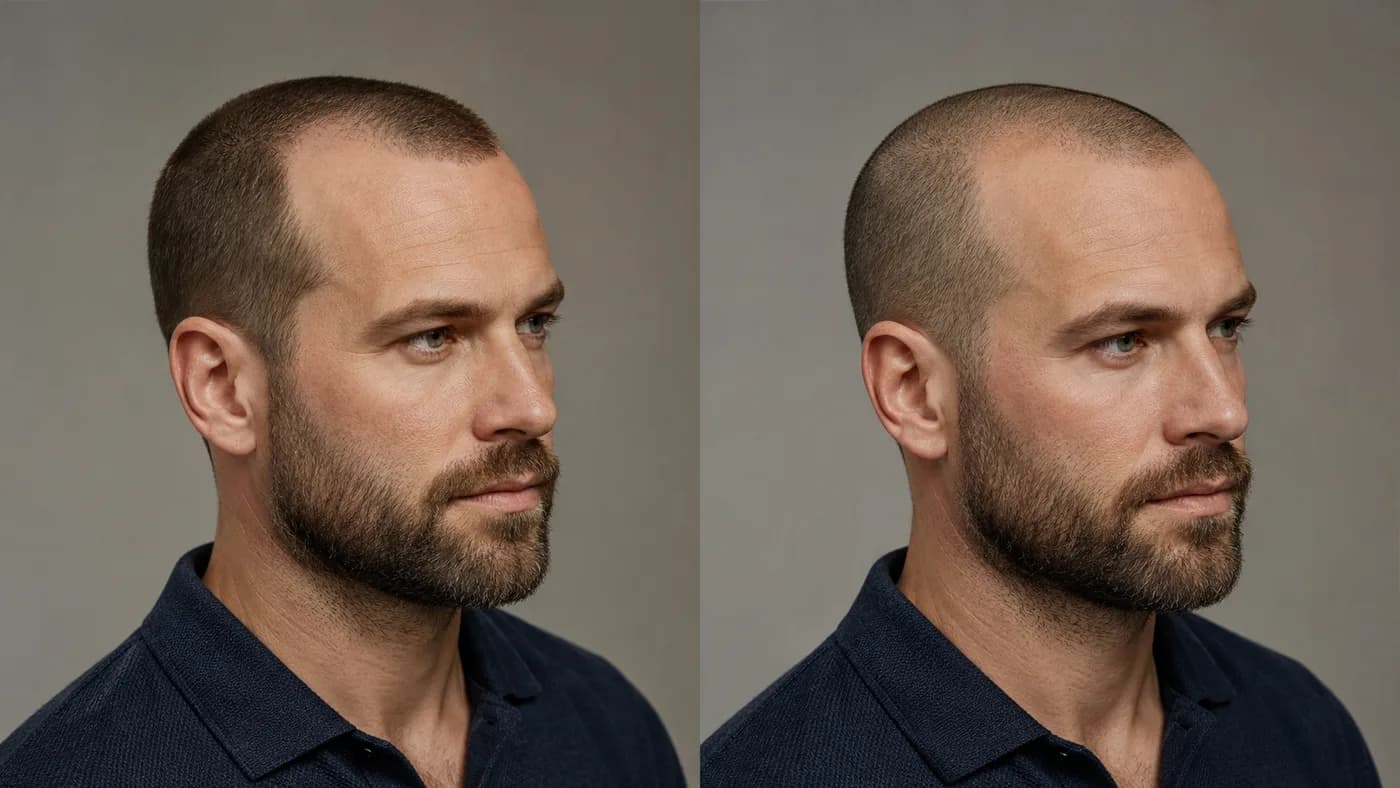
The right test is not “which leaves more hair?” It is: which version makes the top look less interrupted? A #1 can be the answer if it reads as one consistent short surface. A #0 is often better if that little extra length makes the crown and front separate. If neither creates an even read, shaving may be the cleaner move.
This is a narrower decision than the broader options in Norwood 5 Hairstyles. That article compares the overall style paths. Here, focus on the specific question of whether the buzz itself earns its place.
Signs a close buzz will probably expose too much loss
A buzz cut does not hide baldness. It can reduce contrast, but it cannot create density. At Norwood 5, it is likely to disappoint when the remaining hair is doing more visual harm than good.
Harsh overhead light is especially revealing because it highlights scalp-to-hair contrast. Do not let it panic you—every close cut shows more scalp in hard light—but do not ignore it either. Test the cut in daylight, indoor light, and a normal phone photo. A hairstyle that only works in a controlled bathroom mirror is not really working.
How to make a Norwood 5 buzz look intentional
If the buzz passes the evenness test, the rest of the look becomes more important—not because you need to compensate, but because a very short top puts more attention on your face and grooming.
Keep the transition restrained
An even buzz is often the most forgiving choice. If you want a fade, start low and soft. A very high skin fade creates maximum contrast beside the temples and can make the top seem lighter by comparison. A subtle transition is usually easier to live with than a dramatic barber-photo fade.
Use facial hair as balance, not camouflage
You do not need a beard to pull off a short buzz. Clean-shaven can look precise. But a neat short beard, stubble, or goatee can add texture around the jaw and make the overall frame feel more grounded. The goal is grooming that suits your own growth pattern, not growing the biggest beard possible. See Bald With Stubble, Shaved Head With Goatee, and Bald With No Beard for different directions.
Let glasses do a real job if they suit you
Glasses can add structure around the eyes and help shift the visual centre of the face. They are optional, not a fix. If you already wear them, assess the buzz with your normal frames on; taking them off for the mirror test can give you a result you will not actually wear. Bald With Glasses can help with the styling side.
Treat the scalp like part of the haircut
At #0 or fully shaved, scalp condition is visible. Dryness, irritation, and excessive shine have more impact than tiny differences in guard length. Use a gentle routine, moisturise, and protect the scalp from sun exposure. If you get frequent bumps, a slightly less-close electric finish may look better than chasing a razor shave. Bald Head Care Routine and Razor Bumps on a Shaved Head cover the practical details.
Buzz cut or shaved head: make the decision with a comparison
The simplest route is gradual:
- Start with a uniform #1 and assess it after a few days, not only the first surprised look in the mirror.
- If the top still looks disconnected, try a #0 before deciding that shaving is too big a leap.
- Compare the #0 against a shaved-head preview with the beard, glasses, and clothes you actually wear.
- Choose the version that feels calm and consistent across your useful angles.
The unfamiliarity effect is real. A short cut can look dramatic on day one simply because your face has been framed by hair for years. Give yourself enough time to separate “this is new” from “this does not suit me.” But do not use adjustment time to excuse an obviously patchy result either.

Hair loss treatment and haircut choices are separate decisions
Choosing a buzz cut does not mean you have decided against treatment. Choosing to shave does not mean you “gave up.” They are style choices; the cause and management of hair loss are health questions.
Male-pattern hair loss usually develops slowly, and the American Academy of Dermatology notes that treatment options exist and tend to work best when started soon after changes are noticed. If preserving hair matters to you, talk with a dermatologist about the cause of your hair loss and evidence-based options. Seek medical advice sooner if loss is sudden, patchy, painful, itchy, or inflamed—those patterns need more than a haircut guide.
You can have a #1 while you explore treatment. You can shave while you take your time. The good decision is the one that respects both what you want for your hair and what makes you feel more at ease today.
Final answer: can you pull off a Norwood 5 buzz cut?
Yes—a Norwood 5 buzz cut can still work when it makes the remaining coverage look even, simple, and intentional. Begin with a #1, move to a #0 if you need less contrast, and assess the crown as honestly as the front.
If the close buzz keeps separating the top into thin zones, a shaved head is usually not a defeat. It is often the cleaner design choice. Compare both before you commit, build the rest of the look around grooming and fit, and choose the version that works in real life rather than only in one flattering angle.
For more help with the next move, read Buzz Cut vs Bald, How Often Should You Shave Your Head?, and How to Look Good Bald.