
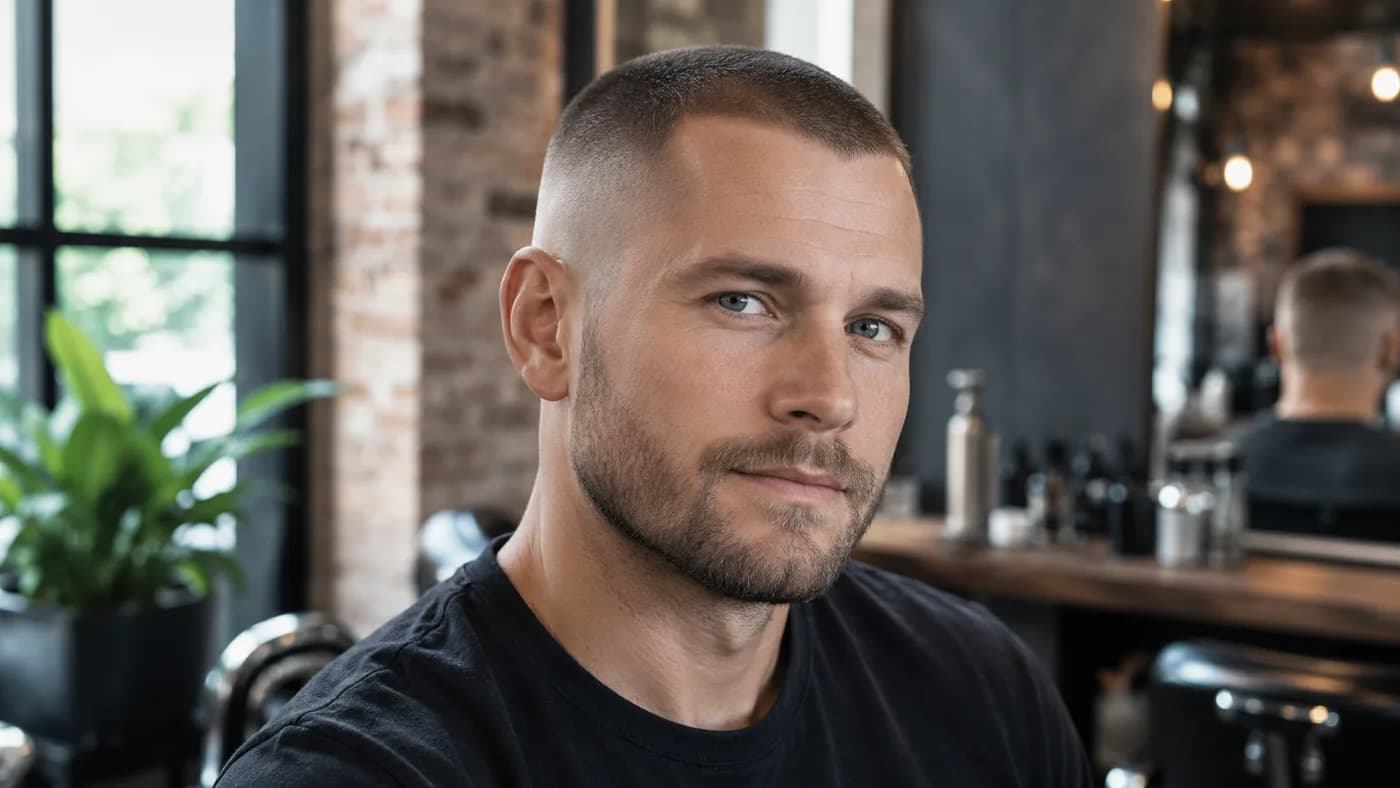
A skin fade buzz cut with a receding hairline can look crisp, athletic, and completely intentional. It can also do the opposite: turn the bare sides into a spotlight for temple recession.
That is not a reason to rule it out. It is a reason to choose the fade height on purpose. A skin fade is not just a shorter buzz cut. By taking the lower sides almost to the scalp, it creates a clear light-to-dark gradient. That contrast changes what people notice first—your jaw, your profile, your temple corners, or the density on top.
The safest starting point for most men is a low skin fade with a #1 or #2 buzz on top. It delivers the clean finish people want from a skin fade while keeping enough side weight to connect the haircut to the rest of the head. A high skin fade can still work, but it is a bolder choice that asks more of your top density and your comfort with visible recession.
Quick read
The bare side area can sharpen your face, but it can also guide attention straight to the temples.
Keeping the skin section below temple level gives you polish without making the front look isolated.
The front, profile, and crown decide whether a bold fade looks balanced after the cut settles in.
Quick answer: when does a skin fade work with recession?
It works best when the short top looks reasonably even, the recession is mild to moderate, and you like a deliberately exposed, sharp outline. The cut does not conceal missing density; it makes the short length itself look chosen. That distinction matters.
If your hair is thinning quickly, the front is see-through behind the hairline, or the crown is visibly lighter than the sides, a high skin fade can make the top appear like a separate patch. A lower fade, an even buzz cut for a receding hairline, or a shaved-head comparison is usually a better place to start.
Receding temples and crown thinning are common patterns in male-pattern hair loss, but a haircut cannot tell you why they are happening. The American Academy of Dermatology notes that a receding hairline or top bald spot can be an early sign of hereditary hair loss. If you have sudden, patchy, irritated, or painful hair loss, talk with a dermatologist rather than treating the haircut as an answer.
Why a skin fade can expose the temples
With a one-length buzz, the head reads as one quiet, short surface. A skin fade changes that. The hair around the ear and nape goes almost to bare skin, then gradually becomes darker as it reaches the top. The eye naturally follows that gradient upward.
That can be useful when your top is dense and your hairline has a clear, stable shape. The clean sides make the whole cut feel precise. But when both temple corners are deep or the hair immediately behind them is thin, the fade can act like two arrows pointing at the area you are most conscious of.
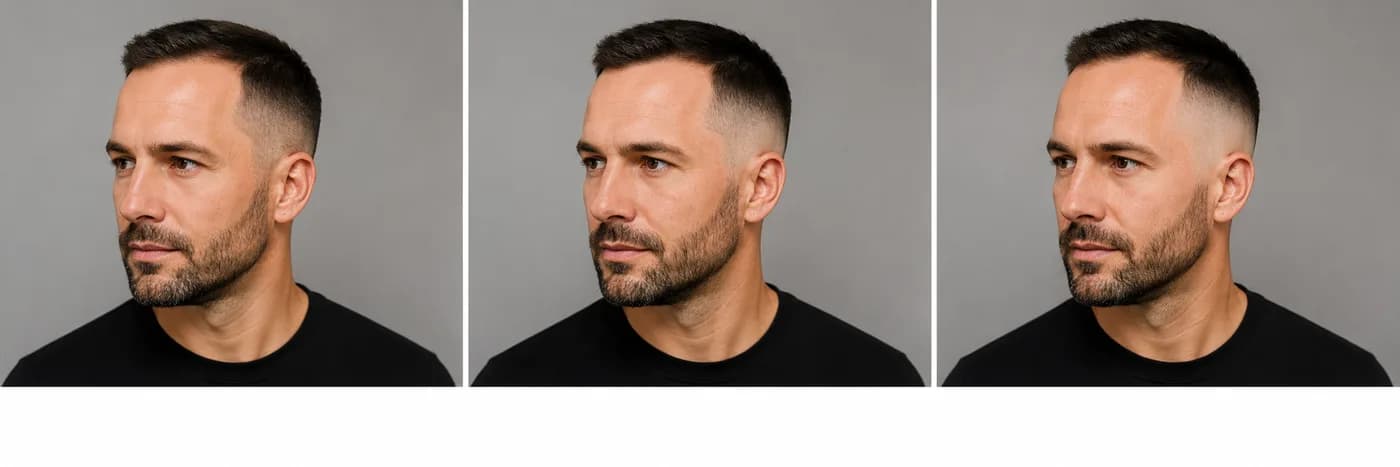
The issue is not that a skin fade is “bad” for recession. It is contrast placement. A lower fade keeps the palest part away from the temple corners. A high skin fade brings the most dramatic light-to-dark transition right into them.
| Option | What the eye notices | Better fit | Main risk |
|---|---|---|---|
| Low skin fade | Clean ears and neckline; a connected top | Mild to noticeable recession, or uncertainty about density | A rushed blend can still leave a harsh band |
| Mid skin fade | More cheek and side profile definition | Even #1 or #2 top with modest temple recession | The blend may land at the deepest corner |
| High skin fade | Strong top-versus-sides contrast | Dense short top and a preference for a bold look | Can isolate thin front or crown areas |
| Soft low fade (not skin) | Similar shape with lower contrast | Deeper recession or a lighter top | Less dramatic finish if you want maximum sharpness |
| One-length buzz | Calm, uniform surface | You need an honest density test | Less sculpted around the ears and beard |
For the wider comparison of low, mid, and high fades, read Buzz Cut Fade for a Receding Hairline. The point here is simpler: if you specifically want skin at the sides, start with as little exposed side area as you need—not as much as the reference photo has.
Who can pull off a skin fade buzz cut?
No face shape or Norwood stage gets to “own” this haircut. Instead, look at three practical variables: how even the short top appears, where the fade ends, and whether the haircut supports your facial structure.
Mild recession with dense coverage
This is the easiest match. A low or mid skin fade with a #1 or #2 on top can look clean and sharp because the short top still reads as a deliberate full surface. Keep the line-up natural. Trying to square off or push forward a receding hairline usually looks less convincing than owning its real shape.
M-shaped recession
An M-shaped hairline often looks better with short hair than with a longer style trying to cover the corners. But the location of the fade matters: choose low skin or a soft low fade so the gradient stays below the deepest temple point. For more pattern-specific guidance, see Buzz Cut M-Shaped Hairline.
Thin front or diffuse top
This is where a high skin fade deserves restraint. Removing the sides can make the lighter top look more obvious by comparison. Test a uniform #1, a low skin fade, and a buzz cut for diffuse thinning before committing to a high blend. If the uniform shortest version is the one that looks most coherent, a shaved preview is worth adding to the comparison.
Crown thinning as well as recession
Do not judge the cut entirely from a front-facing chair mirror. Male-pattern baldness often includes temple recession and/or thinning on the crown, as Cleveland Clinic explains. A high skin fade can make a weak crown feel more exposed from the back. A low fade preserves a more connected silhouette and is easier to grow into.
Choose the guard before you choose the drama
People often focus on “skin fade” and forget that the top guard sets the baseline. The shorter the top, the less visual difference there is between the hairline, top, and sides. That can be helpful when density is uneven—but going extremely short also makes scalp texture, scars, and the true hairline more visible.
- #2 on top: a measured first move if you are new to short hair or want slightly more coverage. Pair it with a low skin fade that blends gently.
- #1 on top: clean and confident when the top has reasonably even density. This is the classic choice for a skin fade buzz.
- #0 or near-bare top: makes the hairline less of a “haircut” question and more of a shaved-head decision. It can look great, but compare it with a full shave instead of assuming the fade is doing the work.
For a direct guard comparison, see Number 1 vs Number 2 Buzz Cut for Balding Men. The barber should assess your density dry and in normal light; wet hair and bright overhead lights can make any front look thinner than it does day to day.
Beard, glasses, and neckline: build balance below the fade
A skin fade removes visual weight from the sides, so a little definition around the lower face can make the final look feel grounded. This does not mean every man needs a large beard. It means the beard, glasses, and neckline should look like they belong to the same level of contrast as the haircut.
Short stubble is a simple option if you want a close, athletic look. A compact boxed beard can add jaw definition if your chin is softer. A tidy goatee directs attention toward the center of the face without creating too much bulk at the cheeks. If you wear glasses, a slightly stronger frame can also introduce a useful focal point above the temples—but it should fit your face, not become a disguise.
Do not try to 'fix' a harsh fade with a bigger beard
A beard can balance a haircut, but it cannot make an unflattering high fade disappear. First make sure the buzz-and-fade silhouette works from the front, side, and crown. Then choose facial hair that supports it. Explore Bald With Stubble, Bald With Glasses, or Bald Men With Beards for the next layer of the decision.
What to ask your barber
Avoid asking for “a skin fade that hides my receding hairline.” It cannot hide the hairline, and that framing often leads to an overly aggressive blend or a forced line-up. Be specific about the visual result you want instead:
“I want a #1 or #2 buzz with a low skin fade. My temples are receding, so keep the skin section below them, blend it gradually, and leave my natural front line alone. Please check the crown before taking the fade higher.”
Ask to see the cut after the initial low blend, before the barber moves it higher. You can always remove more hair. You cannot restore side weight in the same appointment. If you are tempted by a high skin fade because it looks great in a reference photo, remember that the model’s top density, head shape, beard, and lighting are part of that result.
Final verdict: sharp when it supports the whole shape
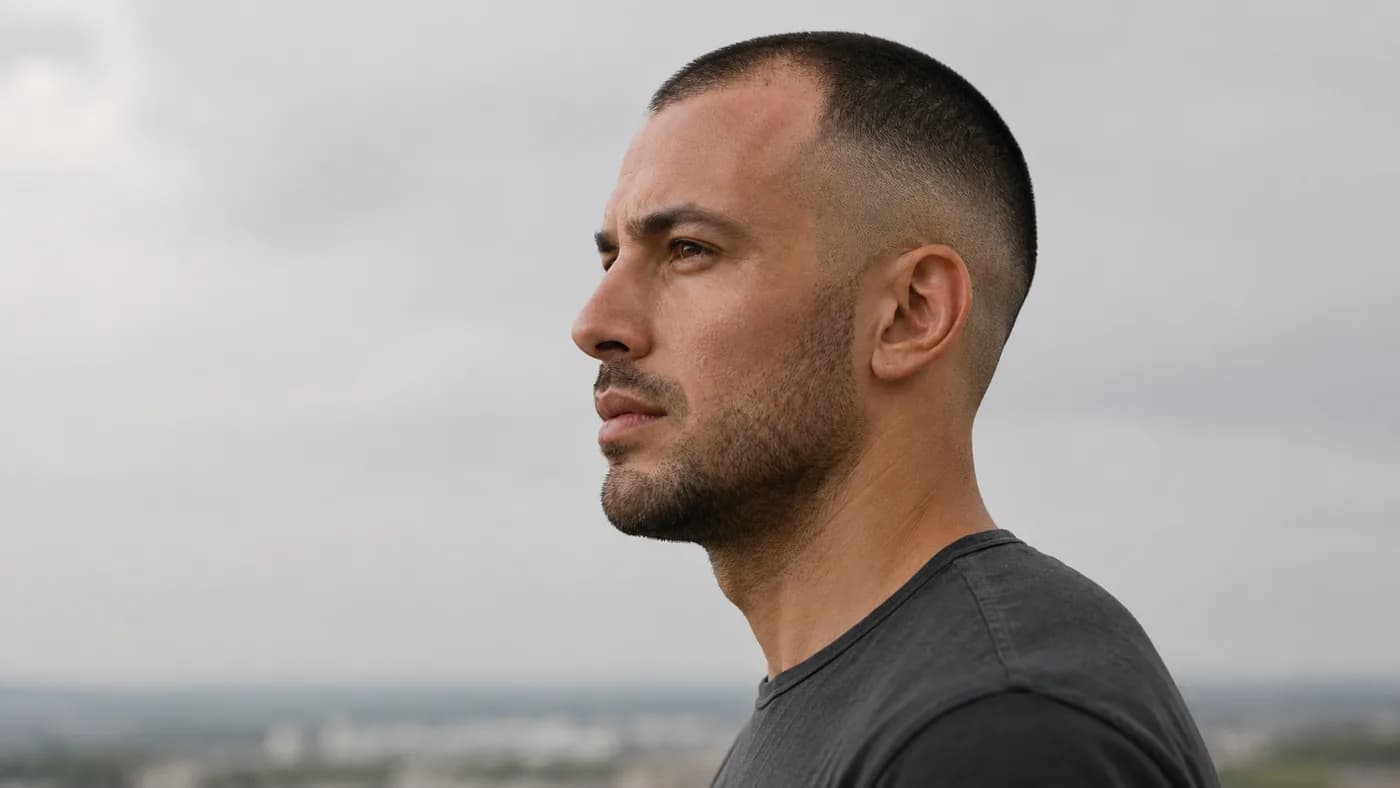
A skin fade buzz cut can suit a receding hairline when you treat it as a deliberate high-contrast style, not a hiding strategy. Start with a low skin fade and a #1 or #2 top. It gives you the precision of a skin finish while keeping the visual transition away from the temples.
Go higher only if the short top looks even from every angle and you genuinely like the more exposed shape. If a high fade makes the front or crown feel disconnected, that is useful feedback—not a failure. A soft fade, one-length buzz, or shaved head may simply be the cleaner answer for your current pattern.
Before booking the cut, compare your own face with a buzz cut filter, revisit the broader buzz cut fade guide, and consider Buzz Cut vs Bald. The best version is the one that looks intentional in your everyday photos, not only in the barber chair.