Bald With Glasses: How to Choose Frames for a Shaved Head
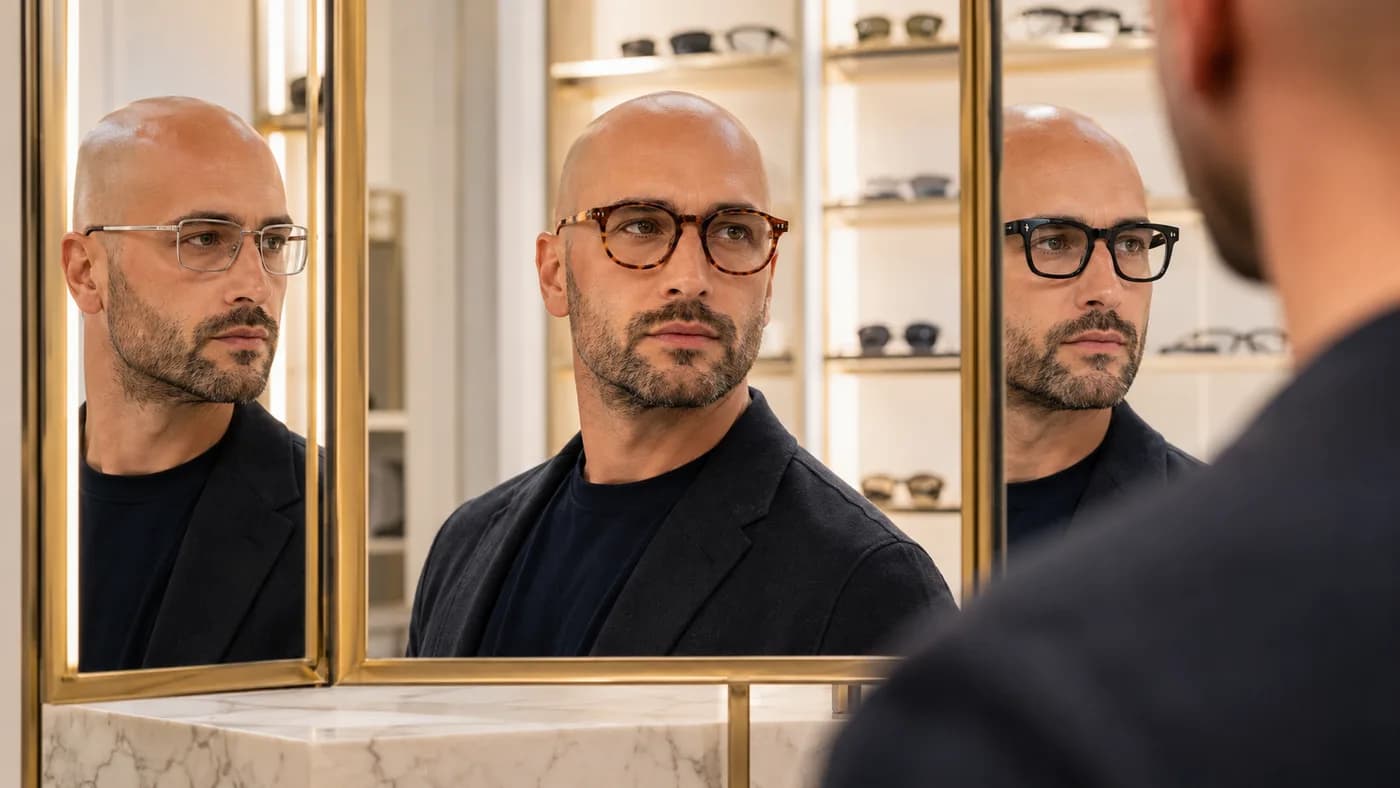
If you are searching for bald with glasses, you are probably not looking for generic eyewear advice. You are trying to answer a more specific question: once the hair is gone, what kind of frames make the face look sharper, cleaner, and more intentional instead of too bare or too heavy?
That is the right question.
When you shave your head, glasses stop being a side detail. They become one of the main structural elements on your face. The right pair can make the shaved look feel more balanced and intentional. The wrong pair can make your head look larger by contrast or add weight in the wrong place.
This is the longer practical guide. The shorter style page for Bald with Glasses gives the quick verdict. Here, the focus is frame weight, face shape, beard balance, and how to test the look before you buy.
Quick read
They restore structure around the eyes and brow line, which matters more once hair is no longer framing the top of the face.
Frames that are too faint can disappear, while oversized heavy frames can overpower the face unless the rest of the look supports them.
Your best frame depends on face shape, beard or no beard, skin contrast, and how the glasses look from both the front and three-quarter angle.
Quick answer: yes, glasses often make a bald head look better
For many men, glasses are one of the easiest upgrades to the shaved-head look because they add definition without requiring facial hair.
That matters because a shaved head removes one of the biggest framing elements from the face. Without hair, the eye pays more attention to your brow line, eyes, jaw, skin, and any accessories near the face.
They tend to help most when:
- your face feels too bare without hair,
- you stay clean-shaven or only wear light stubble,
- your eyebrows are not especially strong,
- or your face benefits from more visual structure around the eyes.
They help less when:
- the frame is too small for your face,
- the frame is so thin that it adds almost no definition,
- or the frame is so dominant that it competes with a dense beard, bold brows, and sharp clothing all at once.
Glasses do not fix everything
They do not replace grooming or scalp care. But for many bald men, the right frames are one of the fastest ways to make the look feel intentional instead of unfinished.
Why glasses matter more once you shave your head
Hair used to create top framing automatically. Once that disappears, the upper half of your face needs to carry more of the look on its own.
1. They create a clear brow-level anchor
The top of the frame can echo the brow line and keep the upper face from feeling too open. This is especially useful if you are also exploring the bald with no beard direction and do not want facial hair to do the balancing work.
2. They add contrast without adding bulk
A beard changes your silhouette. Glasses can sharpen the look without changing the lower half of the face much. That makes them ideal if you want a cleaner or more professional result.
3. They can correct visual softness
Rounder or softer faces often need a little more edge when the scalp is fully shaved. Angular or medium-weight frames can help create that definition.
The safest frame rules for a shaved head
Most men do not need fashion-theory complexity. They need a practical starting point.
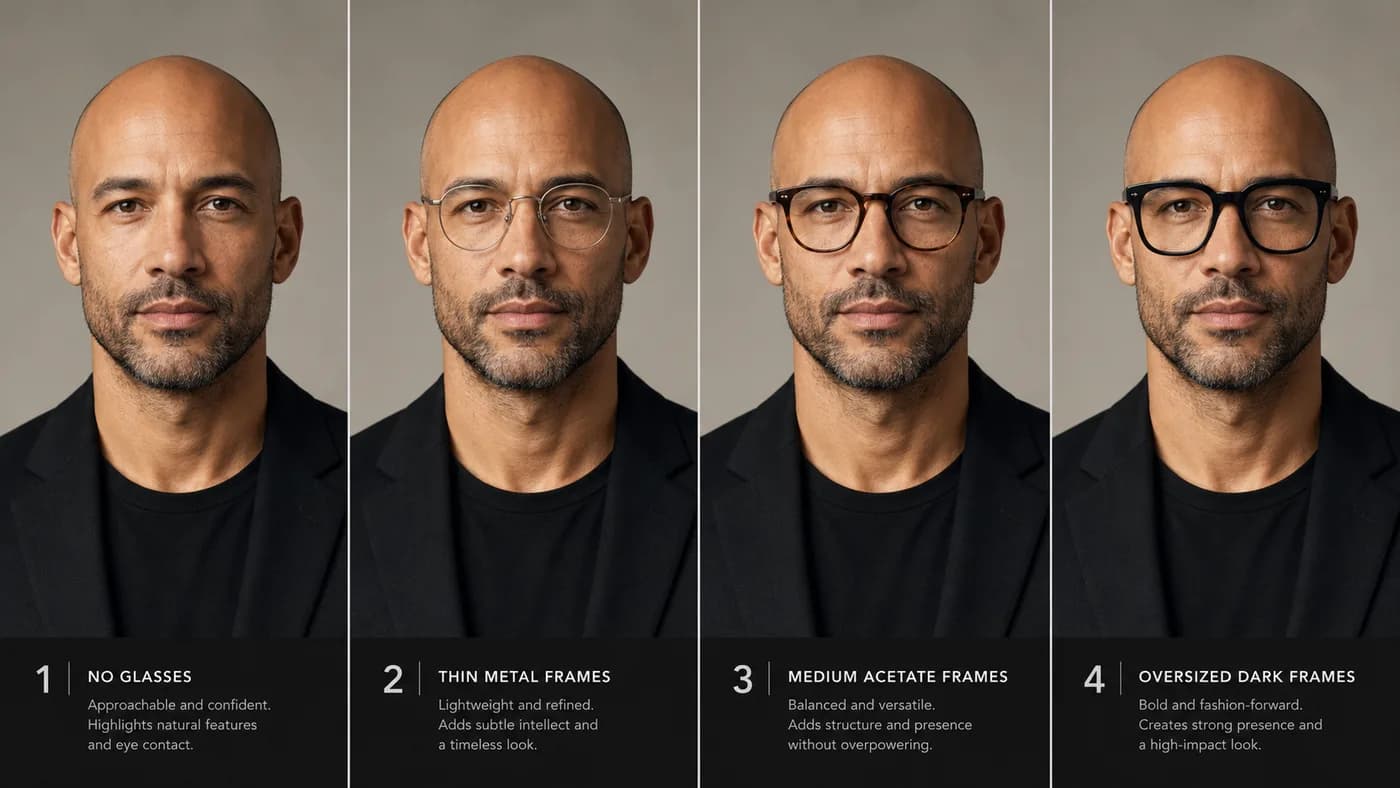
Choose enough frame presence to be visible
Rimless or ultra-thin wire frames can work on the right face, but they often disappear once the scalp is shaved. If your goal is structure, invisibility usually is not helping you.
Avoid tiny frames
Small frames can make the head look larger by contrast. Once the scalp is fully visible, proportion matters more. Frames should usually feel substantial enough to hold their own.
Be careful with very heavy frames
Thick black acetate can look excellent on some bald men. But if you already have a full beard and strong brows, very heavy frames may overload the face.
Let the top line work with your brows
Frames usually look better when they support the brow line instead of sitting awkwardly far below it or completely hiding it. If the frame shape fights your natural upper-face structure, the result will often feel off even if the color is good.
Think in terms of width and balance
Your frames should feel proportionate to the widest part of your face. Too narrow and the head can look larger. Too wide and the frame can feel costume-like.
Best glasses shapes by face shape
There is no perfect chart that overrides taste, but face shape is still useful because it tells you whether your frames should soften, sharpen, widen, or simplify the face.
| Face shape | Usually works best | Watch for | Practical advice |
|---|---|---|---|
| Round | Rectangular, square, browline, or subtly angular frames | Tiny round frames that make the face softer | Use enough edge to create definition without going cartoonishly wide |
| Square | Rounded rectangles, softer squares, or slim ovals | Harsh blocky frames that over-harden the jaw | Keep structure, but let the corners soften the face slightly |
| Oval | Most medium-proportion frames | Frames that are far too narrow or oversized | Stay balanced; this face shape usually handles experimentation well |
| Long or rectangular | Wider frames with some lens depth | Tall narrow shapes that make the face look longer | Add width and visual spread more than vertical emphasis |
| Heart or diamond | Medium-width frames with stable lower balance | Top-heavy frames that exaggerate forehead width | Choose frames that feel centered and not too dramatic up top |
If you are unsure where to start, medium rectangular or softly squared frames are usually the safest first test for a shaved head.
Bald with glasses and no beard vs bald with glasses and facial hair
Glasses do not exist in isolation. Their effect changes depending on whether the lower half of your face is clean-shaven, in stubble, or framed by a fuller beard.
If the lower half of your face is very light, the glasses usually need to do more work. If the lower half is already strong, the glasses should often calm down a little.
What bald men with glasses should avoid
Going too minimal
A lot of men assume subtle always means elegant. On a shaved head, subtle can just mean invisible. If the frames barely register, they are not helping the face much.
Going too heavy too fast
Bold frames can look excellent, but many men jump straight to oversized thick frames because they want more structure. Sometimes that just makes the glasses become the whole face.
Ignoring side angles
A frame may look perfect head-on and too thick, too narrow, or too low from three-quarter view.
Forgetting skin tone and scalp tone
Once the scalp is exposed, color contrast becomes more obvious. Black, tortoiseshell, smoke, crystal, metal, or warm brown frames can all work.

How to test whether glasses improve your bald look
Use a simple process:
- Start with a clear front-facing photo in natural light.
- Compare your shaved look with your current frames if you already wear glasses.
- Compare one slightly bolder frame option and one lighter option.
- Check the result with your real beard choice, not an imaginary one.
- Review both the front and three-quarter angle.
This is where BaldLooks is useful in a practical way. The free analysis can answer the first question: does the shaved base suit your actual face? From there, paid plans help if you want to compare the shaved look with different beard styles, outfits, or stronger style contexts before you spend money on new glasses.
If you are also deciding between bald and shorter hair, do not isolate the glasses question. Compare the eyewear with your current hair, a buzz cut filter, and the shaved version.

Final answer: the best glasses for a bald head usually add structure without stealing the whole look
If your shaved head feels too bare, glasses are often one of the cleanest fixes available. They can frame the eyes, support the brow line, and make the whole look read as more deliberate.
The best choice is rarely the most extreme one. It is usually the pair with enough presence to be seen, enough proportion to suit your face, and enough restraint to work with your beard, skin, and clothing instead of fighting them.
If you want a practical place to start, test medium-presence frames on a clear shaved-head preview first. That removes a lot of guesswork and helps you decide whether the real improvement should come from stronger glasses, better stubble, a cleaner no-beard look, or a combination of the three.