
Number 1 vs Number 2 Buzz Cut for Balding Men
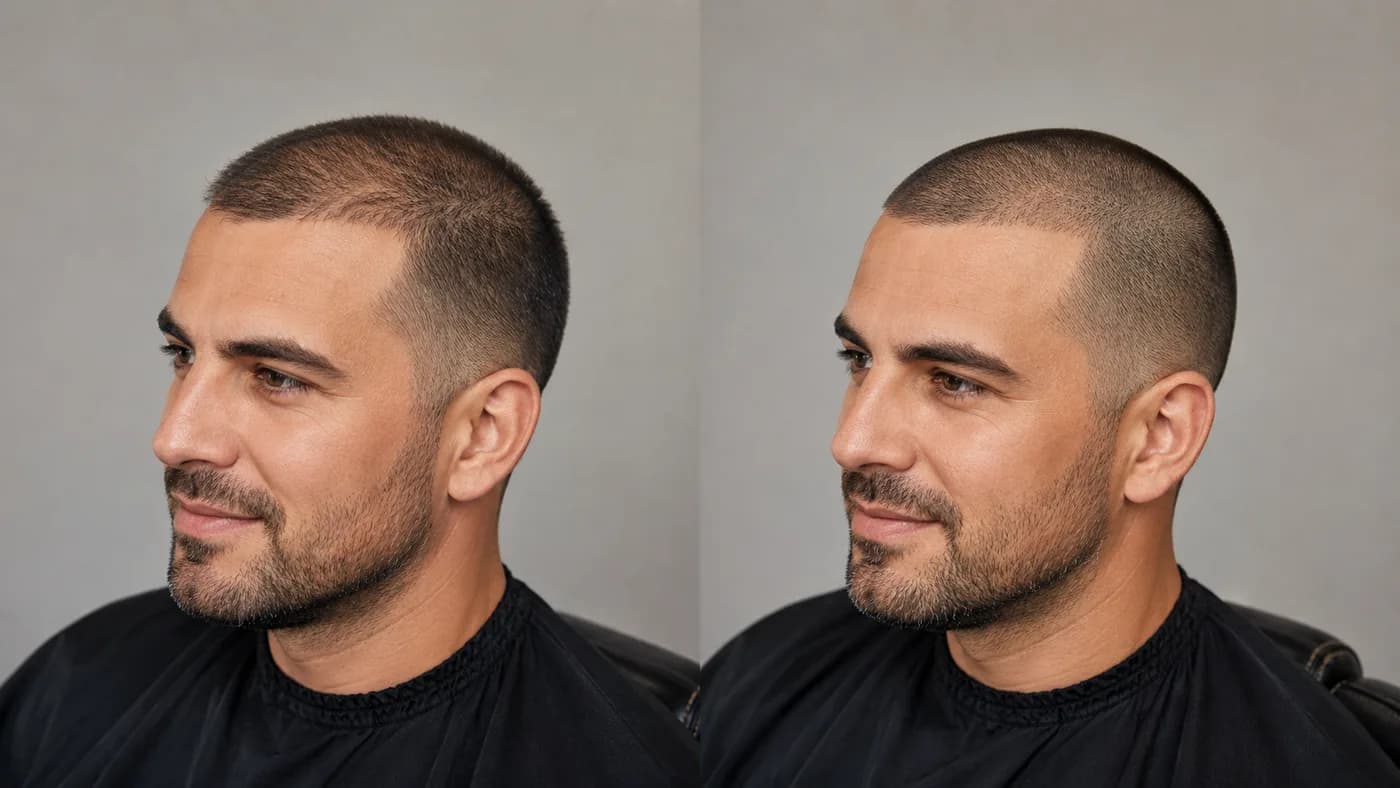
If you are comparing a number 1 vs number 2 buzz cut for balding, you are not choosing between two tiny measurements. You are choosing how much of your scalp, hairline, crown, and head shape the haircut will reveal.
That difference matters more when your hair is thinning. A number 2 can leave enough coverage to soften the look; it can also leave enough length for a weak crown to separate and look patchy. A number 1 removes more of that contrast, but it makes the scalp and shape of the head more visible. Neither guard is automatically better.
The practical rule is simple: choose the shortest guard that makes your hair loss look less like a separate problem and your haircut look more intentional. For mild recession with decent top density, that is often a number 2. For visible crown thinning or a top that looks much lighter than the sides, a number 1 is often the clearer test.
Quick read
It leaves roughly twice the length of a number 1, which can help when the top still looks even and you want a less abrupt change.
It often works better when longer stubble separates around the crown or makes a receding hairline look less deliberate.
Do not choose from the front alone. Compare crown, sides, and normal-light photos before deciding the shorter guard is a win.
Quick answer: number 1 or number 2 for balding?
Start with a number 2 buzz cut if your hair loss is early, the crown mostly shows only under harsh light, and the top still reads as one reasonably even area. It is an easier transition and retains a little visual texture.
Lean toward a number 1 buzz cut if a number 2 leaves the crown looking like a separate pale circle, the sides look noticeably denser than the top, or your hairline still looks like it is trying to conceal itself. Going shorter does not hide hair loss; it reduces the gap between the hair you have and the scalp that is showing through.
Standard guard measurements explain why the difference is visible: Wahl lists its number 1 as 1/8 inch (3 mm), while its haircutting guide lists 1/4 inch (6 mm) as the next common guide length. Your exact result can vary by clipper, blade position, hair texture, and cutting direction, so treat the number as a starting point rather than a promise. Wahl number 1 guide, Wahl haircutting guide.
The reason pattern matters is medical as well as visual. The American Academy of Dermatology notes that male pattern hair loss can begin as a receding hairline, thinning, or a bald spot on the top of the head. That means a single buzz length will not flatter every kind of balding equally. American Academy of Dermatology.
A guard number is not a diagnosis
A buzz cut can make thinning easier to see, but it cannot tell you what is causing it. A bald patch that appears suddenly, spreads quickly, or comes with irritation, pain, redness, or scaling is a reason to see a dermatologist rather than solve it with a shorter guard.
What actually changes between a number 2 and number 1
The extra 3 mm on a number 2 does not sound important. On thinning hair, it can change the whole visual read.
| What you notice | Number 2 buzz cut | Number 1 buzz cut |
|---|---|---|
| Overall feel | Softer, slightly more hair-like | Sharper, more deliberately close-cropped |
| Scalp visibility | Lower when density is good; can expose separated thin zones | Higher everywhere, but can reduce the outline around a thin zone |
| Receding hairline | Can keep a little softness at the front | Often makes the recession feel cleaner and more intentional |
| Crown thinning | Works when thinning is mild | Often the stronger test when the crown is visible in normal light |
| Maintenance | Usually every 1–2 weeks to keep the length | Often weekly or sooner to stay crisp |
| Best next comparison | Number 1 if the crown still splits | Number 0 or shaved if the top remains much lighter than the sides |
The key is not to expect either cut to create density. Hair color, scalp color, curl pattern, and the direction the hair grows all affect how much scalp you see. The AAD also notes that hair length and type change the apparent coverage of hereditary thinning. AAD overview of genetic hair loss.
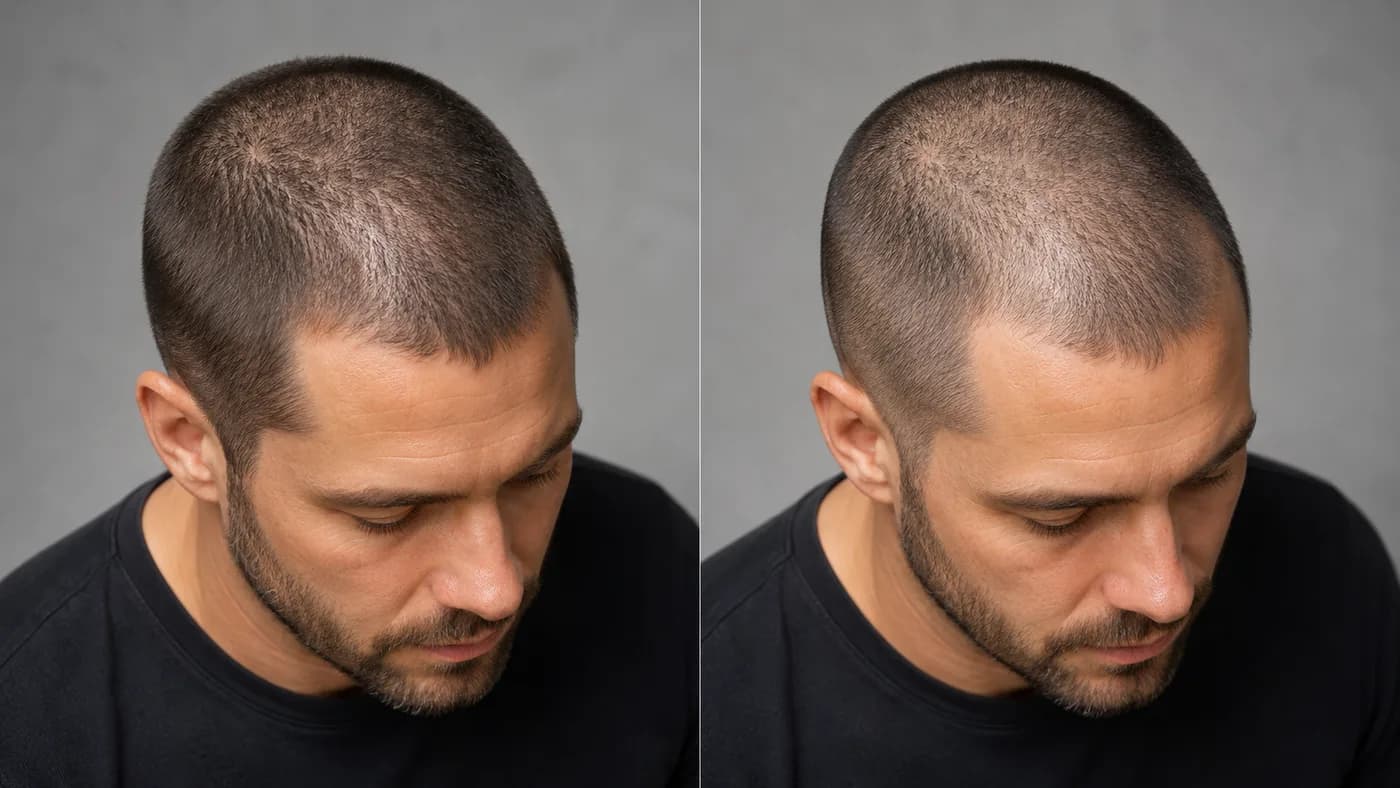
Choose a number 2 when hair still contributes something useful
A number 2 is not a compromise cut. It is often the right answer when the hair on top still makes the overall shape look better.
It is usually worth trying first when:
- your recession is more obvious than your crown;
- the top looks mostly even from normal distance;
- a short cut reduces styling trouble without revealing a distinct thin spot;
- you want to see your head shape gradually instead of jumping straight to a very close cut.
The number 2 can be especially useful for early recession. It removes the fragile, over-styled look that longer hair can create around the temples, while leaving enough stubble to make the head feel softly framed. If your main concern is the front, see Buzz Cut for a Receding Hairline for a more specific guide.
The catch: a number 2 becomes less useful when it creates a dark ring of hair around a light crown. In that case, more length is not adding coverage. It is outlining the exact area you would prefer not to emphasize.
Choose a number 1 when contrast is the problem
A number 1 is the more honest cut. It puts most of the head into the same short visual range, so the haircut reads as one decision instead of dense sides plus a thinning top.
It is usually the better move when:
- the crown is visible outside of harsh bathroom lighting;
- a number 2 separates or forms little gaps around the crown;
- the top looks lighter than the sides even after a short cut;
- your hairline has receded enough that extra length looks accidental rather than flattering.
For many men, this is the sweet spot: short enough to remove weak texture, but not yet fully shaved. It is also a useful decision point. If the number 1 makes the whole head look calmer, you have your answer. If the number 1 makes the crown or top look even more disconnected from the sides, the next question is usually not “How do I style it?” It is whether a number 0 or shaved head looks more unified.
Compare the cut away from the barber chair
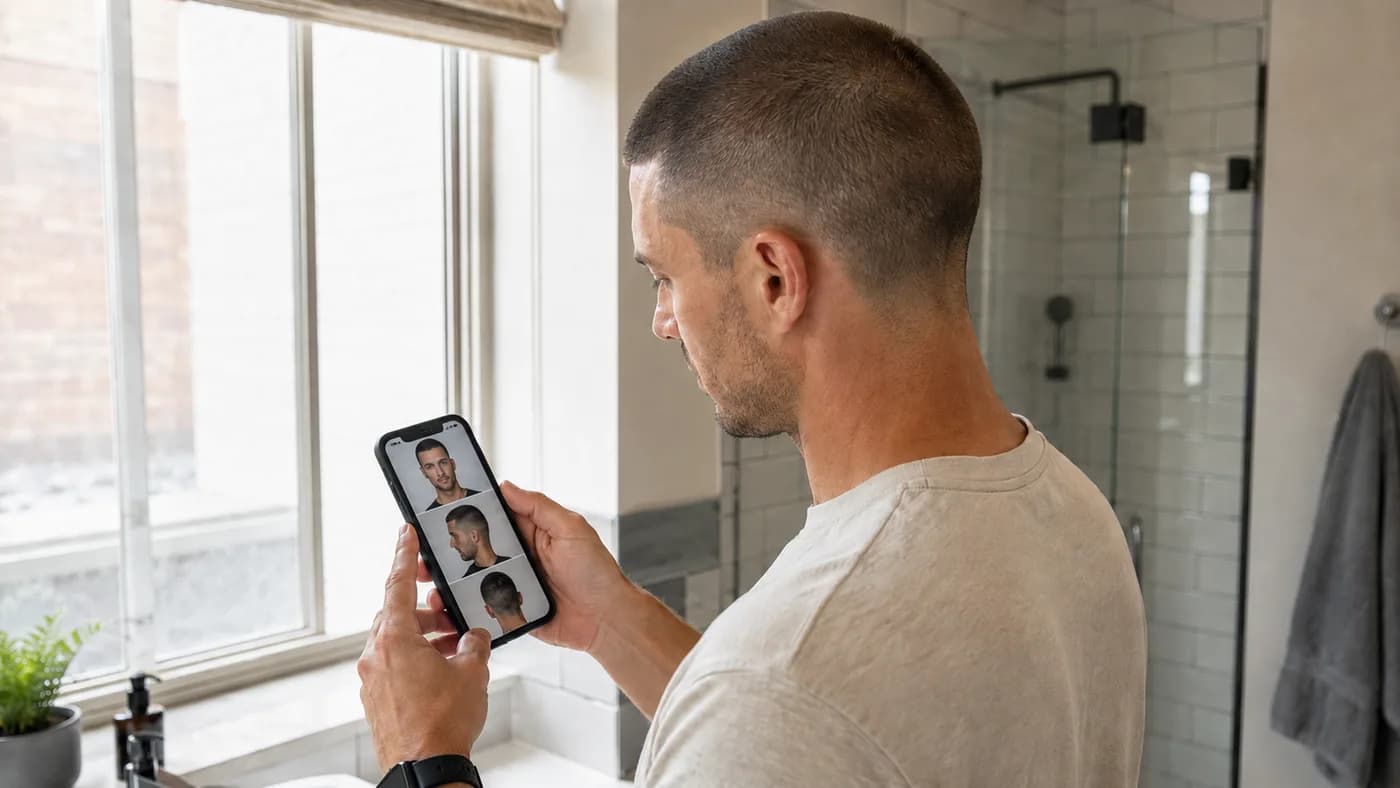
Do not decide from the immediate mirror reaction. Check the cut in indirect daylight, then take front, side, and crown photos at the same distance. The best result is the one where your eye reads the haircut as a whole instead of going straight to the thin area.
This is also where a photo preview is useful before committing. BaldLooks Free Analysis gives a first read from one clear photo. If the decision is close, paid plans let you compare a shaved head across more angles, outfits, and locations.
When neither guard is the right endpoint
A useful progression is:
- Number 2 wins: Keep it if the top looks even and the short texture helps the overall shape.
- Number 1 wins: Keep it if the reduction in contrast makes the crown, front, and sides feel more unified.
- Number 0 wins: Treat that as evidence that the shaved option deserves a fair comparison.
- Neither looks right: Get more time and better photo comparisons; see a dermatologist if the loss is sudden or unusual.
For crown-specific advice, Buzz Cut for Balding Crown explains when a very short buzz can reduce a crown spot and when full shaving is usually cleaner. For the broader trade-off, Buzz Cut vs Bald compares maintenance, appearance, and the emotional adjustment.
Final answer: use number 2 as the softer test, number 1 as the clearer test
For balding men, a number 2 buzz cut is usually best when there is still enough density for short hair to look even. A number 1 buzz cut is usually better when the extra length at a number 2 makes your crown, thin top, or hairline stand out.
Do not decide by which guard leaves more hair. Decide by which one removes more visual conflict. If number 1 makes everything look more intentional, it has done its job. If going even shorter keeps improving the result, compare the shaved option properly before you settle.