
Buzz Cut With a Receding Hairline: Best Lengths

If you are considering a buzz cut for a receding hairline, you usually want the same thing every other guy wants: a haircut that looks clean, deliberate, and easier to live with than constantly managing the front.
That is why buzz cuts stay popular. They do not pretend the hairline is unchanged. They reduce the contrast between the temples, top, and sides so the whole haircut looks calmer.
But a buzz cut is not automatically flattering. The result depends on guard length, hair density, crown thinning, beard balance, face shape, and whether your current hair loss pattern still leaves enough coverage on top.
The short answer is this: a buzz cut usually looks good on a receding hairline when the shorter length makes the recession look intentional instead of exposed.
Quick read
Those lengths often soften recession without leaving enough top length to look patchy or indecisive.
A buzz cut helps when the top still has enough density to read as even from a normal distance.
If the top and crown are far thinner than the sides, a shaved head often looks stronger than trying to preserve a weak buzz.
The quick answer
Yes, a buzz cut can look very good with a receding hairline.
In many cases, it looks better than a longer style because longer hair makes recession harder to control. The more length you leave on top, the more obvious it becomes when the hairline is uneven, the temples are pulling back, or the density behind the front is weaker than it used to be.
The American Academy of Dermatology notes that male pattern hair loss often begins with a receding hairline or thinning at the crown. The Cleveland Clinic describes the same overall pattern. That matters here because a buzz cut is not solving one isolated corner. It is dealing with how recession and density changes read together.
A buzz cut usually helps when:
- the front corners are moving back but the top still has decent density,
- the sides are strong and you want the whole haircut to feel more balanced,
- longer hairstyles look fragile in wind, bright light, or photos,
- you want a transition step before going fully shaved.
It usually helps less when:
- the crown is clearly see-through,
- the top is much thinner than the sides,
- diffuse thinning makes scalp visibility obvious across the whole top,
- you are keeping a buzz cut only to delay the cleaner shaved option.
Why a buzz cut often improves a receding hairline
A receding hairline looks worse when the haircut keeps drawing attention to the difference between the front and the rest of the hair.
That happens with styles that rely on volume, forward fringe, or longer top sections. When the front corners are thinner but the rest of the cut still tries to behave like a full hairline, the contrast gets louder.
A buzz cut changes the visual problem:
- it makes the recession look intentional,
- it lowers the contrast between dense and thin areas,
- it stops the front from collapsing or separating,
- it brings the focus back to your face.
That is why a buzz cut is one of the safest haircuts for a receding hairline. It does not hide the pattern, but it can stop the pattern from dominating your whole look.
Shorter is not always harsher
Many men assume shorter hair exposes the hairline more. Sometimes it does. But often it removes the weak styling tricks that were making the hairline look more obvious in the first place.
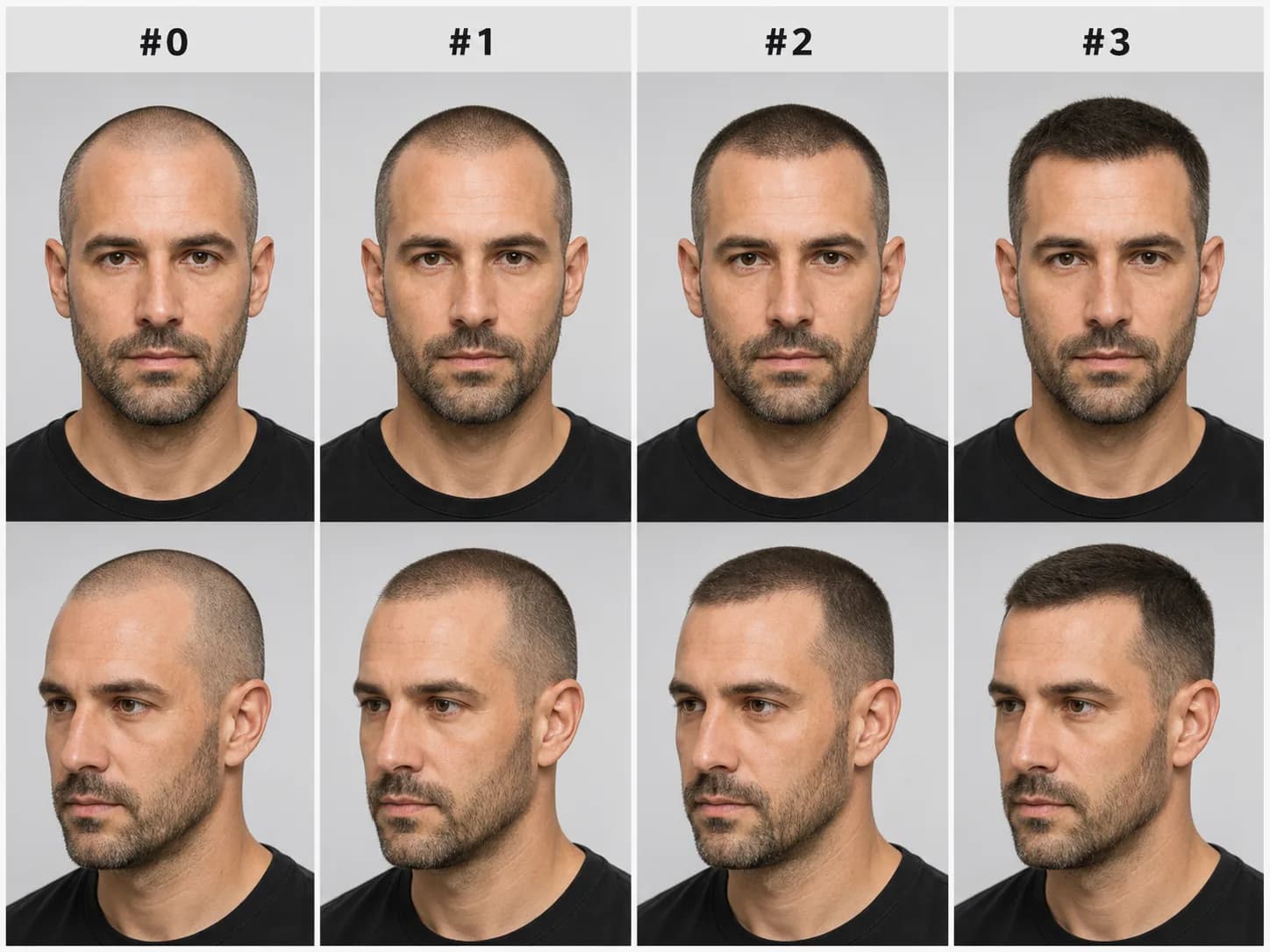
Buzz cut guard lengths: #0 vs #1 vs #2 vs #3
Not all buzz cuts solve the same problem. The best guard length depends on how much density you still have on top and how much scalp visibility you can tolerate.
As a rough guide, a #0 leaves stubble, a #1 leaves around 3 mm, a #2 leaves around 6 mm, and a #3 leaves around 10 mm. The numbers are small, but visually they can change the whole read of a receding hairline.
Which length looks best on most men?
For most men with a receding hairline, #1 or #2 is the best place to start.
A #1 usually looks sharper if the recession is obvious. A #2 usually looks better if the hairline is moving back but the density behind it is still solid.
A #3 can work, but it is less forgiving. It leaves enough length for the hairline shape to become more visible again. If your goal is to make the haircut look cleaner, not fuller, shorter often wins.
When a buzz cut makes recession look cleaner
A buzz cut is usually a good choice when the hairline problem is mostly about shape, not collapse.
In practical terms, it works well when:
- your temples are receding but the top still looks reasonably even,
- the crown is not yet a major issue,
- the hairline looks worse when styled longer than when cut short,
- your current haircut depends on angle, product, or constant adjustment.
This is especially true for men whose longer hairstyles are creating false hope. If the style looks decent only in the mirror you arranged it in, but weak from the side or under daylight, a buzz cut often gives you a more stable look.
That is one reason many men move from longer thinning hair to a buzz cut before deciding whether they would look good bald.
When a buzz cut exposes thinning too much
The buzz cut stops helping when shortening the hair does not create visual balance. It only reveals how much density is missing.
That tends to happen in three scenarios.
1. Diffuse thinning across the whole top
If the entire top is losing density, a buzz cut can make the scalp visible everywhere instead of only at the hairline. The cut may still look neat, but it may not look fuller or stronger.
2. Significant crown thinning
If the crown is clearly opening while the sides remain dense, the contrast can stay obvious even after buzzing. In that case, the haircut may look like a compromise rather than a choice.
3. Advanced recession with weak density behind it
If the front corners are far back and the hair immediately behind them is also thin, a longer buzz such as a #2 or #3 may simply outline the loss pattern.
That is when a #0 or fully shaved head often becomes the cleaner move.
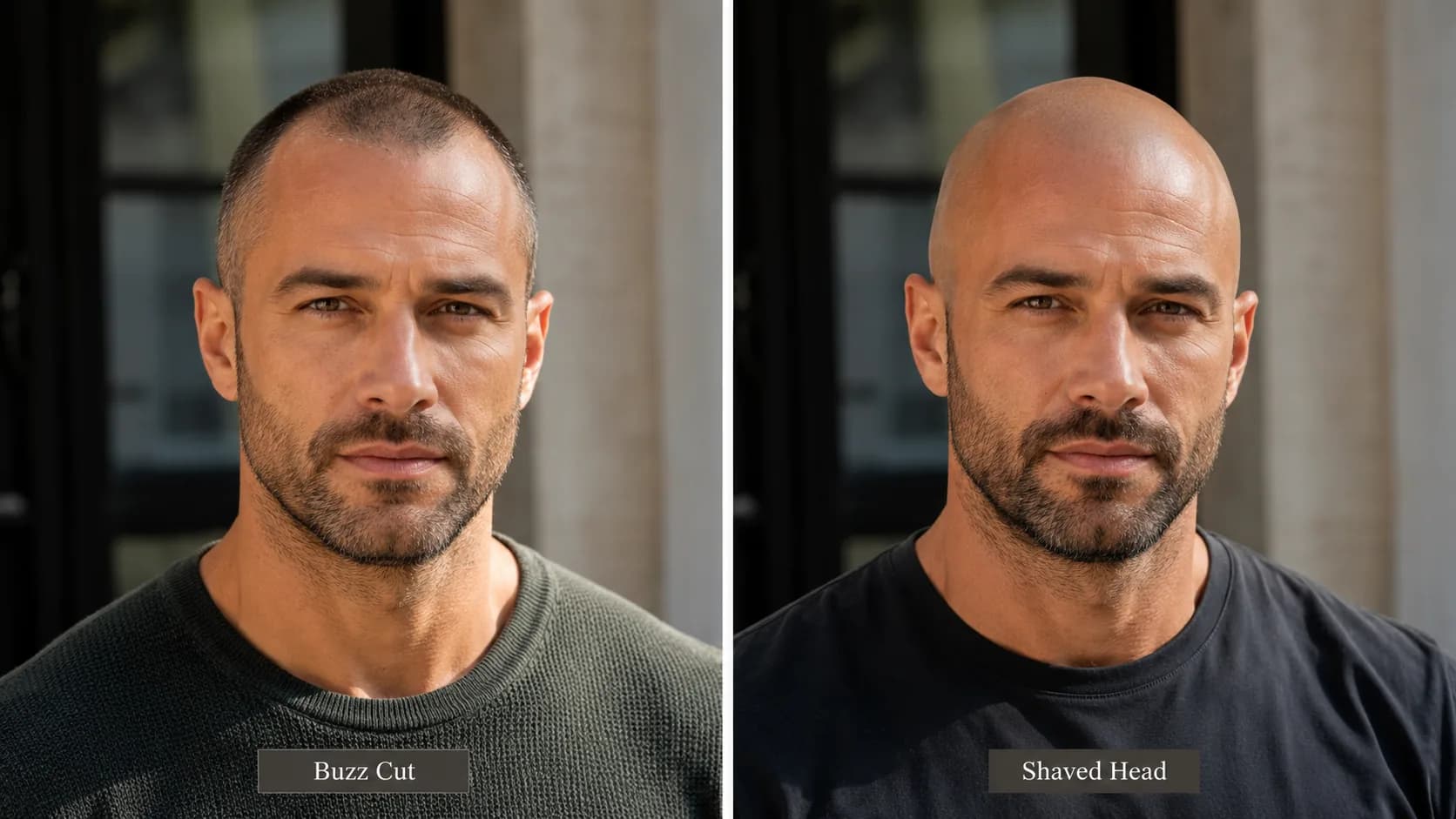
Beard, face shape, head shape, and density all change the result
A buzz cut is not judged in isolation. It is judged as part of your whole face.
Beard
A little facial hair often helps because it shifts weight downward and makes the haircut feel deliberate. Stubble or a short boxed beard can make a #0 or #1 buzz look more balanced, especially if your forehead becomes more prominent once the top is shortened.
Face shape
Oval, square, and rectangular faces usually handle buzz cuts easily. Rounder faces can still work very well, but often benefit from a touch of facial hair or cleaner side definition so the look does not become too soft.
Head shape
If you are worried about head shape, a #1 or #2 is usually a better first test than going razor-smooth immediately. It gives you the structural read of a short haircut without exposing every contour as clearly as a shaved head.
Hair density
This is the real decision-maker. Strong density can support a #2 or #3. Medium density often looks best at #1 or #2. Weak density usually pushes you toward #0 or shaved.
If you want a low-risk way to decide, try the shaved-head version first so you can compare buzzed vs bald before committing. BaldLooks Free Analysis gives you a first read from one photo, and paid plans let you compare the fully shaved look across more angles, outfits, and settings.
Buzz cut vs fully shaved head for a receding hairline
This is usually the real decision.
| Option | Usually better when | Main upside | Main downside |
|---|---|---|---|
| Buzz cut | You still have decent top density and want a softer transition | Keeps some hair while making recession look cleaner | Can still expose thin areas if density is weak |
| Fully shaved head | Recession and thinning are both obvious, or every shorter cut keeps looking better | Lowest contrast and most decisive look | Exposes head shape more and requires more scalp upkeep |
A buzz cut is usually better if you are in the middle stage where hair still adds something. A shaved head is usually better when the remaining hair is no longer improving the overall look.
If you are stuck between the two, the sequence is simple:
- Try a #2.
- If that still looks too soft or patchy, try a #1.
- If the #1 looks better but still feels compromised, test #0 or a close shave.
That staged process is often easier emotionally than going straight from longer hair to bald.
If you already know the hairline is affecting confidence, photos, or day-to-day grooming, the guide on when to shave a receding hairline will help you read the bigger decision.
Final answer: yes, but only if the buzz cut creates balance
A buzz cut for a receding hairline can look excellent. In fact, it is often one of the best haircut choices for men who are losing the front corners but still have enough density on top to support a short, even look.
The best guard length for most men is usually #1 or #2. A #3 works mainly when density is still strong. A #0 works when the cleaner answer is already close to shaved.
The real test is not whether the hairline disappears. It will not. The test is whether the shorter cut makes the whole look feel sharper, calmer, and easier to own.
If it does, the buzz cut is working.
If it only reveals weak density more clearly, the shaved head may be the stronger move.
Use the shortest version that makes the haircut look intentional, not hopeful. If you want to decide with less guesswork, preview the fully shaved option first and compare it against the buzz.