
Diffuse Thinning Buzz Cut: Good Idea or Bad Idea?
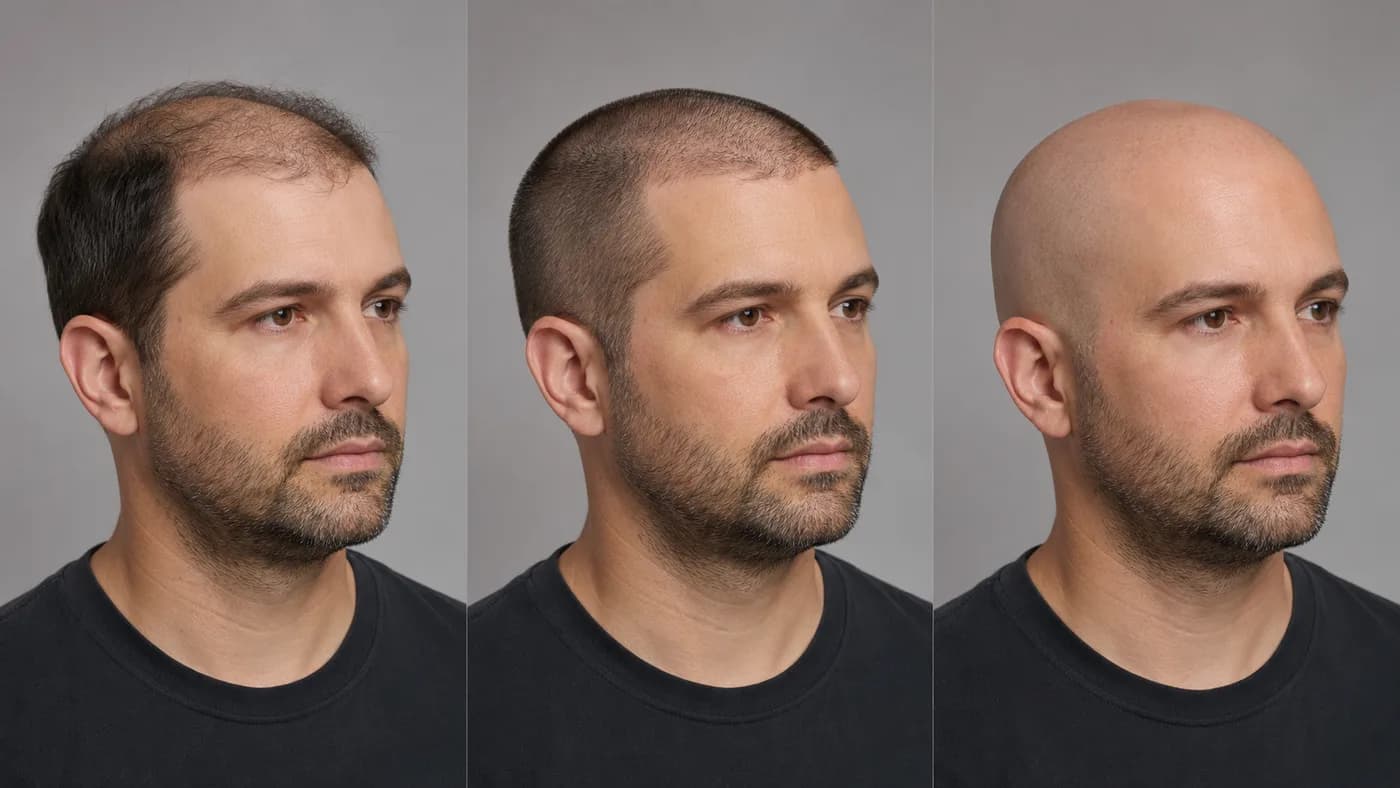
If you are considering a diffuse thinning buzz cut, you are probably not trying to hide one bald spot or one receding corner. You are trying to make hair that looks lighter all over the top feel less fragile, less high-maintenance, and more intentional.
That makes the decision different from a standard receding-hairline buzz cut. With diffuse thinning, the question is not whether short hair can disguise one area. It is whether less hair creates a more even overall look—or simply reveals more scalp everywhere.
The honest answer: a close buzz can be a good idea for diffuse thinning when it removes weak, separating length and the remaining coverage still reads as even. If it leaves a pale, patchy-looking top next to much denser sides, a shaved head may look cleaner.
Quick read
The visible change is across a wider area of the top, not only at the temples or crown. That is why the usual haircut rules need a closer look.
A #1 can calm uneven length. But if the scalp is already highly visible, a buzz can clarify the pattern rather than conceal it.
Check daylight, overhead indoor light, and an ordinary phone photo. A haircut that works only in one mirror is not a reliable answer.
What diffuse thinning looks like—and why it is harder to buzz
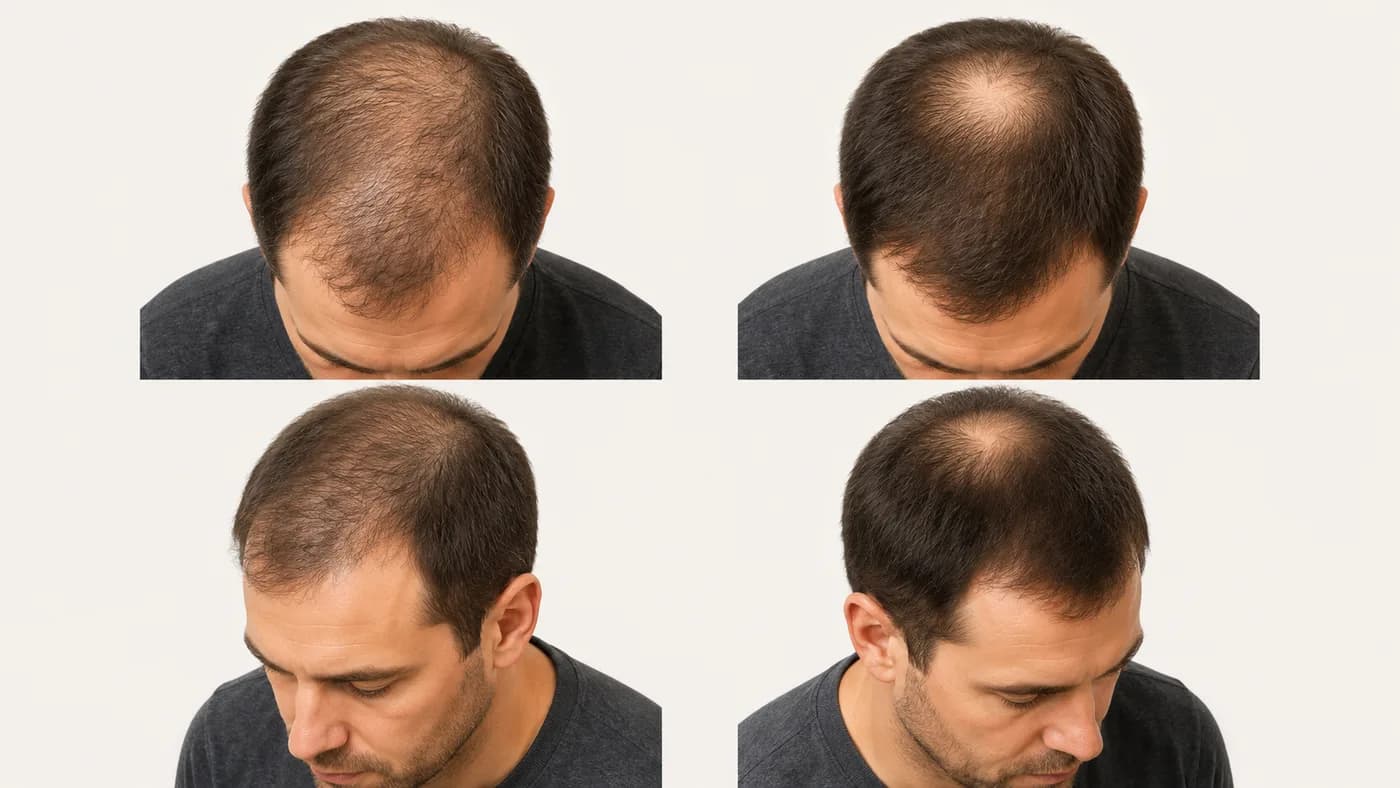
Diffuse thinning means the hair is losing density across a broad area rather than forming one clearly defined bald spot. You may still have a mostly intact hairline. You may also have some temple recession or a weaker crown. The defining detail is that the top looks less dense in several places at once, especially when it is wet, under harsh light, or viewed from above.
That does not tell you the cause. Gradual male-pattern hair loss commonly begins with recession or thinning on top, according to the American Academy of Dermatology. But rapid, unusually heavy shedding can have different causes. Cleveland Clinic explains that telogen effluvium can cause temporary thinning across the scalp after a stressor or bodily change. A haircut is a style choice, not a diagnosis.
For appearance, diffuse thinning is tricky because medium-length hair can make the uneven density louder. It separates into strands, falls open under light, and creates a dark-sides/light-top imbalance. A buzz cut takes away that unstable length. What remains is a simpler question: does the short coverage add anything useful to your overall look?
Do not diagnose your hair loss from a haircut test
If thinning or shedding is sudden, patchy, painful, itchy, inflamed, or worrying you, see a dermatologist. The AAD notes that getting the cause right is the first step toward effective treatment.
When a buzz cut helps diffuse thinning
A buzz cut works best when it reduces the contrast created by longer, weak hair. In practical terms, it can help when:
- your current hair splits into obvious thin lines after washing or styling,
- the top still looks reasonably consistent once it is clipped close,
- the hairline and crown are not dramatically weaker than the rest of the top,
- shorter hair makes your face, beard, and glasses feel like the focus again,
- and you want a low-maintenance transition rather than a sudden razor shave.
The improvement is not that a buzz creates density. It does not. The improvement is that it removes the illusion that longer, thinner hair can reliably provide coverage. A uniform short cut can look sharp because it looks chosen.
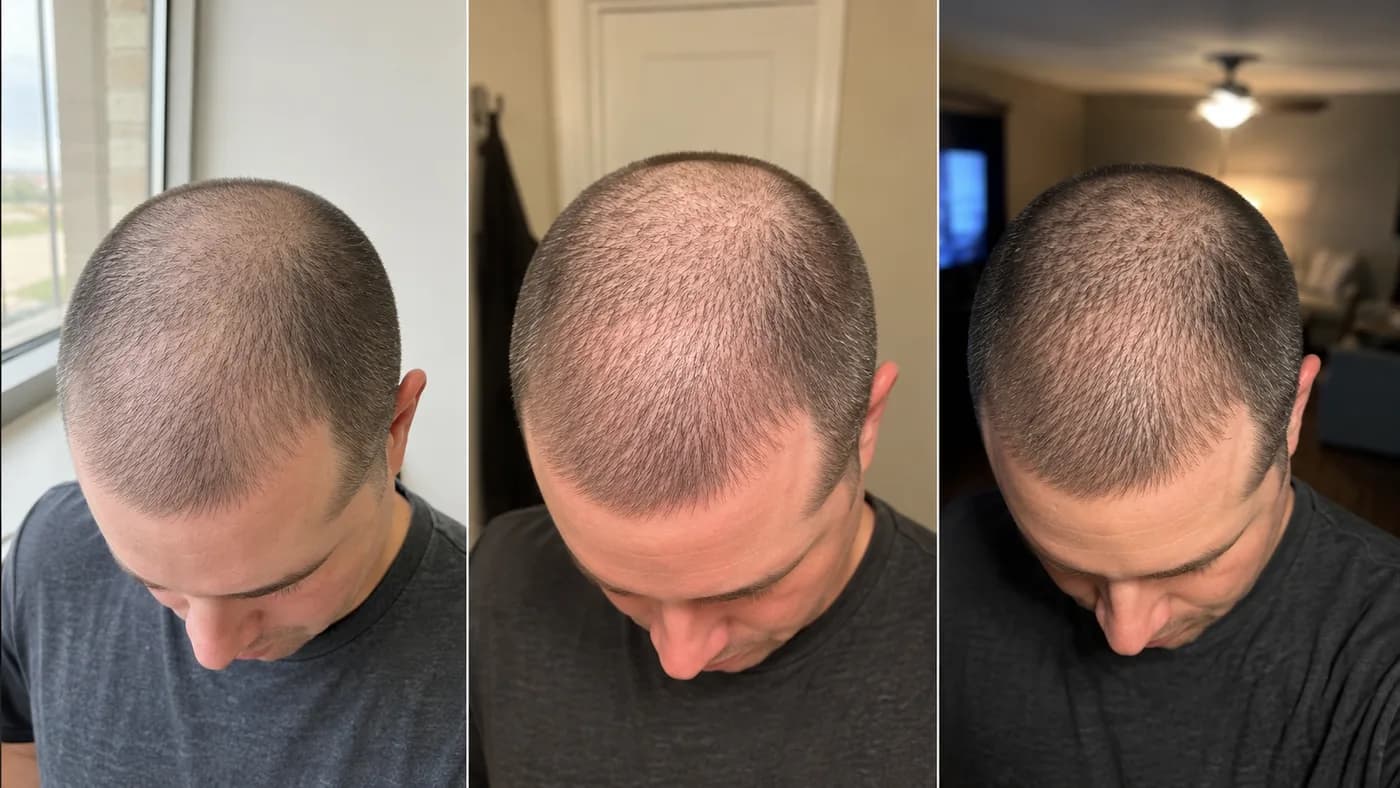
This is often why a #1 buzz cut is a sensible first experiment. It is short enough to stop strands from collapsing apart, yet leaves enough texture to tell whether hair is still helping. If the #1 makes the whole top look calm and even, you may have your answer. If it still looks transparent in islands, a #0 or shaved comparison becomes more useful.
For the broader guard-length framework, see Buzz Cut for Hair Loss. The distinction here is that diffuse thinning demands a stricter test: you are judging the entire top, not trying to rescue one weak zone.
When a buzz cut can make diffuse thinning look worse
A buzz can backfire when it shortens the hair but preserves the imbalance. Common signs include:
- scalp visibility across most of the top while the sides remain dark and dense,
- a #2 or #3 that exposes thin areas without reducing their contrast,
- a top that looks fine from the front but pale in crown or overhead photos,
- and a result that improves every time you take another guard length off.
Harsh light matters more with diffuse thinning because it travels through short, sparse hair and reflects from the scalp. This is not a flaw unique to you; every close cut shows more scalp under some light. But if the scalp grabs attention before your face does in normal life, that is useful evidence.
Do not make the decision under one brutal bathroom downlight, either. Check three situations: a window-lit room, normal indoor overhead light, and a quick phone photo taken by someone else. You are looking for consistency, not perfection.
| What you see after buzzing | What it usually suggests | A sensible next move |
|---|---|---|
| The top reads as one even short surface | The buzz is reducing visual conflict | Keep the length; refine grooming and shape |
| The top is tidier but still broadly see-through | The buzz helps, but hair may not add much | Compare #1 with #0 and a shaved preview |
| Dark sides frame a much lighter top | Contrast is still the problem | Try a more uniform, closer cut or shave |
| The verdict changes wildly by lighting | Density is borderline or scalp contrast is high | Test photos in several real settings before deciding |
#3, #2, #1, #0, or shaved: choose by evenness
There is no universal best guard for diffuse thinning. But the lengths have predictable trade-offs:
- #3: Can work when thinning is mild, but it often leaves enough length for sparse hair to separate and show scalp.
- #2: A reasonable cautious step if density is still good. For true diffuse thinning, it may still be too long to calm the top.
- #1: Usually the most informative test. It sharply reduces strand separation while retaining a clear buzz-cut look.
- #0: Useful when a #1 is close but still leaves visible patchiness. It lowers hair-to-scalp contrast further.
- Fully shaved: Often the cleaner result when the top remains much lighter than the sides, or when every shorter step looks better.
The goal is not to keep the most hair possible. It is to keep the version that looks most coherent. If a #1 gives you a simple, even finish, there is no prize for shaving closer. If a #0 looks noticeably better than a #1, however, that points toward a shaved-head comparison—not as a defeat, but as useful design information.
Buzz cut versus shaved head for diffuse thinning
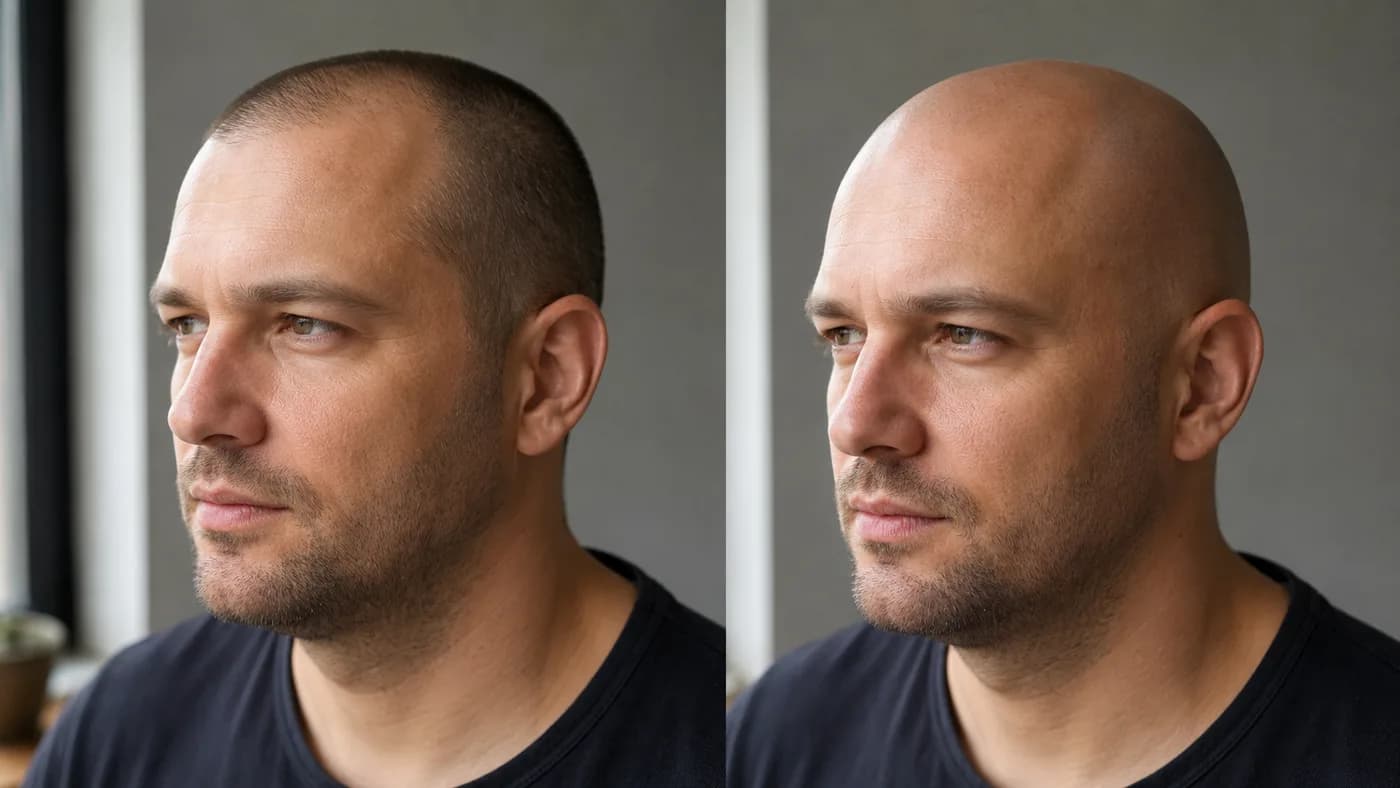
The difference is simple: a buzz leaves a little hair texture; shaving removes the last hair-versus-scalp contrast. For some men, that texture still frames the face nicely. For others, it is the very thing that makes the top look thinner.
Choose a buzz if the remaining hair looks close enough to even that it reads as a deliberate short style. Consider a shaved head if the top stays visually lighter, the crown looks disconnected, or the contrast with the sides still dominates.
Beard, stubble, glasses, and clothing can change the overall balance, but they should not be used to talk yourself into a haircut that fails the basic evenness test. They are finishing choices. If you want practical combinations, Bald With Stubble, Bald With Glasses, and How to Dress When Bald are good places to start.
Keep treatment and haircut decisions separate
Buzzing or shaving does not mean you have decided against treating hair loss. It can simply make the present-day look easier to live with while you explore your options. The AAD advises that treatment depends on finding the cause; a dermatologist can distinguish gradual hereditary loss from excessive shedding and other conditions.
If you want to preserve or regrow hair, speak with a dermatologist early rather than relying on a haircut article for medical guidance. If you want a cleaner look today, you can still get the cut that feels right while you take your time. Those choices do not conflict.
Final answer: should you get a buzz cut for diffuse thinning?
Yes, a diffuse thinning buzz cut is worth trying when close, even coverage makes the top look calmer than your current length. Start with a #1, assess it in real light and photos, and move to a #0 only if it reduces visible patchiness.
If the buzz keeps the top pale and uneven next to strong sides, shaving may give you the more intentional result. Do not choose based on fear of losing the last bit of hair. Choose the version that looks balanced from the angles and in the situations that actually matter to you.
For the next step, read Buzz Cut vs Bald, Should I Shave My Head If My Hair Is Thinning?, and Am I Balding?.