
Winter Style for Bald Men: Layers, Beanies & Grooming
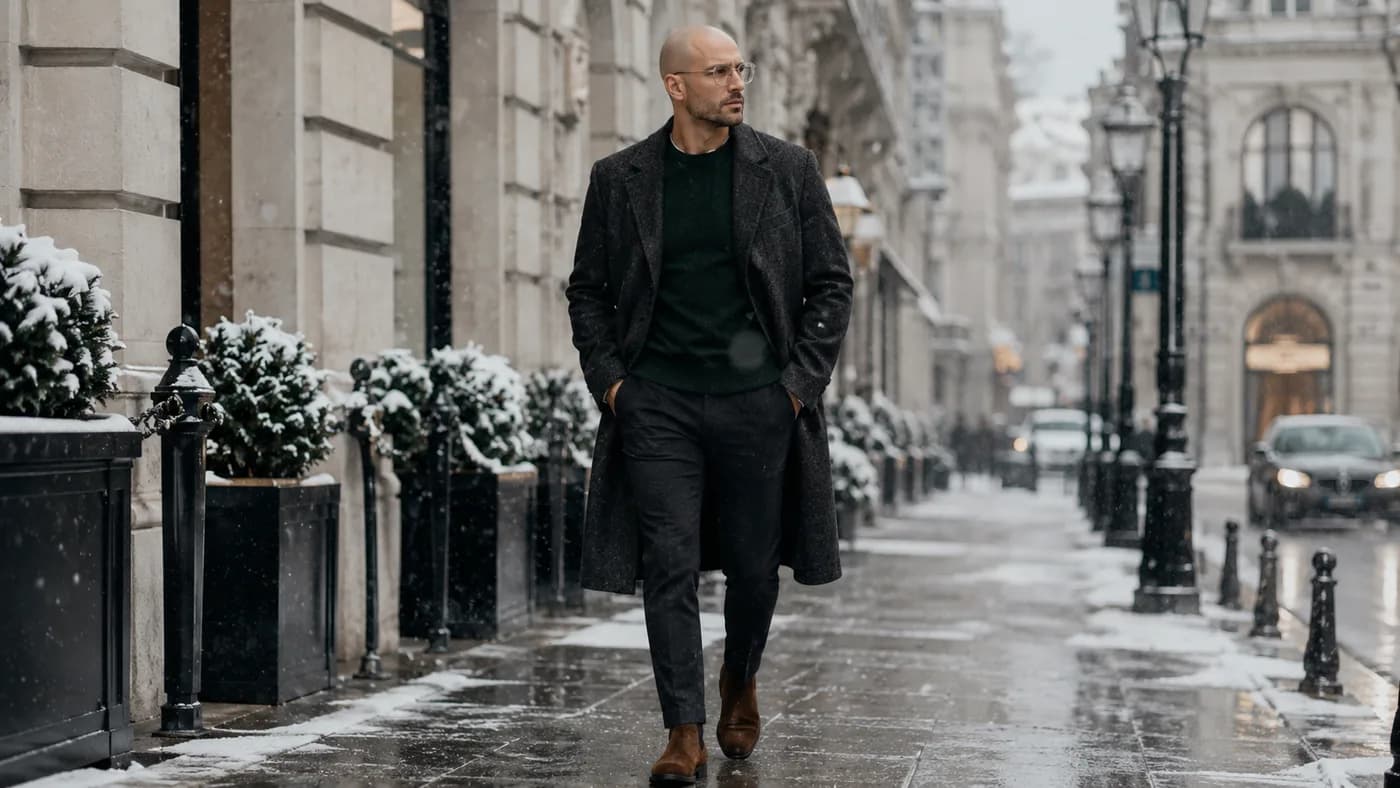
Winter style for bald men works when the layers frame the face instead of swallowing it. A clean scalp makes collars, knitwear, scarves, glasses, facial hair, and headwear more visible—so you do not need a huge wardrobe. You need a few pieces that work together at the temperature you actually live in.
This guide is not about hiding a bald head under a hat all season. It is about using a structured coat, a comfortable knit, and a simple scalp routine to build relaxed, professional, date-night, and formal looks that feel deliberate. The goal is warmth with a clear silhouette, not rules about what a bald man “should” wear.
Quick read
Coat collars, crewnecks, roll necks, and scarves sit close to a shaved head, so they set the visual frame first.
Wool, flannel, brushed cotton, suede, and knits add depth when your outfit has fewer exposed layers.
Cold air, indoor heat, and close hats can change how your scalp feels; adjust gently rather than over-treating it.
Quick answer: the easiest winter formula
For most winter days, wear a textured knit or overshirt under a coat with a defined collar, straight trousers or dark denim, and clean weather-ready boots or sneakers. Add a simple beanie only when the weather and setting make it useful. Keep your scalp calm with gentle cleansing, moisturizer, and sunscreen whenever it will be exposed outdoors.
With hair out of the equation, the strongest details sit around the head and shoulders. A crewneck gives a clean horizontal line. A roll neck adds height and warmth. An open coat lapel introduces shape. A scarf can add color, but it should complement the coat rather than pile up at the jaw. For the year-round foundation, see How to Dress When Bald and Best Colors for Bald Men.
Build winter outfits around your plan
Winter style gets easier when you decide the job of the outfit before choosing the layers. A scarf and beanie that make sense for a cold walk may be too much for a client meeting; a wool overcoat that looks sharp at dinner may be excessive for a wet casual commute. Baldness makes this editing more visible, because the outfit is framing a clean head-and-face outline.
| Winter situation | Reliable outfit formula | Bald-specific detail to check |
|---|---|---|
| Casual weekend | Merino crewneck or textured overshirt + dark denim + boots or clean sneakers + chore jacket or parka | Let the collar sit neatly; use a beanie for weather, not as a permanent indoor accessory |
| Workday | Oxford or knit polo + fine-gauge knit + chinos or wool trousers + coat or blazer | Choose a collar/lapel combination that does not crowd your neck or beard line |
| Date night | Dark knit or roll neck + tailored trousers + suede boots + wool overcoat | A little texture near the face gives depth without adding loud logos or layers |
| Formal event | Dark suit + fine-gauge knit or crisp shirt + overcoat + polished shoes | Test scalp finish and outfit in the event lighting; fresh irritation photographs more than normal shine |
The formula is deliberately flexible. If your winter is mild, a suede jacket, overshirt, or unstructured blazer can do the work of a heavy coat. If it is truly cold, build outward: a soft base layer, a knit, an insulating mid-layer if needed, then a weatherproof shell. The visible pieces should still make sense together when you take the outer layer off.
Let the coat create structure
A coat does not need sharp shoulders to work on a bald man, but it should have a clear shape at the collar and shoulders. Check it in a three-quarter mirror view: if the collar collapses, the scarf crowds your jaw, or the shoulders pull, size or styling is the issue—not your head shape.
Choose layers that frame your head and face
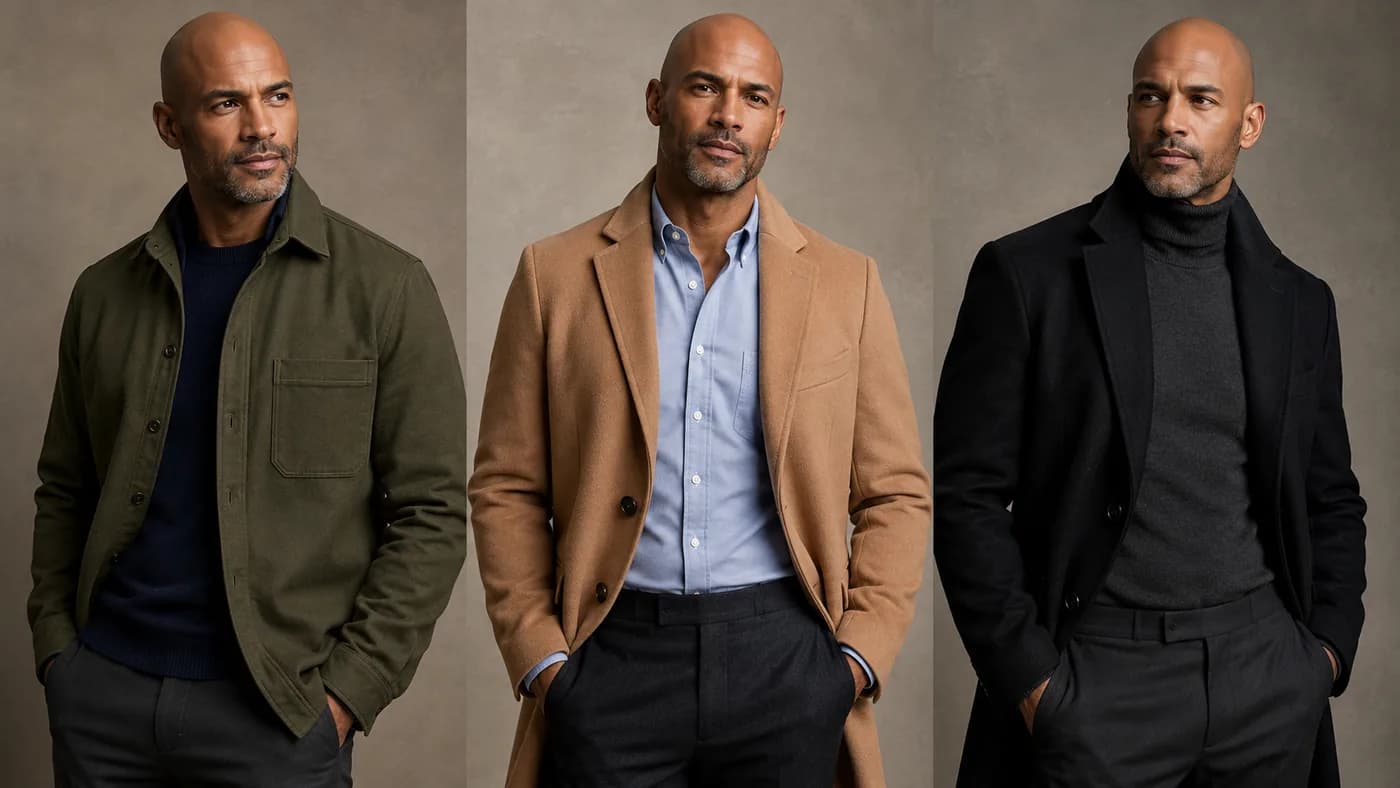
The useful winter question is not “What is the best coat for bald men?” It is “What line does this layer make around my face?” A crewneck is clean and understated. A quarter-zip creates a vertical line but can look sporty or bulky if it rises too high. A roll neck is strong for a clean-shaven face or neat stubble, though a thick one may compete with a fuller beard. An open shirt collar under a knit adds polish when your office is more formal.
Coat collars matter in the same way. A peacoat, car coat, topcoat, mac, field jacket, or wool overshirt can all work; choose for weather and wardrobe rather than a generic “bald” category. When possible, leave the collar in its normal resting position. Popping it high around the ears often looks less natural than letting a scarf or beanie do the warmth work.
Texture is the easiest way to make neutral winter clothes feel intentional. Consider charcoal flannel, navy wool, olive twill, oatmeal knitwear, brown suede, or a muted check. Near the face, aim for contrast you can comfortably wear rather than automatic black. Your beard shade, glasses, scalp tone, and lighting can change the balance; Bald Men’s Capsule Wardrobe has repeatable basics, while Business Casual for Bald Men narrows the workwear choices.
Wear beanies and scarves as useful accessories
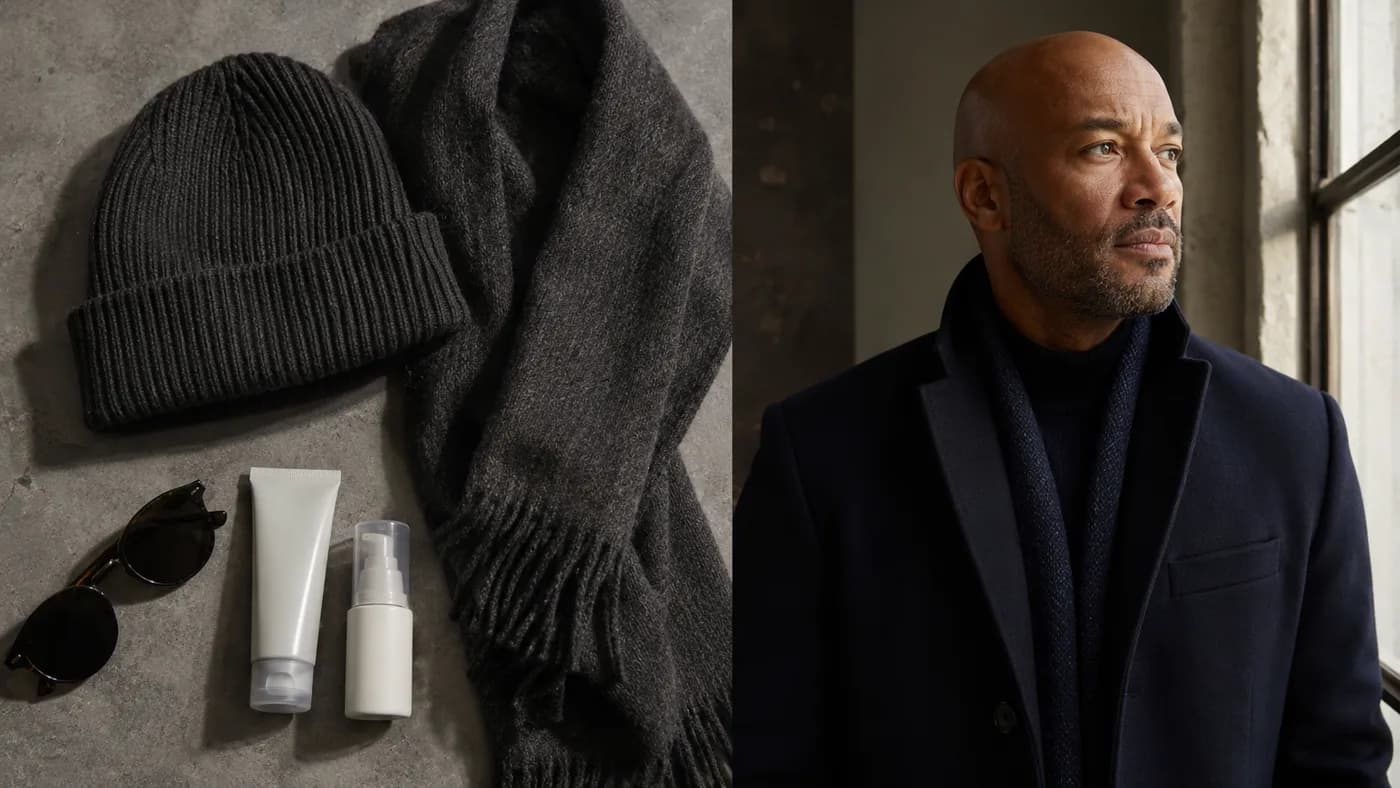
Beanies are a legitimate winter accessory, not a concession. The most versatile version is usually a clean ribbed knit in navy, charcoal, olive, brown, or a neutral that works with your coat. It should cover your ears in cold weather without leaving a deep compression line or needing constant adjustment. A cuffed fisherman-style beanie adds more visual weight; a finer, close-fitting knit is calmer with a tailored coat.
Pay attention to how your scalp feels, not only how the hat looks. Take the beanie off after you get indoors if you are warm, and wash it regularly—especially if you sweat in it or use scalp products. If a fabric feels itchy or creates friction, switch to a softer knit, a lighter weight, or a fit that does not rub. A hat is not treatment for persistent itch, flaking, or irritation.
Scarves should make one deliberate line, not create a large cushion under the chin. A simple once-around or loose drape works with a structured coat. Keep a bulky scarf away from a full beard if the combination makes your jawline disappear; with a clean-shaven face, a textured scarf can become the lower-half contrast that a beard would otherwise provide. For broader headwear fit and styling, read Hats for Bald Men.
Keep cold-weather scalp care simple
Cold, dry air and indoor heating can leave exposed skin feeling dry or tight. The American Academy of Dermatology notes that winter and indoor heat can contribute to dry, chapped skin; it recommends gentle, fragrance-free products and says creams or ointments are generally more effective than light lotions for dry skin (AAD dry-skin overview). Its winter guidance also recommends applying moisturizer after washing while skin is still damp and using warm—not hot—water (AAD cold-weather skin guidance).
That supports a modest routine, not a pile of new products:
Avoid turning ordinary winter tightness into a diagnosis. If the scalp is persistently painful, cracked, bleeding, very itchy, or not improving with gentler care, it is worth seeing a dermatologist; the AAD gives the same advice for dry skin that does not improve (dermatologists’ dry-skin tips). For day-to-day care details and shaving choices, continue with Bald Head Care Routine, Razor Bumps on a Shaved Head, and Bald Head Shine.
Preview the whole winter look, not one layer at a time
The coat, beard or clean shave, glasses, beanie, and boots all read as one image in a winter photo. Before buying several items, take a front and three-quarter photo in daylight wearing the full outfit. Check where the coat collar lands, whether the scarf covers too much of your neck, if the beanie suits the coat, and whether the colors still have shape in ordinary light.
Use BaldLooks to compare layered casual, professional, and evening winter looks before choosing your seasonal style. A free BaldLooks Analysis gives you a bald-look report from one photo; a paid plan lets you compare your shaved head from different angles with outfits and locations before making real-world changes.
A five-minute winter style check
Winter is an advantage for bald style because layering gives you several ways to create warmth and structure around a clean silhouette. Get the coat collar, knit texture, and scalp comfort right first. Then let a scarf, beanie, beard, or glasses do only the job they need to do. The best seasonal look is the one that still feels like you when you take the coat off.