
Bald Head Shine: Natural, Matte, or Polished?
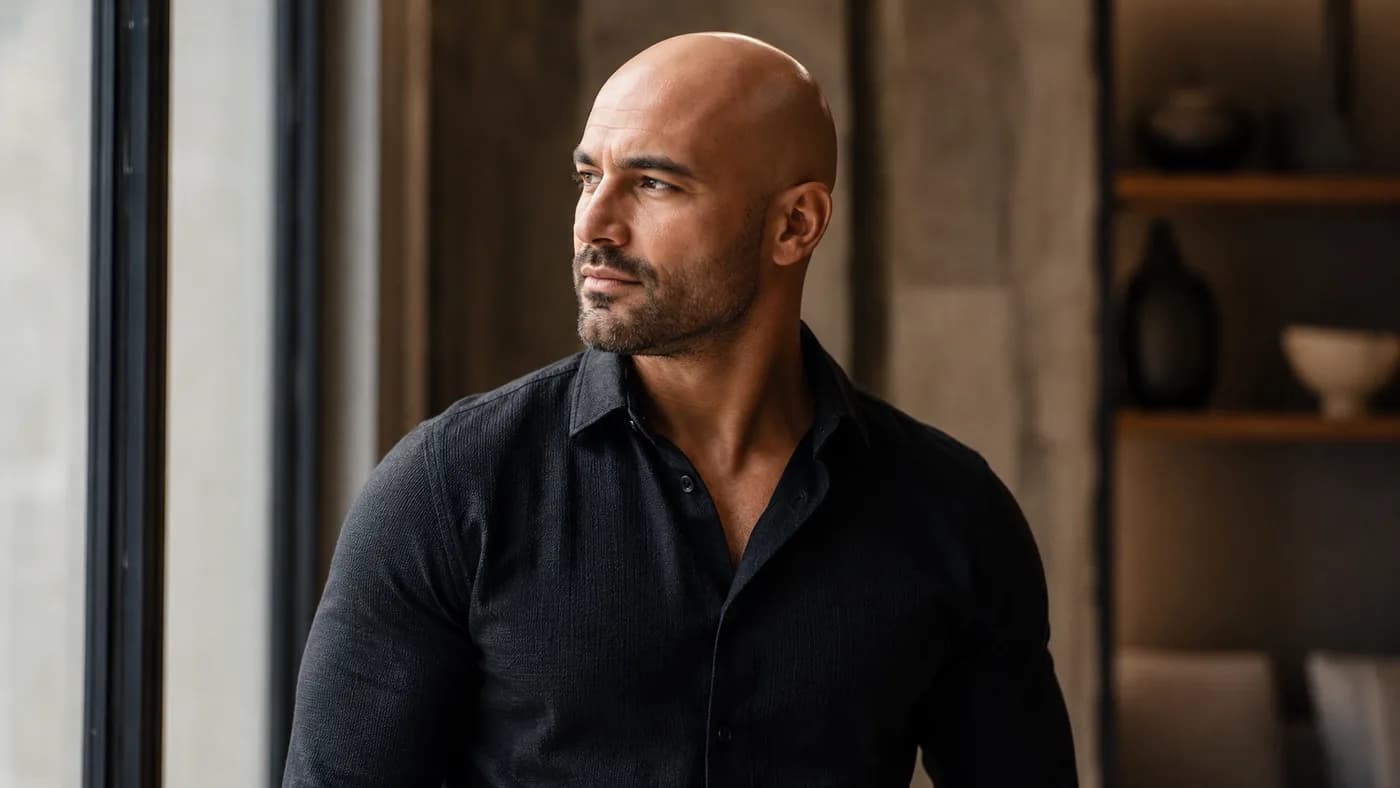
Bald head shine is usually a mix of normal skin reflection, oil or sweat, product finish, and lighting. The best fix is not to make your scalp look unnaturally dry. It is to choose the finish you prefer, protect your skin, and control the situations that turn ordinary sheen into a distracting bright spot.
If you shave your head, you may notice the change in a bathroom mirror, a work video call, or a photo taken outside. That is normal: hair no longer breaks up the light, so a smooth scalp reflects it more clearly. Sometimes that reads polished. Sometimes it reads oily. Sometimes the issue is simply one ceiling bulb aimed in the wrong place.
This guide helps you tell those situations apart and build a routine that looks like you in ordinary life—not just under ideal lighting.
Quick read
Natural sheen is part of healthy-looking skin. The target is a controlled finish, not a dry or powdered-looking scalp.
A lightweight moisturizer and a sunscreen you can wear daily usually work better than stripping the scalp with harsh products.
A pinpoint hotspot from overhead light or flash is a setup problem first, not proof that your bald look is wrong.
Quick answer: how to reduce bald head shine
For a more natural bald finish, wash with a gentle cleanser, apply a small amount of lightweight moisturizer, and use a broad-spectrum SPF 30+ that suits your skin outdoors. Let products settle before leaving or taking photos. If you see excess surface oil, blot gently rather than scrubbing. Then judge the result in soft daylight: harsh overhead light, direct sun, and flash can make even a calm scalp look much shinier than it does in person.
The American Academy of Dermatology recommends choosing moisturizer and sunscreen for your skin type; for oily skin, that can mean looking for products made for oily skin or labeled non-comedogenic (AAD guidance on selecting skin-care products).
First, identify the kind of shine you are seeing
Not every shine needs the same response. A useful way to diagnose it is to look at where it appears and when it changes.
| What you see | Likely cause | Useful first move |
|---|---|---|
| A soft, even reflection in daylight | Normal smooth-skin reflection | Leave it alone; this can look healthy and polished |
| A greasy-looking film by midday | Oil, sweat, or too much product | Blot gently and simplify the amount or texture of product |
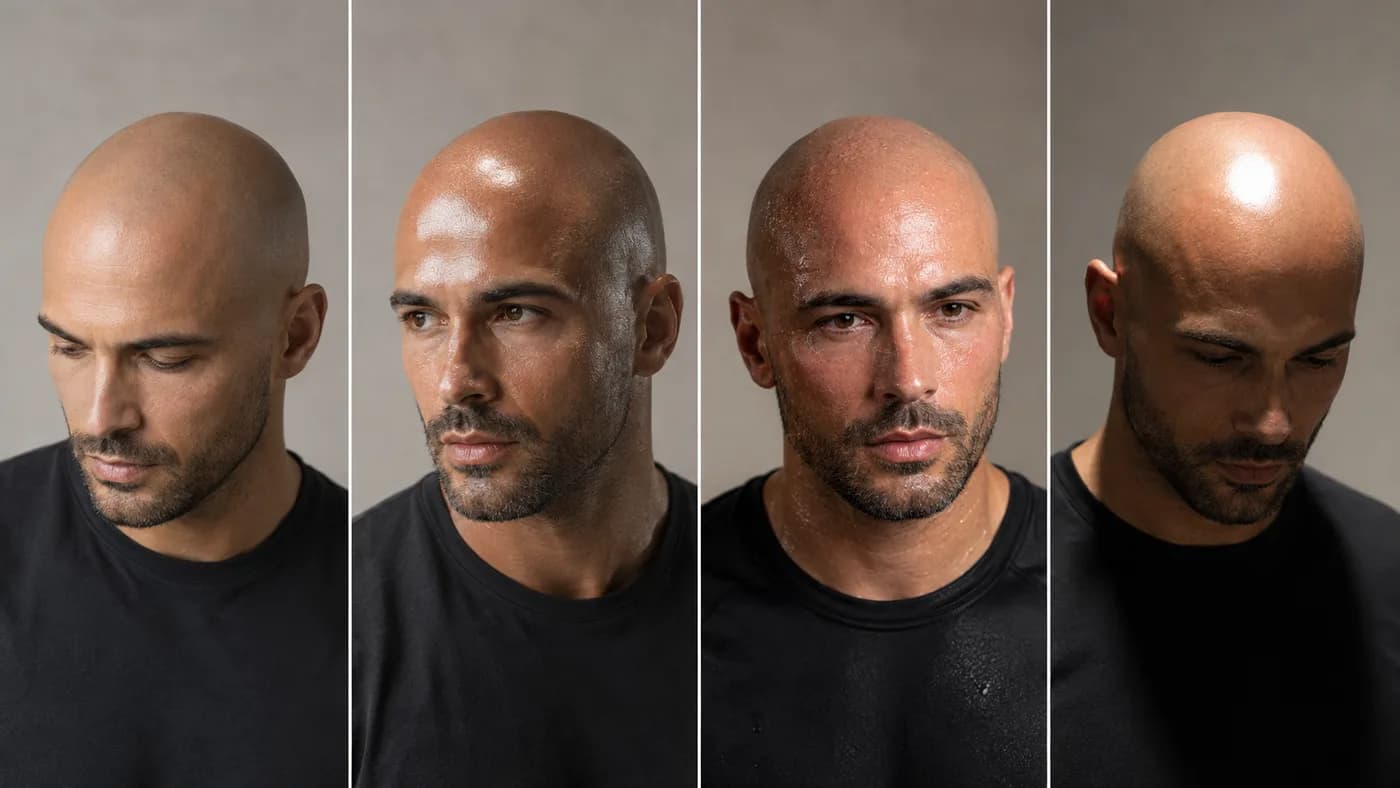
| A single bright white spot in a photo | Small, direct overhead light, sun, or flash | Change light direction or turn slightly before changing skincare |
| Shine plus tightness, flaking, or redness | Possible irritation or an over-drying routine | Return to gentle cleansing and light moisture; seek clinical advice if it persists |
| A white or chalky cast outdoors | Sunscreen formula or application issue | Try a sunscreen that blends better on your skin tone—do not skip SPF |
The important distinction is between surface finish and camera behavior. Your mirror may show calm, lightly reflective skin, while a direct ceiling bulb creates a hard circle of light in a video call. A stronger cleanser cannot solve that lighting geometry.
A shiny photo is not always a shiny scalp
If your scalp looks normal in indirect daylight but blows out under one lamp, phone flash, or direct noon sun, solve the setup first. Move toward a larger, softer light source or turn your head a few degrees. Do not respond by trying to dehydrate your skin.
Build a finish that feels good on your scalp
The goal is not a universal matte bald head. Some people prefer a low-shine finish for work and photos; others like a little polished reflection. What matters is comfort, sun protection, and a product amount that does not sit on the skin as a visible film.
Start with gentle cleansing
Wash away sweat, sunscreen, and product at the end of the day, but do not keep washing just because you notice shine. Hot water, aggressive scrubbing, and frequent stripping products can leave skin tight and irritated. The AAD advises gentle cleansing and applying moisturizer after washing while skin is still damp (AAD dry-skin self-care guidance).
For most bald scalps, a simple rhythm is enough: cleanse after sweating heavily or at night when you have worn sunscreen; rinse or use a mild cleanser in the morning based on how your skin feels. If your shave itself causes bumps or tightness, use the detailed steps in Bald Head Care Routine rather than adding more shine-control products.
Moisturize lightly instead of skipping it
Oily-looking skin can still be dehydrated or uncomfortable. Rather than removing moisturizer completely, use less of a lighter lotion or gel-cream and give it a few minutes to absorb. If the scalp looks glossy immediately after application but settles well, the amount may simply be too generous for daytime.
Apply a thin, even layer to slightly damp skin. On a dry day, you may need more; on a humid commute day, less may be enough. This is one place where consistency beats chasing a perfectly matte mirror finish.
Protect the scalp without accepting a finish you hate
An exposed scalp needs sun protection. The AAD recommends broad-spectrum sunscreen with SPF 30 or higher, and water resistance when you will be sweating or in water (AAD sunscreen selection guidance). It also recommends reapplying while outdoors; the Skin Cancer Foundation specifies every two hours and after swimming or excessive sweating (Skin Cancer Foundation sunscreen guidance).
That does not mean you have to tolerate an overly glossy formula. Test a lighter fluid, gel, stick, or sunscreen made for oily skin on an ordinary day. Let it set, then check it outside. The right choice is the protected finish you will actually reapply—not an ideal texture that lives unused in a drawer.
Use event-day shine control with restraint
For an interview, date, wedding, or important photo, plan your routine early enough that your skin can settle. A dramatic last-minute product or very close shave can create more redness and texture than the shine you were trying to avoid.
Avoid harsh DIY fixes: astringent-heavy products, strong scrubs on a freshly shaved scalp, or excessive powder can leave the skin uncomfortable, patchy, or obviously coated. If you have persistent itch, pain, breakouts, scaling, or a changing spot, that is a health question rather than a styling puzzle—consider a dermatologist.
Separate everyday grooming from photo problems
Light has more control over scalp shine than many people expect. A broad window or open shade wraps light around the head. A small source—an uncovered ceiling bulb, hard noon sun, or direct flash—creates a concentrated reflection and often leaves the eyes too dark.
For portraits, start with soft light from in front and slightly to one side. Turn your shoulders a little, keep your chin natural, and take a few frames. If a hotspot appears, turn a few degrees away from the strongest light or move closer to the window rather than lowering your head into shadow. The same principle applies to video calls: face the window if you can, or use a diffused light in front of you instead of relying on overhead fixtures.
For the complete shooting setup, see Bald Men Photos. If you are preparing a work portrait specifically, LinkedIn Headshots for Bald Men covers crop, clothing, glasses glare, and camera position.
Choose the finish that fits the rest of your look
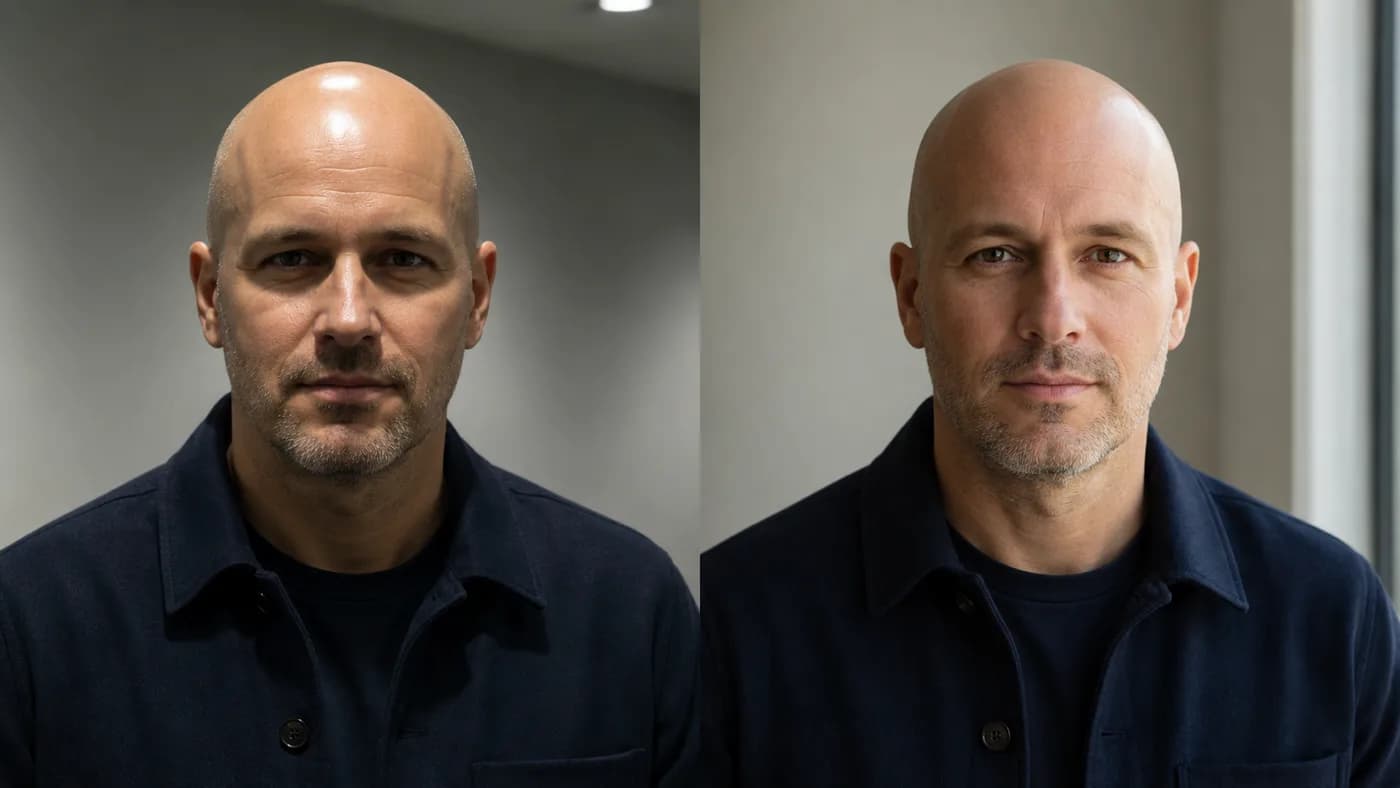
There is no rule that a bald head must be dull to look good. A clean-shaven face, close beard, glasses, and structured clothes can support either a natural matte or subtly polished scalp finish. Think of it as contrast management.
- Natural finish: best if you want healthy-looking skin with no special effort. Use a light moisturizer and let normal reflection remain.
- Matte-leaning finish: useful in hot weather, bright offices, or frequent video calls. Choose lighter products, blot before a camera, and control light.
- Polished finish: can suit a dressed-up or editorial look. Keep the rest restrained so glossy scalp, reflective glasses, and shiny clothing do not all compete.
If facial hair is part of the equation, a well-kept beard or stubble can add lower-face texture, but it is not required. Bald With Stubble and Bald With Beard vs No Beard can help you compare the overall frame instead of treating scalp shine as the only variable.
One clear photo can also be a useful decision tool. BaldLooks Free Analysis gives you a bald-look report from one photo; paid plans let you compare your shaved look across angles, outfits, and locations. Try the same look in studio, office, and outdoor lighting before deciding that one mirror or selfie represents the whole picture.
The practical takeaway
The best approach to bald head shine is controlled, comfortable, protected skin—not an exhausting search for total matte perfection. Cleanse gently, moisturize in the amount your scalp needs, wear a sunscreen you can use consistently, and blot only when there is true excess surface oil.
Then look at the lighting. A soft natural reflection can look polished and healthy. A bright hotspot often just needs a different window, camera angle, or lamp position. Treat the scalp as visible skin, build a routine you can repeat, and let the rest of your grooming and style complete the frame.