
How to Avoid Razor Bumps and Irritation on a Shaved Head

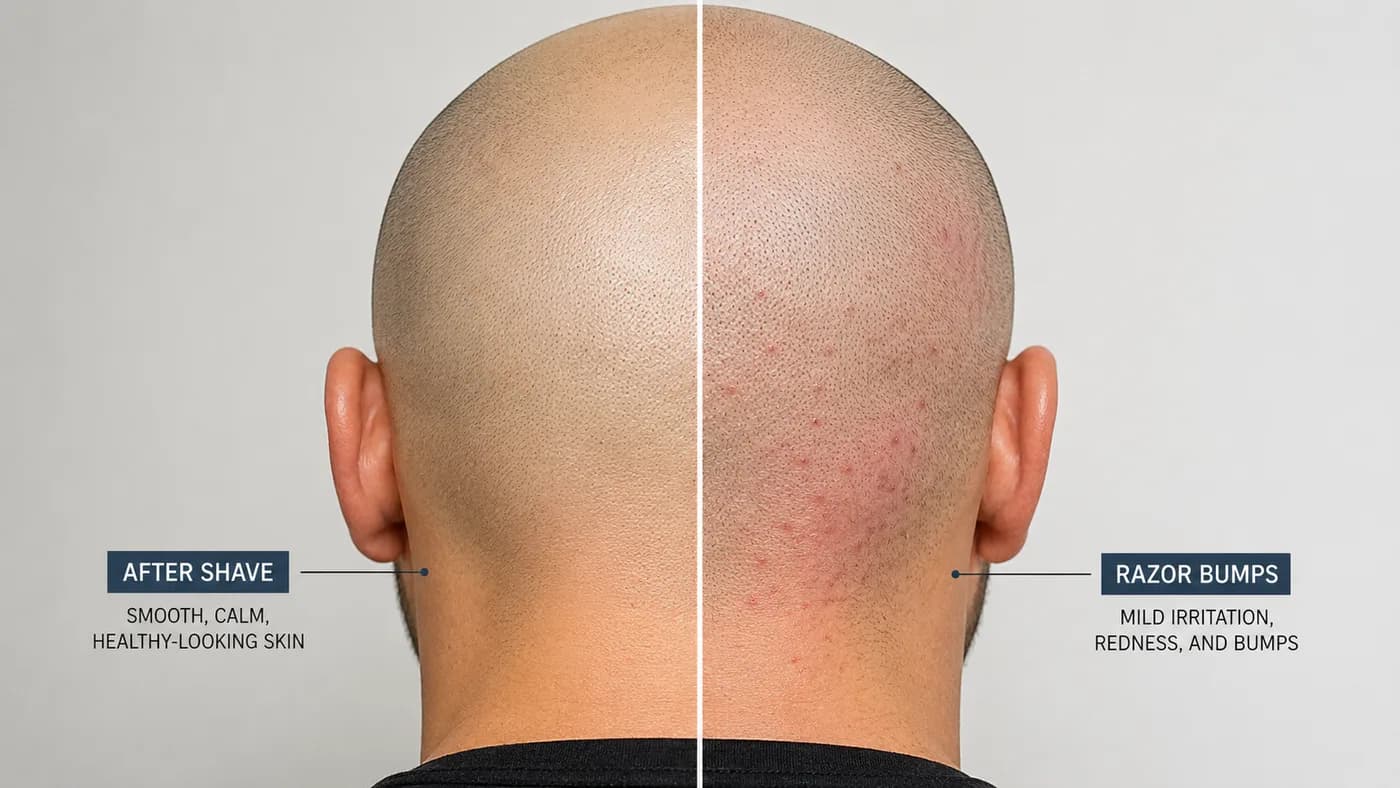
If you are dealing with razor bumps on a shaved head, the problem is usually mechanical, not mysterious.
Most bumps come from shaving too close, shaving over dry skin, using a blade that is not clean enough, making too many passes, or shaving again before the scalp has calmed down.
Quick read
A better shave usually starts before the blade touches your scalp, not during the final pass.
If your scalp hates ultra-close shaving, a close electric shave or very short buzz may look better overall.
A scalp without bumps, flakes, and redness usually looks sharper than a razor-close finish with visible irritation.
What razor bumps and shaved-head irritation actually are
People often group everything under "razor bumps," but there are a few different problems that can show up after head shaving:
- razor burn, which tends to feel like red, irritated skin soon after shaving,
- ingrown-hair-type bumps, where short hairs curl or grow back into the skin,
- general friction irritation, where repeated scraping leaves the scalp tight, hot, or flaky,
- product irritation, where a cream, fragrance, or aftershave causes stinging or redness.
The Cleveland Clinic separates razor burn from razor bumps and notes that shaving too fast, dry shaving, dull blades, and shaving against hair growth can all contribute. Mayo Clinic gives similar prevention advice: soften the hair first, use lubricating cream or gel, avoid pulling the skin tight, shave in the direction of growth, and rinse the blade after each stroke.
Do not treat every bump like a character flaw
If your scalp gets irritated, the answer is usually to change technique, timing, or tools, not to keep forcing a closer shave.
The biggest reasons bumps happen after shaving your head
If you want to know how to shave your head without irritation, start by removing the most common triggers.
1. Shaving dry or rushing the prep
The scalp usually reacts better when the hair and skin are softened first. Mayo Clinic recommends warm water and shaving cream or gel for a few minutes before shaving.
2. Dull or dirty blades
The American Academy of Dermatology advises replacing disposable razors after about 5 to 7 shaves and cleaning electric razors according to the product instructions.
3. Shaving against the grain too early
Shaving against the grain can get you closer, but it can also increase irritation. Both AAD and Cleveland Clinic guidance emphasize shaving in the direction of hair growth first.
4. Too many passes over the same area
Many men get one missed patch, then keep scraping it until the scalp gives in. Short, light passes usually beat repeated polishing.
5. Shaving too often for your scalp
Some scalps tolerate daily shaving. Others do not. If bumps keep appearing, your scalp may simply need more recovery time between shaves.
For cadence help, the related read is How Often Should You Shave Your Head?. For tool choice, see Razor vs Electric Shaver for a Bald Head.
The best routine to prevent razor bumps on a shaved head
The simplest prevention plan is also the most reliable.
Blade hygiene, shaving cream, and direction matter more than "toughing it out"
The AAD's razor-bump prevention guidance is straightforward: soften the hair, use a moisturizing shaving cream, shave in the direction the hair grows, rinse after each stroke, and use fresh blades.
Blade hygiene
Keep razors clean, dry them properly, and replace them before they start dragging. If you use an electric shaver, clean it after use.
Shaving cream or gel
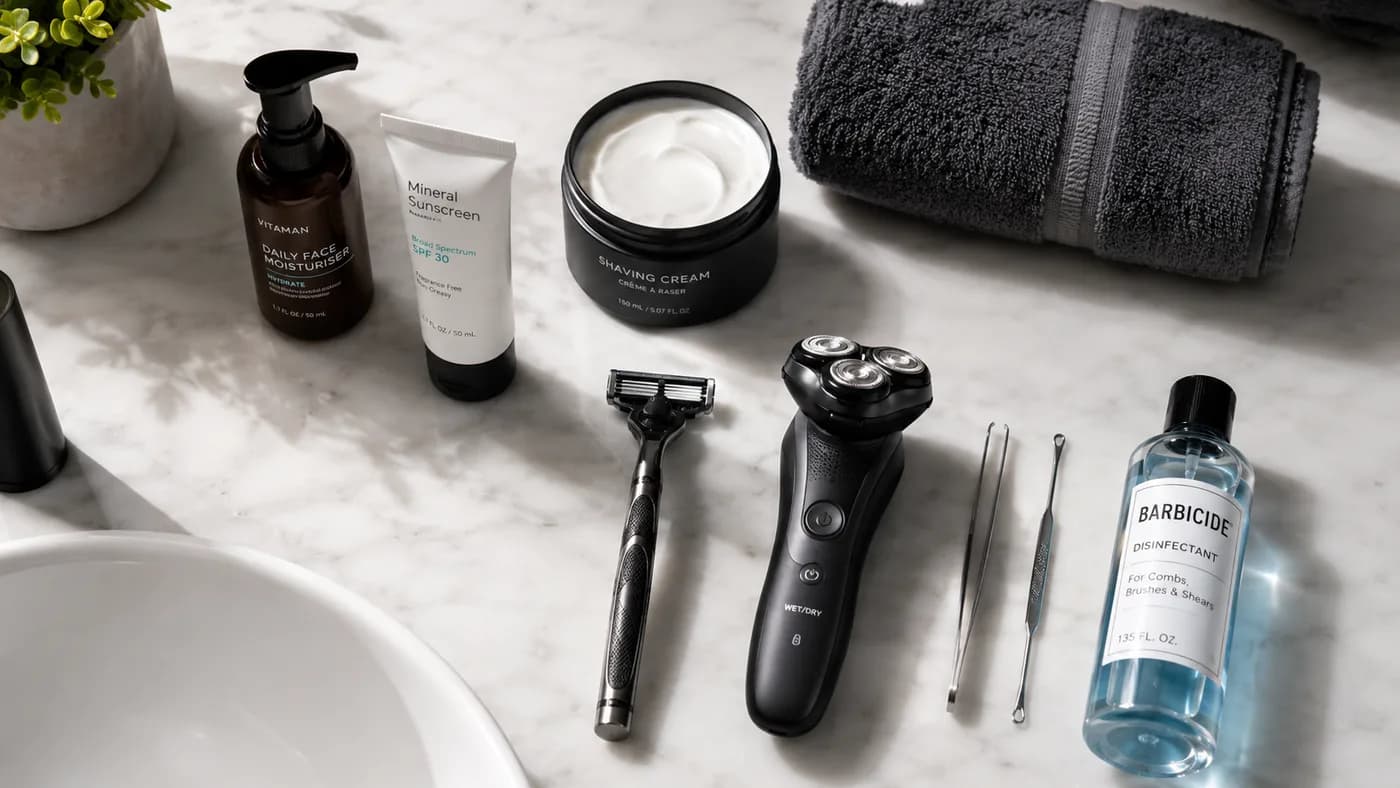
Lubrication is not optional if your scalp is sensitive. The goal is glide. If your product burns afterward, it may be too harsh for frequent use.
Shaving direction
The scalp often has swirl patterns around the crown and direction changes behind the ears. Spend one shave mapping how your stubble grows.
Moisturizer, exfoliation, and SPF: the aftercare most men underdo
Moisturizer
After shaving, the scalp is exposed and more visibly dry. A simple fragrance-light moisturizer can reduce tightness. The AAD's dry-skin guidance recommends applying moisturizer after washing while the skin is still damp.
Exfoliation
Gentle exfoliation may help if dead skin buildup is contributing to trapped hairs or rough texture, but over-exfoliating can make irritation worse.
SPF
Sun exposure makes irritation more visible and can make the scalp feel worse. The AAD recommends protecting exposed scalp with broad-spectrum SPF 30+ or a wide-brimmed hat.
For the bigger care routine around cleansing, shaving, and SPF, read Bald Head Care Routine After Shaving.
Is shaving frequency making the problem worse?
Sometimes the issue is not that you are shaving badly. It is that you are shaving too often for your current method.
Try asking:
- Do bumps appear mostly at the back or sides after close shaves?
- Does the scalp feel hot or tight for hours afterward?
- Am I shaving again before the last irritation fully calms down?
- Do I get a better result from a close electric shave than a blade?
If the answer is yes, you may need one of three adjustments:
- shave every other day instead of daily,
- switch to an electric shaver for regular maintenance,
- leave a tiny bit of shadow instead of chasing perfectly smooth skin.
Many men assume the closest result is automatically the best one. In practice, the better result is the one your scalp can tolerate consistently.
Razor or electric if your scalp keeps reacting?
If you already have recurring shaved head irritation, electric often deserves a serious look.
A razor can give the cleanest finish, but it also creates the most direct contact with the skin. An electric shaver usually leaves a trace more shadow, but for many men it reduces friction enough to make the routine easier to maintain.
That tradeoff is worth it if:
- you keep getting bumps with a blade,
- your scalp is sensitive,
- you shave frequently,
- or you care more about looking clean than feeling perfectly glass-smooth.
If you are still deciding whether a fully shaved head is worth maintaining at all, a soft BaldLooks angle fits here: use the free analysis first, and if you want more certainty, the paid plans can help you compare a fully shaved look with other short options before you keep investing in a routine your scalp may hate.
What not to do if you want fewer bumps
Some mistakes are so common they deserve their own section.
| Mistake | Why it backfires | Better move |
|---|---|---|
| Dry shaving or shaving too soon | More drag, more friction, more redness | Shave after warm water and use real lubrication |
| Pressing harder for a closer finish | Irritates skin without solving the root issue | Use light pressure and fewer repeat passes |
| Using a dull blade | Pulls at hair and roughs up the scalp | Replace blades earlier and clean tools well |
| Over-exfoliating | Can weaken the skin barrier and increase burning | Exfoliate gently and not right around a close shave |
| Ignoring sunscreen | Sun makes irritated scalp more noticeable and uncomfortable | Use SPF 30+ or a hat outdoors |
| Shaving through active irritation | Turns a small issue into a recurring cycle | Let the scalp calm down, then restart with a better method |
When to stop self-fixing and see a dermatologist
See a dermatologist if:
- bumps are severe, painful, or keep coming back,
- you notice pus, swelling, spreading redness, or signs of infection,
- bumps leave dark marks or scars,
- you think the issue may be folliculitis, eczema, or another skin condition,
- or the irritation does not improve when you simplify your routine.
Frequently Asked Questions
Final answer: prevent bumps by making the shave less aggressive
If you want fewer razor bumps on a shaved head, start by making the shave less aggressive:
- soften the scalp first,
- use enough shaving cream or gel,
- keep the blade clean and fresh,
- shave with the grain first,
- stop overworking the same spots,
- moisturize after,
- use SPF outdoors,
- and reduce frequency or switch tools if your scalp keeps reacting.
Most shaved-head irritation improves when the routine gets calmer. If it does not, get medical help instead of forcing the same shave over and over.