
Bald Head Care: 5-Step Routine After Shaving
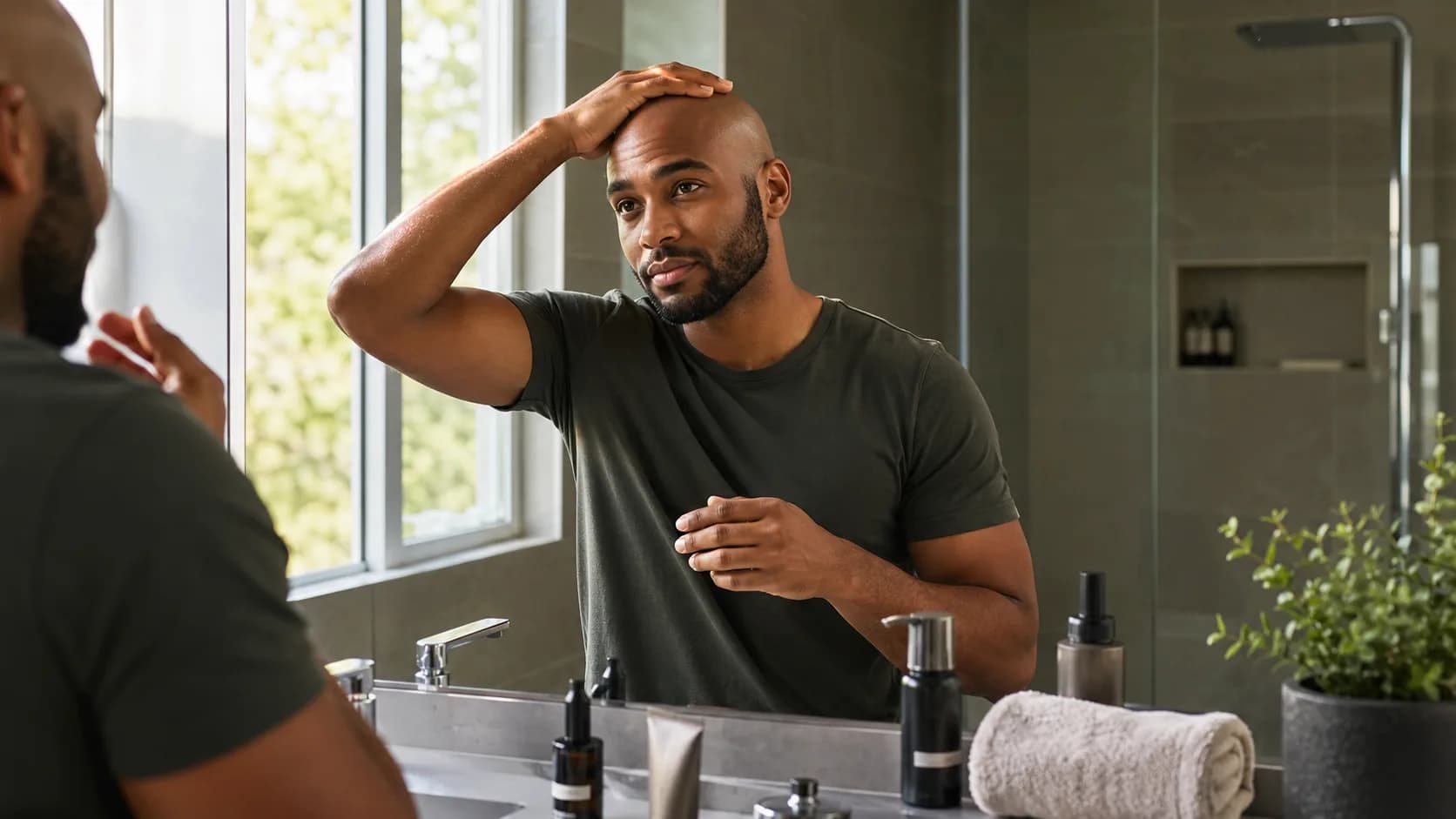
The best bald head care routine has five steps: cleanse gently, shave or trim without forcing closeness, soothe fresh irritation, moisturize, and protect the scalp with SPF 30+.
A bald head looks easy from the outside. Then you shave for the first time and realize the scalp has opinions.
It can feel tight. It can shine more than expected. It can get small bumps around the neck and crown. It can burn in the sun faster than your face. It can flake even though there is no hair.
That does not mean the shaved look is high maintenance. It means your scalp is now visible skin, so it needs the same basic care your face has needed all along.
Quick read
A cleanser, shaving method, moisturizer, and SPF cover most bald scalp needs.
A newly exposed head burns easily, so SPF is part of grooming, not a beach-only step.
If shaving causes bumps or redness, change the rhythm or tool before forcing a closer shave.
What changes after you shave your head
Hair hides more than hair loss. It hides dry patches, redness, oil, flakes, uneven tone, and small shaving mistakes. Once you shave, the scalp becomes part of the face visually.
That is why a bald head can look sharp one day and tired the next. The basics are a clean scalp, an even shave or buzz, moisture, SPF, and a plan for bumps or cuts.
The American Academy of Dermatology recommends washing with a gentle cleanser, moisturizing, and wearing sunscreen as part of men's skin care. The scalp is not exempt just because you used to call it hair.
The first 24 hours after shaving
The first day is not the time to test every product in the cabinet.
Rinse the scalp with cool or lukewarm water. Pat dry with a clean towel instead of rubbing. If the skin feels hot, wait a few minutes before applying anything heavy.
Use a simple moisturizer while the skin is still slightly damp. The AAD's dry skin self-care guidance recommends applying moisturizer after washing, when skin is still damp, and using warm rather than hot water.
Avoid aftershaves that sting. A strong alcohol splash may feel traditional, but tight, red skin is not a good trade. If you want a post-shave product, choose something calming and lightweight.
First-shave rule
The first shave is a skin test. Your goal is not the closest possible result. Your goal is to learn how your scalp reacts.
Your daily bald head care routine
For most men, the best routine is short enough to repeat.
That is the core. You can add products later, but you do not need a complicated shelf to keep a bald head looking good.
If you are still choosing a tool, compare a Razor vs Electric Shaver for a Bald Head. If closeness keeps causing irritation, use the Razor Bumps on a Shaved Head guide and adjust your technique before adding more products. Your ideal head-shaving frequency should follow your skin tolerance, not a fixed rule.
If your scalp is oily, cleanse daily and use a lighter moisturizer. If it is dry, avoid hot water and consider a richer moisturizer at night. If it flakes, do not assume it is always dryness.
How often should you wash a bald head?
Wash your scalp when it is dirty, sweaty, oily, covered in sunscreen, or flaky. For many men, that means daily. For others, especially with dry or sensitive skin, a rinse plus moisturizer on some days may be enough.
The key is not to punish the scalp. A bald head still produces oil, sweats, and collects sunscreen, dust, pillow oils, and shaving residue. Harsh scrubbing can make tightness and irritation worse.
Use your skin as the signal. Tight and flaky may mean overwashing or harsh products. Greasy by midday may mean you need a daily gentle cleanse. Itchy with persistent flakes may need an anti-dandruff approach. Red and bumpy means the shave method needs attention.
If you had dandruff before shaving, it may not disappear just because the hair is gone. Mayo Clinic notes that medicated shampoos used for dandruff and seborrheic dermatitis can include ingredients such as selenium sulfide, ketoconazole, tar, salicylic acid, and zinc pyrithione. If flakes are persistent, painful, spreading, or not improving, see a dermatologist.
Shaving without bumps and irritation
Razor bumps and irritation can make a shaved head look rougher than thinning hair did. The fix is usually method, not willpower.
The AAD's razor bump prevention guidance recommends wetting the skin and hair first, using shaving cream or gel, shaving in the direction the hair grows, rinsing after each stroke, avoiding skin stretching, and replacing disposable razors after 5 to 7 shaves.
On the scalp, that means:
- Shave after a warm shower or after softening the scalp with warm water.
- Use enough cream or gel that the blade glides.
- Shave with the grain first.
- Use short, light strokes.
- Rinse the blade often.
- Do not keep scraping the same spot.
- Moisturize afterward.
If a razor still gives you bumps, try an electric head shaver or clippers without a guard. A clean electric shave with calm skin often looks sharper than a razor shave with redness.
SPF is part of the routine
A shaved head exposes skin that may not be used to direct sunlight, making sun protection one of the most important habits after shaving.
The AAD's hair loss self-care guidance recommends protecting exposed scalp with a wide-brimmed hat or broad-spectrum, water-resistant sunscreen with SPF 30 or higher. Their general sunscreen guidance also recommends broad-spectrum protection, SPF 30 or higher, and water resistance for swimming or sweating.
Use SPF on:
- scalp,
- forehead,
- ears,
- back of neck,
- face.
Reapply if you are outdoors for a while, sweating, swimming, or wiping your head with a towel. A baseball cap helps, but it does not protect the ears and neck unless you cover them too.
If regular sunscreen makes the scalp too shiny, try a lighter facial sunscreen, matte sunscreen, or a sunscreen stick for touch-ups. The best option is the one you will actually use.
Morning routine
Your morning routine should match the day.
For a normal workday, rinse or cleanse, shave or trim if needed, moisturize lightly, and apply SPF if you will be outside.
For an outdoor day, cleanse, skip a harsh razor shave if your skin is already irritated, apply SPF 30+ to scalp, face, ears, and neck, and bring a hat or sunscreen for reapplication.
For a date, event, or photo day, shave early enough that redness can calm down. Check shine in natural light and blot before photos if needed.
If you are deciding whether a shaved head fits your face, do not judge it only on day one redness. Give the scalp a few days of care, then compare clear photos in decent light. BaldLooks Free Analysis can give you an initial read from one photo, and paid BaldLooks plans can show the shaved look from different angles, outfits, and locations.
Night and weekly routine
At night, wash off sunscreen, sweat, and hat buildup instead of only rinsing. Moisturize while the scalp is slightly damp, and change pillowcases regularly so oil and product do not sit against freshly shaved skin.
Once or twice a week, check for dry patches, recurring bumps, persistent flakes, uneven shave spots, sunburn, or spots that look new or changed.
Do not aggressively exfoliate a freshly shaved scalp. If you exfoliate, keep it gentle and avoid doing it right before or right after a close razor shave. Too much exfoliation plus shaving can create the same problem you were trying to fix: redness and irritation.
This is also a good time to clean tools. Rinse razors, let them dry, replace dull blades, and clean electric shavers according to their instructions.

What products do you actually need?
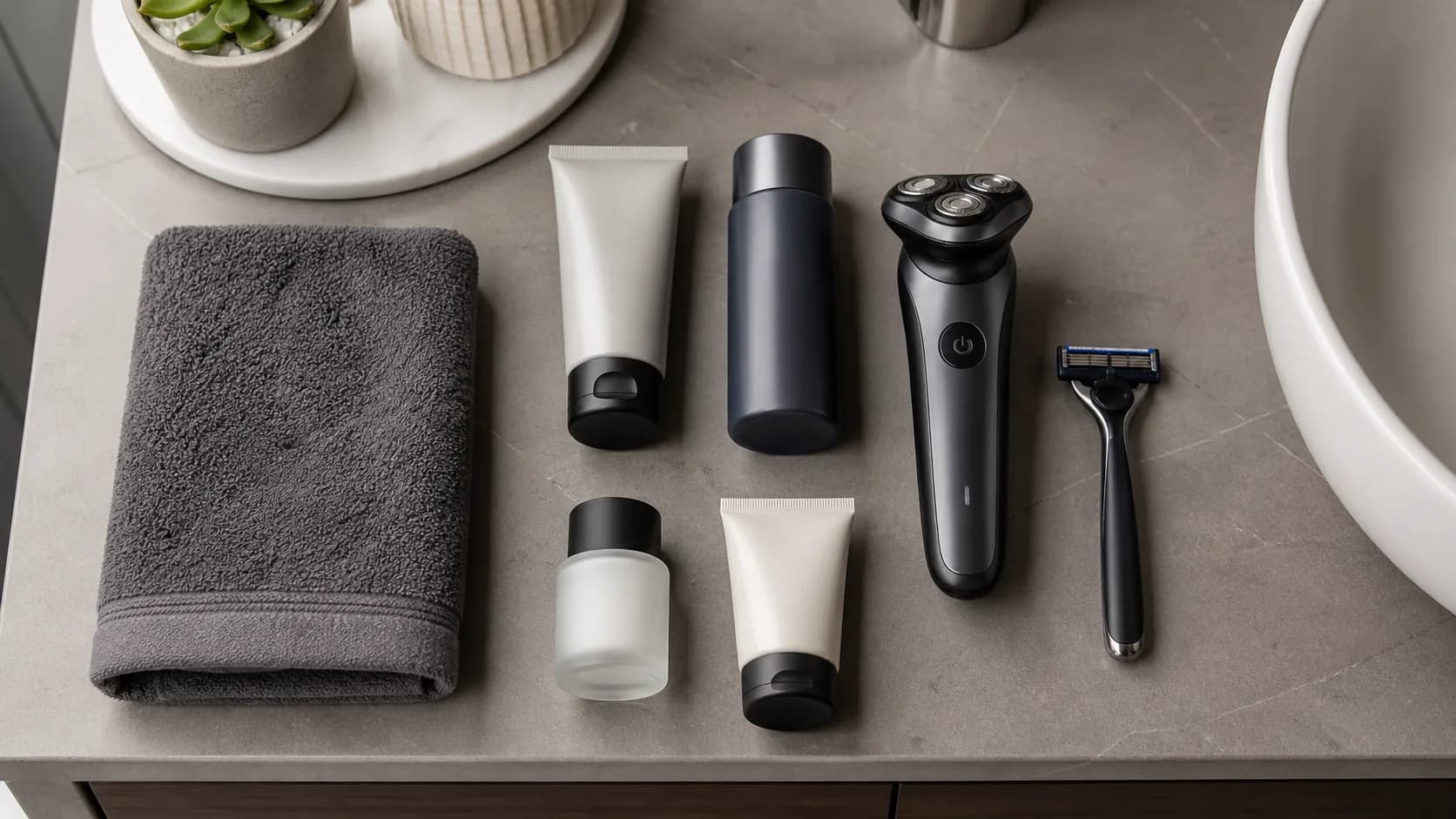
Start with five: a gentle cleanser, shaving cream or gel, moisturizer, sunscreen, and clean tools. Use enough shaving cream that a razor glides instead of scrapes. Pick moisturizer by skin type: lightweight lotion for oily skin, richer cream for dry skin.
For sunscreen, choose broad-spectrum SPF 30 or higher. For tools, replace razors before they drag and keep electric shavers clean. Extras should solve a real problem, not create a longer routine you will abandon.
Common mistakes after shaving your head
Do not treat shine like moisture. A shiny scalp can still be dehydrated or irritated, so use a light moisturizer and adjust the finish with SPF or blotting.
Do not shave through irritation. Daily shaving works for some men, but if your scalp is angry, switch to every other day, try electric, or leave a very short buzz.
Do not ignore the neck, crown, and hat friction. Use a mirror, lighter pressure, clean hats, and avoid wearing sweaty hats for hours after a close shave.
When to get medical help
Most post-shave irritation improves when you change technique and simplify products. Get medical help if you have severe pain, spreading redness, pus, swelling, bleeding that will not stop, suspicious changing spots, or flakes and itching that do not improve.
If you have a history of skin cancer or lots of sun exposure, make scalp checks a habit. A bald scalp is easy to inspect, which is an advantage if you actually look.
Frequently Asked Questions
Final answer: make the routine repeatable
A good bald head care routine is not complicated.
Cleanse gently. Shave in a way your skin can tolerate. Moisturize after washing. Protect the scalp from sun. Keep tools clean. Adjust when your skin complains.
The goal is not a perfect, polished scalp. The goal is a head that looks healthy, calm, and intentional every day you choose the shaved look.