
Job Interview Style for Bald Men: A Practical Guide
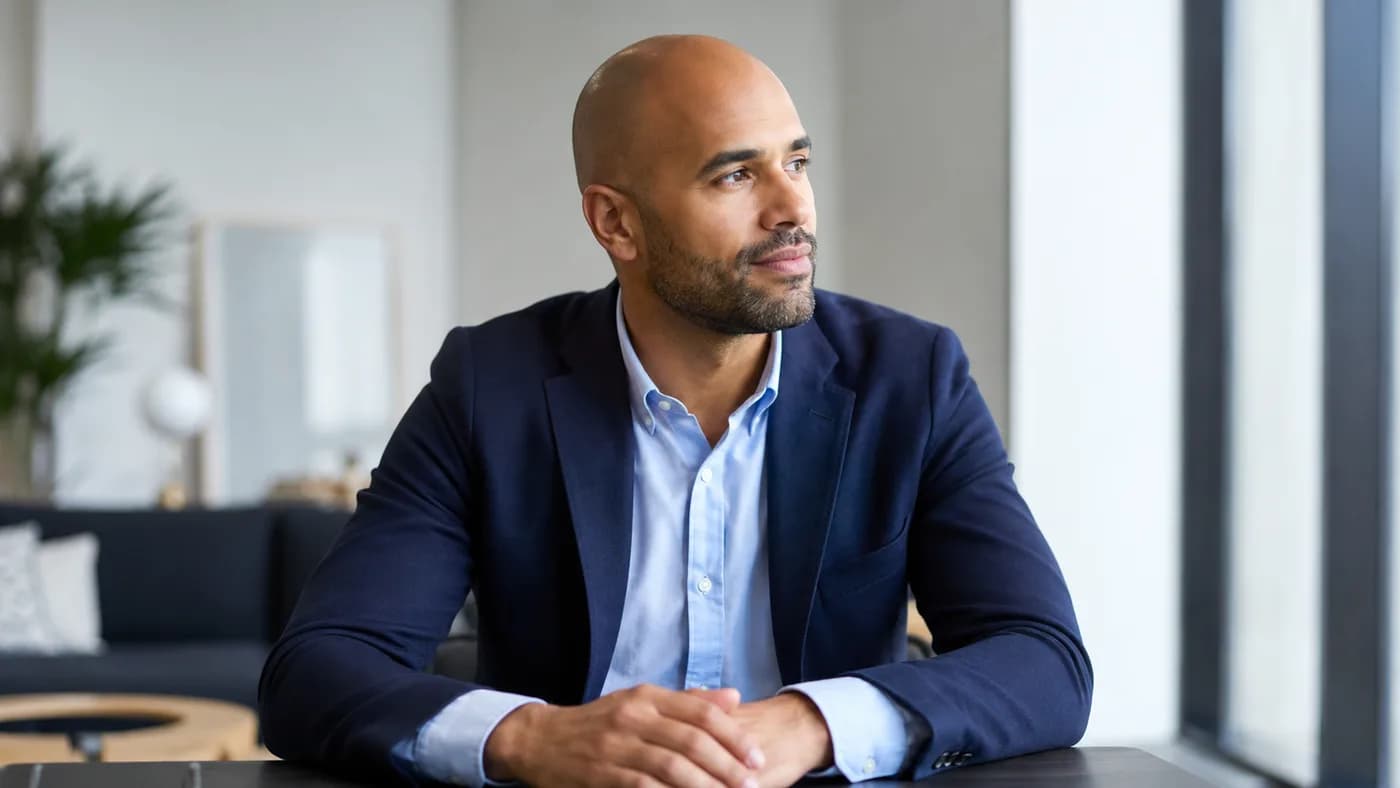
Job interview style for bald men is not about proving that a shaved head is acceptable. It is about making your preparation visible in the details you control. Your answers, experience, and listening drive the conversation. A comfortable outfit, settled grooming, and a calm camera or in-person presence simply make it easier for those things to come through.
The most dependable approach is not to manufacture a new image for one meeting. Build a sharper version of how you would credibly show up for the role, then test the full frame: head and face, collar and shoulders, glasses if you wear them, posture, and the light around you.
Quick read
The company, role, interview format, and meeting instructions determine the dress level—not your hair or lack of it.
A calm scalp, clean beard line or clean shave, and clear glasses look more considered than an unfamiliar last-minute transformation.
Take one photo or short recording in the actual outfit and light before the interview. It catches glare, collar issues, and distracting backgrounds early.
Quick answer: choose a polished version of the role's real dress code
For an interview, wear one step more considered than the everyday baseline you can reasonably infer from the employer. That may mean a pressed shirt and blazer for a formal or client-facing role, or a clean knit, polo, overshirt, and tailored trousers for a relaxed technical or creative setting. Indeed recommends researching the company's dress code and checking clothes for stains, holes, and pet hair before an interview (Indeed interview-attire guide).
Your bald head does not change that logic. It does make the upper frame—scalp finish, facial hair, glasses, collar, and shoulder fit—especially obvious in conversation and on camera. Keep those elements intentional, then spend the rest of your energy preparing your examples and questions.
Build an interview outfit from context, not baldness
An interview outfit should show situational awareness without feeling like a costume. Start with the invitation, the company's public photos, the role's client exposure, and any recruiter guidance. If you still cannot tell, a clean, simple, slightly polished outfit is safer than a themed “power” look.
| Role or environment | Dependable interview direction | Bald-frame check |
|---|---|---|
| Corporate, finance, law, or regulated | Pressed shirt, tailored trousers, polished shoes, and a blazer or suit when appropriate | Make sure the collar lies flat and the jacket shoulders fit cleanly |
| Client-facing, management, or sales | The refined end of your normal work uniform: blazer or structured layer, simple shirt or knit, trousers | Use a composed beard line or clean shave; avoid highly reflective accessories |
| Technical, product, or startup | Solid knit, polo, casual button-down, or overshirt with tailored chinos or trousers | Choose a neckline with structure and skip large logos or busy prints |
| Creative or design-led | Personal but restrained layer, stronger color if it suits you, clean footwear | Let one choice show personality; keep the face and eyes as the focus |
| Hands-on or site-based | Clean role-appropriate workwear if the interview includes the environment, with a polished backup layer | Prioritize fit, clean condition, and safety requirements over formality theater |
These are starting points, not claims about who gets hired. A client-facing engineer may need the first or second formula; a creative director may interview in a simple knit. When in doubt, ask the recruiter about the expected dress level. For broader workplace formulas, see Business Casual for Bald Men and Does a Shaved Head Look Professional at Work?.
The outfit should support the conversation
Choose clothes you can sit, walk, and gesture in without tugging at the collar, jacket, or sleeves. If you feel like you are playing a character, the outfit is probably too far from the role—or from you.
Get scalp, beard, and glasses ready without chasing perfection
The night before, use your normal scalp and face routine. For a smooth shave, give the skin the timing it typically needs to settle. For stubble or a beard, even the length and clean up the line only if that is already part of your routine. A beard can add contrast below the face, but it is not a requirement for a professional bald look; clean-shaven, stubble, and a short beard can all be appropriate.
Avoid a new razor, beard dye, strong exfoliant, or heavy matte product immediately before an important meeting. The American Academy of Dermatology advises shaving when hair is soft, using moisturizing shaving cream, shaving with the grain, and using a soothing aftershave to reduce razor-bump risk (AAD razor-bump prevention). If persistent bumps are painful or inflamed, a dermatologist is more helpful than adding more last-minute products.
Glasses are part of the interview frame if you normally wear them. Clean the lenses, check that the frames sit level, and test for window or screen glare. Do not wear unfamiliar frames just because they seem “more professional.” For more on frame balance, use Bald With Glasses; for natural versus distracting reflection, see Bald Head Shine.
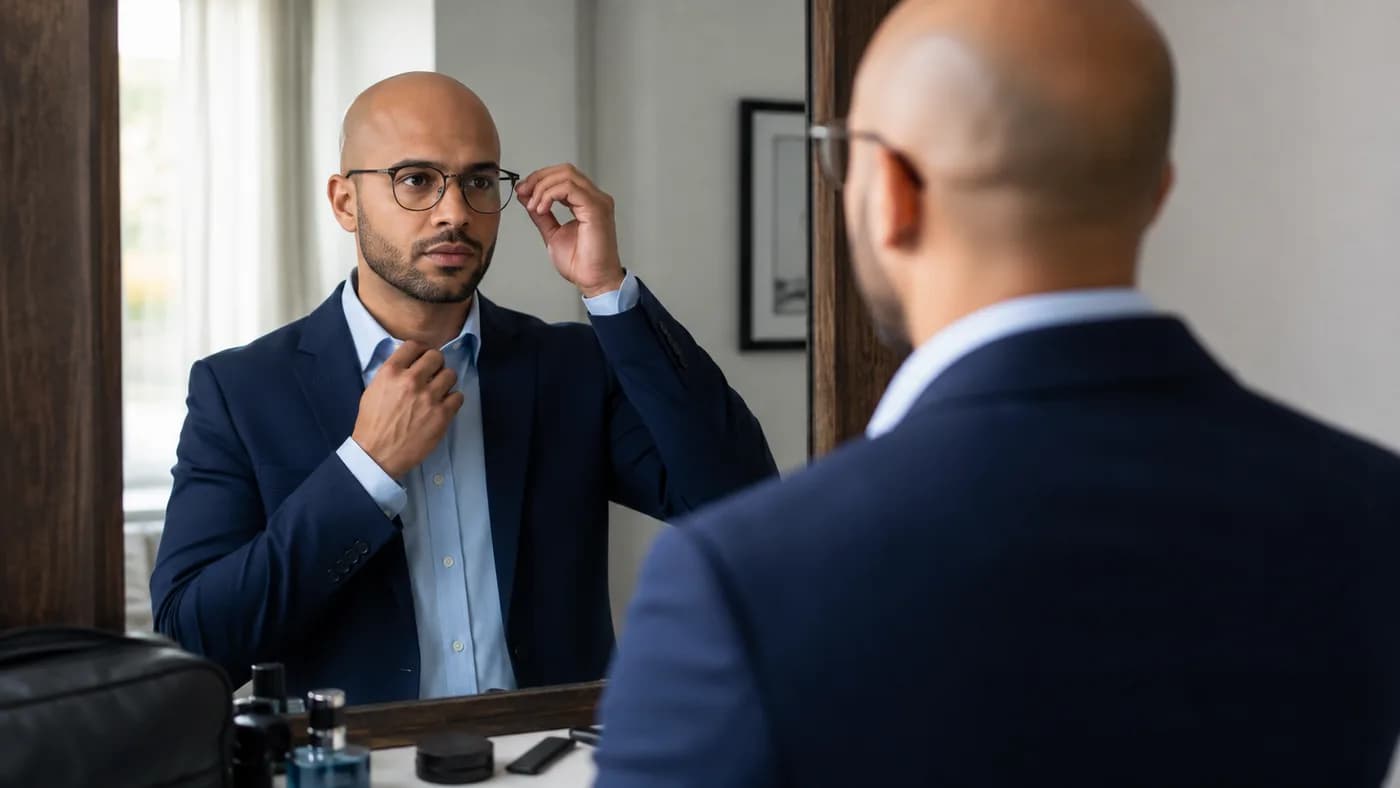
Use posture and in-person light to look present, not posed
In a face-to-face meeting, the goal is simple: arrive with enough margin to settle, greet people naturally, and let your attention stay on the conversation. Stand tall with relaxed shoulders, keep your chin neutral, and avoid repeatedly touching your head, beard, or glasses. That is more useful than trying to hold a fixed “confident” pose.
If you are waiting near a window or under harsh ceiling lights, do not panic about ordinary scalp reflection. It is often a lighting effect, not a grooming failure. A small direct overhead light can create a bright spot on any shaved scalp while leaving the eyes shadowed. Move into softer, more even light when you have a choice, but do not make the room setup the center of the interview.
For an in-person meeting, focus on these controllables:
Make the professional frame feel like your real one
The right interview look should be repeatable after you get the job. That does not mean wearing the exact same thing every day; it means using a version of yourself that is credible for the room. If you usually wear a short beard, choose the tidy version of it. If glasses are part of your everyday work life, wear them. If a blazer makes you feel constrained in a casual team, a structured knit or clean overshirt may communicate more accurately.
This is also where small details beat generic advice. Check contrast around the face: does the shirt make your features readable, or does it blend into your skin and the wall behind you? Check the collar: does it hold its shape when seated? Check the layer: does it fit your shoulders rather than pull at the buttons? None of these choices promises an outcome. They simply remove visual noise so the interviewer can focus on what you say.
For a concise rehearsal, ask a friend to take two phone photos or record one minute of you answering “Tell me about yourself.” Review it without trying to judge attractiveness. Look for practical fixes: a glare patch, a twisted collar, a background distraction, muffled audio, or a low camera angle. Solve one or two real problems and stop. Endless adjustments can make a familiar look feel unfamiliar.
A test photo is a preparation tool, not a verdict
Use a quick photo or recording to check the setup, not to search for a perfect head shape, beard, or outfit. The useful question is: “Does this look clear, comfortable, and appropriate for the conversation I am about to have?”
Set up a remote interview so your face—not glare—does the work
Video interviews reward a test run because the camera turns small setup issues into a first impression: backlighting, a low laptop angle, a noisy background, or a lens flare on glasses. Indeed recommends a quiet space, a light source behind the computer, a non-distracting background, and logging in 15–20 minutes early to check audio and video (Indeed video-interview guide). LinkedIn likewise emphasizes testing the platform, camera, microphone, and connection in advance (LinkedIn virtual-interview guidance).
For bald men, the key distinction is between scalp oil and specular glare. Even healthy, comfortable skin can look intensely shiny when a tiny desk lamp or ceiling fixture points at the top of the head. Before changing your skin, enlarge or move the light: face a window, place a lamp behind and slightly above the laptop, or use a soft light farther from you. Turn slightly if one spot is catching too hard.
Raise the laptop or camera to eye level with a stand or stable stack of books. Frame from the upper chest to a little above the head, leave a little space around the head outline, and put the brighter light in front of you rather than behind you. Then record 30 seconds and watch it at normal size. Check your eyes, collar, scalp reflection, beard line, glasses, audio, and background together.

For deeper camera troubleshooting, Video Call Lighting for Bald Men is the focused companion guide. If you are planning a profile refresh alongside the job search, LinkedIn Headshots for Bald Men covers still-portrait lighting, crop, and wardrobe separately.
Preview the visual choices, then stop tweaking
If you have several interview outfits, beard lengths, or professional backdrops in mind, a preview can reduce the number of real-world guesses. Use BaldLooks to compare interview-ready outfits and professional settings so you can choose a complete look with confidence. BaldLooks Free Analysis provides a bald-look report from one photo; paid plans let you explore a shaved head from more angles, with different outfits and locations.
The sharpest job-interview look is not a special bald-man costume. It is a calm, credible version of you: clothes that fit the room, grooming that your skin can handle, and a camera or in-person setup tested early enough to disappear from your mind. Once that preparation is done, give your attention to the work you want to talk about.