
Early Crown Balding: What to Do Before It Gets Worse
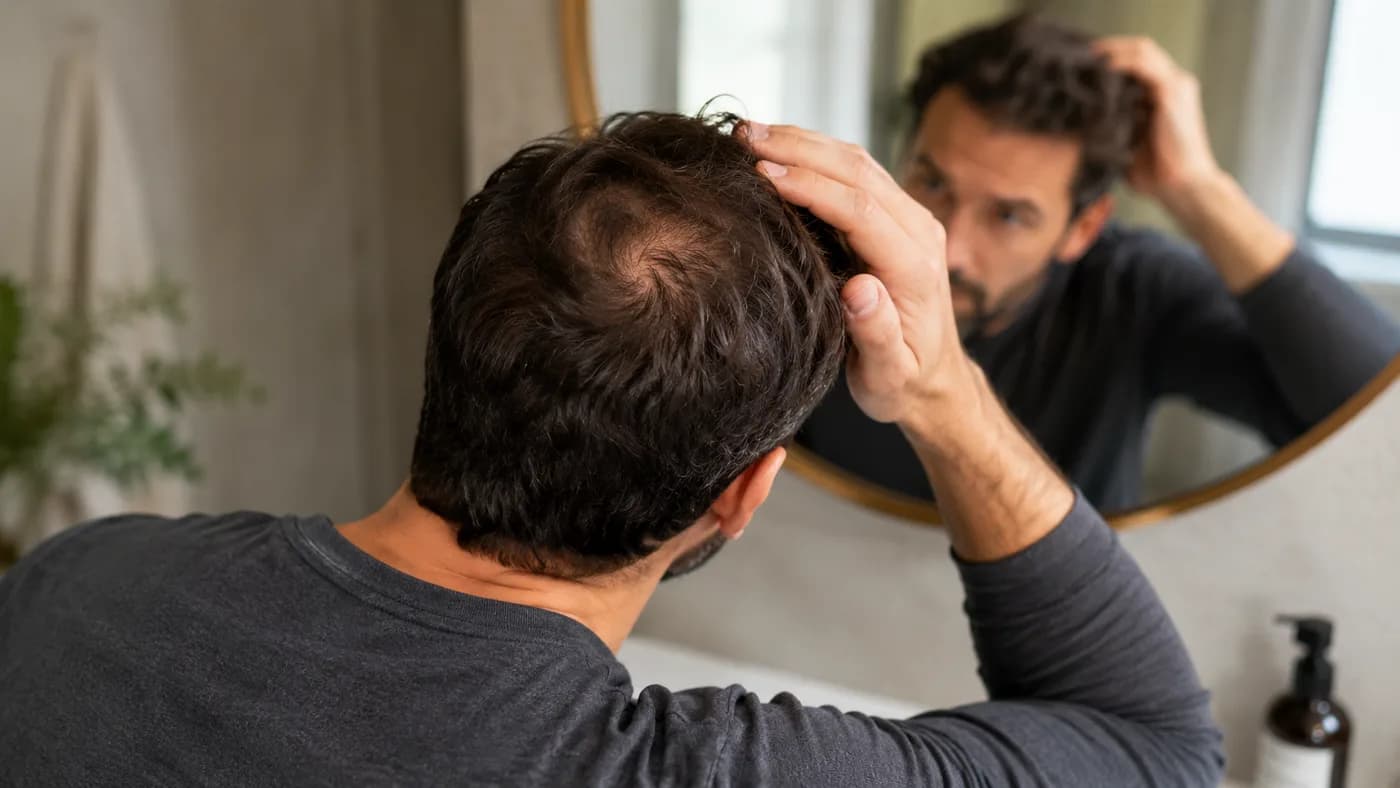
If you think you may have early crown balding, the hardest part is usually the uncertainty.
One day the crown looks normal. The next day a top-down photo makes it look much thinner. The crown is one of the easiest areas to misread.
The practical answer is this: early crown balding matters when the pattern repeats, not when one bad angle scares you.
Quick read
Early crown thinning is more convincing when it shows up in similar photos over time, not only after one rough haircut, workout, or harsh light.
At an early stage, monitoring, haircut changes, and better comparison photos usually matter more than immediate dramatic action.
Wet hair, heavy product, top-down phone photos, and bright ceiling light can make a normal crown look far worse than it is.
What early crown balding usually looks like
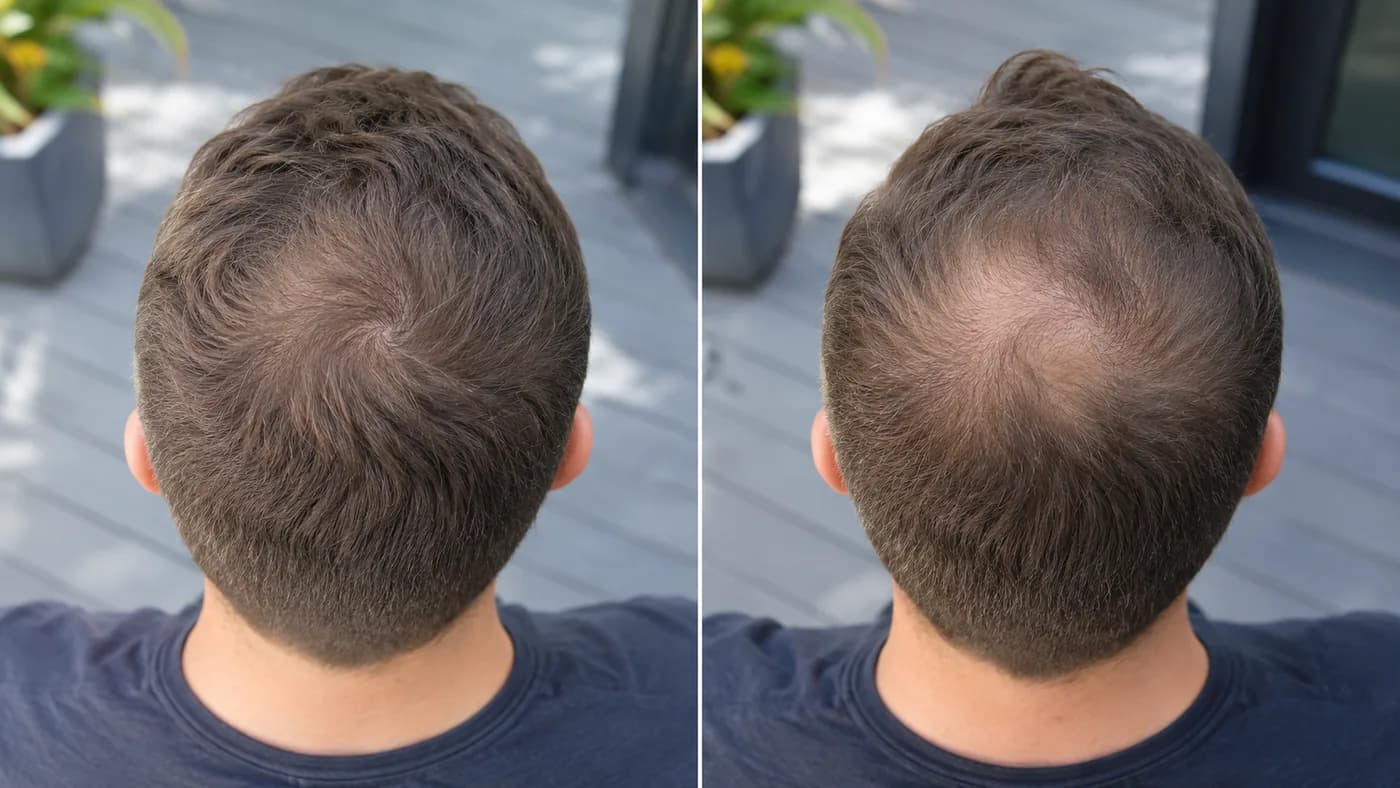
The crown is naturally tricky because it sits around a swirl, sometimes called a whorl or cowlick. That swirl can expose a little scalp even when density is still decent. The challenge is noticing when the visible area stops behaving like a normal crown and starts behaving like crown thinning.
The American Academy of Dermatology notes that male pattern hair loss often begins gradually, including as a bald spot on the top of the head. Cleveland Clinic describes a similar pattern, where male pattern baldness may start with thinning at the crown, the hairline, or both. In other words, the crown is a real starting point for many men, but it usually changes slowly rather than overnight.
At the early stage, the signs tend to be subtle:
- the center of the crown looks brighter than it used to,
- overhead light exposes the scalp more easily,
- the surrounding hair feels flatter or less dense,
- a haircut that used to look fine now reveals more separation,
- the same concern keeps coming back across several weeks or months.
That is different from a random bad photo. For the deeper normal-vs-thinning breakdown, read Hair Thinning at Crown and Balding Crown vs Normal Crown.

How to tell if your crown is actually changing
If your real question is how to tell if crown is balding, stop judging it day by day. Daily checks make almost everyone more confused.
Instead, use a simple tracking method:
- Take one crown photo every month.
- Use dry hair and no heavy product.
- Keep the same room, light, and camera distance.
- Take one top-down photo and one slight rear-angle photo.
- Compare only after you have at least two or three sets.
What you are looking for is expansion and consistency.
A normal crown may keep a visible center point for years. Early crown balding is more likely when the visible area spreads beyond the middle of the swirl, the nearby hair looks weaker too, or the crown starts showing in ordinary daylight.
Track slowly or you will fool yourself
The crown changes more slowly than your anxiety about it. A boring monthly comparison is far more useful than checking your scalp every morning.
Mistakes that make early crown thinning look worse
One of the smartest things you can do early is remove fake signals before you make a real decision.
1. Hair that is too long for the crown pattern
Longer hair does not always hide a thinning crown. Sometimes it splits around the whorl and creates a see-through ring that looks worse from above than shorter hair would.
2. Product-heavy styling
Pomades, waxes, oils, and even some clays can separate the strands at the crown. That makes the scalp reflect more light and look thinner than it would with cleaner, drier texture.
3. Judging under overhead light only
Bathroom lighting is brutal on crowns. So is a phone flash. If you only inspect your crown under those conditions, you will almost always get the darkest version of the story.
4. Keeping the sides much denser than the top
When the sides stay full and the top gets lighter, the contrast becomes the real problem. Sometimes the crown has not worsened dramatically, but the haircut is making the difference more obvious.
What to do first if you catch crown balding early
The good news about early crown balding is that you still have options. The AAD says treatment tends to work best when started before follicles stop producing hair. Cleveland Clinic also advises contacting a healthcare provider early if you want to maintain your hair.
Here is the sensible order:
1. Get a more honest haircut
Often the first fix is not medical. It is visual. A shorter, cleaner haircut may reduce separation at the crown and tell you whether the issue is mostly pattern, length, or both.
If the crown is already pushing you toward style triage, Buzz Cut for Balding Crown gives a more specific breakdown.
2. Decide whether you want a medical opinion
If you want to preserve hair rather than only style around it, early consultation matters.
3. Build a style fallback before panic hits
Even if you are not ready to shave, it helps to know what your shorter options would look like.
Should you shave if the crown is only thinning a little?
Usually no.
If the crown is only mildly changing, shaving can be a premature reaction. A shorter cut may already look cleaner without requiring a full identity shift.
That said, some men are not only worried about hair preservation. They want certainty about appearance. If that is you, a private preview can help without forcing the real haircut immediately. BaldLooks is useful here because the free analysis can give you a quick photo-based read, and the paid plans help if you want to compare more angles, outfits, or beard balance before deciding whether the shaved route would suit you.
When early crown thinning becomes worth taking more seriously
There is a point where early crown concern stops being mostly noise and starts becoming a real pattern. That point usually arrives when several signals stack together:
| Sign | Lower concern | Higher concern |
|---|---|---|
| Frequency | Only appears in a few bad photos | Keeps appearing over time |
| Lighting | Mostly harsh overhead light or flash | Visible in normal daylight too |
| Shape | Stays centered at the whorl | Spreads beyond the center |
| Surrounding density | Nearby hair still feels solid | Hair around the crown looks weaker |
| Styling impact | Changes a lot with product or length | Still visible after haircut cleanup |
If the higher-concern side is starting to win, that is the moment to get more systematic. It still does not automatically mean shaving. It means you should stop guessing.
When to talk to a professional
If your concern is persistent and you want to keep as much hair as possible, early evaluation is reasonable. It becomes more important if the loss is sudden, patchy, painful, itchy, inflamed, or otherwise does not behave like the slow pattern usually seen in male pattern baldness.
Based on the AAD and Cleveland Clinic guidance, the practical advice is:
- gradual repeat thinning at the crown suggests monitoring plus optional professional follow-up,
- sudden or unusual loss deserves a professional evaluation sooner,
- early action matters most when your goal is preserving hair rather than only changing style.
That is a medical lane. BaldLooks does not diagnose hair loss, but it can reduce uncertainty around the style lane. If you already suspect the crown may push you shorter later, it helps to know whether a shaved head, different beard balance, or even a buzzed look would feel cleaner on your own face.
Final answer: early crown balding is a pattern problem, not a panic problem
Early crown balding usually does not announce itself with one dramatic moment. It shows up as repeat scalp visibility, weaker density around the whorl, and a crown that looks less forgiving across time and lighting conditions.
The smartest response is calm:
- fix the obvious distortions,
- track the crown monthly,
- clean up the haircut,
- decide whether you want medical guidance,
- and privately preview shorter or shaved options if the uncertainty is bothering you.
That sequence gives you control before the crown becomes much harder to ignore.
If you want the next step, read Crown Balding Stages for the broader progression or Buzz Cut vs Bald if your real decision is already about what to do with the look.