
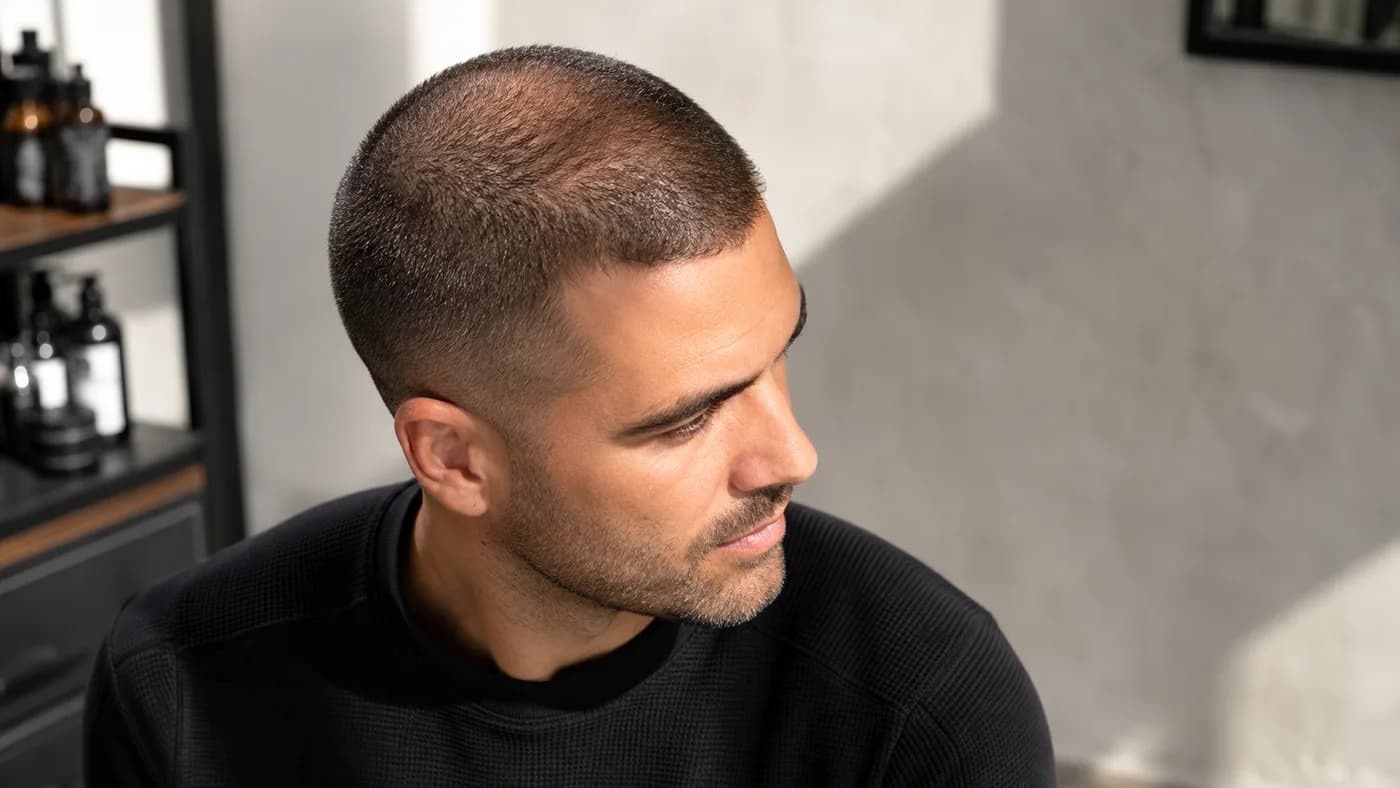
If you are searching for the best buzz cut for balding crown hair loss, you are usually trying to answer one question:
Can I still keep some hair, or is the crown already telling me to go shorter?
Crown thinning is less forgiving than a receding hairline. A little too much length around a weak crown often creates more contrast, more separation, and a more obvious thin spot.
The short answer is this: a crown buzz cut works best when shortening reduces contrast faster than it exposes scalp.
Quick read
A slightly longer buzz can still work on temple recession, but the same length can make a thinning crown stand out more.
A #2 keeps more texture; a #1 exposes more scalp. Start longer if you are unsure and judge the crown from behind.
If the crown stays distracting at short lengths, the cleanest move is usually not a cleverer buzz cut. It is less hair.
Quick answer: what usually works best
A balding crown buzz cut usually helps when:
- the crown is only mildly thin,
- the surrounding top still has decent density,
- longer hair is splitting around the swirl,
- the weak area shows mostly in harsh light or top-down photos.
It usually helps less when:
- the crown is clearly visible in normal light,
- the spot is expanding beyond the natural whorl,
- the top is diffusely thinning beyond the crown,
- the sides are much denser than the top.
The medical pattern behind this is well established. The American Academy of Dermatology notes that male pattern hair loss can begin with a receding hairline or a bald spot on the top of the head. The Cleveland Clinic lists crown thinning, temple thinning, and a receding hairline among common symptoms. The Mayo Clinic also describes hereditary hair loss as gradual and pattern-based.
The haircut advice here is an inference from those thinning patterns plus how short lengths change contrast visually. The medical sources explain the pattern. The haircut choice is about presentation.
Crown thinning is mostly a contrast problem
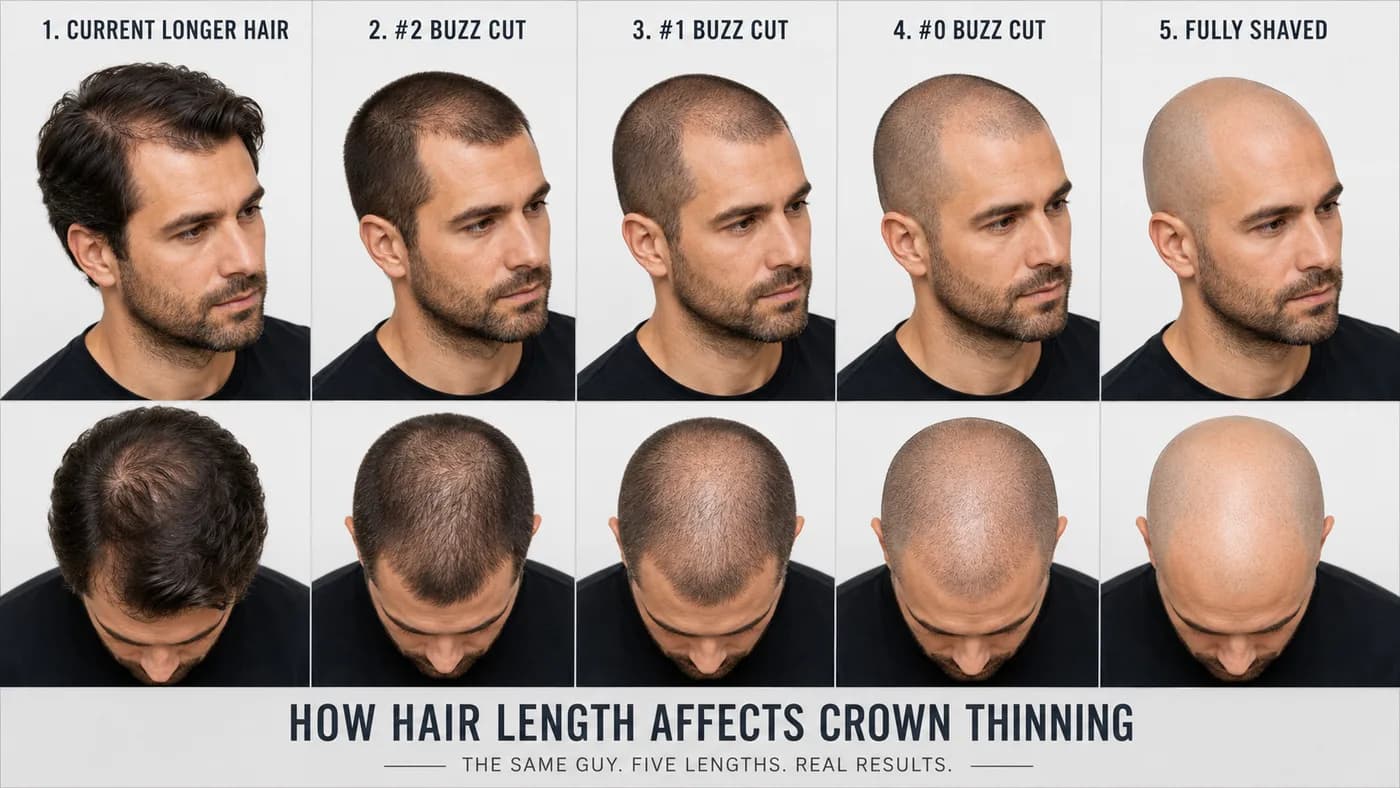
When the hair around the crown stays long enough to separate, the thin spot becomes easier to isolate. The best buzz cut is usually the shortest length that still benefits from having hair at all.
Why the crown is harder to judge
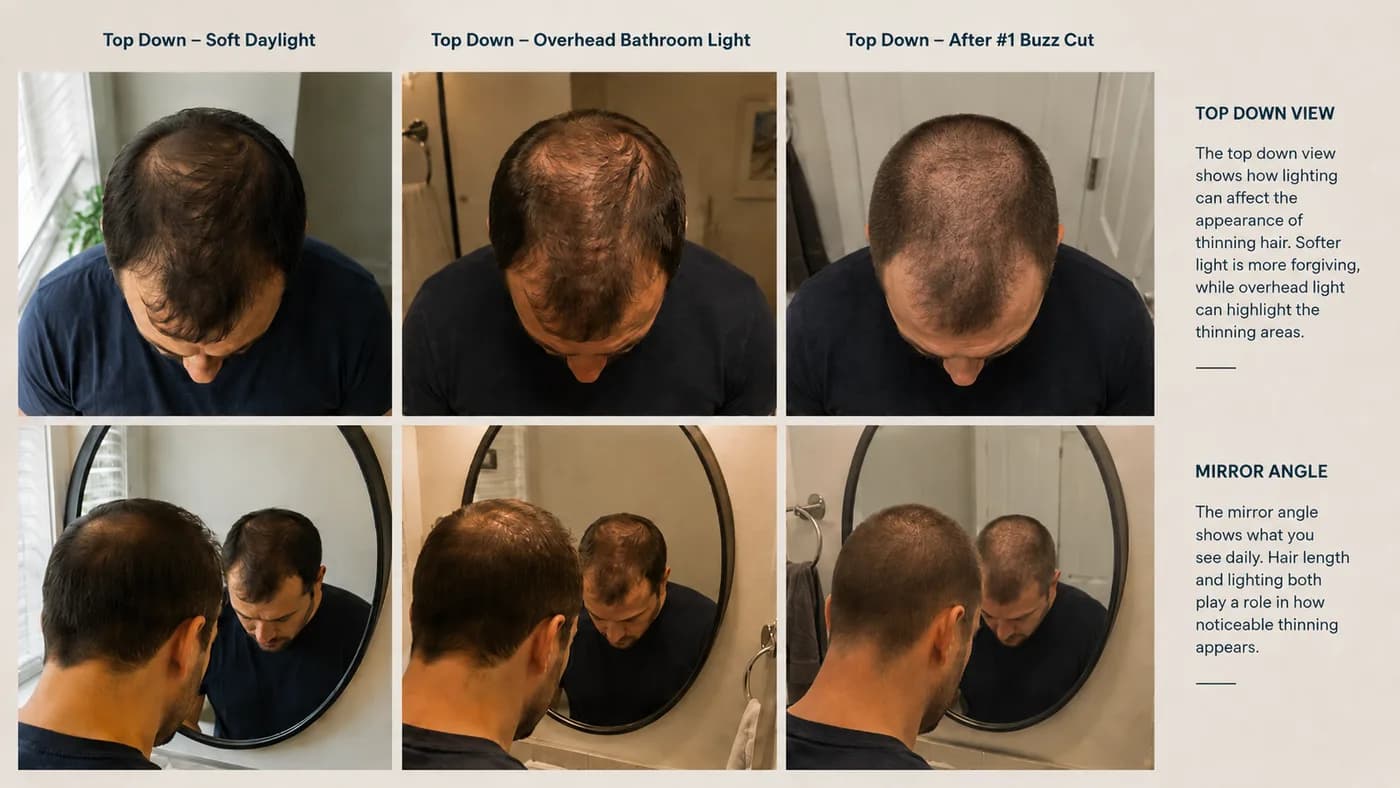
The crown is awkward because you rarely see it the way other people do. Most men judge it from a flattering mirror angle or from a brutal top-down photo. That is why a buzz cut bald spot decision feels less obvious than front recession.
If you are still asking whether the crown is thinning, start with Normal Crown vs Balding Crown and Crown Balding. A haircut or an AI preview cannot determine the cause of hair loss.
The best buzz cut lengths for a balding crown
Men often ask for one perfect answer, but crown thinning usually comes down to four useful lengths. Hair texture, growth direction, skin-to-hair contrast, and how the sides are blended can change the result. Start longer if you are uncertain: you can shorten a cut, but cannot restore its length during the appointment.
Approximate standard guard lengths are #3 = 10 mm, #2 = 6 mm, and #1 = 3 mm. No guard (#0) varies by clipper and blade setting. These are cutting lengths, not stages of hair loss. Wahl haircutting guide.
| Guard length | Usually best for | Main risk on a thinning crown |
|---|---|---|
#3 | Very early thinning with solid density around the crown | Leaves enough length for the crown to split and show the weak spot |
#2 | Early crown thinning that is visible mostly in photos or harsher light | Can sit in the awkward middle where the crown is exposed but still outlined |
#1 | Visible crown thinning in normal light or mixed crown/top weakness | Feels short quickly, but usually gives the clearest honest answer |
#0 | Clear bald spot, expanding crown loss, or transition toward shaving | Shows scalp and head shape clearly, so it works best when you are close to shaved anyway |
In practice:
#3only works when the crown issue is still minor.#2is a cautious first try, but often lands in the awkward middle.#1is a shorter option to compare if#2leaves a contrast you dislike; it may also show more scalp.#0often wins once the crown is a true bald spot rather than mild thinning.
If #0 clearly beats #1, the conversation is usually shifting toward Buzz Cut vs Bald, not toward saving more length.
A crown-specific request for your barber
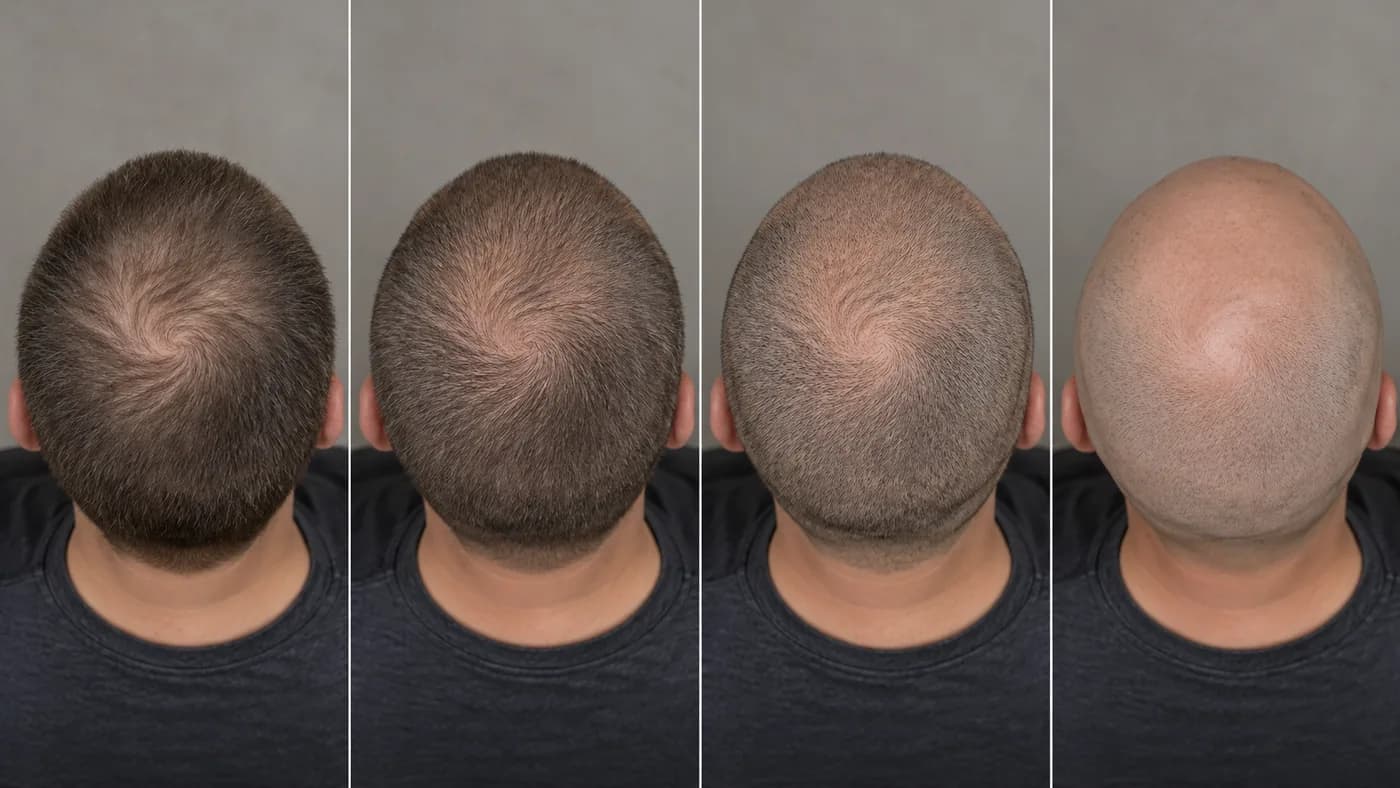
Ask: “Please check my crown from above and behind. I want to try a longer guard first and compare it before going shorter. Keep the transition into the sides soft, and show me the crown in ordinary light before finishing.” Bring a reference for the top length and a separate one for the sides. A tight fade and an all-over buzz can make the same top length look different.
After the cut, compare rear photos in consistent light. Photograph the whole crown rather than zooming into the center. A shorter cut can look tidier while showing more scalp; decide whether you like the overall result, not whether the image looks denser.
When a buzz cut helps, and when it stops helping
A buzz cut helps when the crown looks less isolated after the haircut. It stops helping when the crown is still the first thing you notice, the top around it is also thinning, or every shorter step keeps looking better.
When shaving fully starts to make more sense
You do not need to shave just because the crown is thinning. But shaving usually becomes the cleaner answer once the buzz cut is no longer reducing enough contrast to justify keeping hair.
The AAD source above describes how male pattern hair loss can develop. That does not prescribe a haircut. Comparing #2, then #1, then no guard is a cosmetic choice, and stopping at a length you like is a valid outcome.
How to make the decision without regretting it
The safest practical sequence is simple:
- Start at
#2if the crown is early and you want a softer test. - Go to
#1if the crown is clearly visible or the#2still looks split. - Compare
#1against#0, not just against your current hair. - If
#0is strongest, compare it against shaved rather than stopping there by default.
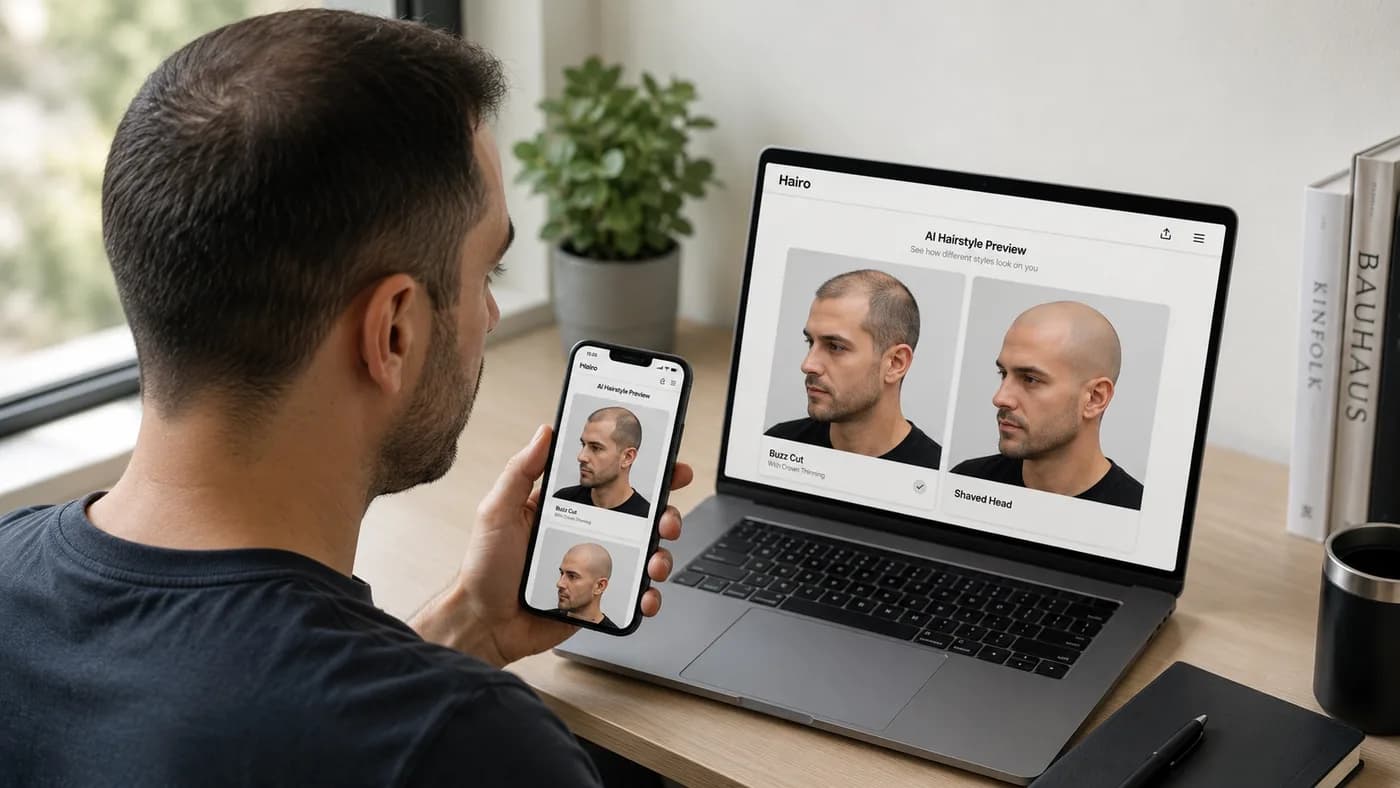
This is where BaldLooks can help. The free BaldLooks analysis is useful when you want a quick first answer from one photo. The paid plans become more useful when your question becomes, "Does the fully shaved version look cleaner from more angles and in real-life context?"
Final answer: what is the best buzz cut for a balding crown?
For most men, the best answer is the shortest length that still makes the crown look less isolated.
That usually means:
#2for early thinning,#1for visible crown loss,#0or shaved when the spot is already obvious or the top is weakening around it.
If your crown only improves when you go almost all the way down, that is useful clarity. The point of a buzz cut is not to preserve the maximum amount of hair. It is to make the whole top of your head look cleaner, more balanced, and easier to live with.