
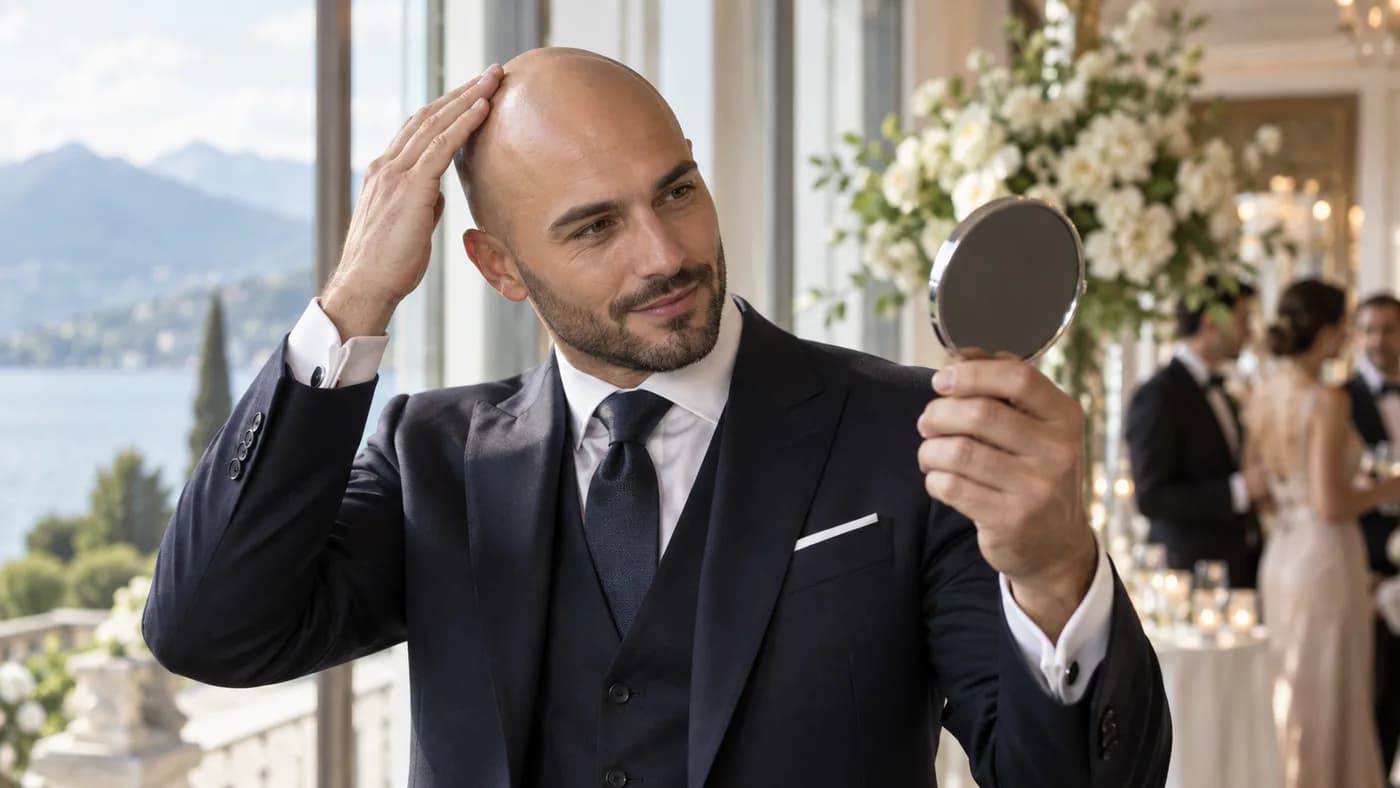
The best time to shave your head before an event is the time that gives you your preferred finish and calm skin. For many regular shavers, that is the night before. For some, it is the morning of. For others, a short, even stubble finish several days ahead is more reliable than a razor-close scalp that turns red in photos.
That is why “as close as possible, as late as possible” is not a universal rule. Weddings, family photos, interviews, celebrations, and professional shoots put you under different light, but the priority stays the same: look like a polished, comfortable version of yourself—not someone recovering from an experiment.
Quick read
Choose the timing that normally leaves your scalp calm, not the timing that sounds freshest in theory.
A test shave and a few photos in similar light tell you more than generic timing advice ever can.
Beard lines, moisturizer, SPF, collar fit, glasses, and lighting matter as much as a perfectly smooth scalp.
Quick answer: pick same-day, night-before, or earlier
Use this simple starting point:
| Timing | Best for | Watch for |
|---|---|---|
| Same morning | Experienced shavers whose skin stays calm and who want the closest, smoothest feel | Rushing, small nicks, redness, or product not having time to settle |
| Night before (about 12–18 hours) | Most regular shavers, especially before portraits or a long event day | Fast regrowth if you show shadow quickly; use a light touch-up only if it is routine |
| Two to three days before | Sensitive scalps, a preferred short-stubble finish, or anyone who tends to get irritation | Do not expect razor-smooth; maintain only if the finish is already familiar |
| Weeks ahead for a first shave | Anyone considering a new shaved-head look for a major event | A first close shave can reveal irritation, contrast, or style preferences you need time to understand |
If you are deciding between smooth and short stubble, Freshly Shaved vs Head Stubble lays out the visual tradeoffs. This article is about a different question: how to schedule the version you already prefer when the date matters.
The reliable choice beats the theoretically freshest one
A scalp that is slightly less close but calm and even nearly always reads better than one that is raw, bumpy, or overworked. Do not add extra passes simply because the event is important.
Start with your scalp’s actual response
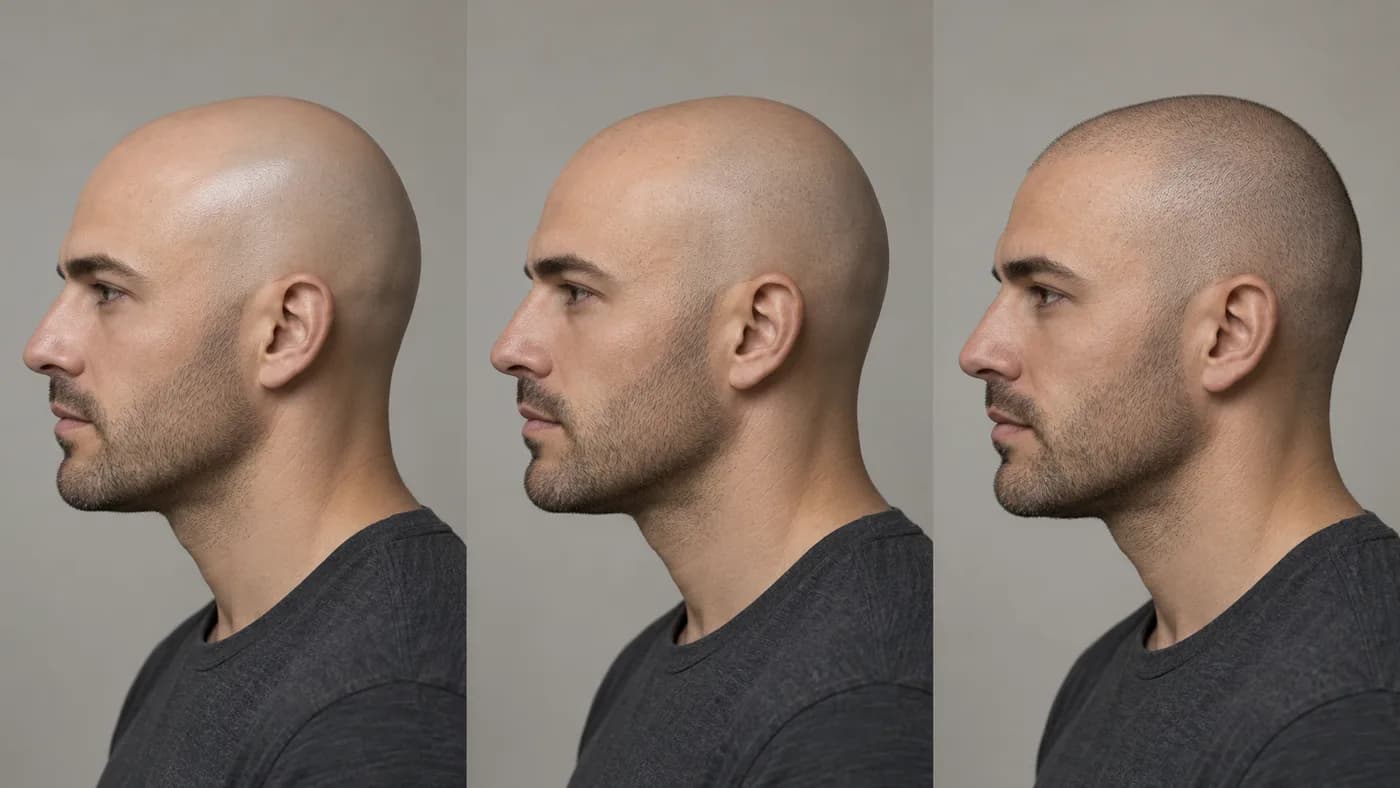
Your calendar does not determine the best shave window; your scalp does. Think back to the last few close shaves. Did your skin look settled ten minutes later, or did it become red and tight for the next day? Does a razor-smooth finish hold visually for a full day, or does shadow return by dinner? Those observations make the schedule personal.
The American Academy of Dermatology recommends softening hair and skin before shaving, using shaving cream or gel, shaving in the direction of hair growth, rinsing the blade after each pass, and replacing disposable blades after five to seven shaves to reduce irritation (AAD shaving guidance). They are small habits, but they are especially useful before a high-visibility day.
Choose same-day if your routine is proven
Same-day shaving can be excellent if you do it often and know exactly how your skin behaves. It gives the closest visual finish and removes the question of overnight regrowth. The catch is time: event mornings are full of travel, steaming clothes, food, messages, and people. A rushed shave raises the chance of pressure, repeat passes, or a nick.
If same-day is your normal routine, make it uneventful. Shave early enough for a shower, a calm cool-down, moisturizer to absorb, and a test photo in the room or daylight you will use. Do not add a new exfoliant, aftershave, or ultra-matte product because a camera is involved.
Choose the night before if you need skin to settle
For many men, shaving the night before is the best event-timing compromise. The scalp still looks intentional the next day, while minor redness has time to settle. It also separates grooming from the pressure of an event morning.
This is a strong default for wedding portraits, family sessions, formal dinners, and professional photos—particularly if you have learned that a close shave looks its best after several hours. If your hair grows back fast, do not automatically re-shave the next morning. First take a quick look in normal light. A little texture is often invisible to everyone except you.
Choose several days before if close shaving creates problems
If your scalp is sensitive, or you deliberately prefer a short stubble finish, schedule the last close maintenance two or three days before and then leave it alone. A foil shaver, trimmer, or your usual no-guard routine may provide a cleaner result than forcing a blade shave.
AAD notes that shave bumps can be reduced by gentle preparation, shaving with hair growth, and a sharp blade; if bumps continue despite changing habits, a dermatologist can help (AAD razor-bump advice). That is not an invitation to self-treat a stubborn flare in the final hours. It is a reason to build more buffer into the plan.
Use a different timeline for a first shave
If shaving your head is new, the event is not the place to find out whether you like the look. A first shave changes more than length: it changes scalp exposure, perceived contrast, your beard balance, what shirt collars feel right, and how you react to seeing yourself in photographs.
Aim to test at least two to four weeks ahead. Make the first attempt on a quiet weekend, use familiar gentle products, and take a few photos in daylight and indoor light. Give yourself enough time to choose smooth, foil-shaved, or stubble; to adjust beard length; and to decide whether you want glasses, sunglasses, or a particular neckline in the final outfit.
You can also use BaldLooks Free Analysis to get a bald look report from one photo. A paid BaldLooks plan lets you compare your look across angles, outfits, and settings before you commit to an event direction. It is useful for planning—not a reason to pressure yourself into a new identity on a deadline.
Make photos part of the timing decision
Mirrors exaggerate what you are looking for. Photos show what light and distance actually reveal. Before a portrait session, take three simple phone photos after your normal shave: by a window, under indoor overhead light, and in the outfit you expect to wear. Check for obvious redness, scalp hot spots, collar imbalance, and glasses glare—not microscopic texture.
In harsh sun or under a small overhead fixture, any smooth scalp can reflect a sharp highlight. That is usually a lighting setup problem, not evidence that you need to strip away moisture. Start with soft side light, open shade, or a small change of position. For more on this, use Video Call Lighting for Bald Men and Bald Men Photos.
For an outdoor event, sunscreen belongs in the plan. The AAD advises applying broad-spectrum, water-resistant SPF 30 or higher to exposed skin and reapplying every two hours outdoors, as well as after sweating or swimming (AAD sunscreen guidance). Choose a formula you have already worn; a surprise white cast or greasy finish is another unnecessary day-of variable.

Finish beard, clothes, and accessories on their own schedule
Your head shave is only one part of the upper frame. Treat the rest of the routine with the same restraint.
- Beard or clean-shaven face: Do a major shape change several days earlier. On the final day, keep only the familiar cleanup: neckline, cheek line, or even length. Beard Neckline for Bald Men can help with a conservative approach.
- Moisturizer and shine: Clean, comfortable skin has more value than an artificial matte finish. Apply a lightweight moisturizer you know, then let it settle. Blot gently before close photos if sweat or oil appears; see Bald Head Shine for the difference between natural reflection and excess product.
- Collar and jacket: Try the outfit after your normal shave. A collar that gaps, pinches, or rides up becomes more noticeable in close portraits than a fraction of scalp shadow.
- Glasses: Clean the lenses, confirm the fit, and take one flash or window-light test photo. Do not buy a dramatic new frame the day before an event just to “balance” a shaved head.
A low-drama emergency plan for irritation
If you notice mild redness, tightness, or a small nick after a shave, stop trying to perfect it. Rinse gently if needed, use a cool clean compress, and stick with a simple fragrance-free product you already tolerate. Avoid picking, scrubbing, alcohol-heavy products, or repeated razor passes. Those responses often make the area more noticeable, not less.
If you have painful, spreading, recurrent, or persistent bumps, or you suspect an infection, get professional medical advice. An important event is not a safe reason to make medical promises, borrow someone else's treatment, or cover an active problem with a harsh cosmetic product.
The best event shave is a repeatable one
For regular shavers, the night before is often the smartest default; for fast-growing, calm-skinned shavers, the morning of can work; for sensitive skin, a settled short finish can be the strongest option. The common rule is simple: test the timing before the stakes rise, then repeat what you know works.
For a wedding-specific full-look plan, read Bald Groom Style Guide. For a sustainable maintenance rhythm after the event, continue with How Often Should You Shave Your Head?.