
Should I Go Bald or Keep My Hair? How to Decide Without Guessing
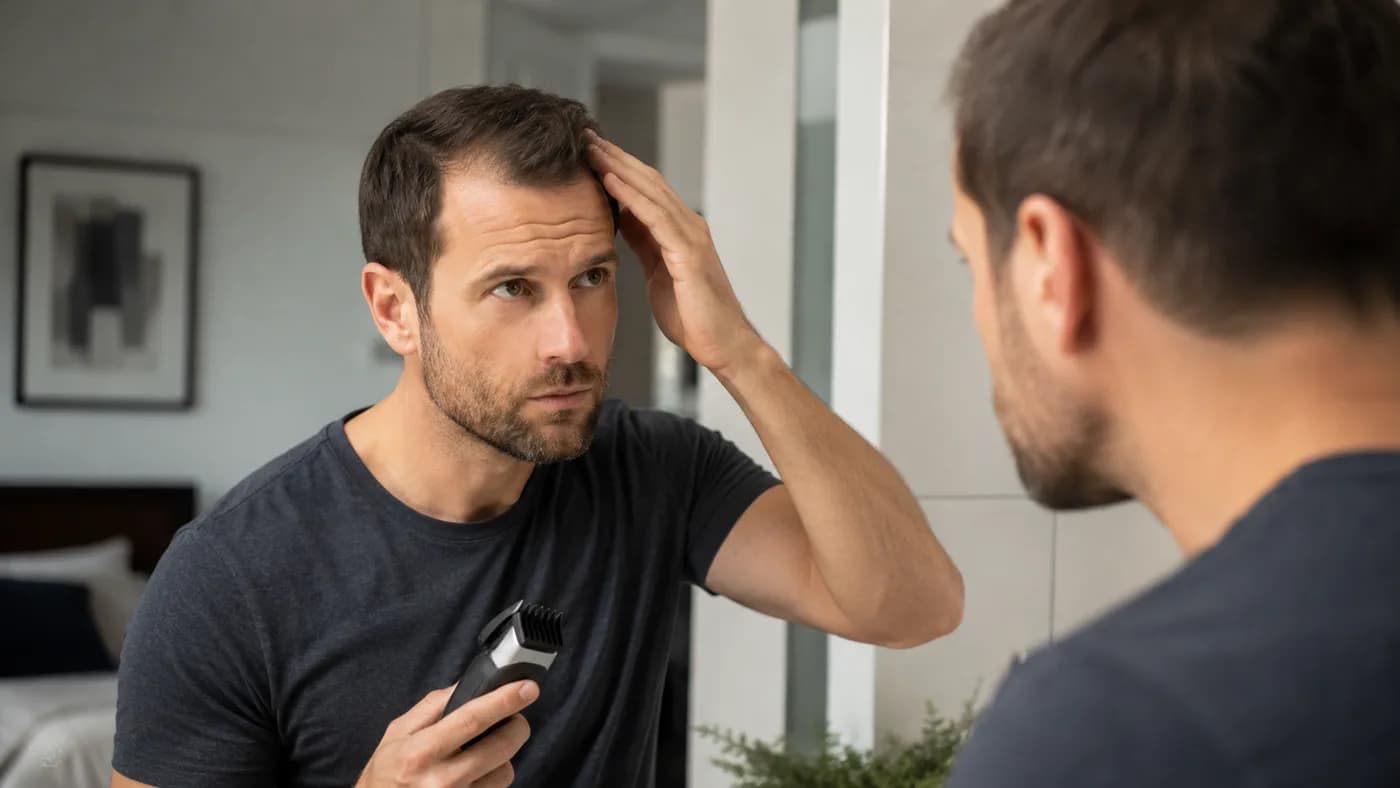
If you keep asking "should I go bald or keep my hair?", you are probably stuck in the worst part of the process: not the haircut itself, but the uncertainty before it.
Most men do not need more hype about "just owning it." They need a better decision framework.
The useful question is not whether bald can look good in general. It is whether your current hair still improves your overall look enough to justify keeping it.
Quick read
Do not compare today against your best hair from years ago. Compare your current hair with the realistic alternatives available now.
A lot of men do not need a full shave yet, but they also do not look best keeping length on top. A short buzz often reveals the truth quickly.
If the decision feels emotional, use better evidence. Good photos and realistic previews are much more useful than mirror panic.
Quick answer: when keeping your hair still makes sense
Keeping your hair usually makes sense when:
- your top still has enough density to frame the face naturally,
- shorter haircuts look sharper without exposing obvious weak zones,
- you are not constantly styling around recession or crown loss,
- and your current look still feels more intentional than stressful.
Going bald becomes the stronger option when the remaining hair mostly draws attention to thinning rather than away from it.
The American Academy of Dermatology notes that male pattern hair loss commonly begins with a receding hairline or a bald spot on top and tends to develop slowly. The Mayo Clinic similarly describes gradual thinning on top of the head as the most common pattern. In practice, this is usually a pattern you can assess, not one dramatic moment.
Do not force a two-option decision too early
For many men, the real choice is not keep everything or shave everything. It is keep the current style, go shorter, buzz it, or shave it. The middle steps matter.
Start with the real comparison, not nostalgia
The mistake that traps most men is comparing a shaved head with the memory of thicker hair.
That is not the real choice.
The real choice is between:
- the hair you actually have now,
- a shorter version of it,
- a buzz cut,
- and a shaved head.
If your current hair still gives your face structure or balance, keeping it may be right. If it mainly creates stress around the temples, crown, or top density, then "keeping hair" may really mean "keeping a problem in place."
This is why articles like Am I Balding? and Receding Hairline vs Balding matter before the haircut decision. You need to confirm what is actually changing.
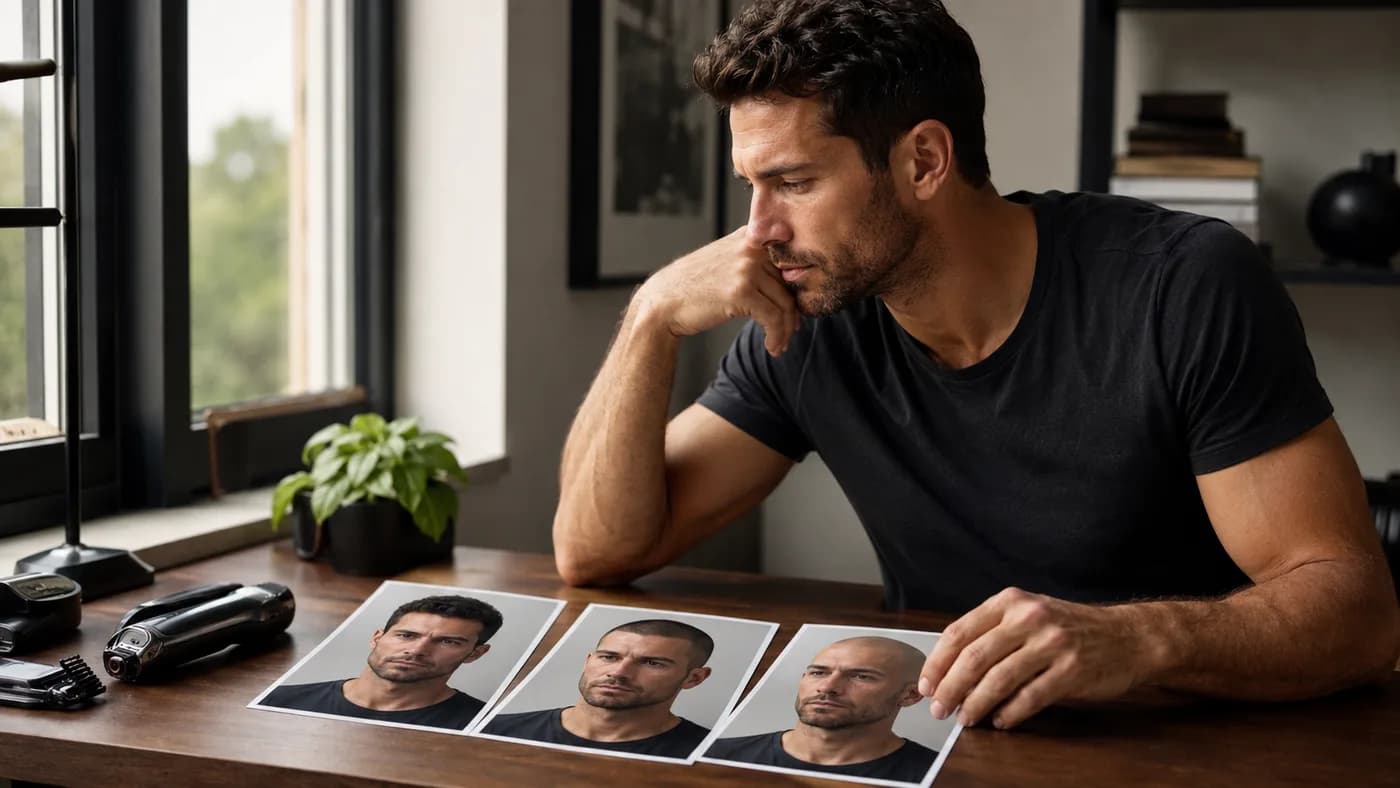
The five things that should decide it
If you want an honest answer to "should I shave my head or keep my hair?", use these five filters.
Keep your hair, change your hairstyle, buzz it, or shave it?
This is the practical version of the decision.
| Option | Usually best when | Usually weaker when |
|---|---|---|
| Keep your current hair | Density is still solid enough that the style frames your face naturally | You are hiding obvious thin zones every day |
| Change to a shorter haircut | You still have enough density, but the current style is too long for the pattern | Shortening mostly exposes the same recession or crown problem |
| Buzz cut | The top still has enough density to look even at #1 to #3 lengths | The top is so weak that short hair still shows clear imbalance |
| Shave your head | Remaining hair mainly highlights thinning and a clean scalp looks more deliberate | You have not yet tested whether a buzz cut solves the problem with less change |
That is why Buzz Cut vs Bald matters. Many men asking whether they should go bald are really asking whether a buzzed compromise still works.
When keeping your hair is still the better choice
Keeping your hair is usually still reasonable when you can say yes to most of these:
- the hairline has changed, but not in a way that dominates your face,
- crown visibility is limited to harsh light or wet hair,
- the top still looks reasonably even when cut shorter,
- you are not avoiding photos or windy situations,
- and you genuinely like the look, not just the idea of not being bald.
This is especially true if your issue is early recession rather than overall density collapse. Cleveland Clinic describes male pattern baldness as a process that can include a hairline moving farther back and thinning hair, but early-stage change does not force one endpoint. The question is whether the hair is still helping.
When going bald usually starts making more sense
Going bald deserves serious consideration when several of these are true:
- the sides are much stronger than the top,
- crown thinning shows up in normal light,
- a short haircut still looks compromised,
- you keep trying to manage the issue instead of enjoying the style,
- and you already suspect the clean shave would look calmer than the in-between stage.
This is where a shaved head stops being an extreme move and starts being the cleaner design choice.
If that sounds familiar, compare this guide with Should I Shave My Head? and Signs You Should Shave Your Head. Those articles go deeper on timing and visible signs.
Do not ignore photos and confidence
This is not purely objective in real life.
If your hair looks acceptable only when you control the angle, if dating photos look worse than the mirror, or if you keep reaching for hats, that is part of the evidence. The right haircut should reduce friction, not create a part-time management job.
If the emotional side is the main blocker, The Psychology of Going Bald is the better next read. If the social side worries you most, Does Being Bald Affect Dating? helps you judge that more realistically.
BaldLooks is most useful when you are close to the line
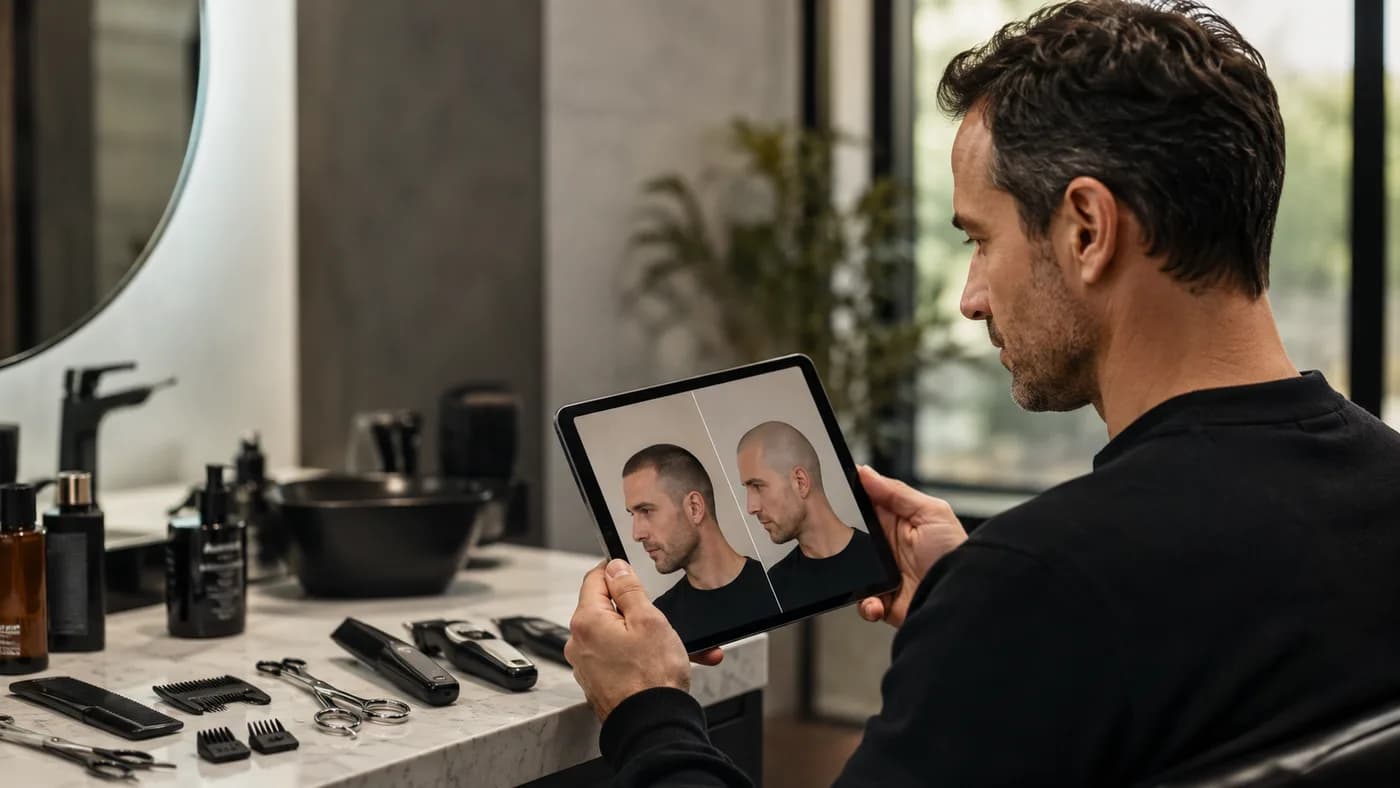
If you are clearly happy keeping your hair, you do not need a shaved-head tool. BaldLooks is most useful in the middle zone, when your hair no longer feels easy and you want to compare buzzed and shaved options on your own face instead of guessing from model photos.
The free BaldLooks analysis gives you a low-pressure first read from one photo. The paid plans are better once you want a more serious comparison across angles, outfits, and settings.
The safest decision workflow
If you want the lowest-regret path, do this:
- Take a clean front photo and a three-quarter photo in even light.
- Ask whether your current hair still improves your face without defensive styling.
- If you are unsure, cut shorter before shaving fully.
- Compare a buzz cut and a shaved head on your own photo.
- Sleep on the result instead of deciding right after a bad mirror moment.
That process is usually better than either extreme: endless delay because bald feels scary, or an impulsive shave because one photo upset you.
Medical caution still matters
If your hair loss feels sudden, patchy, painful, or very different from gradual pattern change, talk to a dermatologist. Mayo Clinic notes that sudden loosening of hair or patchy loss can point to causes other than typical male pattern baldness.

Final answer: should you go bald or keep your hair?
Keep your hair if it still gives your face something real: shape, density, softness, or a natural frame that works without constant effort.
Go bald when the remaining hair mostly highlights loss instead of improving the full look.
And if you are in the middle, do not guess. That is the whole point.
Compare the version of you that exists now with the versions that are actually available next: shorter, buzzed, or shaved. When you do that honestly, the answer usually gets much simpler.