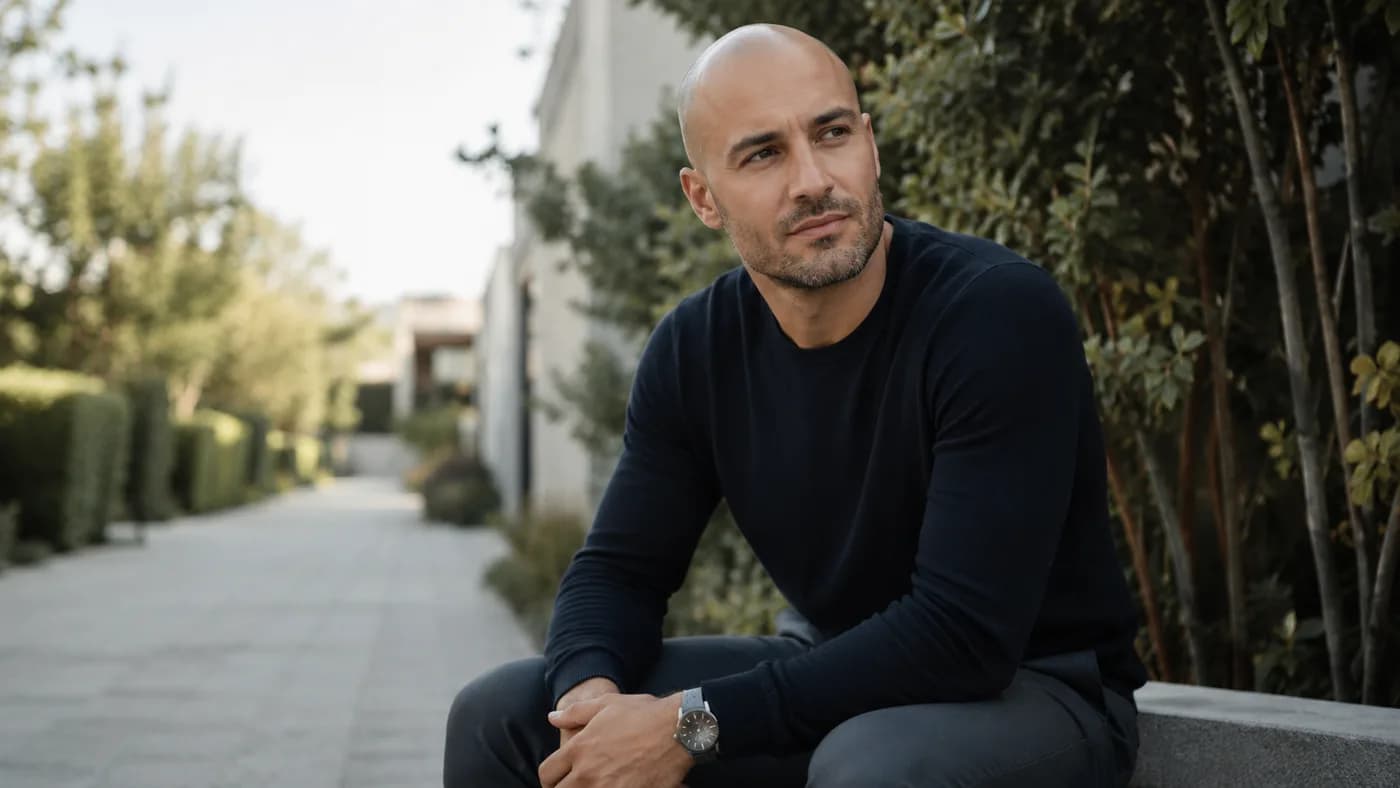
The psychology of going bald: why it feels so emotional
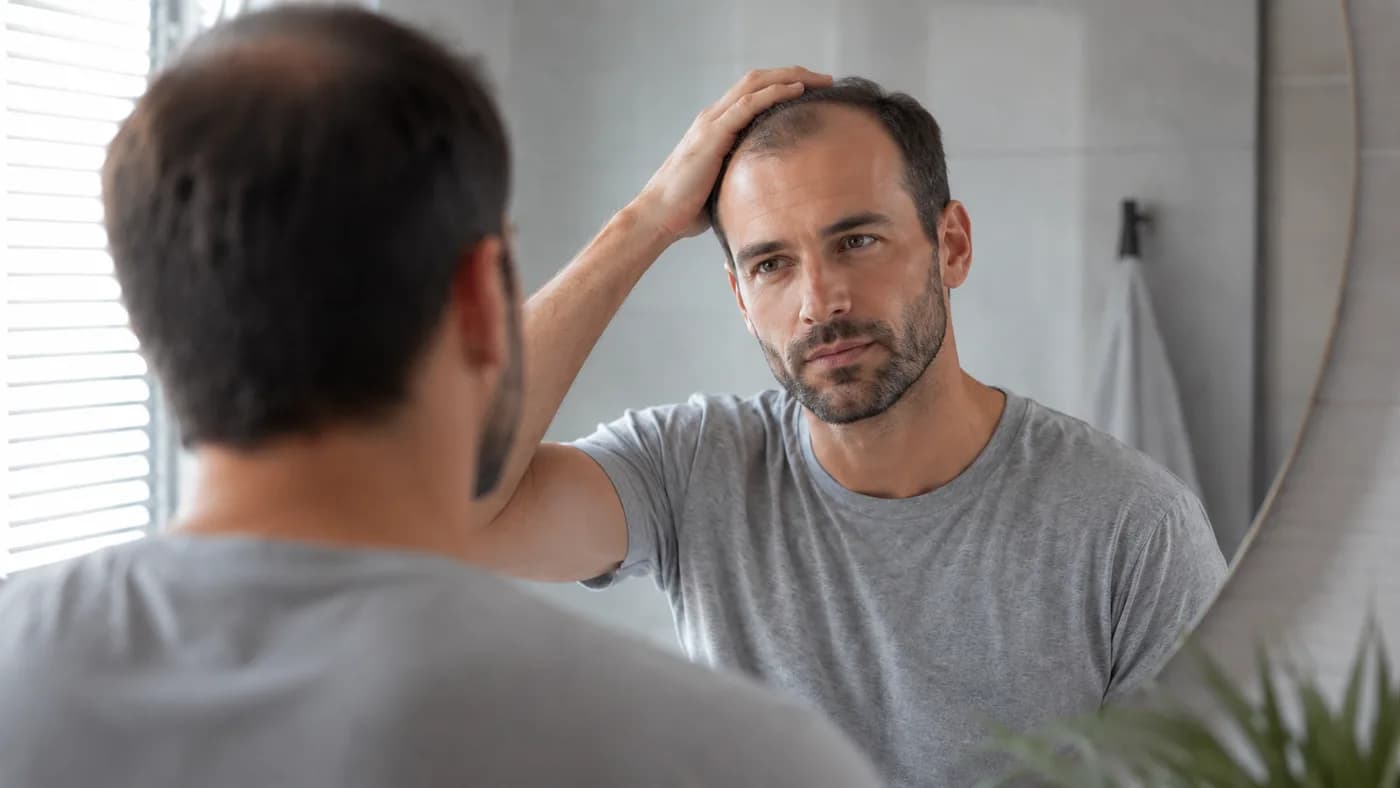
If you are searching for the psychology of going bald, you are probably trying to understand why something that sounds simple on paper can feel so loaded in real life.
That emotional weight is real. Hair loss can touch identity, age, attractiveness, control, dating confidence, and the fear of being judged. It is about what the change seems to say about you.
The short answer is this: going bald feels emotional because hair loss is visible, personal, and hard to control, and the decision to shave can feel like both relief and loss at the same time.
Quick read
Most men are not reacting only to hair. They are reacting to what they believe hair says about age, attractiveness, and self-image.
The decision is often hardest when you cannot picture the outcome clearly and keep imagining the worst version of bald.
Shorter cuts, better photos, and realistic previews turn a vague fear into something you can actually judge.
Why hair loss feels more personal than people expect
Hair loss is different because it changes the frame of your face while also raising questions you may not feel ready to answer.
You may start asking yourself:
- Do I look older now?
- Will dating get harder?
- Am I becoming less attractive?
- Am I supposed to fight this or accept it?
- If I shave, will I still feel like myself?
That is why shallow advice like "just own it" usually misses the point. You are processing a shift in self-image, not only choosing a haircut.
Research supports that emotional impact. A 2024 systematic review and meta-analysis on men with androgenetic alopecia found a mild to moderate psychosocial effect overall, while also noting that distress varies a lot from person to person. A 2021 systematic review and meta-analysis found androgenetic alopecia was associated with impaired health-related quality of life and lower self-esteem, and suggested some patients may benefit from psychosocial support. Cleveland Clinic also notes that male pattern baldness can affect people psychologically and socially, including stress, anxiety, and depression. Sources: 2024 review, 2021 review, Cleveland Clinic.
In plain English: if going bald has felt bigger than you expected, that does not mean you are weak or vain. Visible change plus uncertainty is a strong psychological mix.
The emotional hit is not proof you are handling it badly
Many men judge themselves for caring. That only adds shame on top of the original stress. Caring is normal.
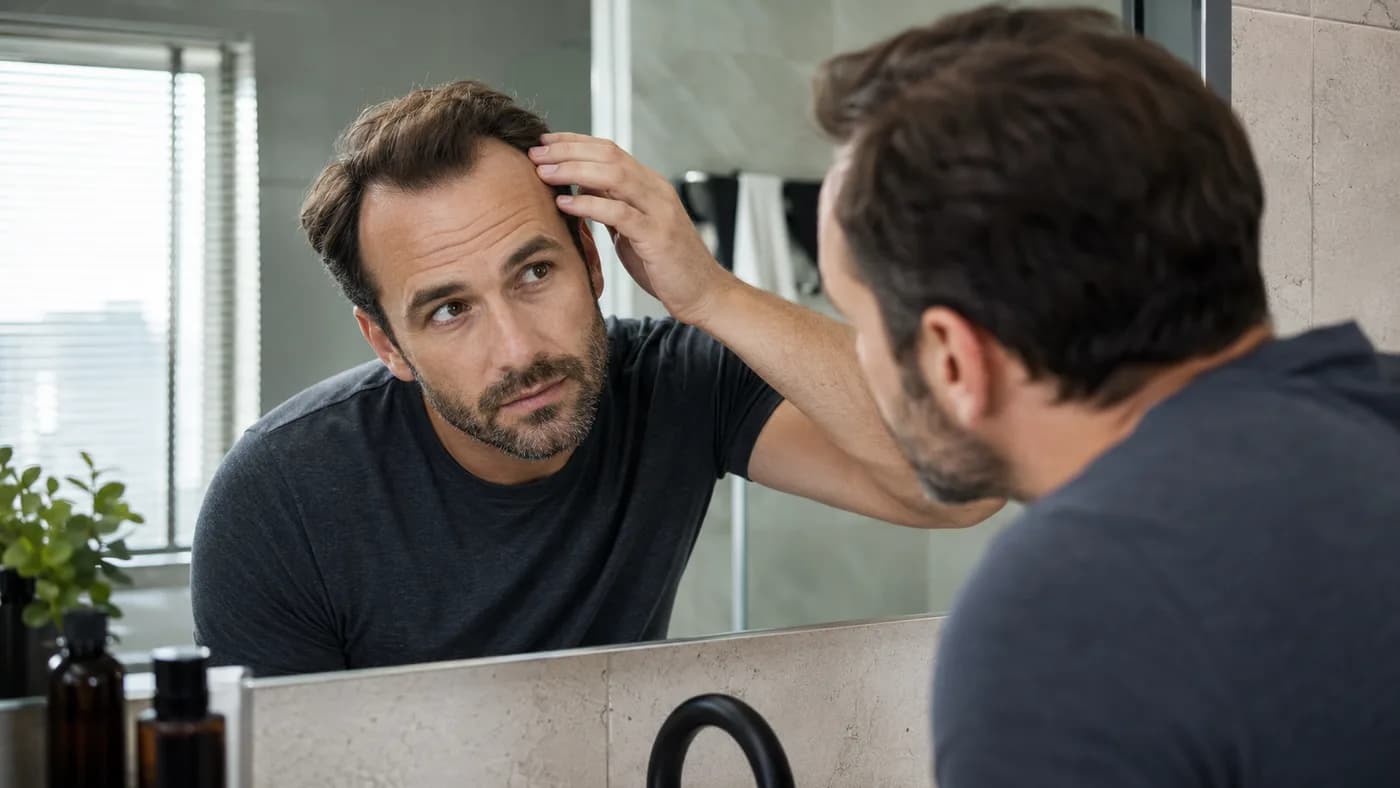
The five emotional triggers behind going bald
The psychology gets easier to manage when you break it into specific triggers.
1. Identity disruption
Most men have seen themselves with hair since childhood. When that frame starts disappearing, your reflection can feel like a version of yourself you have not met yet.
This is why men often say things like "I do not feel like myself" or "I know it is just hair, but it changes everything." They are reacting to identity shock, not only to aesthetics.
2. Loss of control
Hair loss often feels unfair because it develops on its own timeline. You can style around it, monitor it, treat it, or ignore it, but you cannot negotiate with it.
Many men are less upset by being bald than by becoming bald. The transition period is the hard part because it creates uncertainty without closure.
3. Fear of social judgment
The fear is usually social, and it can show up as:
- checking your hair before every social event,
- worrying about bright lighting, rain, wind, or photos,
- wondering if coworkers will notice,
- assuming dating will become harder,
- imagining that other people are paying more attention than they really are.
The social fear is often strongest before the change becomes public. Once the haircut is done, the anxiety usually becomes easier to manage.
4. Decision paralysis
This is the classic loop:
- You dislike what your hair is doing now.
- You are not sure a shaved head will suit you.
- You delay the decision and keep researching.
- The hair keeps changing.
- The emotional charge grows because you still have no answer.
This is why the question "should I shave my head?" can stay stuck for months. You are choosing between a familiar problem and an unfamiliar one.
5. Attractiveness anxiety
For many men, the deepest fear is not the haircut itself. It is whether bald changes how attractive, masculine, youthful, or desirable they feel.
That fear gets worse online because you will find extreme opinions in both directions. Real life is less absolute.
Why the in-between stage is often the hardest
Fully bald is a clear look. A full head of hair is also a clear look. The hardest psychological zone is often the in-between stage where you are constantly comparing the present to the past.
That stage tends to create:
| Mental pattern | What it sounds like | What helps |
|---|---|---|
| Monitoring | "Maybe it is not that bad from this angle." | Compare photos monthly, not hourly |
| Avoidance | "I will deal with it later." | Test a shorter cut instead of waiting |
| Catastrophizing | "If I shave, I will hate how I look." | Use a realistic preview and fair lighting |
| Identity clinging | "Hair is the only version of me that makes sense." | Improve beard, clothes, skin, and posture at the same time |
| Social projection | "Everyone will think I look worse." | Remember most people adjust faster than you do |
This is why the article on bald head confidence helps after the shave, while this conversation matters before and during the decision.
Dating, work, and age fears
Most baldness anxiety eventually lands on three worries:
- Dating: hair can feel tied to youth and desirability, even though dating confidence is shaped by much more than hair alone.
- Work: many men worry a shaved head will look too harsh, even though grooming quality matters more than the absence of hair.
- Age: bald can read older in some cases, but thinning hair can also age you more than a clean shaved head.
If the real fear is social, the better question is not "Is bald good or bad?" It is "Do I look more self-conscious with thinning hair than I would with a cleaner, more intentional look?" The article on does being bald affect dating goes deeper on one part of that.
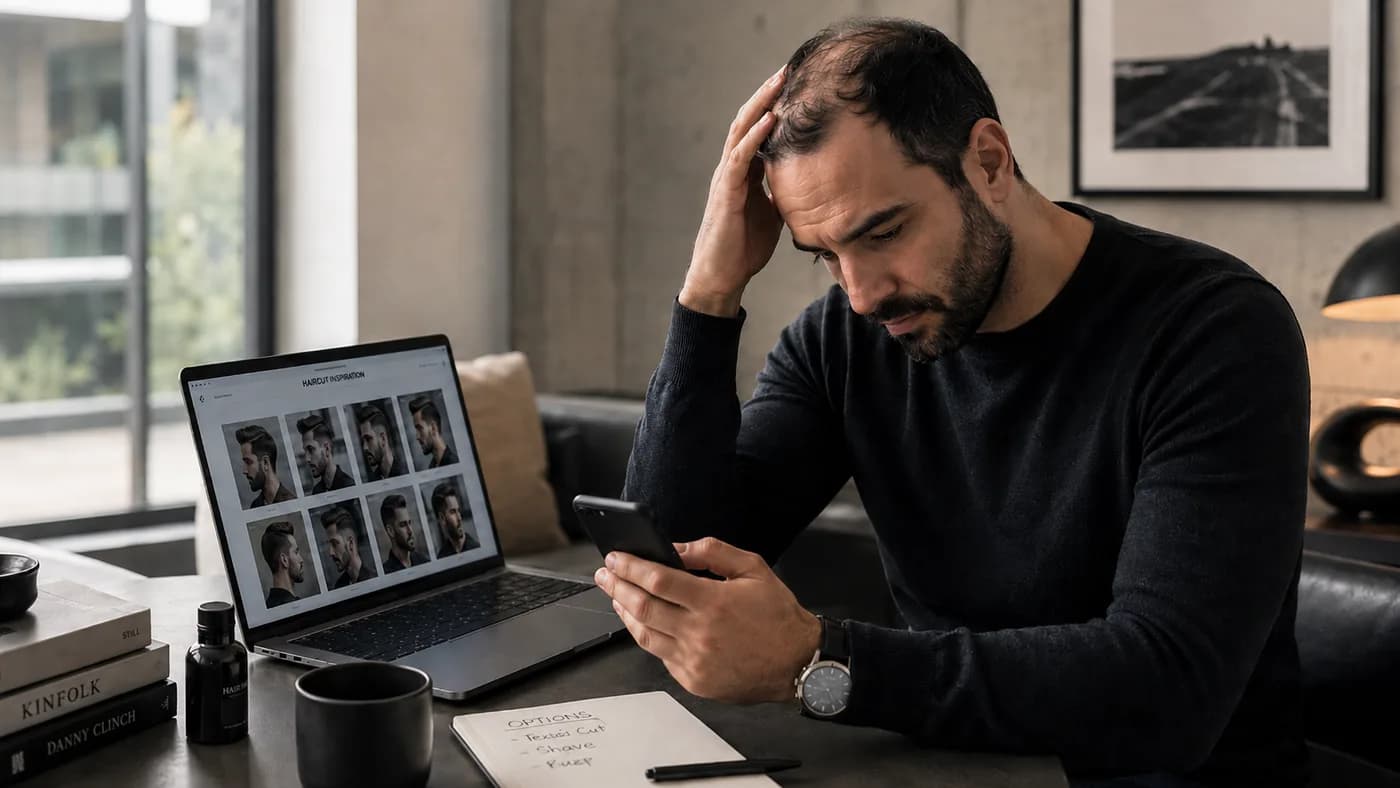
How to be confident bald without forcing fake confidence
If you want to know how to be confident bald, the answer is not to force yourself to like every angle immediately. Real confidence comes from reducing uncertainty, improving the full look, and giving your brain evidence.
Use this sequence instead.
Confidence usually follows evidence. It does not arrive first.
Why a preview helps psychologically
The biggest emotional problem with going bald is often the unknown. A realistic preview can reduce that.
That matters because the brain handles visible evidence better than abstract fear. One good preview can do more than fifty forum threads.
If you want a low-pressure first step, BaldLooks Free Analysis gives you a practical read from one photo. If you want to explore the look more seriously, paid BaldLooks plans let you compare a shaved head across different angles, outfits, and locations, which usually makes the final decision feel less loaded and more deliberate.
When embracing baldness gets easier
For most men, embracing baldness does not happen in one dramatic moment. It gets easier when:
- your current hair stops feeling worth the mental load,
- the shaved or shorter look starts looking cleaner than the in-between stage,
- you stop comparing every photo to an older version of yourself,
- the rest of your grooming supports the change,
- you get a few normal social experiences with the new look.
Embracing baldness is usually more practical than philosophical. You shave, refine the details, live with the look, and it starts to become yours.
Do not confuse first exposure with final truth
Many men think their first shocked reaction is the most honest one. Usually it is just the least adjusted one. Familiarity changes perception more than people expect.
Final answer: why going bald feels so emotional
Going bald feels emotional because it combines visible change, limited control, social fear, and identity pressure in one place. You are deciding how to see yourself while other people can see the change too.
The good news is that the emotion usually drops once the uncertainty drops. Honest photos, shorter transition cuts, better grooming, and realistic previews all help because they replace vague fear with something concrete.
If you are stuck, ask better questions:
- Is my current hair improving my look or draining my attention?
- Am I judging bald against reality or against an idealized older version of myself?
- Would clarity help more than more delay?
Once you answer those honestly, the psychology usually gets simpler. Not effortless, but simpler. And that is often enough to move from stress to a real decision.