
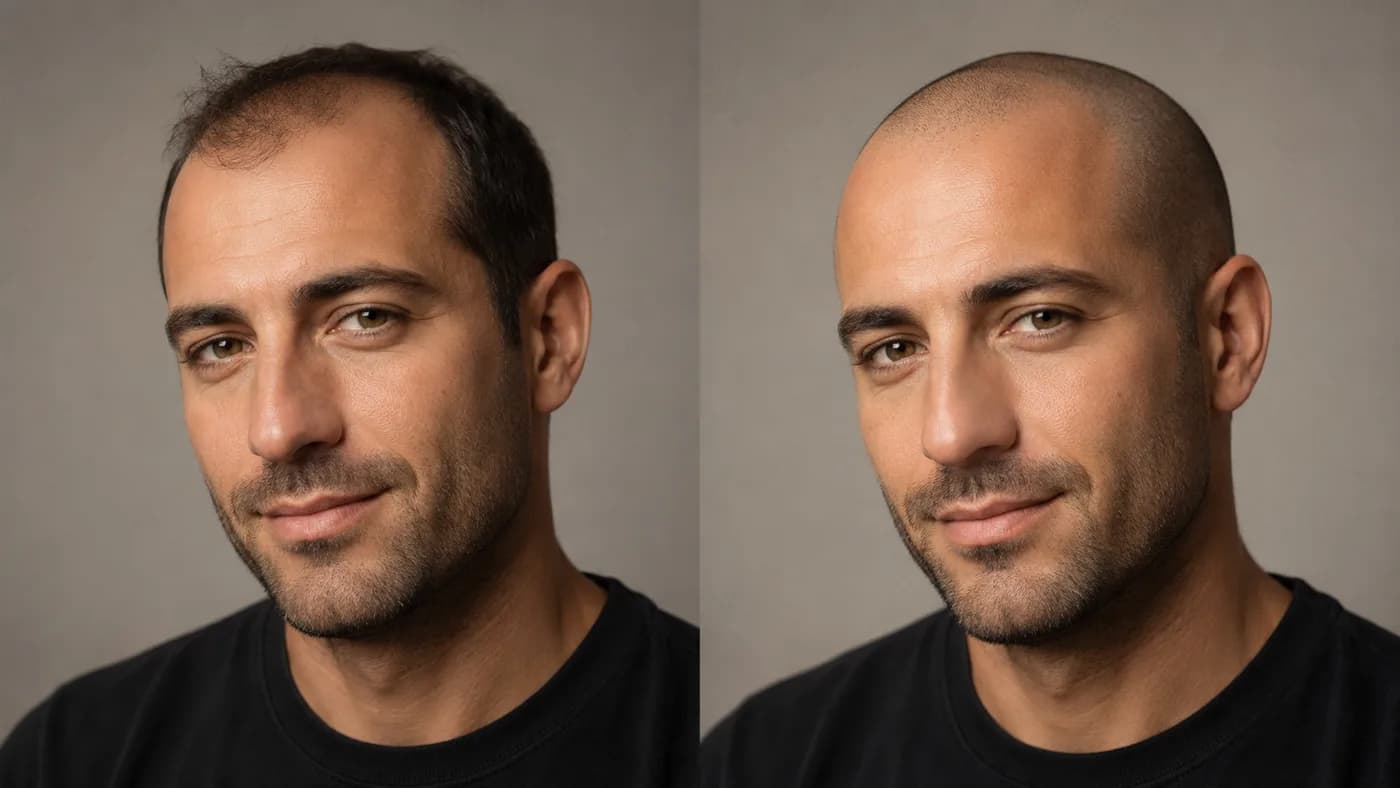
A receding hairline shaved head before and after usually does not make you look like a different person. It changes what your face has to compete with.
Before the shave, the eye can get caught on retreating temples, a thin front edge, or fuller sides that make the top look weaker. After the shave, that uneven outline disappears. Your forehead is more visible, but so are your eyes, brows, jaw, expression, beard, and glasses.
For many men, that is the improvement: not more hair, but less visual conflict. The real question is not whether a shaved head is universally better. It is whether it looks more intentional than the hair you are currently trying to manage.
Quick read
A close shave removes the mismatch between dense sides and thinner temples, so the hairline stops being the main feature.
You see the whole forehead after shaving, but an uneven receding edge can be more distracting than a clean, consistent silhouette.
A #2, #1, or #0 can show whether reducing length already improves the look before you go fully smooth.
Quick answer: will shaving improve a receding hairline?
Shaving can improve the appearance of a receding hairline when longer hair is creating an obvious contrast: thin or sparse temples against dense sides, a fragile comb-over, or a front that only works from one angle. It removes the uneven boundary rather than trying to disguise it.
It does not erase every concern. You will still have your natural forehead and head shape, and scalp care becomes part of your routine. But a shaved head can turn “I am losing my hair” into a cleaner style choice.
The American Academy of Dermatology describes male-pattern hair loss as a slow process that can begin with a receding hairline or a bald spot on top. The Cleveland Clinic notes that the pattern commonly involves the temples, crown, or both. That range matters: the best before-and-after is shaped by your pattern, not a celebrity photo.
A shaved head is a style choice, not medical advice
If loss is sudden, patchy, painful, itchy, or scaly, get it checked by a dermatologist. A new haircut can still be empowering, but it should not replace understanding an unusual change in your scalp or hair.
What changes before and after shaving a receding hairline?
1. The temples stop drawing the eye
When the front corners are thinning, most styling tries to solve one problem: make the hairline look less visible. Longer length often makes that harder. It can separate in daylight, lift in wind, or reveal a sharper contrast in photos.
With a close shave, there is no thin front edge to protect. The temples become part of an even scalp surface, which often looks calmer from the front and three-quarter angle. This is why a shaved head can feel especially freeing when your hairstyle is only reliable in the mirror.
The tradeoff is honesty: you no longer have hair softening the transition into your forehead. That is not automatically a negative. A clean shape is often easier to read than a hairline that looks like it is retreating in several directions.
2. Dense sides no longer make the top look weaker
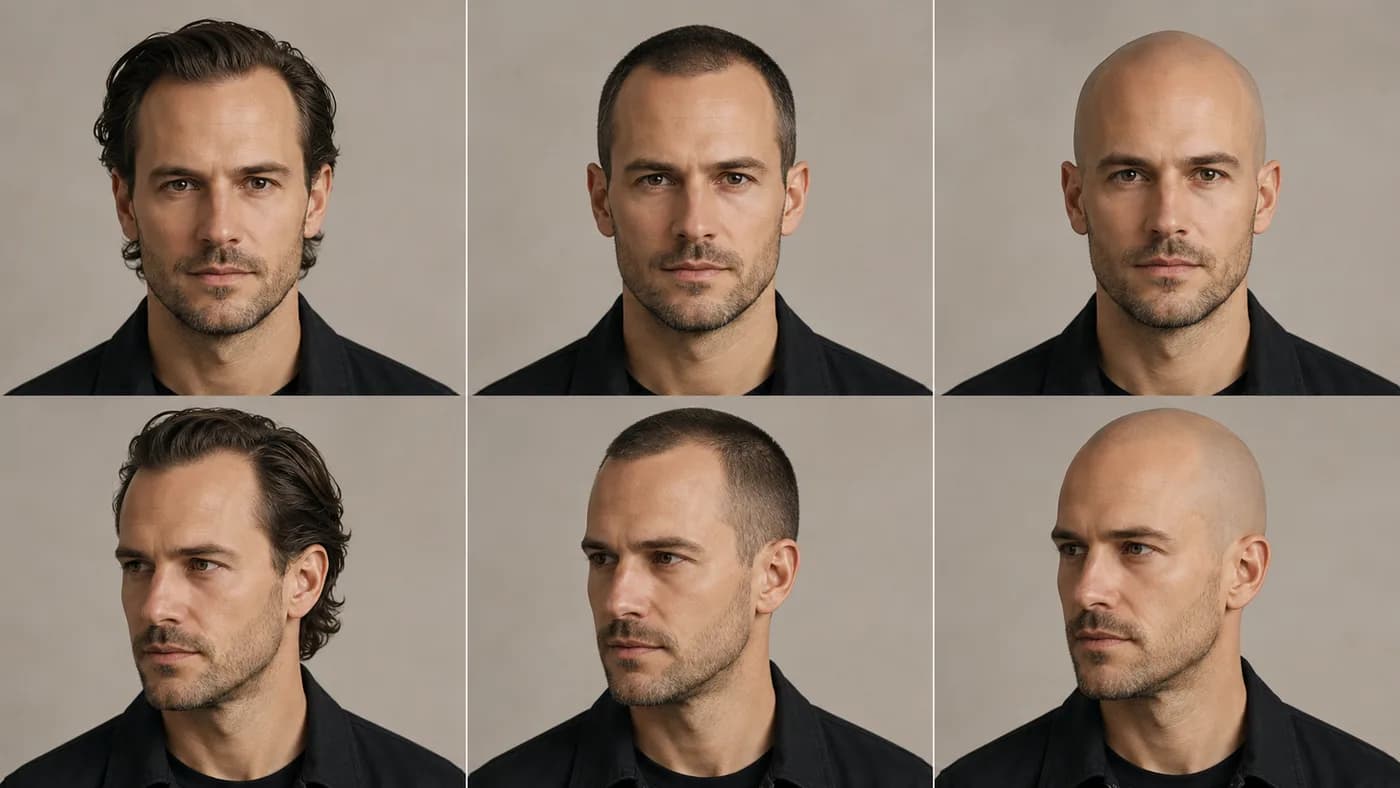
A common before-and-after problem is not the amount of hair alone. It is the difference between the sides and the front. When the sides are thick but the temples are fading, the remaining hair can frame the recession like a spotlight.
Taking everything short reduces that mismatch. A shave is the most complete version of the effect; a buzz may give you enough of it. If your top still has reasonably even coverage, a buzz can keep some texture. If every shorter guard looks cleaner, a shaved head may be the more coherent endpoint.
For a closer comparison, see Buzz Cut vs Bald and Buzz Cut for a Receding Hairline.
3. Your face, not the hairline, becomes the anchor
Removing hair changes the frame around your face. Brows, eye contact, skin tone, glasses, shoulders, and facial hair take up more visual weight. That can feel intense in the first few days because you are used to seeing hair as part of your identity. Give the change a little time and judge it in normal settings, not just one bathroom mirror.
This is also why one man’s transformation looks dramatic and another’s looks subtle. The haircut is only one variable. Beard density, face shape, glasses, and clothes change the result.
4. Maintenance shifts from styling to grooming
You trade product, volume tricks, and checking the front edge for clipping or shaving, scalp moisturizing, and sun protection. Some men prefer that exchange immediately. Others like the freedom of a short buzz without committing to a smooth head.
The best option is the one you will actually keep up. Read How Often Should You Shave Your Head? if you want to understand the maintenance side before deciding.
Before and after by receding-hairline pattern
The Hamilton-Norwood scale is a useful common language, not a rulebook for when to shave. Cleveland Clinic describes early stages as mild temple recession, with deeper temple change and possible crown loss appearing later. Your density, styling preference, and confidence matter more than reaching a particular number.
If you are not sure whether the front has truly changed, start with Hairline Test: Is Your Hairline Mature or Receding?. If crown thinning is part of the picture, Receding Hairline and Crown Thinning gives you the more complete pattern check.
Beard and stubble: helpful, but not required
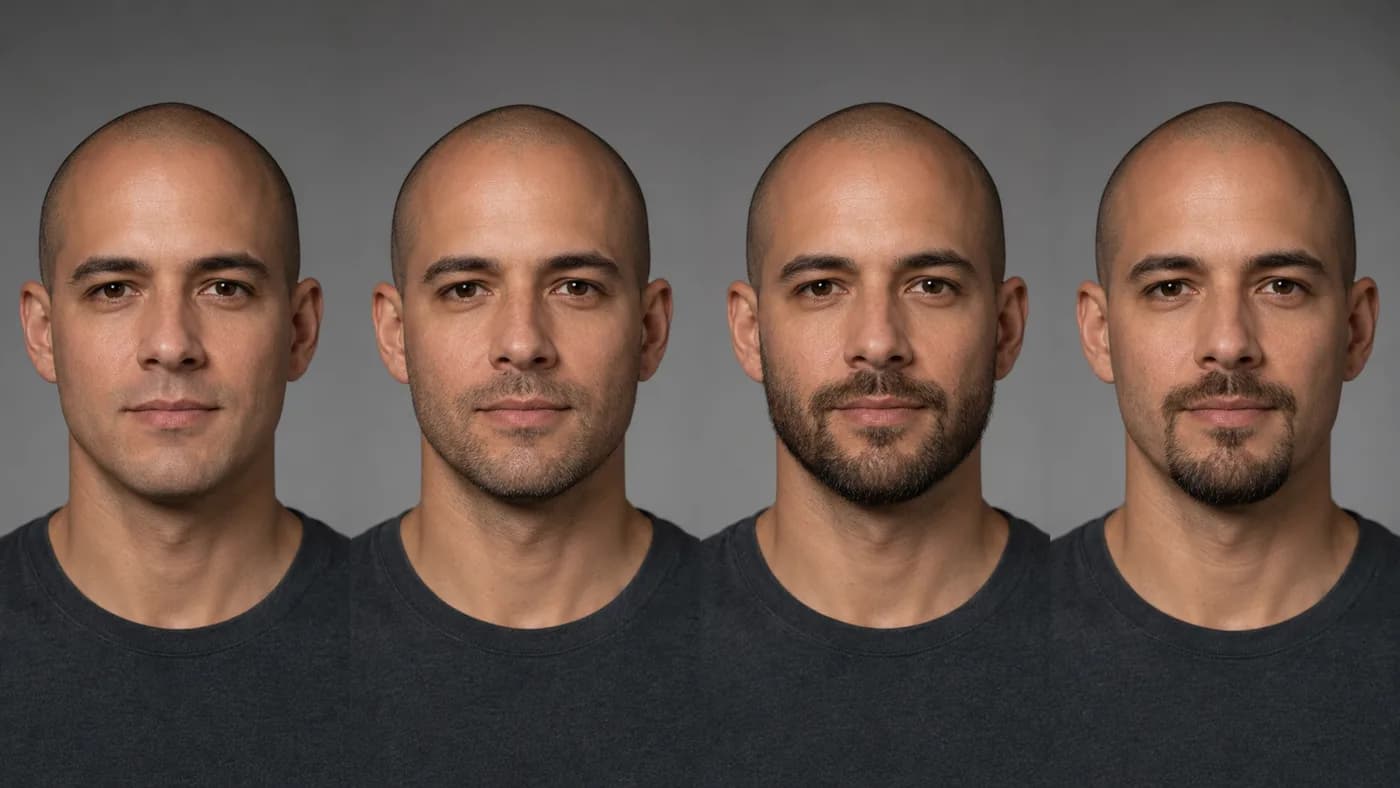
Beard advice for bald men gets overstated. You do not need a beard to “qualify” for a shaved head. A clean-shaven face can look sharp with strong brows, good skin care, glasses, or a well-fitting collar.
Facial hair is useful when you like the lower-face balance it adds. After shaving, a little stubble can create a visual connection between the scalp and jaw. A short beard can add more lower-face weight. But a patchy beard forced into a large shape can look less intentional than neat stubble or no beard.
Explore Bald With Stubble, Bald With Goatee, and Bald With No Beard for more specific directions.
How to make your own fair before-and-after comparison
Do not use a random bald filter on a badly lit selfie and call it an answer. A useful comparison keeps the photo conditions stable so you can judge the haircut, not the camera.
- Take a front-facing photo in even daylight with no hat and your hairline visible.
- Add a three-quarter photo. Include the crown if that is changing too.
- Compare your current hair with a #2 or #1 buzz, then a close shaved version.
- Keep your expression, glasses, and basic lighting the same across each option.
- Test one facial-hair variation at a time: clean-shaven, stubble, or your usual beard.
- Look at the images at normal phone size, then revisit them the next day rather than deciding in the first emotional minute.
When keeping hair or choosing a buzz makes more sense
A shaved head is not the only confident answer. Keep your hair if the recession is stable, density is still even, and you genuinely like the way it styles. Choose a buzz when you want less contrast but still prefer some texture or a gradual transition.
If preserving hair is important to you, talk to a dermatologist early rather than relying on haircut advice alone. The AAD says treatment options for male-pattern hair loss exist and that earlier treatment tends to produce better results for men who choose that path. A dermatologist can also distinguish typical gradual pattern loss from other causes.
The strongest decision is not “shave because the internet says bald is better.” It is choosing the version—current hair, buzz, shaved, or treatment plan—that makes you feel least preoccupied with your hairline in real life.
The bottom line
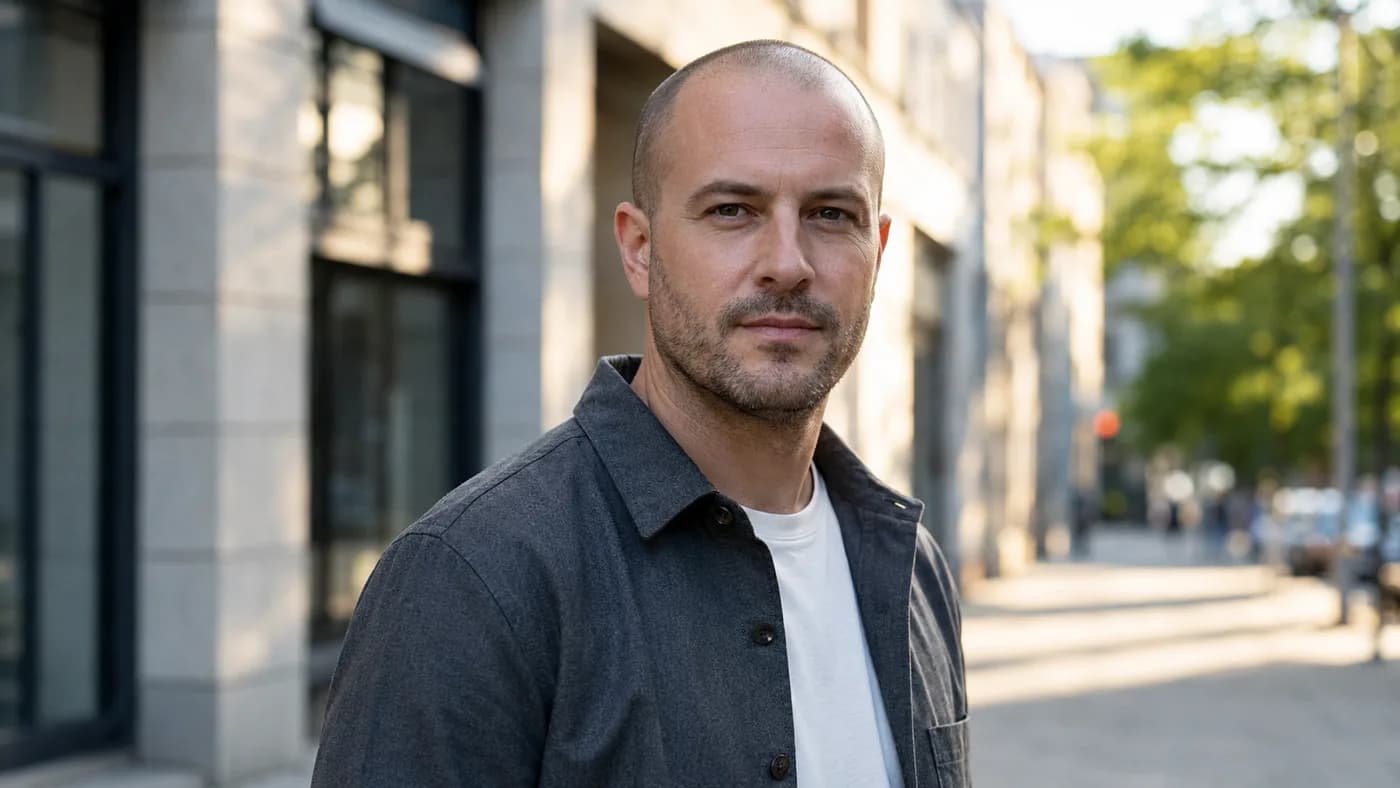
A receding hairline shaved head before and after works best when it replaces an uneven, high-maintenance hairline with a silhouette that looks deliberate from every angle. It may show more forehead, but it can also stop the temples, thin front, and dense sides from competing with your face.
Preview it using your own photo, compare a buzz and a shave, and test the beard or stubble you would realistically wear. That gives you a better answer than someone else’s transformation—and makes the real decision feel much less like a leap.