
Best Haircuts for a Receding Hairline in 2026
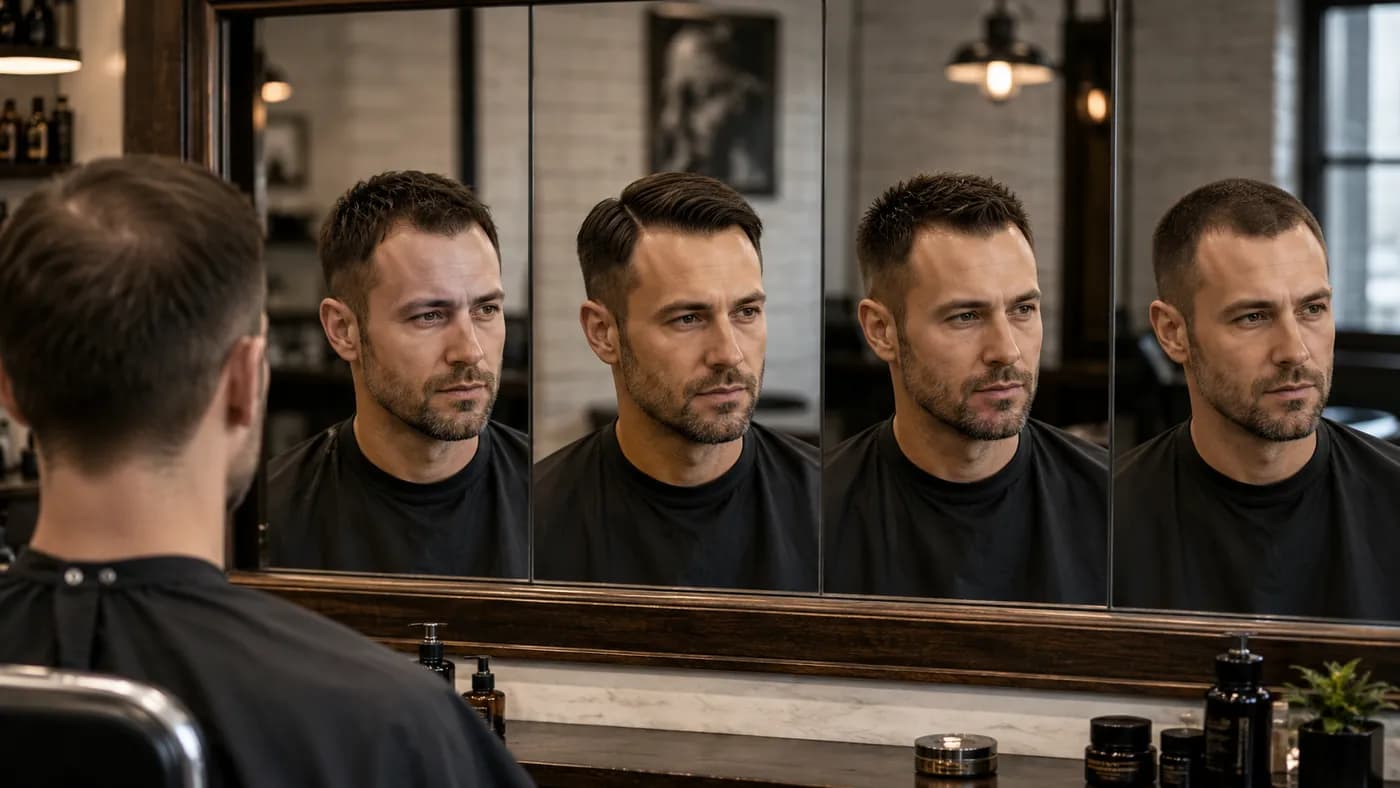
If you are searching for the best haircuts for a receding hairline, the goal is not to magically hide hair loss. The goal is to choose a haircut that makes the recession look deliberate, balanced, and low-stress.
Most bad haircut advice for receding hairlines is built around denial. It tries to preserve the idea of a full hairline even when the temples have clearly moved back. That usually creates more contrast, more styling effort, and worse results in bright light, wind, or photos.
The better approach is simpler: choose styles that work with recession instead of against it.
Quick read
Short cuts reduce the contrast between the temples, top, and sides, which often makes recession look more intentional.
An M-shaped hairline, temple recession, and a widow's peak do not all benefit from the exact same haircut.
If every shorter haircut improves the look, testing fully bald may be the cleanest next step.
Quick answer: what actually works?
The best haircuts for a receding hairline are usually:
- buzz cut,
- crew cut,
- high fade with a short top,
- textured crop,
- Caesar cut,
- short quiff,
- close shave,
- fully shaved head.
These cuts tend to work because they do one or more of three things:
- reduce the visual gap between thick sides and a weaker front,
- keep the top short enough that thinning does not collapse,
- stop the hairline from becoming the entire point of the style.
The Cleveland Clinic notes that male pattern baldness often shows up as temple recession, a receding hairline, and crown thinning. The American Academy of Dermatology similarly describes a receding hairline and top thinning as common early signs. That matters because the right haircut is less about fashion trends and more about how your loss pattern reads from normal distance.
What makes a haircut good for a receding hairline?
A haircut usually works well when it solves one of the main visual problems caused by recession:
- the temples sit farther back than the middle,
- the top looks weaker than the sides,
- longer styling exposes scalp or separation,
- the haircut only works from controlled angles.
A haircut usually fails when it asks thin or receded hair to behave like dense hair. That is why the safest advice is often simple: go shorter, cleaner, and more intentional.
Do not chase 'fuller' if cleaner is available
Many men keep choosing styles that promise more volume. If the added volume only makes the recession easier to notice, it is not helping. Cleaner usually beats fuller.
The best haircuts for a receding hairline
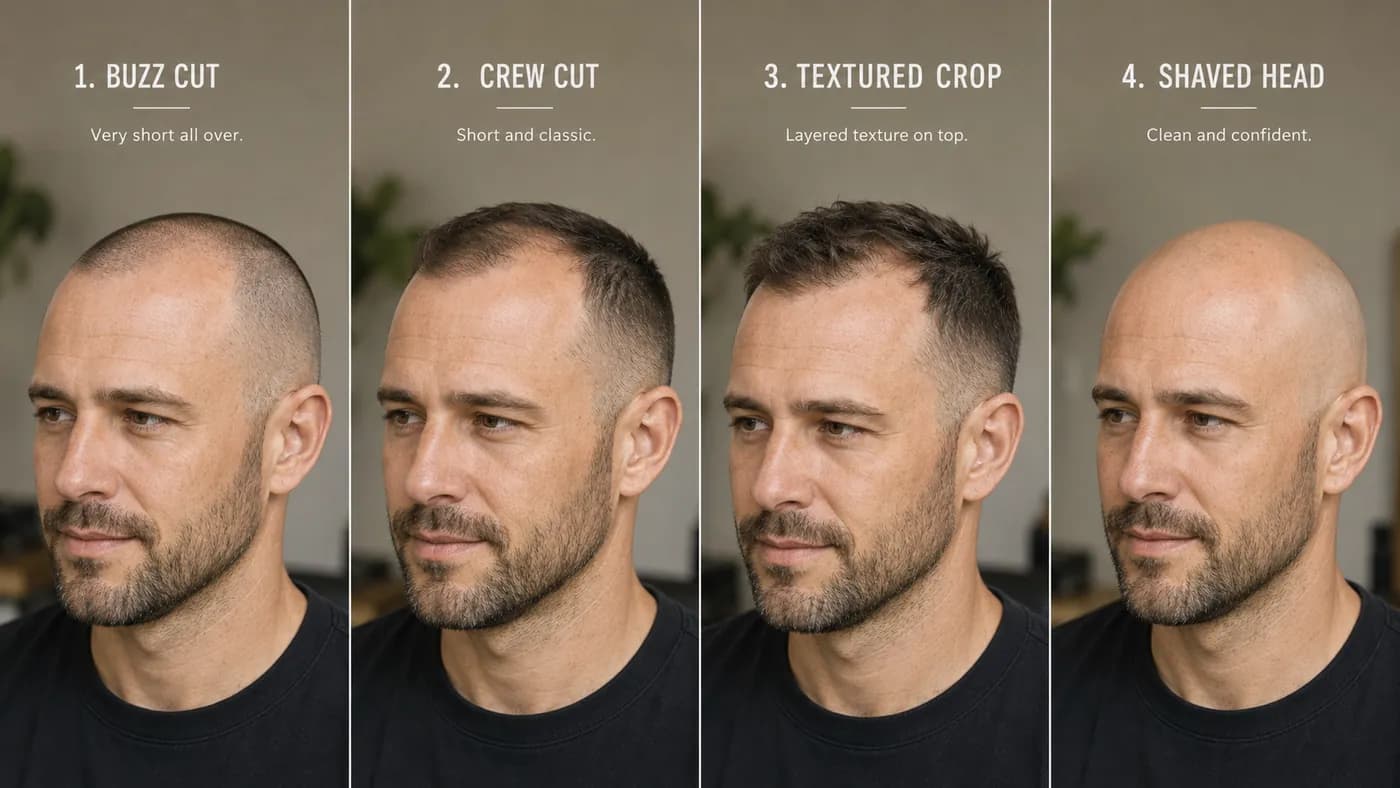
1. Buzz cut
The buzz cut is one of the safest choices because it lowers contrast fast. It does not hide recession, but it often makes the whole haircut look calmer and sharper.
A #1 or #2 is the usual starting point. A #1 is stronger when the recession is obvious. A #2 works well when the top still has solid density.
If you want the fuller breakdown, the guide to a buzz cut for a receding hairline goes deeper on guard lengths.
2. Crew cut
A crew cut keeps the top slightly longer than a buzz while staying short enough to avoid fragile styling. It works especially well if you still have decent density behind the hairline but want structure without pretending the temples are not moving back.
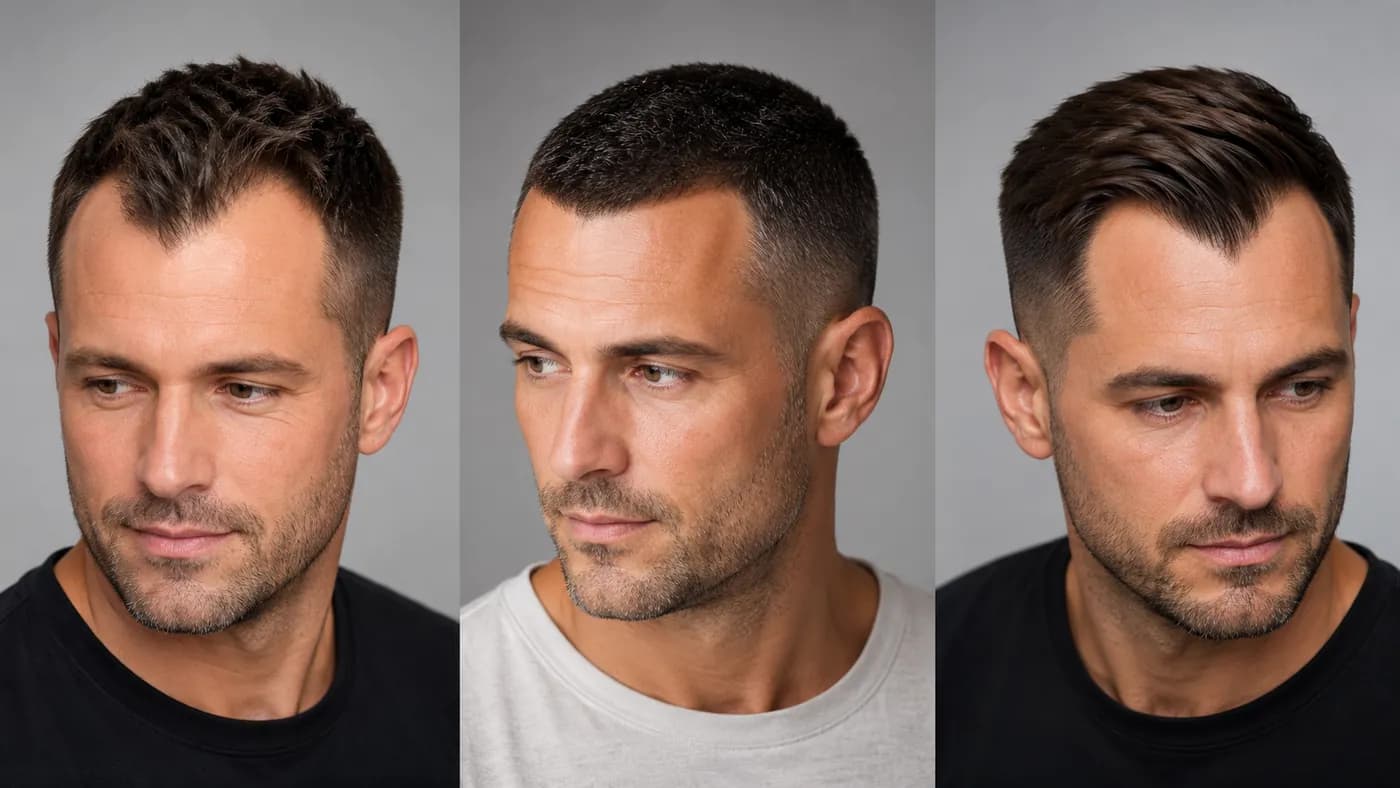
3. High fade with a short top
A high fade can help when the sides are very dense and the recession looks heavy by comparison. Taking the sides tighter removes some of that weight and makes the whole head look more balanced, but only if the top stays short too.
4. Textured crop
A textured crop works best when the front still has enough density for soft texture. It can break up the hairline visually without relying on height.
This is often one of the best answers for men who want a modern haircut but know that long, styled volume is no longer flattering.
5. Caesar cut
The Caesar cut stays popular for recession because the short forward fringe softens the hairline and keeps attention moving horizontally instead of upward. GQ recently described the Caesar cut as a strong option for receding hairlines because that blunt, forward fringe helps balance the front.
The catch is density. If the front is too thin, the fringe can start to look sparse instead of strategic.
6. Short quiff
A short quiff can still work, but only when the word short is doing real work. You want just enough lift to shape the face, not a tall front that exposes deep corners and thin density behind them.
This option is usually better for early recession than obvious recession.
7. Close shave
A close electric shave or no-guard clipper cut is a useful bridge between haircut and full razor shave. It strips away most of the contrast without exposing the scalp as fully as a smooth shave.
8. Fully shaved head
Sometimes the best haircut for a receding hairline is no haircut at all.
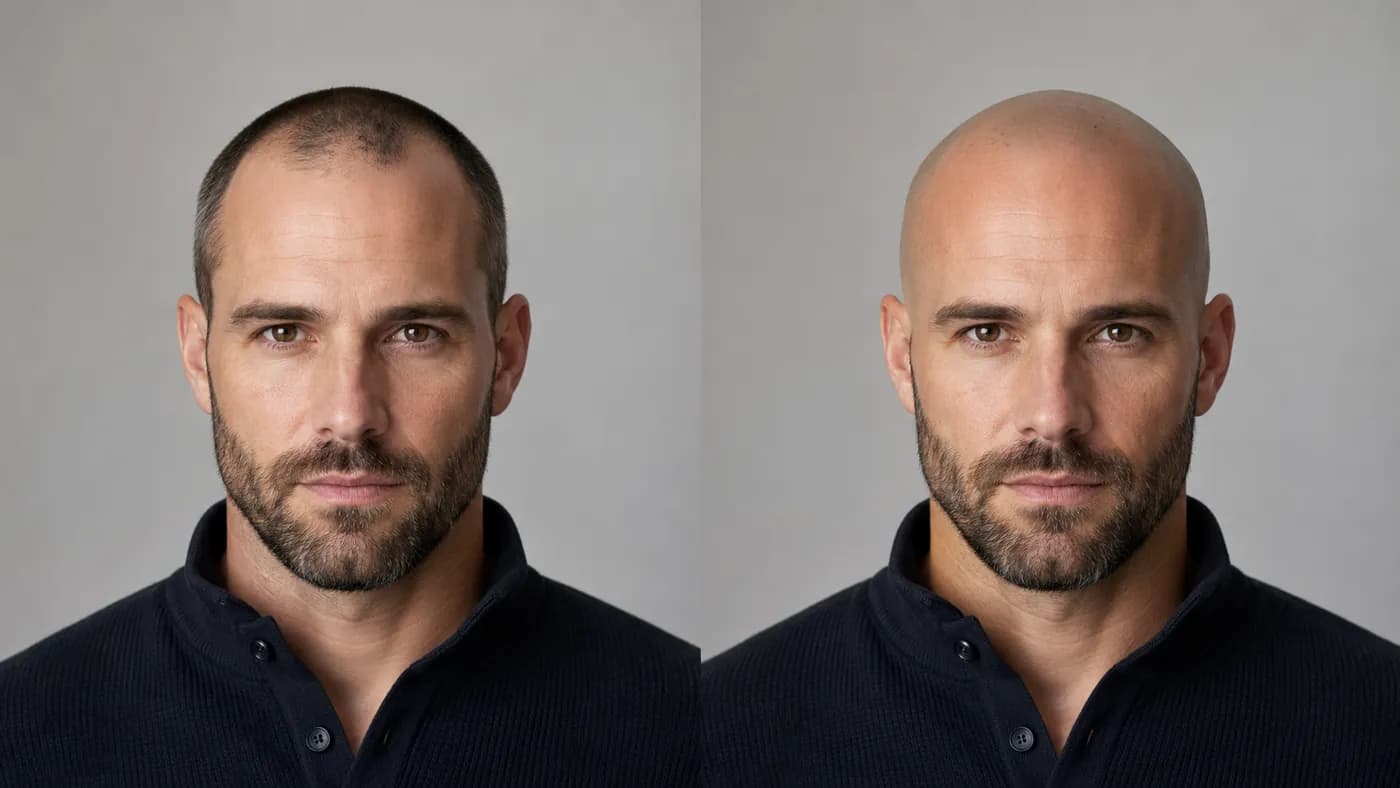
If the top is also thinning, the crown is opening, or every shorter style looks stronger than the last, the shaved head is often the cleanest answer. That is also why a lot of men end up comparing buzz cut vs bald before they commit.
Which haircut works best for your pattern?
M-shaped hairline
If your temples have moved back enough to create a strong M shape, the best cuts are usually the ones that stop trying to rebuild the front line.
Best bets:
- buzz cut,
- crew cut,
- Caesar cut,
- shaved head.
Worst bets:
- long quiff,
- slick back,
- comb-forward with obvious separation.
Temple recession
Temple recession is often still manageable with short structured cuts. A crew cut, textured crop, or short quiff can work if the density behind the front is still solid. If it is actively thinning, shorter usually wins.
Widow's peak
A widow's peak is not automatically a problem. In many cases, it looks best when you stop fighting it.
Short textured cuts, crew cuts, and Caesar-style fronts usually work better than trying to flatten or disguise the center point. The mistake is often letting the rest of the style get too long, which makes the peak look more dramatic.
Haircuts and styles to avoid
Some styles fail for the same reason over and over: they create more contrast than the hairline can support.
Usually avoid:
- long combovers,
- tall pompadours,
- slick backs with visible corners,
- long disconnected tops with tight sides,
- wet-look products that separate thin hair,
- heavy fringes that need constant arranging.
These styles can look good in a controlled mirror, then fail in daylight, wind, or side-profile photos. If you keep adjusting the front every hour, the haircut is doing too much labor for too little payoff.
Buzz cut vs fully shaved head
This is the real decision for a lot of men.
A buzz cut is better when:
- the top still has enough density to look even,
- you want a softer transition,
- the recession is obvious but not yet paired with major crown thinning.
A shaved head is better when:
- the top is also getting thinner,
- the crown is distracting,
- the sides are much denser than the top,
- every shorter step already looks better.
If you are not sure which side you land on, preview the shaved version first so you can compare it against the short-hair version on your own face. BaldLooks Free Analysis gives you a first read from one photo, and paid plans let you compare more angles, outfits, and settings without guessing.
How to choose without overthinking it
If you want a practical sequence, use this:
- Start with a short, honest haircut such as a crew cut or #2 buzz.
- Take photos from the front, side, and under natural light.
- If shorter keeps improving the look, move to #1 or no guard.
- If the top still looks weaker than the sides, test fully shaved.
The AAD recommends broad-spectrum SPF 30+ sunscreen for exposed skin, which matters more if you buzz very short or shave smooth.
You can also use related guides if you are still narrowing things down:
- Receding hairline: when is it time to shave?
- Buzz cut for a receding hairline: does it actually look good?
- Will I look good bald?
Final answer
The best haircuts for a receding hairline are the ones that stop fighting the recession.
For most men, that means short, controlled styles like the buzz cut, crew cut, textured crop, Caesar cut, close shave, or fully shaved head. If your style depends on hiding the temples, preserving volume, or carefully arranging the front, it is probably already losing.
Choose the haircut that makes your face stand out more than your hairline. If shorter keeps improving the result, keep going. If you want to remove the guesswork before making the cut, preview the bald option first.