
Minoxidil vs Shaving Your Head: Which Makes More Sense?
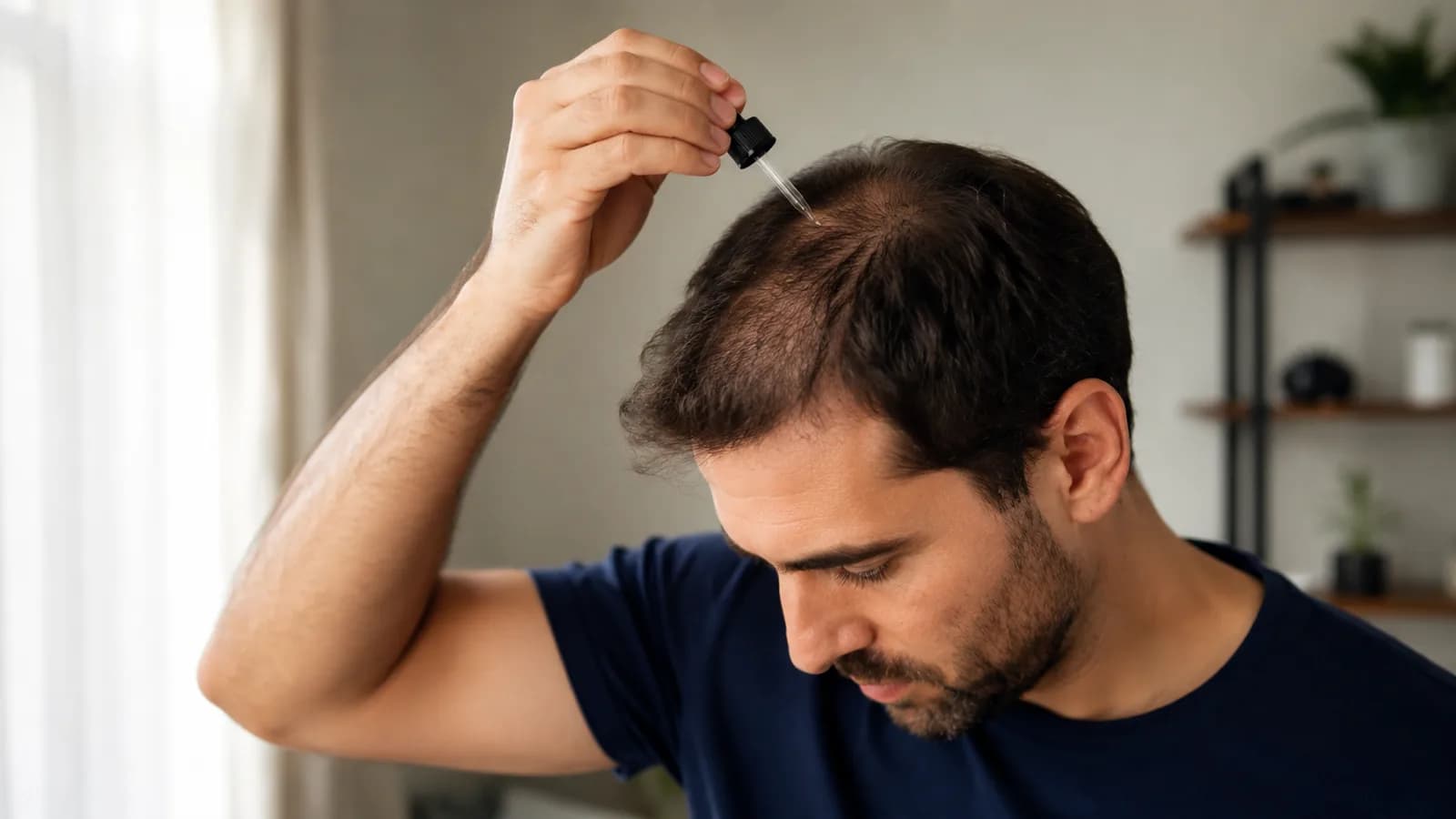
If you are stuck between minoxidil vs shaving your head, you are not only comparing two hair-loss tactics. You are comparing two different lifestyles.
Minoxidil is the "try to keep or improve the hair" path. Shaving your head is the "stop negotiating with the hair" path.
Neither choice is automatically smarter. The better option depends on what you want from the next year of your life:
- more time trying to preserve hair,
- or a cleaner decision right now.
Quick read
It may help some men, but results usually take months and depend on daily consistency.
It does not treat hair loss, but it removes the visible contrast between thinning and denser areas on day one.
Choose minoxidil if keeping hair matters most. Choose shaving if simplicity and immediate visual control matter more.
Medical note
This article is educational, not medical advice. Hair loss has different causes, and treatment decisions should be made with a qualified healthcare professional, especially if you are considering minoxidil or other medications.
What each option is actually trying to do
The biggest mistake is pretending these two options do the same job.
Minoxidil is a treatment path. The American Academy of Dermatology says topical minoxidil is FDA-approved for male pattern hair loss and can reduce hair loss, stimulate some growth, and strengthen existing hairs for some men. But it also notes that you are unlikely to see full regrowth, it must be used every day, and it can take up to six to 12 months to see whether it is helping.
Shaving your head is not treatment. It is a grooming decision. It does not regrow hair. It changes the way hair loss reads visually by removing the uneven contrast between stronger zones and weaker zones.
So the first question is not "Which one works better?" It is:
Are you trying to save hair, or are you trying to make the whole situation look cleaner now?
If you still strongly want hair on your head, minoxidil makes more sense to explore. If you are more tired of managing the issue than attached to keeping hair, shaving may be the stronger move.
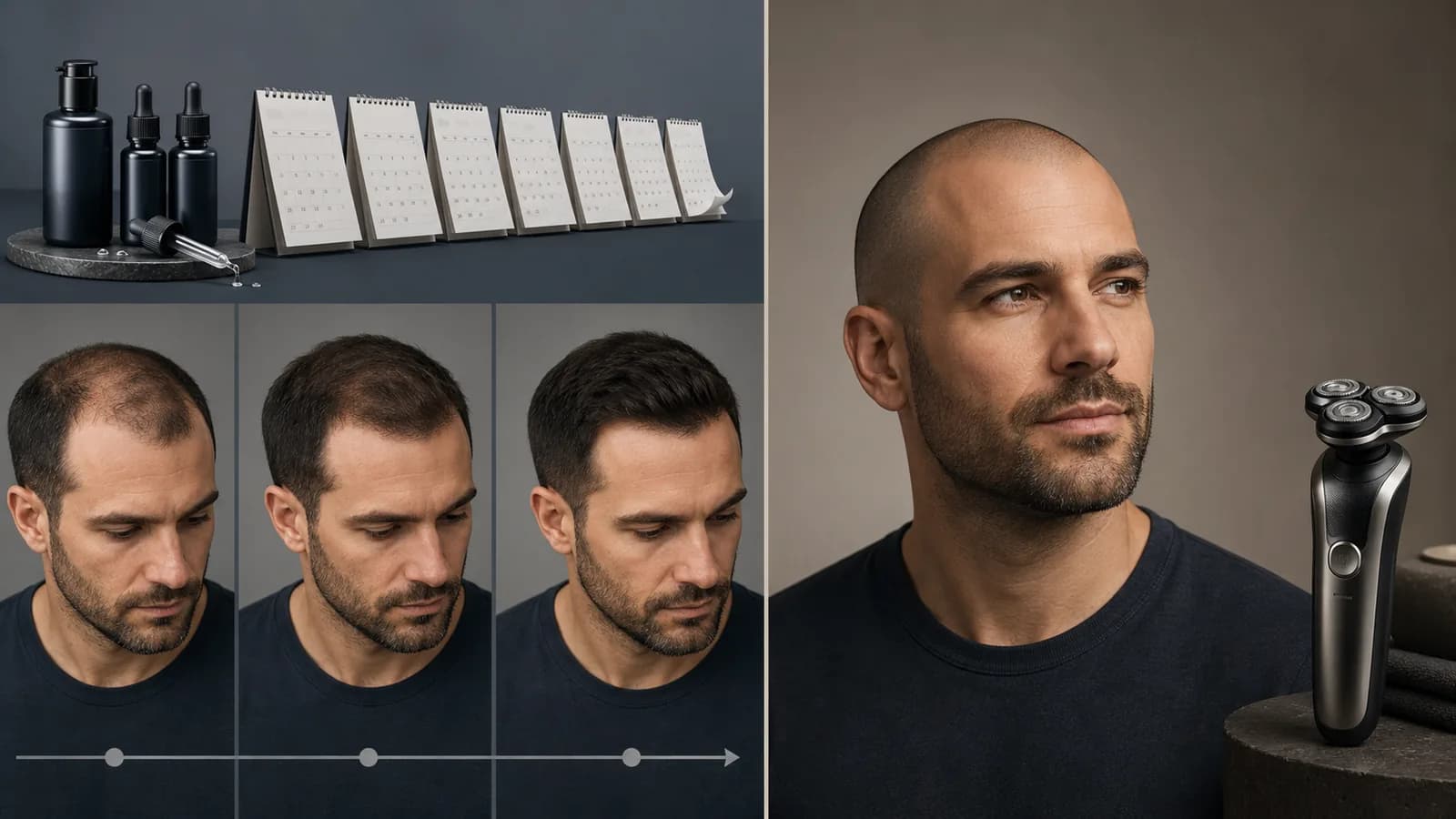
The fastest comparison
| Factor | Minoxidil | Shaving your head |
|---|---|---|
| Main goal | Slow loss or support some regrowth | Create a clean, intentional bald look |
| Timeline | Often months before useful judgment | Immediate visual result |
| Daily effort | Ongoing application and patience | Ongoing shaving and scalp care |
| Best for | Men who want to keep hair in play | Men who want simplicity and clarity |
| Risk of frustration | Waiting, inconsistency, disappointing response | You may simply decide you prefer some hair if treatment was viable |
| Medical angle | Treatment decision | Grooming decision |
| Reversibility | Stop and benefits usually fade | Hair can grow back out if you change your mind |
The Mayo Clinic similarly notes that minoxidil may help regrow or slow hair loss for some people, but it can take at least six months and must be continued to retain the benefit. In contrast, shaving tells you almost immediately whether the bald look feels cleaner, sharper, or more "you."
Minoxidil makes more sense when your goal is preservation
Minoxidil is usually the better fit when you identify with most of these:
- you are not ready to let go of having hair,
- your hair loss still feels early enough that improvement would matter,
- you can handle a long feedback loop,
- and you are willing to be disciplined with daily use.
The AAD says results tend to be better when treatment starts soon after noticing male pattern hair loss. MedlinePlus also says topical minoxidil is most effective for people under 40 whose hair loss is recent, and that it does not cure baldness. It further notes that most new hair is lost within a few months after stopping the drug and that it may have no effect on receding hairlines for some users.
That last point matters. If your main issue is a clear temple recession or a hairline you already hate styling around, treatment may not solve the emotional part of the problem as much as you hope.
This is why articles like Receding Hairline: When Is It Time to Shave Your Head? and Norwood 3 Hairline: Best Hairstyles and When to Shave often become more relevant than purely medical reading. Sometimes the real decision is not "Can I preserve some hair?" but "Does keeping this pattern improve my appearance enough to justify the effort?"
Shaving makes more sense when your goal is relief and clarity
Shaving tends to win when the mental cost of hair loss has become higher than the value of trying to preserve it.
That often looks like:
- checking mirrors and photos constantly,
- building your haircut around coverage,
- disliking the crown, temples, or density every day,
- or wanting an answer now rather than six to 12 months from now.
This is especially common once the hair loss is no longer subtle. If you are already somewhere between obvious temple recession, visible crown thinning, or broader top thinning, you may get more confidence from a cleaner overall look than from chasing partial improvement.
Shaving is also more honest emotionally. There is no long wait to see whether you are a responder. You remove the problem visually, assess the result, then fine-tune beard length, clothing, glasses, or scalp care from there.
That is why posts like Would I Look Good Bald?, Buzz Cut vs Bald, and Crown Balding tend to be the next useful reads. They help answer whether shorter or fully shaved hair would improve the whole look more than trying to hold onto thinning patterns.
Treatment and acceptance are not opposites
Some men use minoxidil because preserving hair still matters to them. Others shave because simplicity matters more. Neither choice makes you more serious, masculine, or rational by default.
The timeline difference is bigger than most people expect
This is where shaving has a huge advantage.
With shaving, the answer is immediate. You can know this week whether the clean shaved look feels stronger than your current hair.
With minoxidil, the answer is delayed. The AAD says some men need up to six to 12 months to judge results. MedlinePlus says you may need to use it for at least four months, and possibly up to one year, before seeing an effect. That is a long time if your hair loss is already affecting your confidence daily.
For some men, that timeline is worth it. For others, it creates a holding pattern: not fully treating the issue emotionally, but not resolving it visually either.
Ask yourself a blunt question:
If minoxidil gave you only modest improvement after months of daily use, would that still feel worth it?
If the answer is yes, treatment may be worth exploring. If the answer is no, shaving becomes much more attractive.
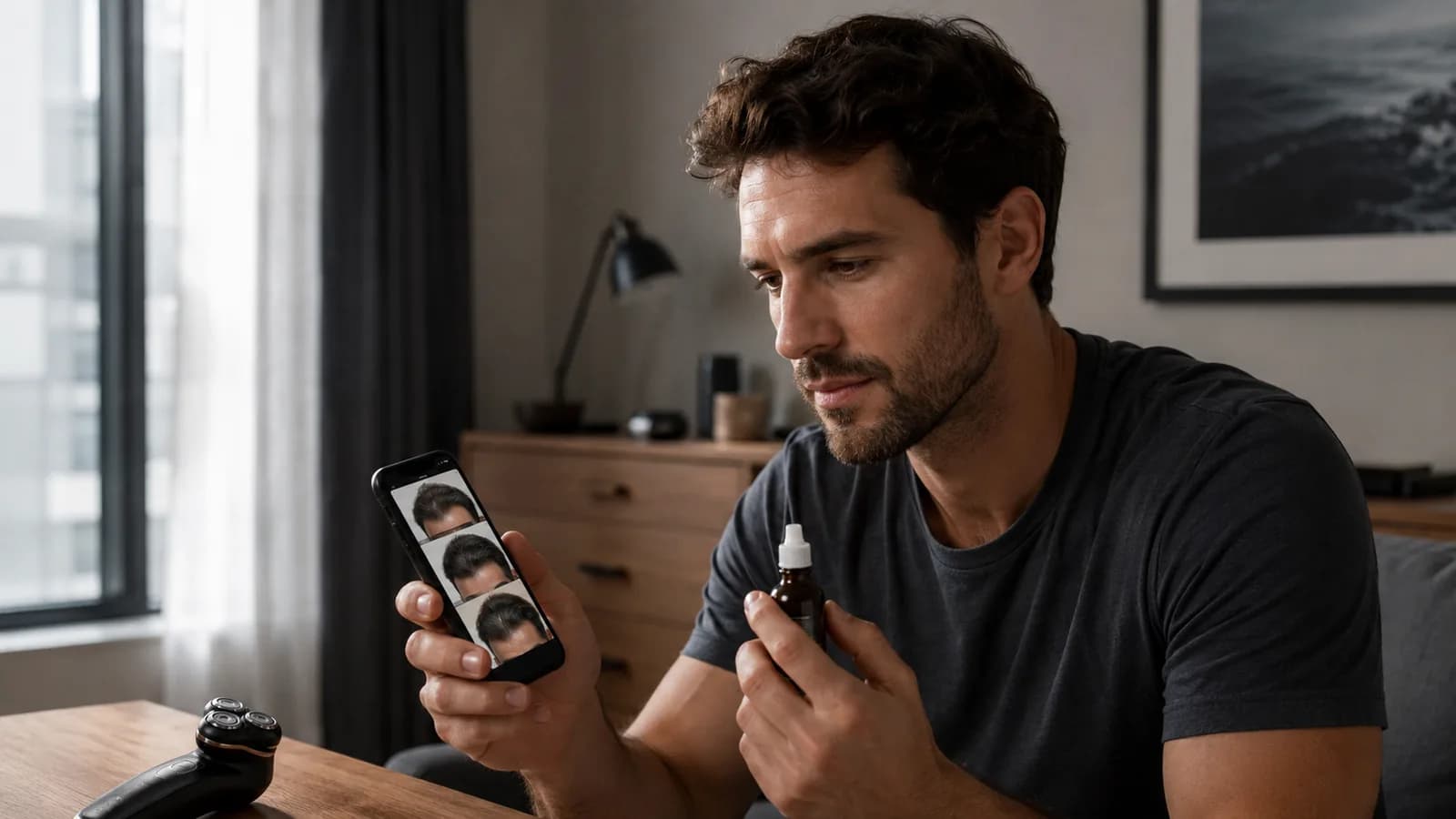
Side effects and tradeoffs should be handled calmly, not dramatically
This is a medical topic, so it needs precision.
Minoxidil is not something to hype or fear-monger. The right framing is that it may help some people, but it also has tradeoffs. The AAD notes that some men develop an irritated scalp, while Mayo Clinic lists possible side effects such as scalp irritation and unwanted hair growth on nearby skin. MedlinePlus also warns against exceeding the recommended dose and notes you should speak with a doctor if you have heart, kidney, liver, or scalp disease.
That does not mean minoxidil is unsafe for everyone. It means treatment should be approached like treatment, not like a magic cosmetic hack.
Shaving has tradeoffs too, but they are usually simpler:
- scalp sensitivity,
- possible razor bumps or irritation,
- sun protection needs,
- and the emotional adjustment of seeing yourself without hair.
In other words, minoxidil carries more medical complexity; shaving carries more identity shock at the start.
Hair loss stage changes the answer
You should not give the same advice to a man with fresh early thinning and a man with a much weaker top.
If you are unsure which stage you are actually in, start with Norwood Scale Explained rather than guessing from one bad mirror angle.
You can explore treatment and still preview bald privately
One reason this decision gets emotionally stuck is that people act like choosing one path erases the other.
It does not.
You can talk to a healthcare professional about minoxidil and still want to know how you would look with a shaved head. That is a rational backup plan, not a betrayal of treatment.
In practice, that backup often reduces pressure. If you know bald is a viable look for you, treatment decisions become calmer because they are no longer loaded with "If this fails, I am doomed."
Final answer: should you use minoxidil or just shave your head?
Use this shortcut:
- Choose minoxidil first if keeping hair still matters a lot to you, your loss seems relatively early, and you are willing to commit to daily use for months before judging the result.
- Choose shaving first if you want immediate visual control, lower mental overhead, and a cleaner look that does not depend on whether you respond to treatment.
- Choose professional guidance first if you are unsure what type of hair loss you have, have medical concerns, or want help evaluating realistic expectations.
The cleanest way to think about it is this:
Minoxidil is for men who still want to compete for more hair. Shaving is for men who want to stop competing and start simplifying.
Neither is the universally correct answer. The right one is the option that matches your actual goal, your patience, and the amount of energy you want to keep investing in your hair.