
Hair Transplant vs Shaved Head: Which Fits Your Stage?
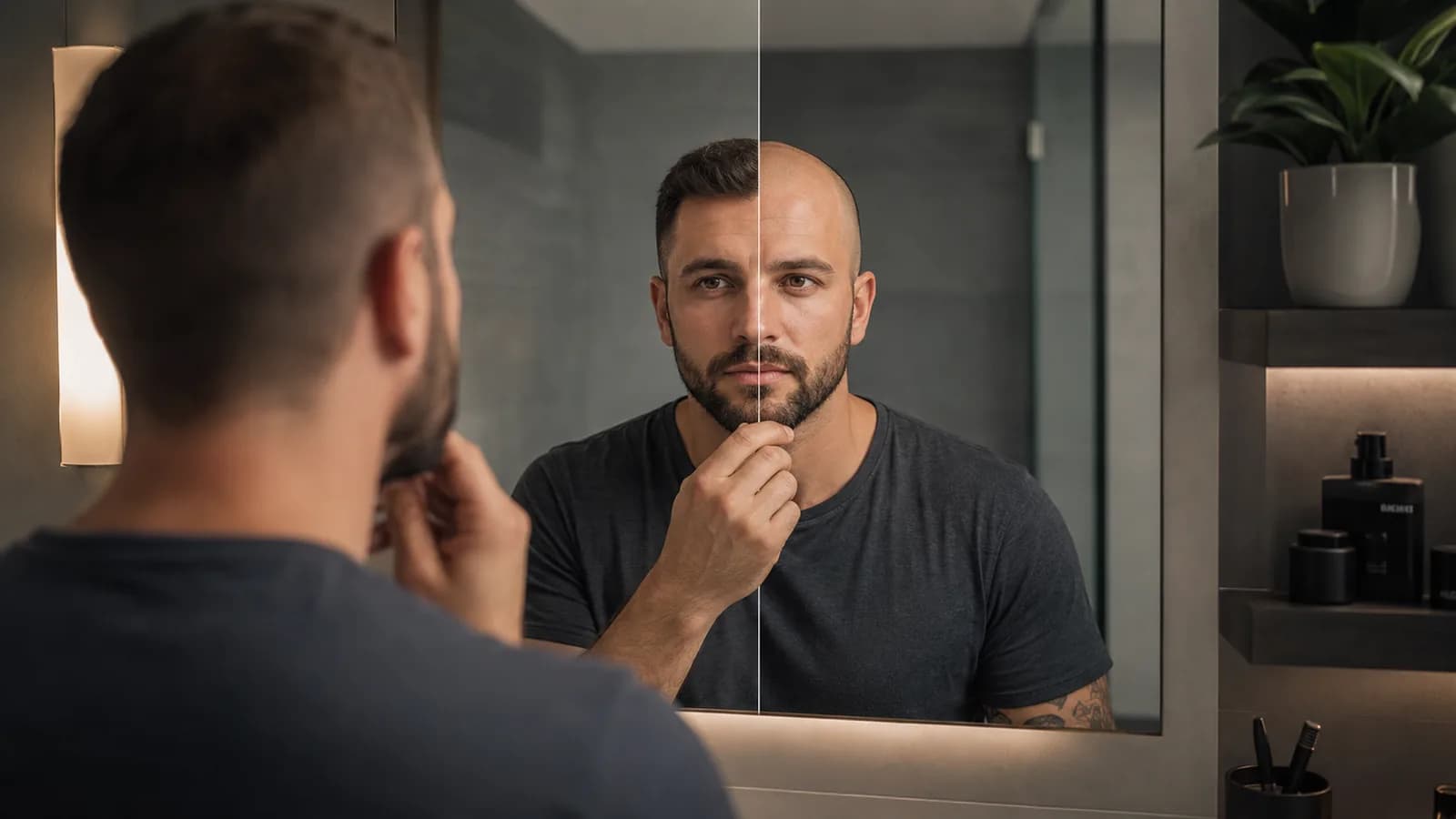
If you are stuck between a hair transplant vs shaved head, you are not really choosing between "good" and "bad." You are choosing between two very different strategies.
A hair transplant tries to keep hair in the picture. A shaved head removes the fight and turns the decision into grooming instead of restoration.
Both can be the right call. Both can also disappoint if you choose them for the wrong reason.
This guide is built around the practical questions that matter most:
- what stage of hair loss you are dealing with,
- whether you have enough donor hair for a useful transplant result,
- how you feel about surgery, recovery, and ongoing maintenance,
- and whether your real goal is to keep hair or to look cleaner and more settled.
Quick read
They can make sense when your donor area is strong and you want to keep a hair-bearing look.
It often works best when you want a cleaner look now instead of years of management.
The better option at early recession is not always the better option at Norwood 5 or 6.
Medical note
This article is educational, not medical advice. If you are considering a transplant, minoxidil, finasteride, or any other treatment, speak with a qualified dermatologist or hair-restoration surgeon who can assess your pattern, donor area, and expectations.
What each option is actually trying to do
A shaved head and a hair transplant solve different problems.
A hair transplant is usually for the person who still wants hair on top and is willing to invest time, money, and recovery into getting a more natural-looking frame back. The American Academy of Dermatology notes that modern transplants can look natural, but results depend heavily on technique and surgeon quality. The same source also explains that results take time, with many patients seeing meaningful growth around six to nine months and sometimes later.
A shaved head is usually for the person who wants a direct, lower-friction solution. It does not regrow hair. It changes the styling equation. Instead of trying to improve density, it removes the contrast between thin and dense areas and puts attention back on the face.
That is why the first question is not "Which one is better?" It is:
Do you want to keep hair, or do you want to stop managing hair loss?
If your real answer is "I want to keep hair if the result is worth it," a transplant may be worth exploring. If your real answer is "I want the cleanest and calmest version of myself," shaving may be the better fit.
The fastest comparison
| Factor | Hair transplant | Shaved head |
|---|---|---|
| Main goal | Restore the look of hair in thinning areas | Create a clean, intentional look without restoring hair |
| Timeline | Months before visible growth, often longer for final result | Immediate once you shave |
| Recovery | Procedure, healing, shedding, waiting | Minor grooming adjustment |
| Maintenance | Often includes medication, monitoring, and sometimes touch-ups | Ongoing shaving and scalp care |
| Cost profile | High up-front cost, sometimes plus ongoing treatment | Low compared with surgery |
| Best emotional fit | "I want to keep hair if possible" | "I want a clean solution and less mental load" |
| Big risk | Unrealistic density expectations or progressive future loss | You may simply decide you prefer hair if you had another viable option |
The AAD male pattern hair loss guide also notes that hair loss can continue even after treatment, and that some men use medication to maintain results. That matters because a transplant is not always a one-and-done finish line.
Hair loss stage changes the decision
This is where most people get sloppy. They compare transplant and shaving as if the same answer applies at every stage.
It does not.
If you have not already done it, read Norwood Scale Explained first. It gives context for how early recession differs from deeper temple loss, crown thinning, and advanced balding.
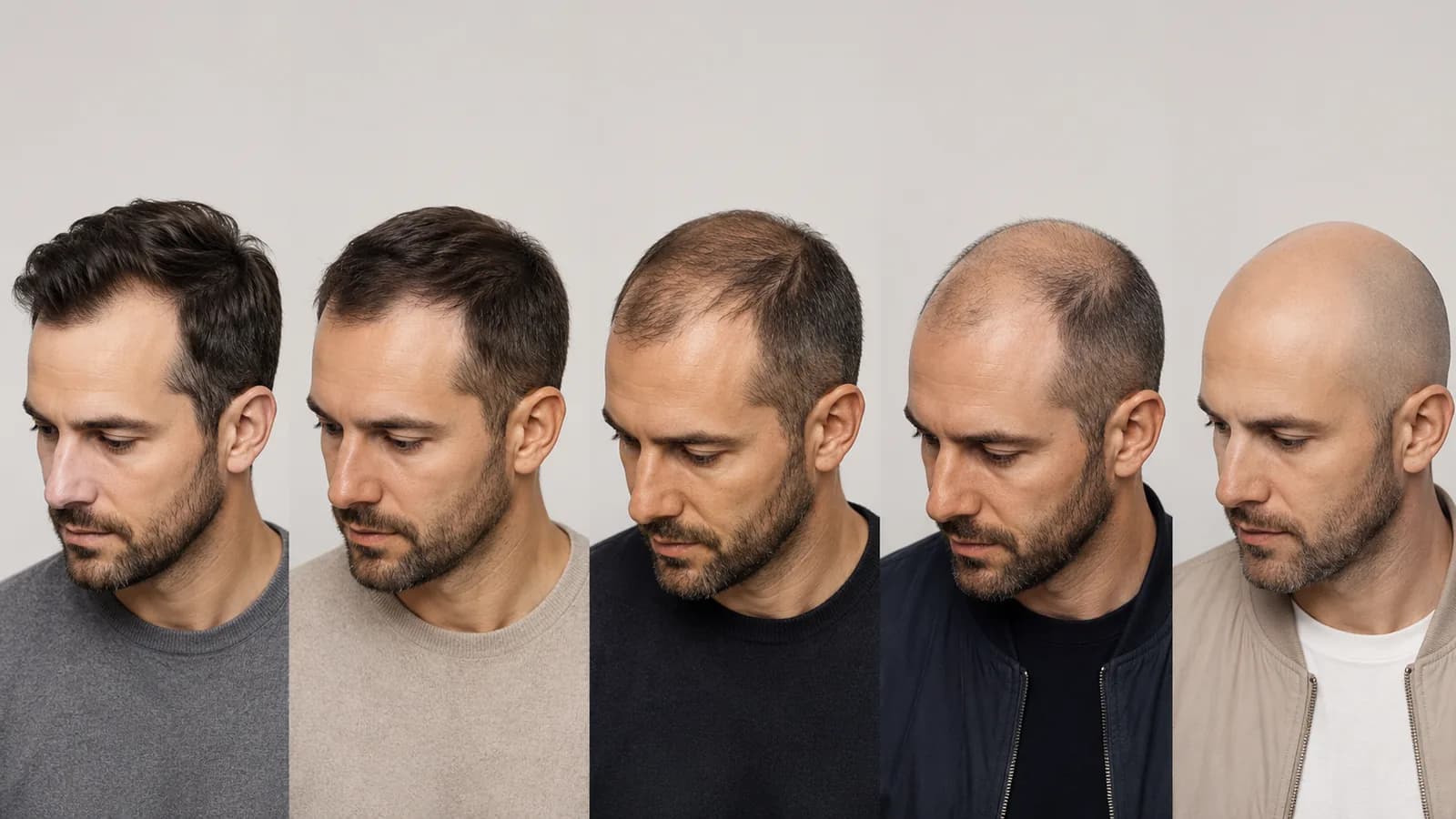
When a hair transplant is usually the better fit
A transplant tends to make more sense when you check most of these boxes:
- you genuinely want to keep a hair-bearing look,
- your hair loss is early to moderate rather than very advanced,
- your donor area is strong,
- you can accept surgery and the recovery period,
- and you are comfortable with the possibility of using medication or needing future planning.
The AAD explains that a transplant moves healthy hairs into thinning areas and that modern methods can produce natural-looking results. It also notes that removing individual hairs instead of a strip avoids leaving a long, narrow scar, which is relevant if you might ever want to wear your hair extremely short.
That last point matters more than people think. If there is a real chance you will eventually prefer a buzz cut or shaved head, talk to the surgeon about how the technique could affect that future.
The Cleveland Clinic also notes that a transplant can involve recovery time, possible irritation or scarring, and that full results may take up to a year. It further notes that some people need touch-up procedures to reach a more natural final look.
So the transplant case is strongest when you are patient, selective, and realistic. It is weakest when you are desperate for a quick identity reset.
When shaving your head is usually the better fit
Shaving tends to be the better option when your goal is clarity, not restoration.
It often wins if:
- your thinning is advanced or spread across multiple zones,
- you do not want surgery or a long waiting period,
- the cost-to-confidence tradeoff feels poor,
- shorter cuts already make you look better,
- or you are more tired of managing hair loss than you are attached to keeping hair.
This is especially true if you are already somewhere in the territory covered by Norwood 3, crown balding, or the general "should I just shave it?" question in Receding Hairline: When Is It Time to Shave Your Head?.
The hidden advantage of shaving is emotional simplicity. There is no post-op waiting, no graft-count anxiety, and no year-long suspense over whether the density will feel worth the effort. You shave, assess, adjust beard or eyewear if needed, and move on.
That does not mean shaving is "giving up." It means you are optimizing for a different outcome: cleaner appearance, lower maintenance, and less mental overhead.
The maintenance question people underestimate
Many men compare transplant and shaving as if only one of them needs upkeep.
That is not how it works.
The AAD says men sometimes need medication even after a transplant because thinning can continue. Its male-pattern hair loss guide also notes that minoxidil can take up to six to 12 months to show results, must be used consistently, and loses its benefit if you stop. Mayo Clinic similarly notes that minoxidil may help regrow or slow loss, but you generally need to keep using it to retain the benefit, and side effects can include scalp irritation.
So the real comparison is this:
- Hair transplant path: surgery, healing, waiting, possible medication, and future planning.
- Shaved head path: clippers or razors, scalp care, sunscreen, and grooming consistency.
Neither path is "no maintenance." They just ask for different kinds of commitment.
Do not buy density with fantasy expectations
The most common bad transplant decision is not wanting hair back. It is expecting a transplant to recreate teenage density, stop future loss, and remove uncertainty forever. That is not how progressive hair loss usually behaves.
If you are mainly scared of looking bad bald, test that fear first
Sometimes the transplant question is really a confidence question in disguise.
You are not certain you want surgery. You are not even certain you need to keep hair. You are mostly afraid that bald will not suit you.
That is a different problem, and it is easier to test.
Start with the lower-commitment moves:
- Look at your current stage honestly in natural-light photos.
- Try shorter hair first if you have not already.
- Read Would I Look Good Bald? if the hesitation is mostly about face shape, head shape, or beard balance.
- Use a preview before you spend money or make a permanent-feeling decision.
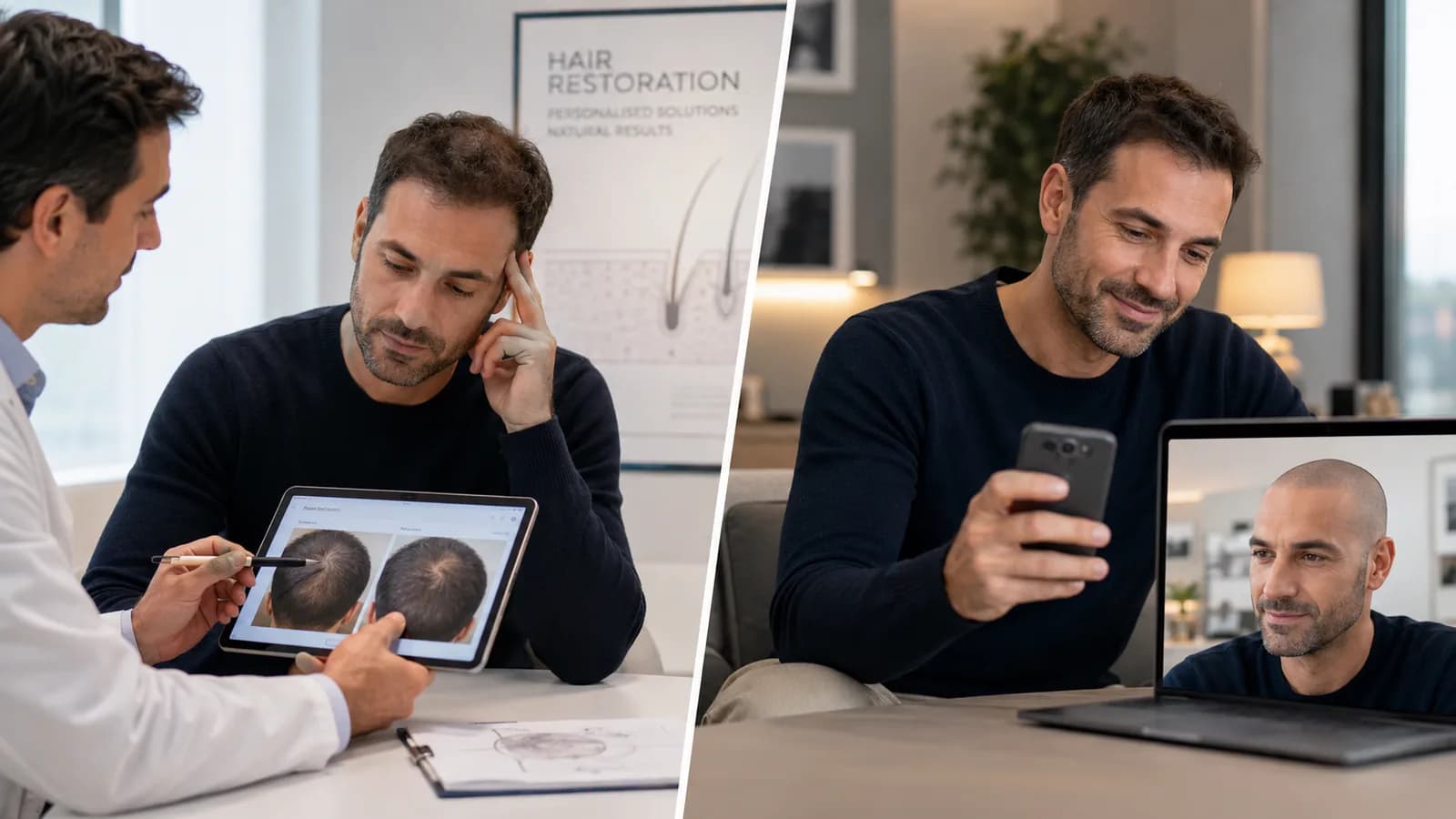
BaldLooks Free Analysis gives you a first read from one photo, and the paid BaldLooks plans let you compare a shaved head across angles, outfits, and locations if you want a more realistic decision tool before surgery or shaving.
A practical decision rule
If you want a simple rule, use this one:
- Choose hair transplant when you still strongly value having hair, your loss pattern and donor area make you a reasonable candidate, and you can accept surgery, waiting, and maintenance.
- Choose shaving your head when you value simplicity more than restoration, your hair loss is already making styling feel fragile, or the likely transplant payoff does not justify the effort and expense for you.
And if you are somewhere in the middle, do not force a final identity decision too early. You can research transplant candidacy seriously and still preview the shaved option first. In fact, that usually makes the later decision better because you are comparing two real possibilities instead of one real possibility and one fear.
Frequently Asked Questions
Final answer
The best choice between a hair transplant vs shaved head depends less on internet opinions and more on three realities: your stage, your donor area, and your actual goal.
If you want to keep hair and you are a good candidate, a transplant may be worth exploring with a qualified professional. If you want the cleanest, fastest, and lowest-friction route, shaving is often the better move, especially once hair loss has become a daily management problem.
The smartest next step is not guessing. It is testing what you can test, getting a professional opinion where medicine is involved, and making sure you are solving the right problem before you commit.