
Diffuse Thinning Shaved Head: When Bald Looks Cleaner Than Thin Hair
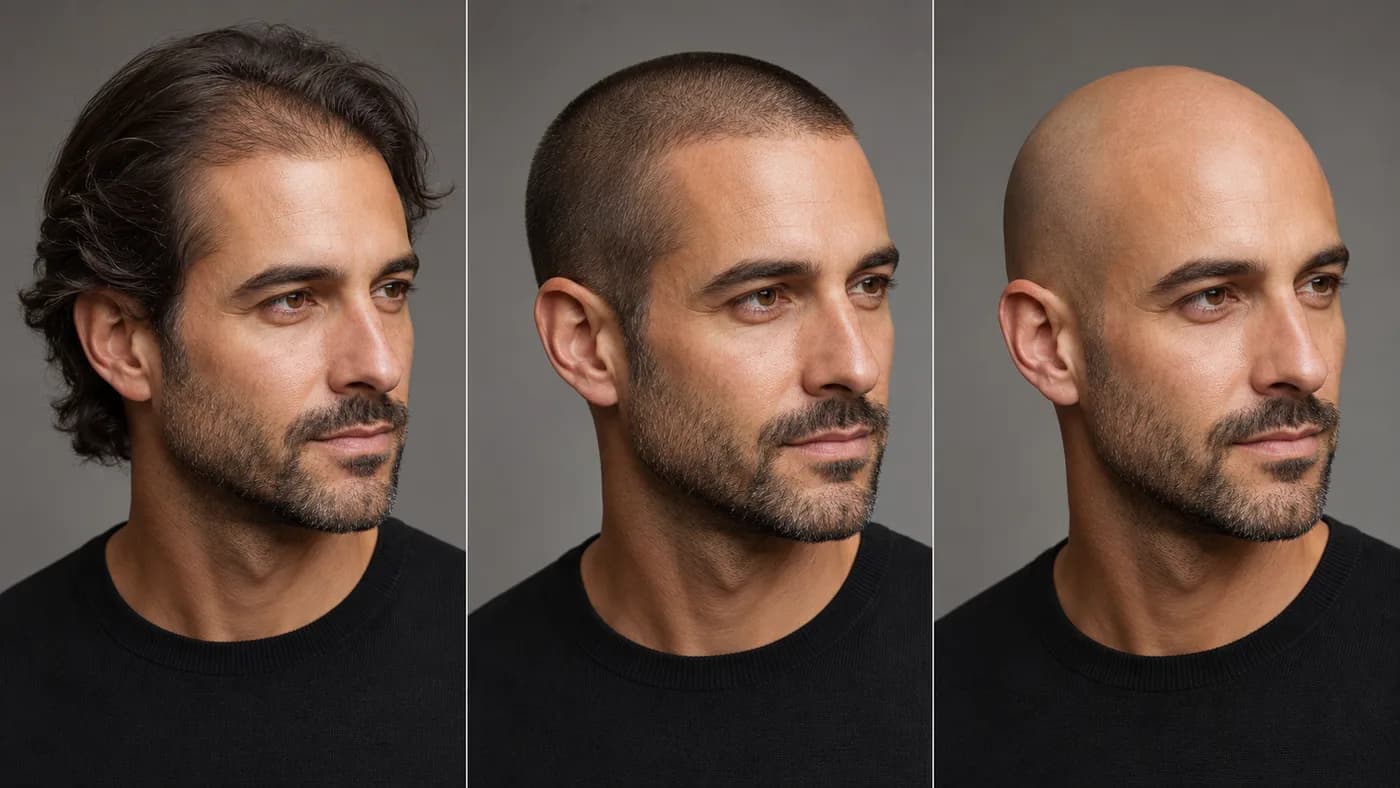
If you are considering a diffuse thinning shaved head, you are probably tired of trying to make broadly thinner hair behave like it still has the same density. This is not always about a dramatic receding hairline or one obvious bald spot. Often, the whole top looks a little weaker: more scalp in daylight, more separation after a shower, and more effort required to make it look normal.
That is where shaving can make sense. A clean shave does not restore density, but it can remove the contrast between thin hair, exposed scalp, and fuller areas. Instead of asking your remaining hair to cover unevenly, you choose one consistent surface and let your face become the focal point again.
The practical answer is: a shaved head often looks cleaner with diffuse thinning when a short buzz still leaves the top patchy or noticeably lighter than the sides. If close hair looks even and supports your face, a buzz may be the better stopping point. Neither choice is a surrender; both are style decisions.
Quick read
Diffuse thinning is spread across the scalp, so the right choice comes from the front, top, crown, and sides together—not one hairline angle.
It can make separated thin zones disappear visually by removing the last difference between sparse hair and visible scalp.
Compare your actual face with a buzz and a shaved look in normal lighting. The cleaner option is personal, not a rule about hair loss stages.
What diffuse thinning is—and what a shave cannot tell you
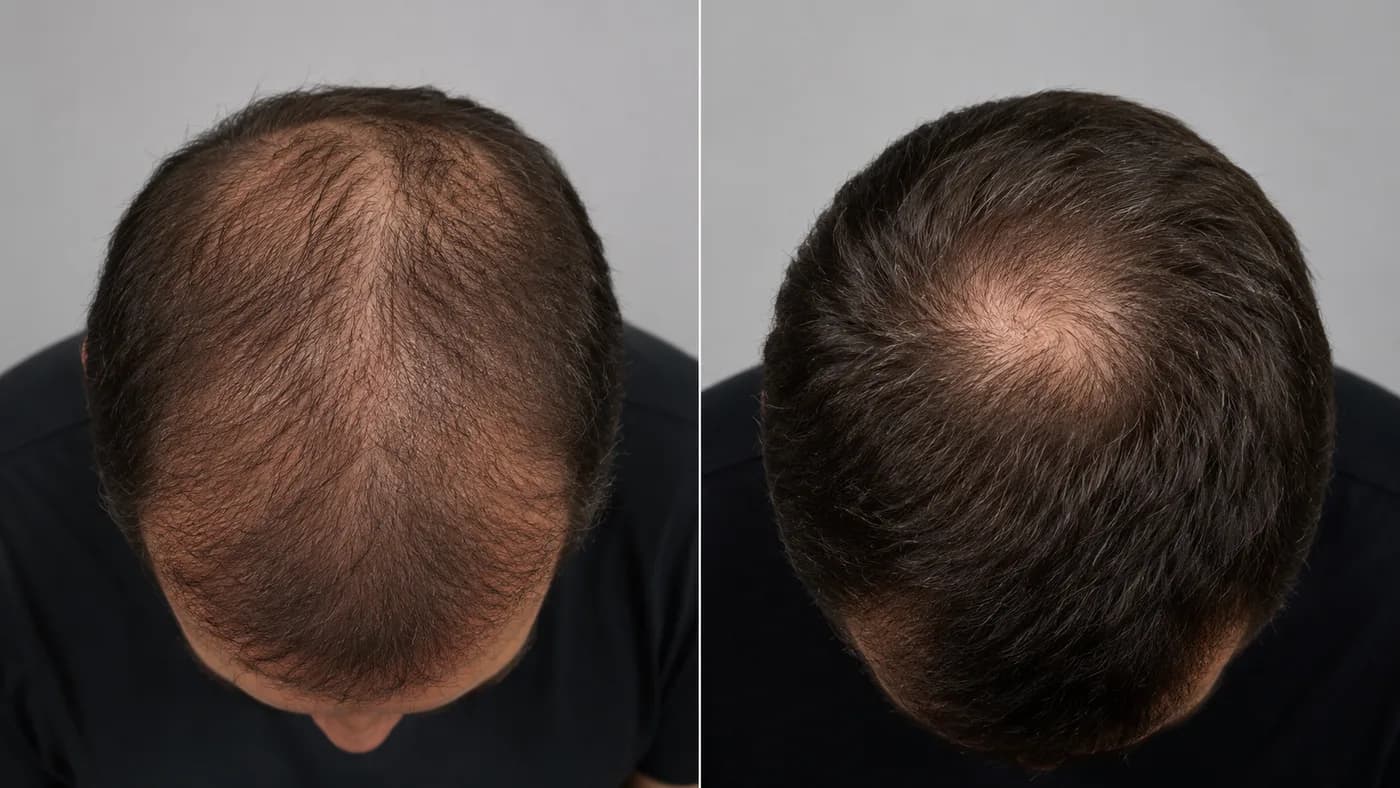
Diffuse thinning means density is reduced across a broader area rather than only at the temples or in one circular crown spot. You may still have a fairly intact hairline, yet notice that the top looks transparent under overhead light or breaks into fine strands after styling.
Gradual diffuse thinning in adults is often associated with pattern hair loss, but it is not a diagnosis by itself. DermNet notes that diffuse hair loss can result from excessive shedding as well as gradual pattern thinning. The American Academy of Dermatology likewise explains that hair loss has many causes. A shave changes how the pattern looks; it cannot identify why it happened or stop it progressing.
That distinction is freeing. You do not need a medical label to decide whether your current hairstyle is working. But if shedding is rapid, hair loss is patchy, or your scalp is itchy, painful, inflamed, or worrying you, get a dermatologist’s advice instead of treating a haircut as the answer.
A shaved head and treatment are separate decisions
You can shave because you prefer the look and still explore treatment. You can also keep your hair while you seek a diagnosis. The best style choice for today does not force a permanent medical decision.
Why longer styles can make broad thinning louder
Longer hair is not automatically wrong for diffuse thinning. If you still have enough density, a short textured cut can look great. The problem begins when length creates the appearance of coverage only until wind, sweat, daylight, or a phone camera separates it.
Thin, medium-length hair tends to clump into strands. That exposes scalp in lines and makes the top read differently from the sides. The more time you spend arranging the front, avoiding overhead light, or checking the crown in every photo, the less the hairstyle is serving you.
A shorter cut can reduce this effect because there is less length to split apart. But shorter is not always the end of the story. A buzz may make the pattern tidier while leaving the top broadly see-through. A full shave can take the final step: it removes the visible argument between sparse hair and scalp.
| Option | Usually works best when | Watch for |
|---|---|---|
| Keep some length | Thinning is mild and texture still looks consistent | Styling that collapses under normal light or weather |
| Close buzz (#1 or #0) | Short coverage looks even and you like some texture | A pale, patchy top beside much darker sides |
| Clean shave | Every shorter guard looks better or thin zones remain obvious | Judging it only on day-one redness or one dramatic mirror angle |
The aim is not to keep the most hair. It is to keep the amount of hair that improves the total picture.
Signs a shaved head may look cleaner than a buzz
A clean shave is worth comparing when the buzz cut reveals a pattern instead of resolving it. The clearest signals are practical rather than emotional:
- Your top looks like several thin areas instead of one short, even surface.
- Your sides stay dark and dense while the top looks much lighter at the same guard length.
- A #0 looks better than a #1, and a #1 looks better than a #2.
- The crown, mid-scalp, and front all need separate styling tricks.
- You feel more relieved by the idea of removing the daily cover-up routine than worried about the missing length.
None of these mean you must shave. They simply suggest that the hair left on top may be adding visual noise rather than useful texture. This is why the decision should be made in real-life conditions: window light, ordinary indoor lighting, and photos taken by someone else—not just the most forgiving bathroom mirror.
Buzz cut or shaved head: make the comparison fairly
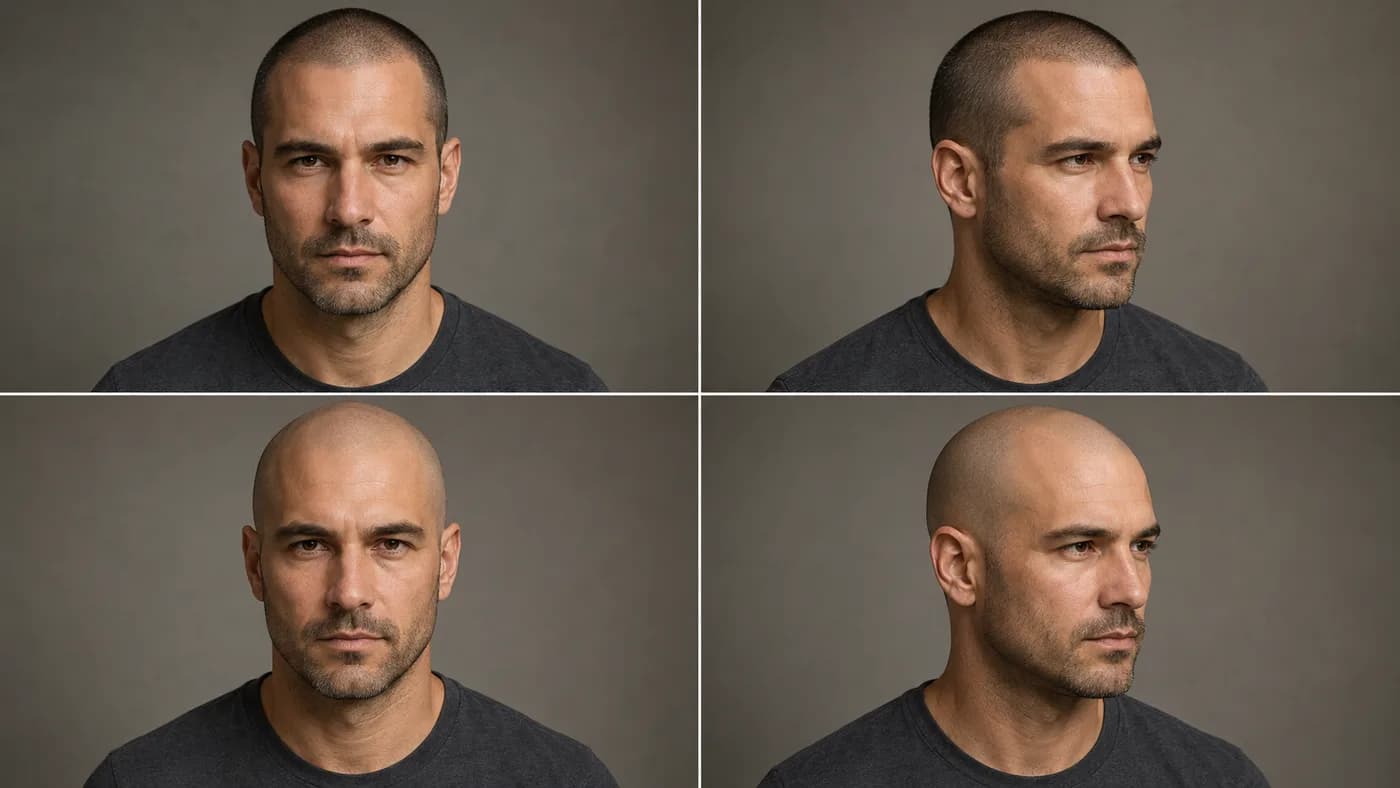
The fairest comparison is simple: start with the current style, then imagine or preview a close buzz and a clean shave. Do not compare a messy, overgrown version of your current hair with a perfectly lit shaved-head inspiration photo. Give each option the same lighting, expression, and camera angle.
With diffuse thinning, a buzz is usually the right answer when the remaining hair reads as intentional texture. You should still see a unified top rather than a map of slightly different densities. A shaved head tends to win when the buzz feels like a compromise: neater than longer hair, but still clearly trying to cover a broad thin area.
For more guard-length detail, read Diffuse Thinning Buzz Cut. If you are deciding between the two looks more generally, Buzz Cut vs Bald gives you a broader comparison. The important point is that diffuse thinning changes the test: evenness matters more than the exact amount of remaining hair.
How to make a shaved head feel like your look
The first shave can feel more dramatic to you than it looks to everyone else. Your hair has been part of your self-image, even when you no longer liked managing it. Give the result a few days before you decide it is too stark: fresh shaving can leave temporary redness, and you need to see the look in your normal clothes and lighting.
Then focus on the pieces that make bald look intentional. Keep the scalp clean and protected from the sun; the AAD recommends broad-spectrum SPF 30+ sunscreen or a wide-brimmed hat for exposed or thinning scalp outdoors. If you wear facial hair, tidy the neckline and cheek lines. Stubble is a particularly easy option because it gives the lower face some definition without making the look overworked—see Bald With Stubble.
You do not need a beard to shave your head, and you do not need to dress like a different person. But better fit and a cleaner collar line have more visual weight once the hair is gone. How to Dress When Bald and Bald With Glasses can help you refine the frame after the core choice is made.
A practical first-shave plan
If you decide to shave, make it an experiment with a low-pressure plan. Start by clipping the hair short so you can see the shape before you go smooth. Then use a clean razor or electric head shaver, light pressure, and a product that gives enough glide. Do not chase an ultra-close result if your scalp becomes irritated; a calm, healthy scalp looks better than a perfect shave with razor bumps.
Take a front, side, and outdoor photo after a few days. Compare them with the same photo set from your buzz cut. If shaving reduces the urge to inspect, style, or hide the top, that is a meaningful outcome. For maintenance, use How Often Should You Shave Your Head and Bald Head Care Routine.
Do not decide from the first-hour shock
The first look is unfamiliar because it is new, not necessarily because it is wrong. Let the scalp settle, wear the clothes you normally like, and judge a few ordinary photos before you make the final call.
Final answer: does a shaved head suit diffuse thinning?
A shaved head often suits diffuse thinning when it makes the top look more unified than a buzz or a longer haircut. It works by removing patchy density contrast, not by pretending the thinning was never there.
Try to choose from evidence rather than fear. If a close buzz still leaves several thin zones competing for attention, shaving may be the cleaner and lower-maintenance look. If the buzz looks even and gives you enough texture, stop there. The strongest choice is the one that lets you spend less time managing your hair and more time feeling like yourself.