
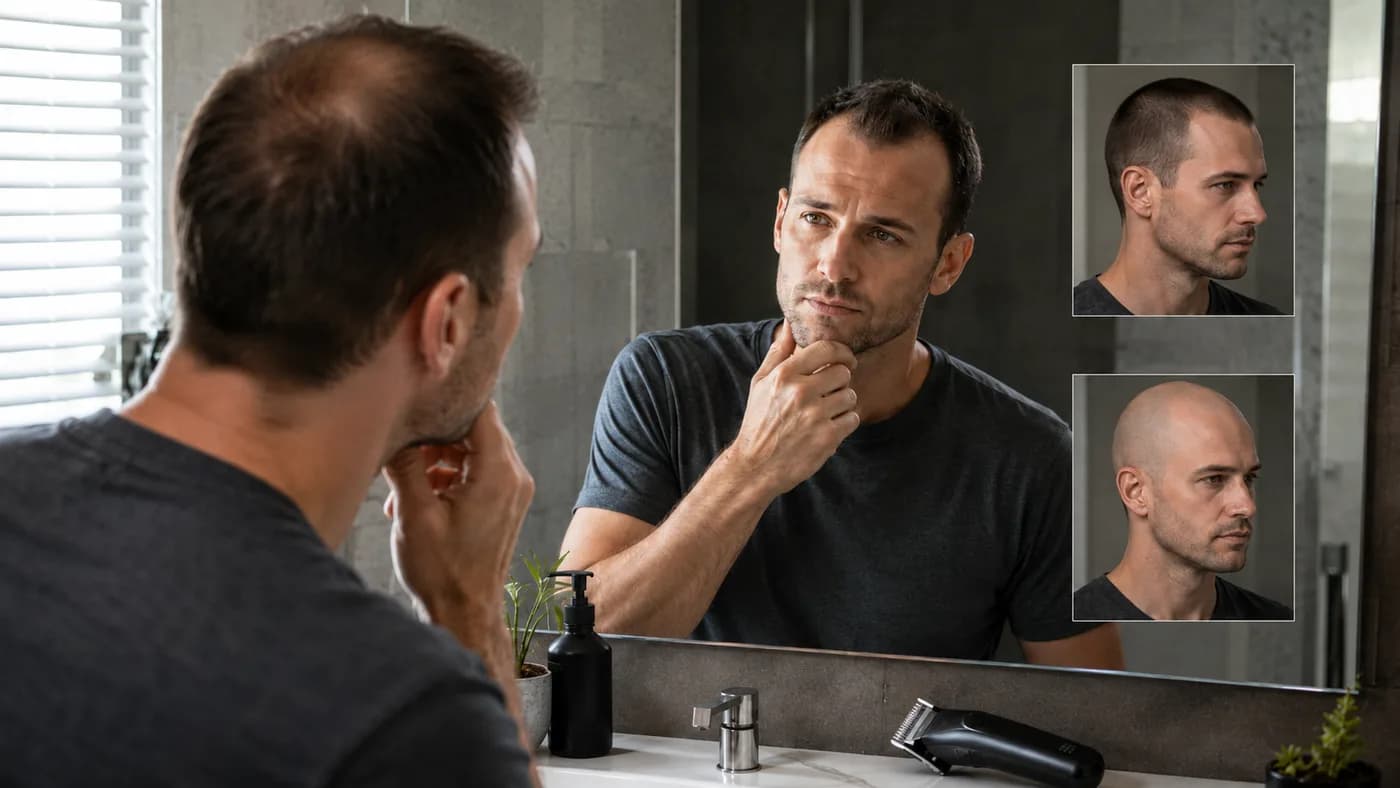
If you are considering a buzz cut for thinning hair, you are probably trying to solve one practical problem:
How short can I go before my hair starts looking cleaner instead of thinner?
A buzz cut often helps thinning hair when the top still looks reasonably even at a short length. It does not hide hair loss, but it can remove weak length, reduce contrast, and make the haircut look intentional. If the top is already very see-through, buzzing may expose more scalp instead.
Some men look much better the moment they go to a #2 or #1. Others discover that a buzz cut only reveals scalp faster and that a fully shaved head is the cleaner move. The difference usually comes down to where the thinning is happening and how even the top still looks once the hair is short.
Quick read
If the top still holds together visually, shortening the hair usually makes recession or mild thinning look more deliberate.
When thinning is spread across the top or clearly opening at the crown, a buzz cut can expose scalp instead of disguising it.
A buzz cut is often a step in the decision, not always the final answer. If every shorter length looks better, fully shaved may be the cleanest end point.
Quick answer: when a buzz cut helps and when it doesn't
A buzz cut for thinning hair usually helps when:
- recession is more obvious than full top thinning,
- the crown is mild rather than clearly open,
- the top still has enough density to look reasonably even,
- longer hairstyles are making the hair loss more obvious.
It usually helps less when:
- the crown is see-through under normal light,
- thinning is diffuse across the entire top,
- the sides are much denser than the top,
- you already know every shorter cut looks better than the last one.
The American Academy of Dermatology notes that male pattern hair loss often starts with a receding hairline, thinning, or a bald spot on the top of the head. The Cleveland Clinic describes similar patterns, including temple recession, crown loss, and thinning across the top. That matters because a buzz cut works best when it matches the specific pattern, not just the general fact that you are losing hair.
A buzz cut is a contrast tool, not a camouflage trick
Going shorter usually helps when your current length is creating a mismatch between thick and thin areas. If the whole top is already weak, shorter hair may reveal that weakness more honestly.
Why buzzing can improve hair loss in the first place
Longer thinning hair often fails for the same reasons:
- it separates,
- it collapses in bright light or wind,
- it makes the thin zones look accidental,
- and it forces you to style around problems instead of removing them.
A buzz cut changes the conversation. Instead of asking weak hair to create fullness, it strips the style down until the haircut itself looks intentional. That is why a buzz cut often makes hair loss look sharper even when it does not make the hair look thicker.
The improvement usually comes from three things:
- Lower contrast. Short hair makes the jump between dense and less-dense areas smaller.
- Cleaner outline. The haircut looks chosen rather than improvised around loss.
- Less styling failure. There is less length to separate, flatten, or expose scalp unexpectedly.
This is why many men searching for a buzz cut for balding are not really chasing a hairstyle trend. They are trying to remove visual conflict.
When a buzz cut helps recession
Hairline recession is usually the most buzz-cut-friendly pattern.
If your front corners are moving back but the hair behind them still has decent density, a buzz cut can make the recession look deliberate instead of fragile. A shorter length stops the front from pretending to be fuller than it is. That often makes the whole haircut look stronger.
This is why men with early temple recession often do well at #2 or #1. A #3 may still work if density is strong, but it leaves enough length for the hairline shape to keep drawing attention.
If your biggest issue is the front rather than the crown, the dedicated guide on Buzz Cut for a Receding Hairline goes deeper on which guard lengths tend to suit different recession patterns.
When a buzz cut helps crown thinning
Crown thinning is harder.
A buzz cut can help when the crown is only mildly weak and the rest of the top still looks fairly even. In that case, taking the whole head shorter can reduce the contrast between the crown and the surrounding hair. The thinning becomes less dramatic because the style is no longer relying on length.
But once the crown is clearly visible, buzzing can backfire. A #2 or #3 can leave enough hair around the crown for the thin area to stand out even more. The hair becomes too short to cover, but not short enough to remove the contrast completely.
That is why crown thinning often pushes men toward #1, #0, or fully shaved faster than frontal recession does. If your main uncertainty is up top rather than at the hairline, use the dedicated Buzz Cut for a Balding Crown guide.
When a buzz cut helps diffuse thinning
Diffuse thinning is the trickiest pattern because the issue is not one spot. It is the whole top.
Buzzing can still help by making the overall haircut look neater, but it does not always create the result men expect. If scalp visibility exists across most of the top, a buzz cut may simply distribute that visibility evenly. The hair looks tidier, but not necessarily fuller.
This is the pattern where men often say a buzz cut looked "better but still not right." That reaction usually means the haircut improved, but the hair itself was no longer adding enough.
The Diffuse Thinning Buzz Cut guide covers this pattern in more detail, including how overhead light and the density difference between the top and sides change the result.
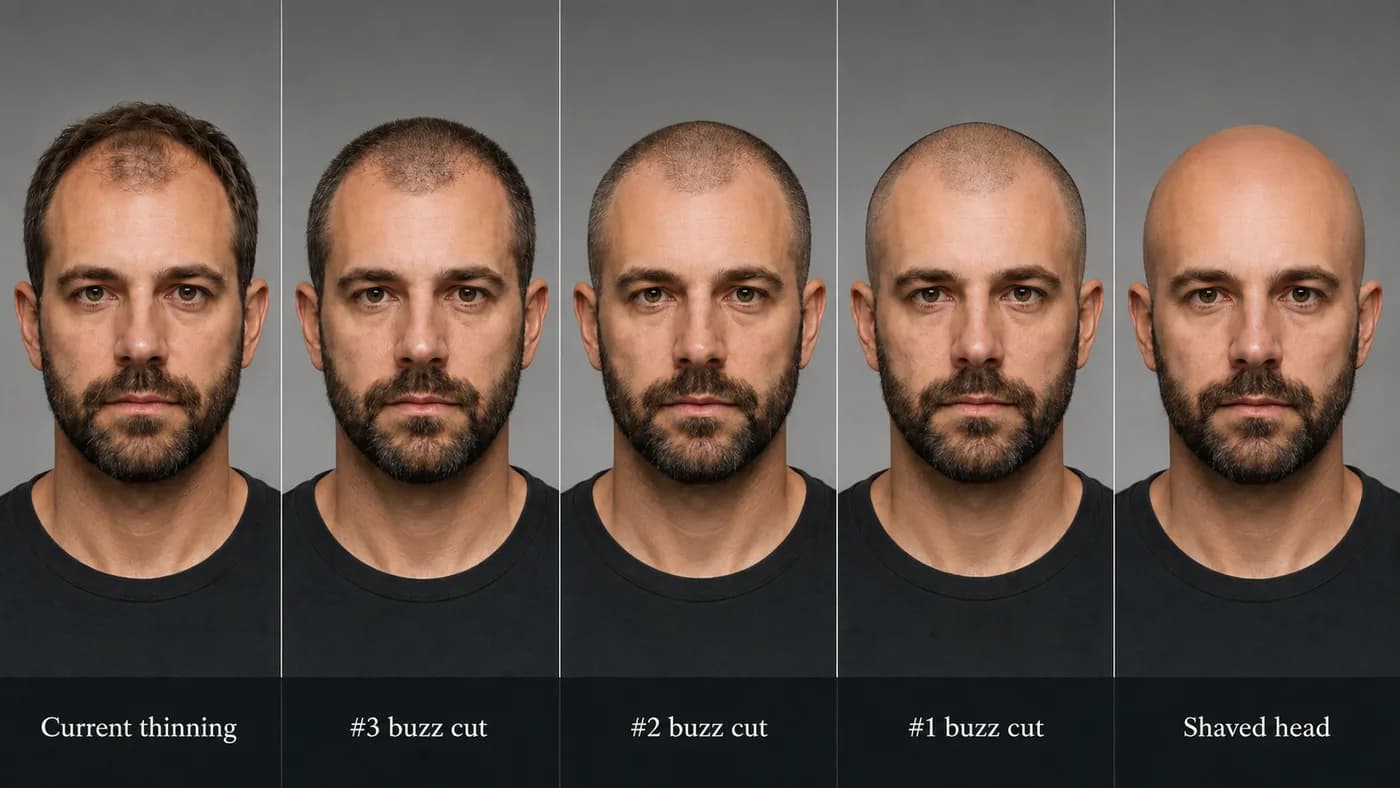
If this sounds familiar, the useful comparison is no longer just current hair versus buzz cut. It is current hair versus #2, #1, #0, and shaved head. That is where a photo-based preview becomes more useful than haircut inspiration photos from strangers.
The guard lengths that usually work best
Men often talk about "getting a buzz cut" as though it is one haircut. It is not. The difference between #3, #2, #1, and #0 can completely change how thinning reads.
As a practical guide:
- #3 works best when density is still good and the goal is only to clean up early recession.
- #2 is often the safest first test for mild to moderate hair loss.
- #1 is usually the sweet spot when recession is visible or the crown is beginning to thin.
- #0 is the closest step before fully shaved and often looks best when the top is clearly weaker than the sides.
If you are unsure, start longer and work shorter. That gives you evidence instead of opinions.
When a buzz cut doesn't help anymore
The buzz cut stops working when it only shortens the problem.
That usually happens when:
- the top is transparent next to dense sides,
- the crown stays distracting even at very short lengths,
- diffuse thinning makes scalp visible almost everywhere,
- or the haircut looks cleaner at #0 than at #1, which usually means shaved is next.
This is the point where men often ask whether they should just go fully bald. In many cases, yes. Not because bald is always better, but because it removes the last visual mismatch.
If your hesitation is emotional rather than practical, remember that a shaved head often looks more intentional than a compromised buzz. The strongest result is usually the one that removes the most conflict.
Buzz cut vs shaved head for hair loss
For many men, this is the real decision.
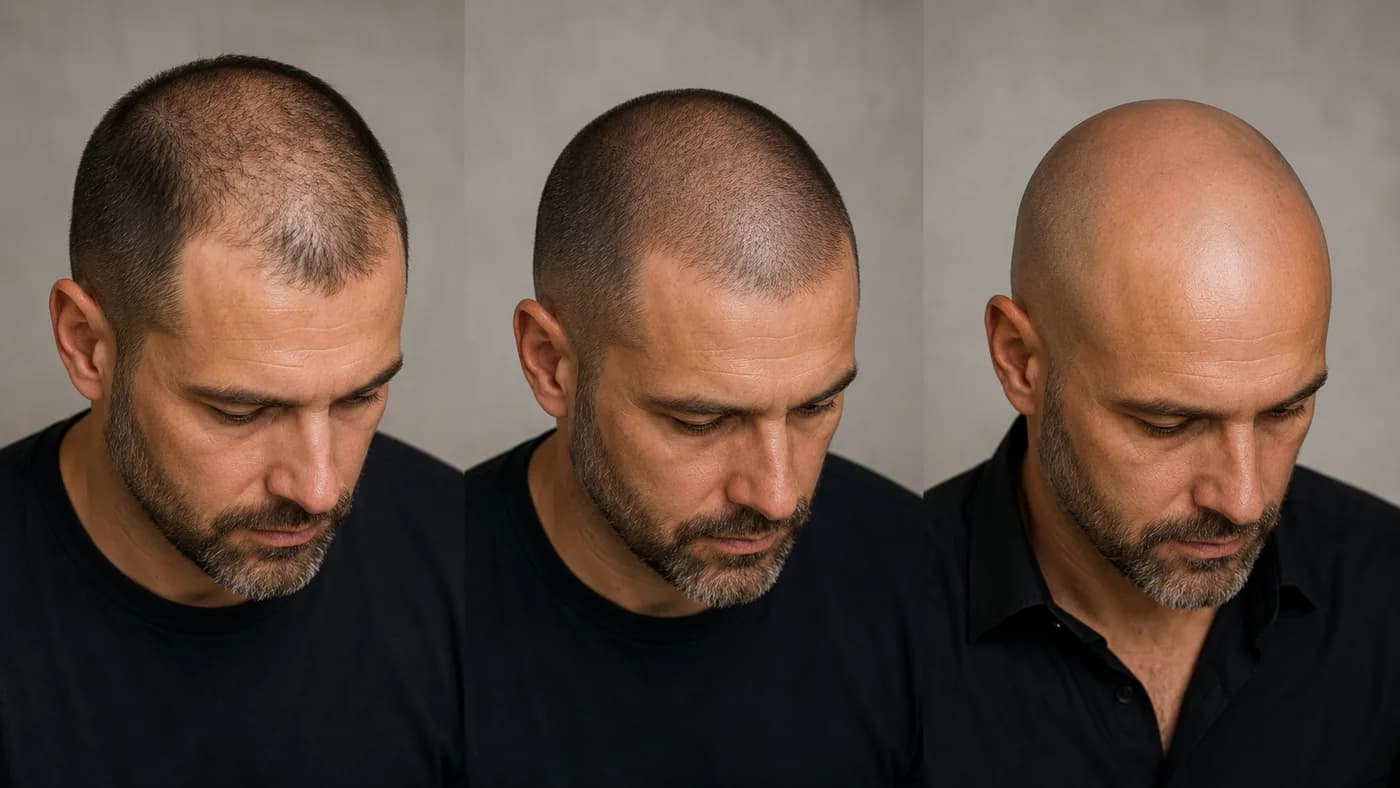
A buzz cut is usually better when hair still contributes something useful. A shaved head is usually better when the remaining hair is only documenting loss.
Here is the practical difference:
| Factor | Buzz cut | Shaved head |
|---|---|---|
| Best for | Mild recession, mild thinning, softer transition | Crown loss, diffuse thinning, strong side-to-top contrast |
| Look | Short and intentional, but still dependent on density | Cleanest and most decisive removal of contrast |
| Upkeep | Clippers every few days to weekly | Smooth shaving every 1 to 3 days if you want it polished |
| Risk | Can expose scalp if the top is too weak | Can feel like a bigger identity change at first |
| Decision rule | Keep it if hair still improves the frame | Choose it if every shorter cut looks better |
The most useful way to answer this is visually. A free BaldLooks analysis gives you a first answer from one photo. If you want to compare buzz lengths, beard balance, more angles, and different outfit or location contexts, the paid BaldLooks plans are where the preview becomes more decision-ready.
How to test the decision without regret
If you want the lowest-regret path, use a sequence:
- Try or preview a #2 first.
- Move to #1 if the top still looks soft or uneven.
- Test #0 if the top remains weaker than the sides.
- Compare fully shaved if the no-guard result is clearly best.
This step-down method matters because it separates fear from evidence. Sometimes a man discovers that a #1 is exactly right. Sometimes he learns that all the momentum points toward shaved. Both are useful outcomes.

Final answer: should you get a buzz cut for hair loss?
A buzz cut for hair loss is a strong option when the top still has enough density to benefit from going short. It is especially effective for early recession, mild crown thinning, and situations where longer hair is creating more visual stress than style.
It is a weaker option when the crown is clearly open, the thinning is diffuse, or the sides are much denser than the top. In those cases, buzzing can make the problem tidier without truly solving it. That is usually when a shaved head starts to look cleaner.
So the rule is simple: buzz it if short hair still improves the frame; shave it if keeping hair only highlights the loss.
If you want the answer on your own face instead of on someone else's, start with a real photo and compare the lengths honestly.