
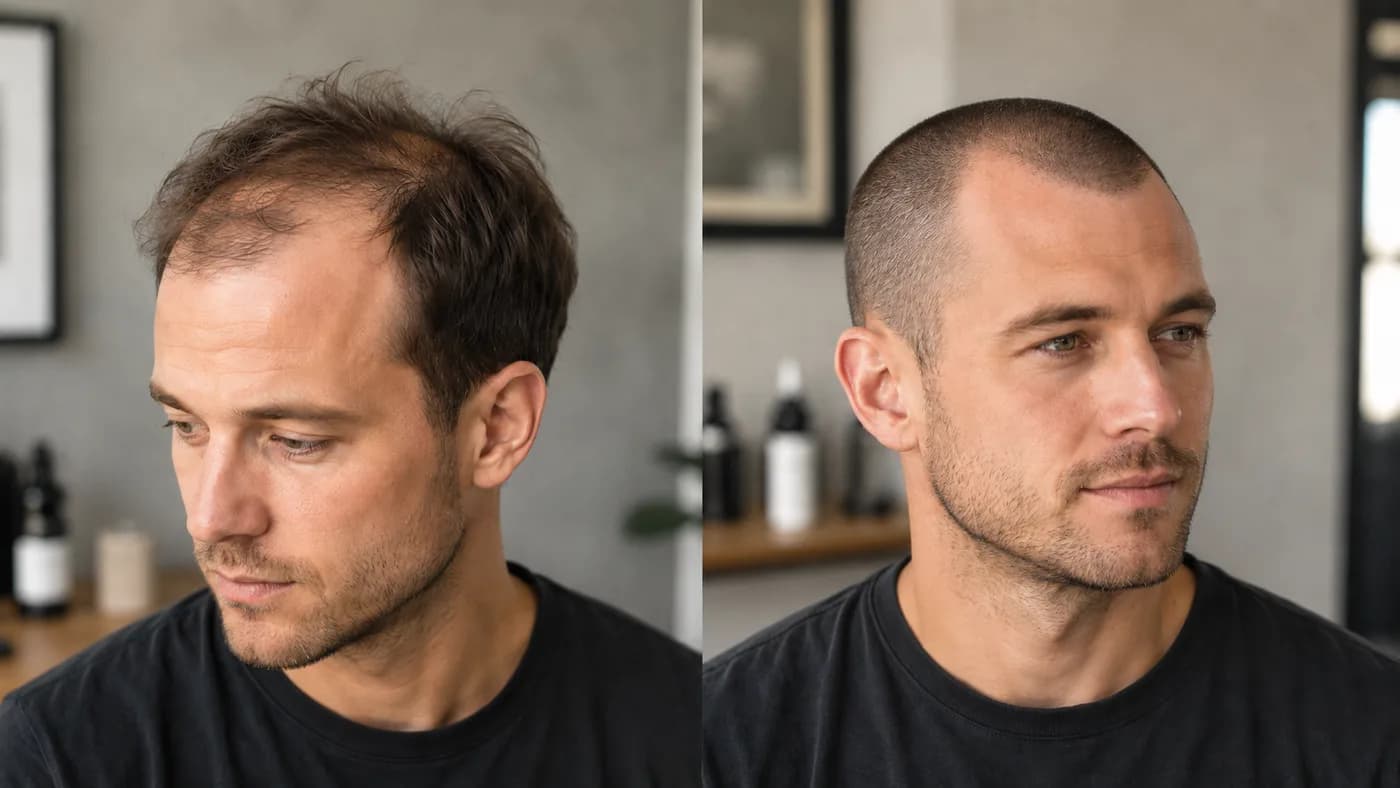
If you are searching for buzz cut balding before and after, you probably do not want theory. You want to know what actually changes once the longer thinning hair is gone.
That is the right angle. The best before-and-after transformation is not about magically getting more hair. It is about whether the haircut makes your current hair loss look more intentional, more even, and less distracting.
The important detail is that the change is not the same for every man. A buzz cut can improve recession, crown thinning, or uneven density, but it can also expose scalp faster if the top is already much weaker than the sides.
Quick read
Buzz cuts often help because they shrink the visual gap between thicker sides and weaker top areas, not because they hide hair loss completely.
Early recession and mild crown thinning usually show the cleanest before-and-after jump. Diffuse thinning is less predictable and often pushes the answer shorter.
A useful before-and-after comparison should include the possibility that shaved looks stronger than every buzz length.
Quick answer: what a balding buzz cut changes before and after
In most balding buzz cut before and after comparisons, five things change first:
- Contrast drops. Thin zones stop fighting long surrounding hair.
- Scalp visibility shifts. Sometimes it becomes less distracting, sometimes more obvious.
- The hairline reads more honestly. The front looks sharper, but also less hidden.
- Your face becomes the focus again. Brows, beard, jawline, and glasses matter more.
- The haircut looks chosen. That alone can make the result look stronger.
According to the American Academy of Dermatology, male pattern hair loss commonly shows up as a receding hairline, thinning, or a bald spot on top. The Cleveland Clinic describes the same common pattern zones, especially temples and crown. That is why a buzz cut before and after does not look identical from one man to another. The pattern decides the result.
Before and after is really a balance test
The best buzz-cut transformation happens when shorter hair removes visual conflict. If the hair left on top still looks much weaker than the sides, the haircut may feel cleaner but not fully resolved.
What actually changes visually after a buzz cut
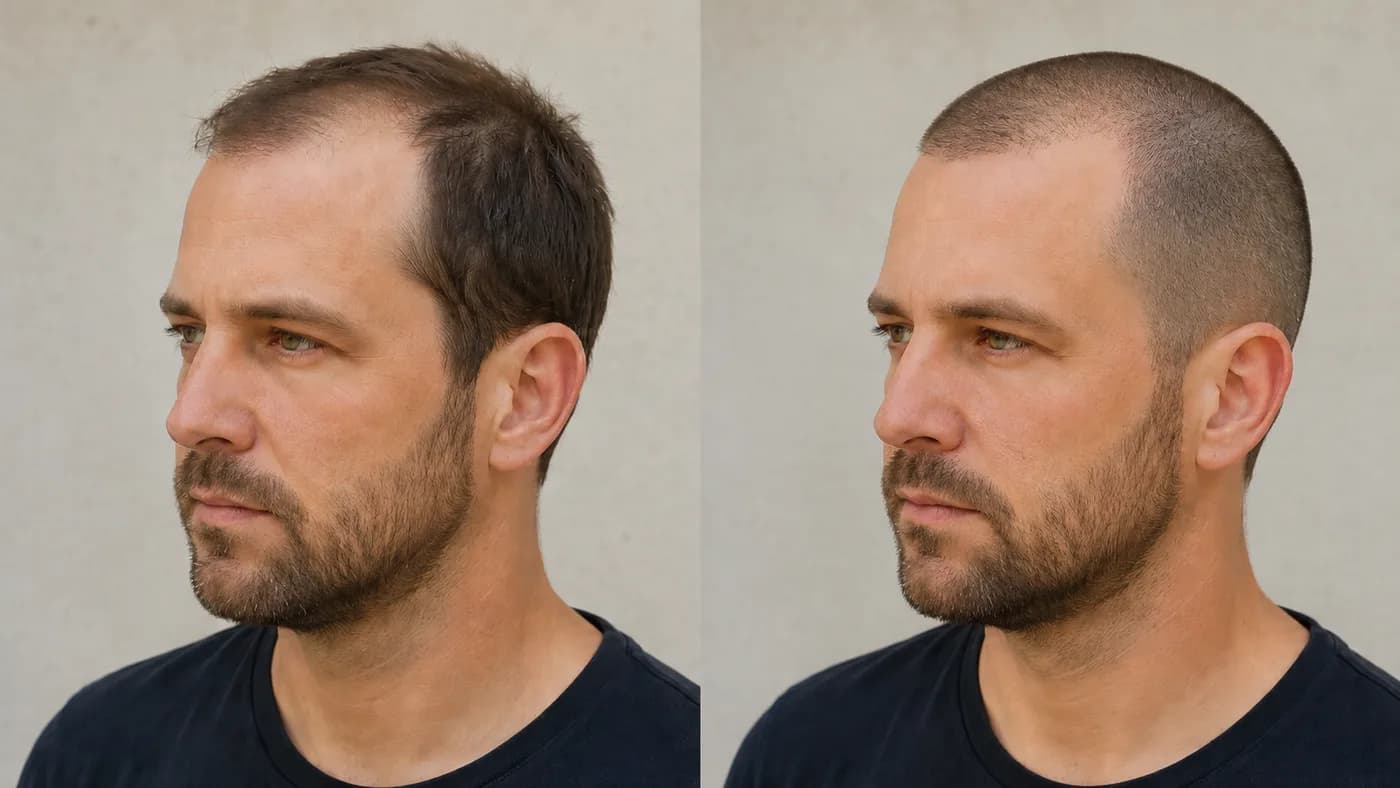
Many men expect the before-and-after difference to be all about the hairline. In reality, the visual shift is broader than that.
Contrast between thick and thin areas
This is usually the biggest improvement. Longer thinning hair often creates a strong mismatch between the dense sides and the weaker top. A buzz cut shortens everything at once, so the top stops trying to compete with fuller areas.
That is why the haircut can look sharper even when the scalp is still visible.
Scalp visibility
This is the part people misread. Buzzing can reduce the distraction caused by wispy length, but it can also show more scalp if the density is already too low. That is not always bad. Sometimes exposed scalp looks more deliberate than exposed thinning hair. But it does mean that a buzz cut is not automatically "coverage."
Hairline shape
A buzz cut usually makes recession look cleaner because it stops disguising it poorly. But it also makes the true hairline easier to see. If the front is only mildly receding, that honesty often helps. If the recession is deep, the result may point you toward a shorter guard or a fully shaved head.
Face focus
In strong before-and-after changes, attention moves away from damaged hair and back to the face. Your eyebrows, beard, glasses, skin tone, and head shape become more important. This is why two men with similar hair loss can have very different buzz-cut outcomes.
Beard balance
A buzz cut does not work in isolation. If the shorter haircut reveals more forehead and less upper-face weight, even a bit of stubble can help restore balance. If that is part of your uncertainty, Bald Men With Beards and Bald With No Beard are useful follow-up reads.
Buzz cut balding before and after by hair-loss type
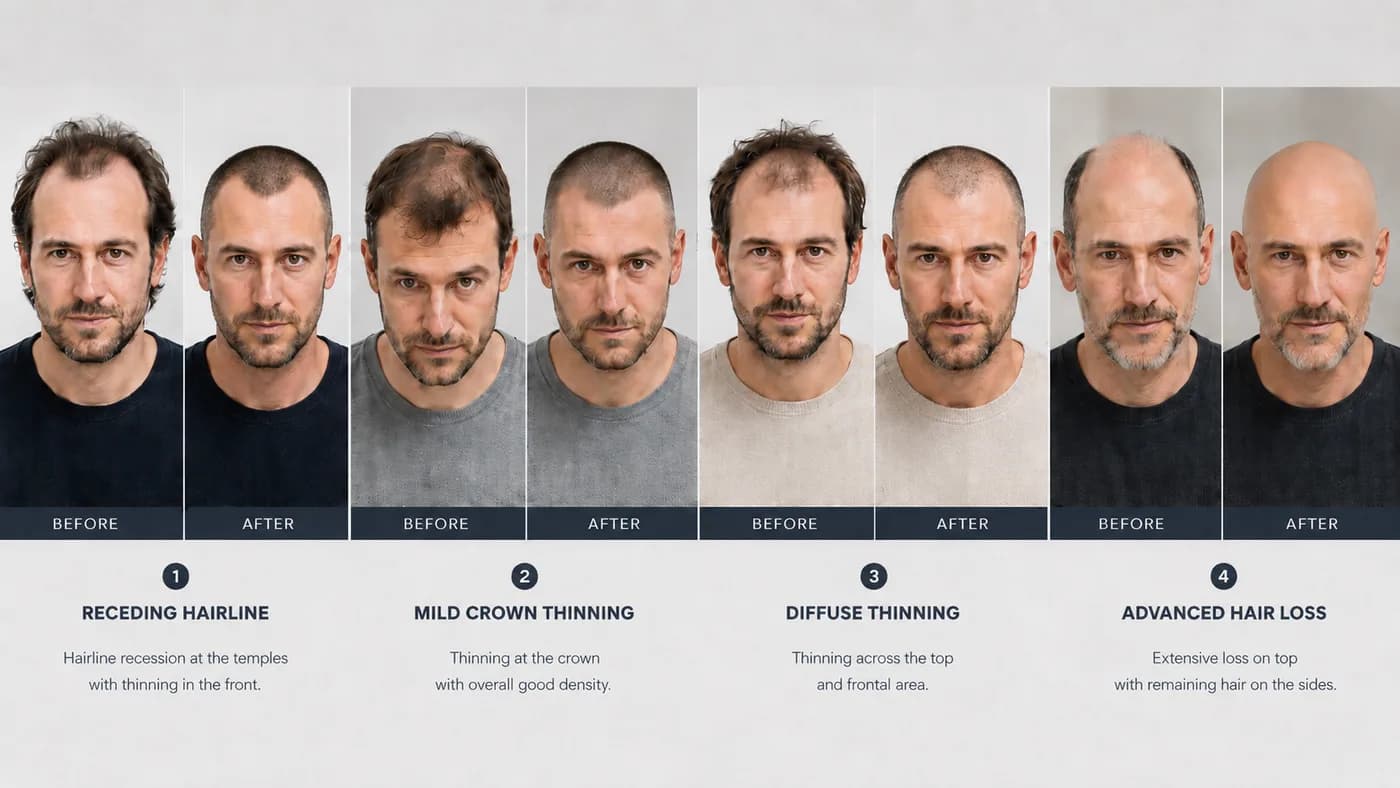
The best way to judge buzz cut thinning hair before and after is by pattern, not by one generic example.
If your main concern is specifically the front, Buzz Cut for a Receding Hairline goes deeper on temple recession. If your main issue is up top, Crown Balding and Buzz Cut for Hair Loss are the better companion reads.
What good before-and-after photos usually reveal
When a buzz cut works for balding, the improvement is usually practical, not dramatic.
You do not suddenly look like a different person with thicker hair. You look like someone whose haircut finally matches the reality of his hair.
That often means:
- less daily styling pressure,
- fewer weak strands trying to create fake volume,
- a calmer outline around the hairline,
- less contrast between dense sides and weaker top,
- and a more intentional overall impression.
That is why a successful before-and-after does not always look "fuller." It often just looks cleaner.
What a buzz cut does not fix
It is just as important to understand what the transformation cannot do.
A buzz cut does not:
- rebuild density,
- close a bald spot,
- erase recession,
- or make every head shape look the same.
This is where some men get disappointed. They wanted a buzz cut to create the illusion of full hair. The better goal is simpler: remove enough length that the remaining hair stops working against you.
If your comparison still looks unresolved after a #2, that does not necessarily mean the haircut failed. It may mean you need to compare #1, #0, and shaved. This is the same reason many men searching for buzz cut for balding eventually land in the Buzz Cut vs Bald decision.
Which buzz lengths usually create the best before-and-after result
The best length depends on how weak the top already is.
| Guard length | Usually best for | Before-and-after effect |
|---|---|---|
#3 | Very early loss with decent density | Cleans up shape, but may leave enough hair for thinning to stay obvious |
#2 | Mild recession or early thinning | Good first test when you want a cleaner look without going too short immediately |
#1 | Noticeable recession, visible crown thinning, mixed pattern loss | Often the strongest true buzz-cut transformation for balding men |
#0 | Advanced thinning or a transition toward shaving fully | Removes most remaining contrast and shows whether bald is the cleaner answer |
For a more detailed guard-length breakdown, Buzz Cut for Balding Men covers the decision pattern by pattern.
How to preview your own buzz cut before and after
The problem with using other men's before-and-after photos is obvious: they are not your face, your density, or your beard.
That is where a photo-based preview becomes useful. BaldLooks Free Analysis gives you a quick answer from one image, which is often enough to tell whether a shorter cut is worth taking seriously. If the answer is close, the paid BaldLooks plans are more useful because they let you compare the shaved option from more angles, with different outfits, and in different settings.
That matters for this topic because the real decision is rarely just before hair versus after buzz cut. It is usually:
- current hair,
- short buzz,
- very short buzz,
- fully shaved.
If you compare only one step, you can miss the cleaner end point.

Final answer: is a buzz cut before and after worth it for balding?
Usually, yes, if the goal is to make your hair loss look cleaner rather than fuller.
The strongest buzz cut balding before and after results happen when the haircut removes weak length, reduces contrast, and makes the overall look feel chosen. Receding hairlines and mild crown thinning usually benefit the most. Diffuse thinning and advanced loss can still improve, but they often point you toward shorter guards or a shaved head faster.
So the best way to judge the change is not to ask whether a buzz cut works in theory. Ask whether it looks better on your actual face than your current hair does now.