
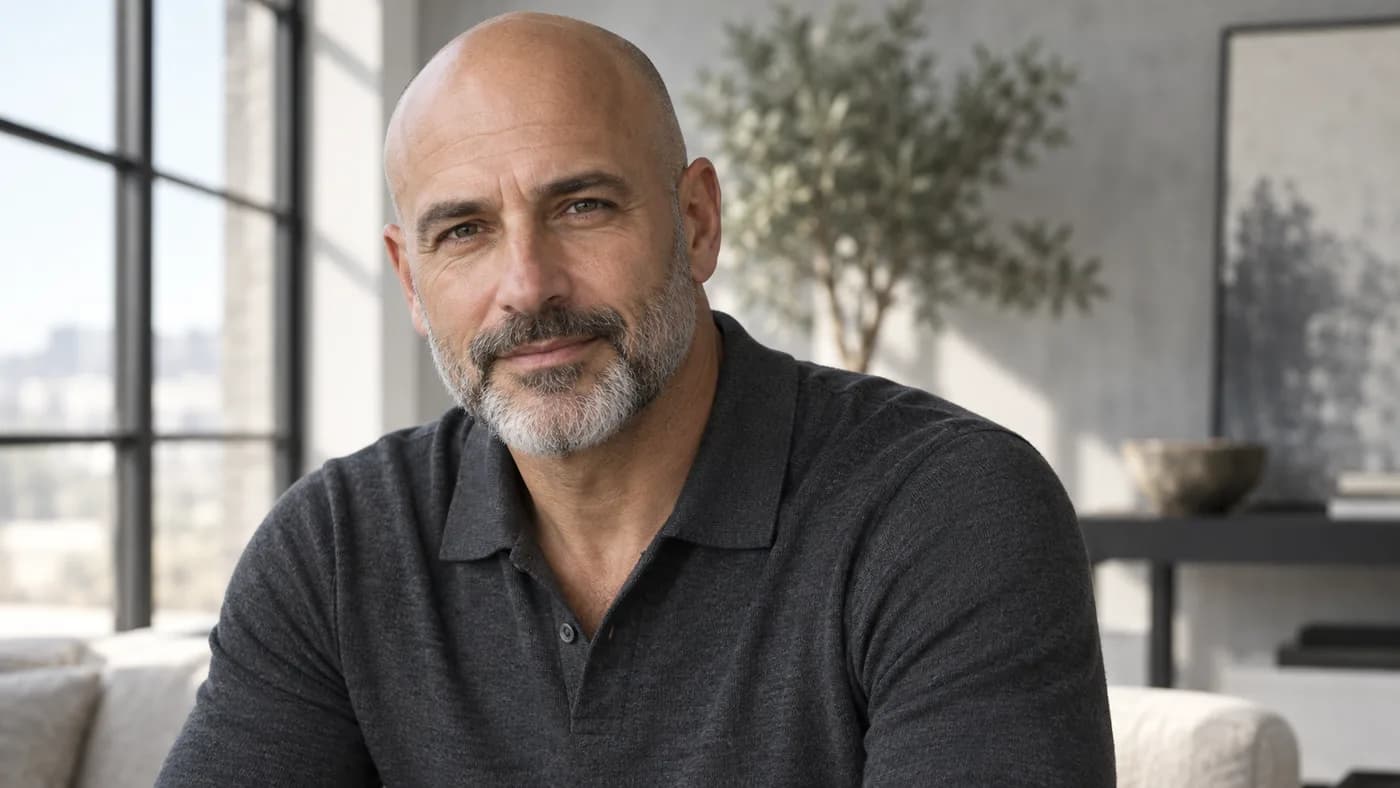
A bald head with a gray beard often looks most natural when the beard color feels like a choice, not a correction. Natural gray can add texture and softness; salt-and-pepper can create depth; a subtle blend can reduce contrast; a fully dyed beard can look sharper—but it also asks more of your maintenance routine.
If you are deciding between gray beard and dyed beard options, start with the whole face rather than a single silver patch. A shaved scalp makes facial hair, brows, skin tone, glasses, collar, and beard edges more visible. That is why a short, neat gray beard can look especially considered beside a bald head, and why an overly dark dye job can be more noticeable than the gray it replaced.
This guide is for the color decision. For beard length and shape, use Bald Men With Beards and Beard Neckline for Bald Men. If you want a broader wardrobe and grooming view, see Bald Men Over 40.
Quick read
Gray does not need disguising. A controlled shape and healthy-looking beard condition usually matter more than removing every lighter hair.
The right color is one you can repeat without stress. Regrowth contrast is part of the decision, especially with a short beard.
A lighter blend, a shorter trim, or a photo comparison gives useful information before you commit to a dense, uniform color.
Quick answer: preserve variation before you erase it
For most bald men, a natural gray or salt-and-pepper beard is the easiest, most believable starting point. It creates a clean contrast against the scalp without demanding that you conceal anything. Keep the length intentional, take bulk out where it grows wide, and maintain the neckline. The finished result can feel mature, confident, and current rather than “older.”
If you dislike how light areas read, try a subtle blend first. The aim is to reduce the loudest contrast while leaving enough variation that the beard still looks like hair, not a block of ink. A fully dyed beard can work too, especially when it aligns with your eyebrows, natural darker hairs, and personal style. It simply needs more upkeep and a more careful safety routine.
Natural does not mean unmaintained
Letting gray show is not the same as letting a beard become dry, uneven, or shapeless. Trim the bulk, keep the neck comfortable, and use a beard conditioner or moisturizer if the hair feels coarse. Gray is a color direction; maintenance is the finish.
Compare the four beard-color directions
Each option can look good with a bald head. The useful choice depends on how much contrast you enjoy, what your beard density allows, and how often you want to think about color.
| Direction | What it looks like beside a shaved head | Best fit | Maintenance reality | Watch for |
|---|---|---|---|---|
| Natural gray | Soft, textured, and open; often makes the eyes and skin tone more visible | Men who want the lowest-color-maintenance route | Trim, wash gently, and condition as needed | Dry, wiry hair or a beard shape that has gone vague |
| Salt-and-pepper | Richer depth with lighter and darker threads | Men with naturally mixed growth who want character without a color commitment | Similar to natural gray; shape matters more than dye | Trying to make every patch match exactly |
| Subtly blended | A quieter version of gray that still has believable variation | Men who want to soften a few very light areas | Requires label-directed touch-ups and patch tests | Choosing a shade that is too dark or too warm |
| Fully dyed | Stronger, more graphic lower-face anchor | Men who enjoy a deliberate darker beard and accept regrowth | Frequent upkeep as lighter roots show | A dense one-color result that conflicts with brows or skin contrast |
Natural gray: let texture do some of the work
A gray beard can be an asset with a bald head because it breaks up the smooth scalp with texture and tonal detail. It also tends to work across casual and professional contexts: a short gray beard with a clean neckline can look calm with a tee and overshirt, then equally credible with a knit polo or unstructured jacket.
The trick is avoiding neglect disguised as “natural.” Gray hairs can look drier or more wiry under strong bathroom lighting, so condition and a modest trim often help more than color. Make the cheek line believable, keep the moustache out of the mouth, and decide whether a short beard or heavy stubble gives your jaw the right amount of weight. The Bald With Gray Beard style page is a useful visual starting point.
Salt-and-pepper: keep the depth, edit the edges
Salt-and-pepper is often the sweet spot. Darker hairs give the beard definition while the gray stops it from feeling too heavy against a bare scalp. Because the color already has movement, a shorter, controlled shape usually looks better than maximum volume. Check it in daylight before deciding a patch is “too gray”; shirt color, clean lenses, or a sharper neckline may solve the real issue. Clothing Colors for Bald Men has a practical daylight test.
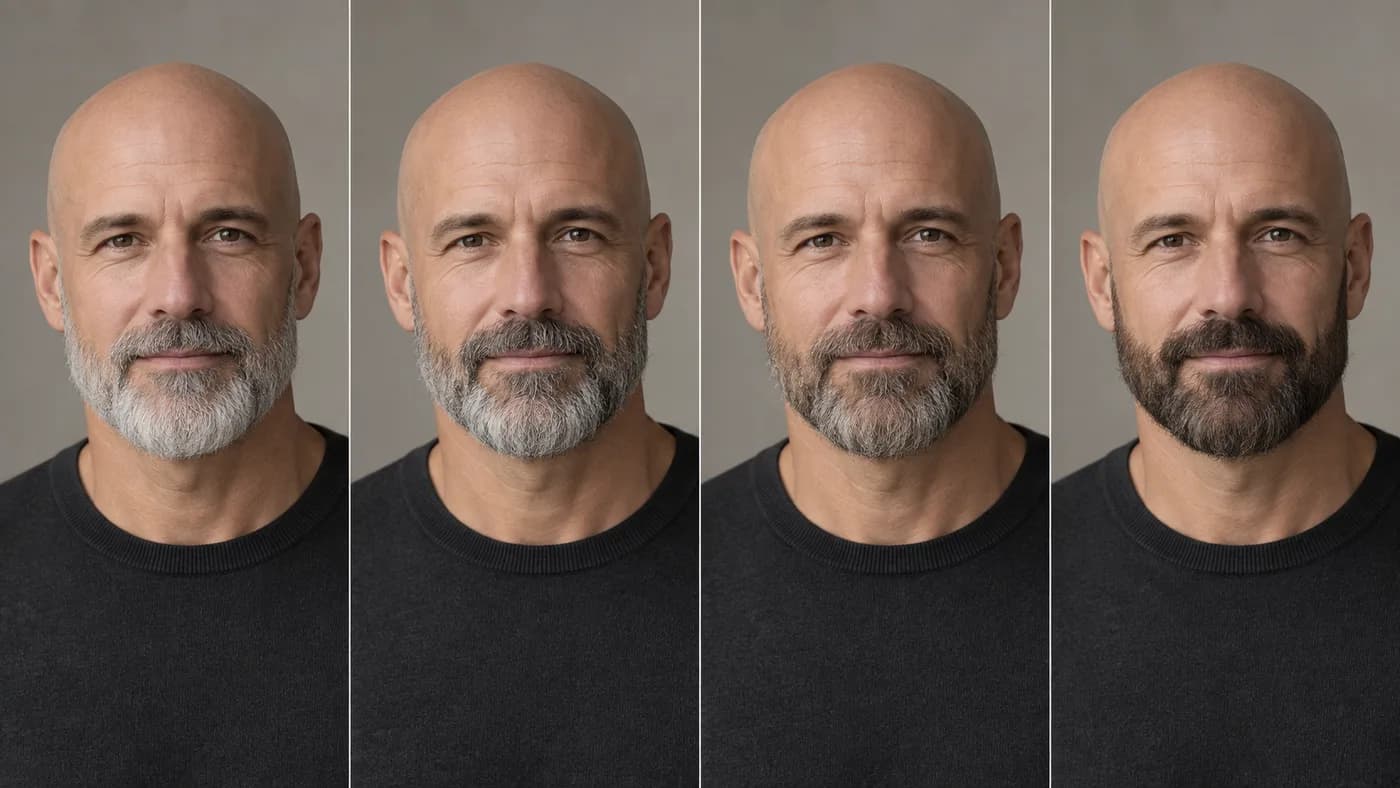
Subtle blending: change the contrast, not your identity
Blending is a sensible middle route when a few bright patches are pulling more attention than you want. Think reduction, not replacement. A brown-gray or ash-leaning result that still leaves lighter hairs visible usually reads more naturally than a beard made uniformly dark from cheek to chin.
This is where skin tone and eyebrow color are helpful guardrails. If your brows are gray or soft brown, a near-black beard can make the lower face feel disconnected. If your natural beard is still mostly dark, a subtle blend may simply restore a familiar level of depth. Start one shade lighter or less opaque than your instinct; you can add color later, while immediately obvious darkness is harder to ignore.
Fully dyed: make it intentional, then own the upkeep
A full beard dye can create bold contrast, but it does not automatically create a younger-looking person. It works best when you enjoy the graphic effect and accept visible roots as the beard grows—especially with a short beard.
Choose a believable color family, maintain a precise shape, and use clothes that do not compete. A very dark beard, black frames, and black shirt can be striking, but may be more intensity than you want every day. Medium-weight frames, navy, olive, cream, or textured charcoal give the face enough separation. Use the beard-and-glasses matrix if you wear frames.
Use contrast, not age, to make the call
The question is not “Which color makes me look younger?” It is “Which amount of contrast feels most like me in ordinary life?” A darker beard creates a stronger lower-face anchor. Gray generally softens the transition from skin to facial hair. Neither is more professional, masculine, or attractive by default.
| If you notice… | Try first | Why |
|---|---|---|
| Your gray beard looks washed out in photos | A shorter, sharper shape; a deeper top near the face; then consider a soft blend | Lighting and clothing are often the actual cause |
| Your beard looks too heavy against your bald head | Reduce bulk or use a lighter frame/shirt before changing color | Shape can lower visual weight without hiding gray |
| A dyed beard looks too obvious | Go lighter, less uniform, or let some gray return | Believable variation is easier on the eye |
| You are tired of visible roots | Return to salt-and-pepper or natural gray | The low-maintenance option is usually the sustainable one |
| You are uncertain | Compare controlled photos before buying dye | A front and three-quarter view reveal more than a close mirror inspection |
Rather than chasing a universal “best” shade, choose the contrast that lets your eyes and expression stay visible. Warm skin may enjoy warm brown, tobacco, olive, cream, or tortoiseshell nearby; cooler or higher-contrast coloring may enjoy charcoal, navy, smoke, or brushed metal. Daylight photos are more trustworthy than a shop mirror.
A cautious beard-dye routine
Beard dye is not just a styling product: it touches facial skin, so treat the package instructions as part of the plan. The FDA advises users to follow the label, wear gloves, avoid leaving dye on longer than directed, and perform a skin test before every use (FDA hair-dye safety guidance). Formulas can change and sensitivities can develop even after previous problem-free applications.
- Do not dye irritated, sunburned, freshly cut, or actively bumpy skin. Give the skin time to settle first.
- Read your product’s instructions in full and complete its patch test exactly as directed. FDA consumer guidance describes leaving the test spot for two days; the product label is the instruction that applies to that formula.
- Stop if you react. Itching, burning, rash, swelling, or blisters are not something to “push through.” The NHS notes that reactions can take up to 72 hours to appear and that PPD in permanent and some semi-permanent dyes can trigger reactions (NHS hair-dye reactions).
- Keep dye away from eyes, eyebrows, and eyelashes. The FDA explicitly warns against at-home eyebrow and eyelash dyeing because of eye-injury risk.
- Get medical help when the reaction is more than mild. Seek urgent help for swelling of the lips, mouth, throat, or tongue, or for breathing difficulty. For recurring or unexplained rashes, a dermatologist can assess whether formal patch testing makes sense.
Avoid assuming that “natural,” “henna,” or “sensitive” on a package guarantees a reaction-free experience. Check the ingredients and directions for the product you are actually using. If you have had a black henna tattoo or reacted to hair dye before, do not improvise—discuss the risk with a healthcare professional. FDA notes that black henna exposures may increase sensitivity to hair-dye ingredients such as PPD.
Style is never worth a facial-skin reaction
A home product patch test is a useful precaution, not a promise that a full application cannot react. If your face becomes painful, significantly swollen, blistered, or you have trouble breathing, stop using the product and seek appropriate medical care.
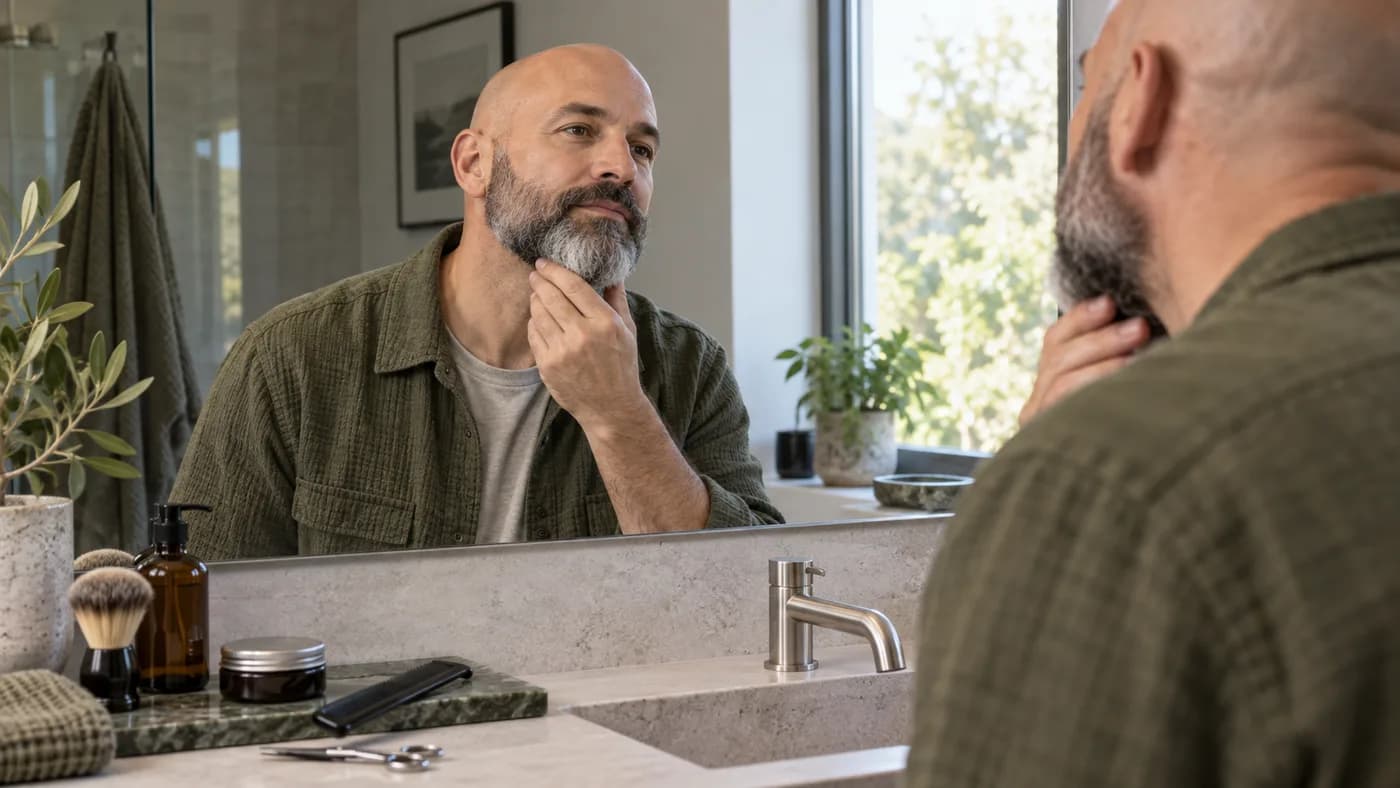
Run a no-regret comparison before committing
First, trim the beard into the shape you would actually maintain. Take front and three-quarter photos in indirect daylight, in a typical work or weekend top. Then test one change at a time: neckline, bulk, shirt, frames, or a safely patch-tested temporary color option.
Ask: Do my eyes still lead? Does the beard look like part of me rather than a separate color block? Would I be happy to repeat this upkeep every one to three weeks?
The most natural option is the one you can sustain
Natural gray, salt-and-pepper, soft blending, and a fully dyed beard can all work with a bald head. Choose the contrast, shape, upkeep, and skin-safety routine that fit your real life.
Start by keeping natural variation and improving the finish. If you still want more depth, move gradually: subtle blend before uniform darkness, careful patch test before application, and photos before another change. A comfortable beard that looks like you outlasts a color decision made in panic.