
What Would I Look Like With a Beard? Try Styles Before You Grow

If you are asking “what would I look like with a beard?”, you are probably not looking for a random face filter. You want a believable answer before you spend months growing facial hair—or trim off a beard you have already earned.
That hesitation makes sense. A beard changes more than your chin. It changes the apparent width of your cheeks, the contrast around your jawline, the length of your face, and, if you are bald or thinking about shaving, the balance of your entire head-and-face shape.
The best way to answer the question is to compare a few meaningful beard styles on your face. Do not start by trying to copy a celebrity beard. Start by seeing how much structure you need, where your growth is strongest, and which version still looks good in an ordinary photo.
Quick read
The useful question is not simply whether you can grow one. It is whether a little more width, chin emphasis, or jaw contrast improves your proportions.
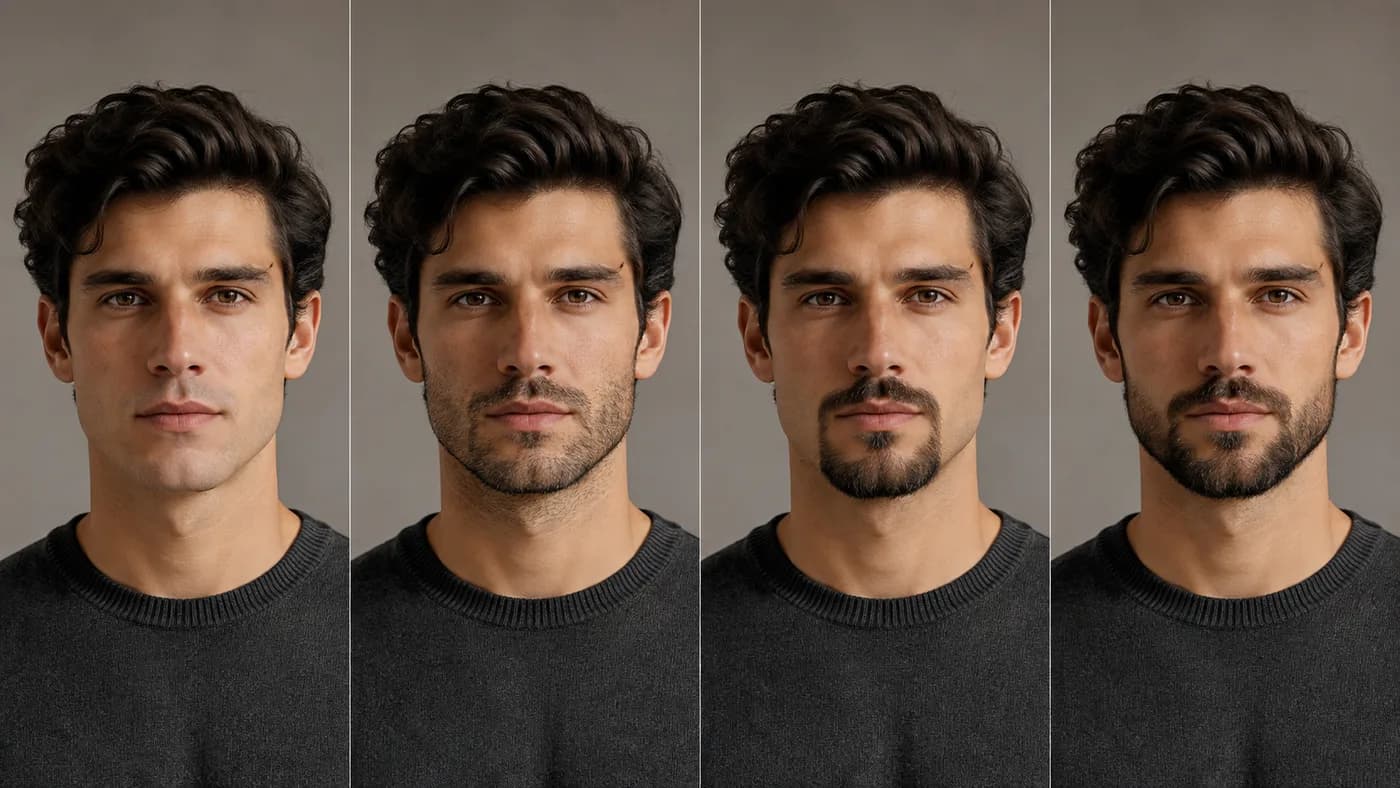
Clean-shaven, heavy stubble, a compact goatee, and a short beard reveal far more than generating one full beard result.
Your haircut, scalp, glasses, skin, and usual clothes affect whether the beard looks considered or pasted on.
Quick answer: a beard can make your face look more defined—but not always better
A beard often makes the jaw and chin look more pronounced because it adds a darker edge below the face. But more facial hair is not automatically more flattering. A beard that is too wide can make the lower face look heavy. A long pointed beard can stretch an already long face. Sparse cheeks can make a full beard look less intentional than stubble or a goatee.
That is why a beard simulator is useful. It lets you test proportion before committing to growth. GQ’s face-shape guidance makes the same practical point: beard width and length can be adjusted to balance a rounder, longer, square, or more angular face rather than following one universal style (GQ). Treat that as a starting hypothesis, not a rulebook. Your own photos are the final test.
What changes when you add a beard
It helps to stop thinking of a beard as a single switch. Different shapes change different parts of the face.
Jawline: contrast can create a clearer edge
Stubble and a short beard create shadow along the jaw. On some faces, that reads as stronger definition. The key is an outline you can keep neat. If the neckline sits too low or the side bulk grows unchecked, the beard can soften the jaw instead of sharpening it.
Chin: length is useful only when you need it
A little extra length at the chin can give a rounder or shorter-looking face more vertical balance. But a narrow, pointed beard can make a naturally long face look longer. If your chin growth is strong but your cheeks are weaker, a compact goatee or circle beard may create focus without pretending you have dense side growth.
Cheeks: width has the biggest visual effect
Cheek growth determines whether a full beard frames your face or overwhelms it. Wider, fuller sides can add useful volume to a narrow face; they can make a round face feel broader. You do not need to fill every bare spot. The American Academy of Dermatology notes that genetics determine sparse areas and recommends choosing a beard style that works with how your hair grows instead of fighting it (AAD).
A bald or buzzed head: the beard becomes more noticeable
With more hair on top, your beard shares the job of framing your face. With a shaved head, it becomes a stronger lower anchor. That can be a benefit—a tidy short beard often makes the overall look feel intentional—but it raises the importance of width, edge control, and skin care.
If this is your main decision, read AI Beard Simulator for Bald Men. If you already know the shaved base suits you, Bald With Beard vs No Beard gives a more focused side-by-side comparison.
Do not grow the biggest beard first
Your first goal is not maximum facial hair. It is the smallest amount of beard that improves the shape of your face. A clean outline and even stubble often beat a larger beard with patchy cheeks or uncontrolled width.
The beard styles worth trying on your face first
You can skip the endless style list. These four comparisons answer most first-time beard questions.
A full beard is still worth testing if your growth is dense. Just compare it with the short boxed version before you assume longer is better. The difference in width is usually more important than the difference in millimeters.
If you are drawn to the goatee route, use Goatee Filter for the detailed shape comparison. If your cheeks are patchy, Bald With a Patchy Beard can help you choose a style that uses your strongest growth rather than hiding behind a filter result.
How to use a beard filter without fooling yourself
A preview can only be useful when the input and comparison are fair. Use this simple process:
Do not make the call with your nose two inches from a bathroom mirror. Step back, or view the result at the size other people normally see you. A beard should improve the whole face, not win one close-up angle.

Beard length, face shape, and bald-head balance
Face-shape advice is most helpful when you treat it as a way to test a direction, not a verdict.
- If your face is rounder, keep the sides controlled and test a little more chin definition. A very wide beard can make the face feel broader.
- If your face is long or narrow, test stubble or a beard with modest chin length and more balanced sides. A long pointed beard often exaggerates vertical length.
- If your face is square, softer, rounded beard corners can keep the jaw from reading overly blocky while still preserving structure.
- If your face has a weaker chin, a compact beard or goatee can add focus, but avoid letting it become a long, thin point.
The same principles apply after a head shave, only more visibly. A shaved head paired with dense facial hair creates a clear top-and-bottom silhouette; keeping the beard close and edged is usually safer than allowing it to grow outward. See Bald Beard Styles by Face Shape for a fuller guide, and Best Head Shape for Bald Men if the head-shave question is still unresolved.
Grow it, trim it, or stay clean-shaven?
Use your preview as a decision aid, then choose the option you will actually enjoy maintaining.
Grow a beard when the preview adds useful jaw or chin structure and your strongest growth areas support the shape. Start shorter than the generated result; you can always add length later.
Trim shorter when the beard looks good in principle but feels too wide, dark, or heavy. Heavy stubble is often the sweet spot for men who want definition without committing to a full beard routine.
Stay clean-shaven when facial hair makes your face look busier, your skin gets irritated by frequent trimming, or your natural jaw and features already carry the look. Clean-shaven is not the default you settle for—it can be the sharpest result.
Whichever route you choose, look after the skin underneath. The AAD recommends moisturizing the skin and facial hair and using an appropriate shaving product when trimming; shaving in the direction of growth helps reduce irritation and razor bumps (AAD beard-care guidance). If you get persistent bumps, acne, or irritation, a dermatologist can help separate a grooming issue from a skin condition.
Final answer
The best answer to “what would I look like with a beard?” is usually not a yes-or-no answer. It is a side-by-side comparison: clean-shaven, stubble, a compact goatee, and a short beard on the same face.
Look for the version that gives you just enough structure without adding bulk or hiding your natural features. If you are also considering a buzz cut or shaved head, judge the beard on that base—not as a separate experiment. One clear photo can turn a vague idea into a practical decision.