AI Beard Simulator for Bald Men: Try Styles Before You Grow
If you are searching for an AI beard simulator, you probably do not need another generic filter. You want to know whether facial hair will improve your face after you buzz or shave your head—and which style is worth the months of growing and trimming.
That is a more specific problem. A bald head takes away the texture and frame that hair on top used to provide. Your beard, jawline, glasses, skin, and clothes become more noticeable. A great beard can give the lower face definition and make the shaved look feel deliberate. A beard that is too wide, too long, or too patchy can do the opposite.
An AI beard simulator gives you a low-stakes way to compare the possibilities first. The goal is not to find the most dramatic transformation. It is to find the version that still looks balanced in an ordinary photo, with your normal expression and your normal clothes.
Quick read
A beard style can look completely different once the hair on top is gone. Judge it against the shaved or buzzed version you are actually considering.
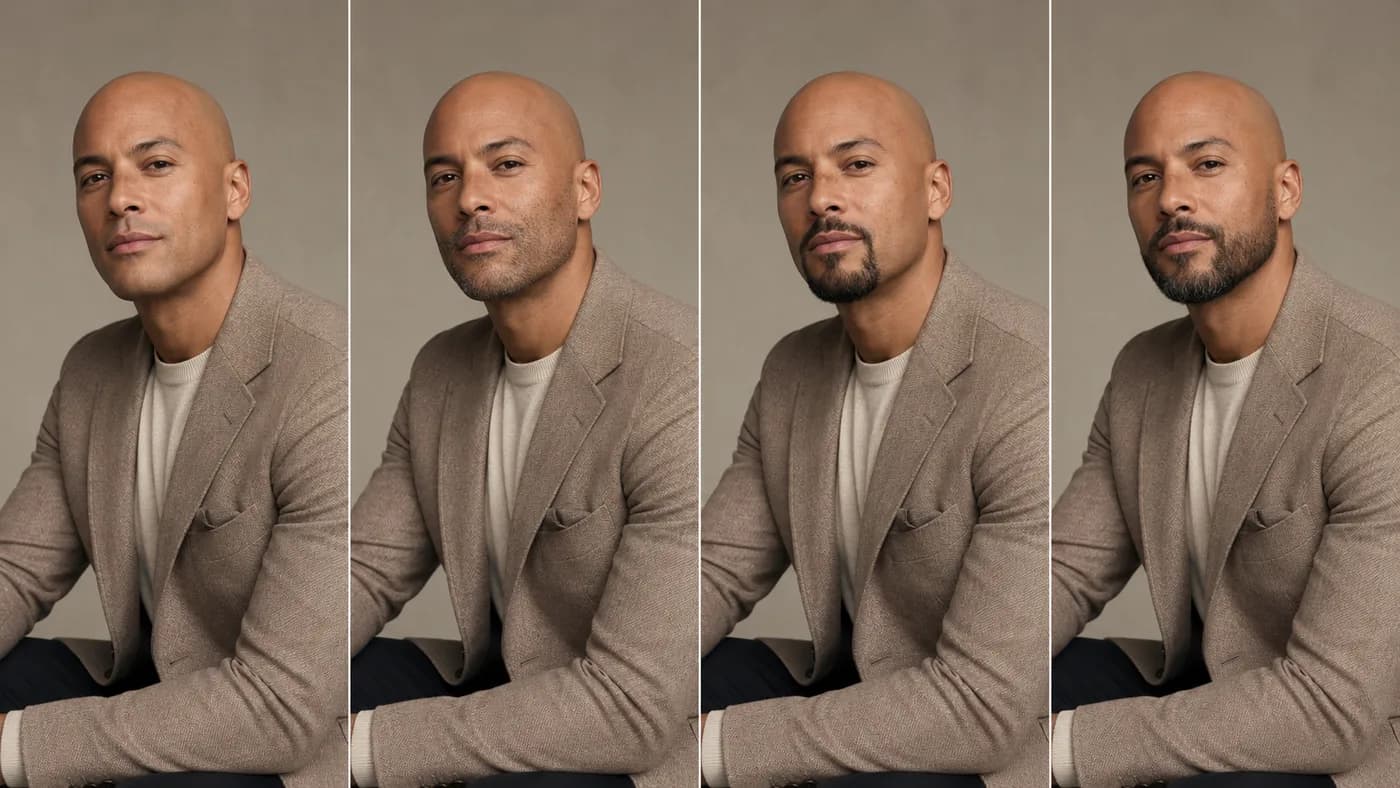
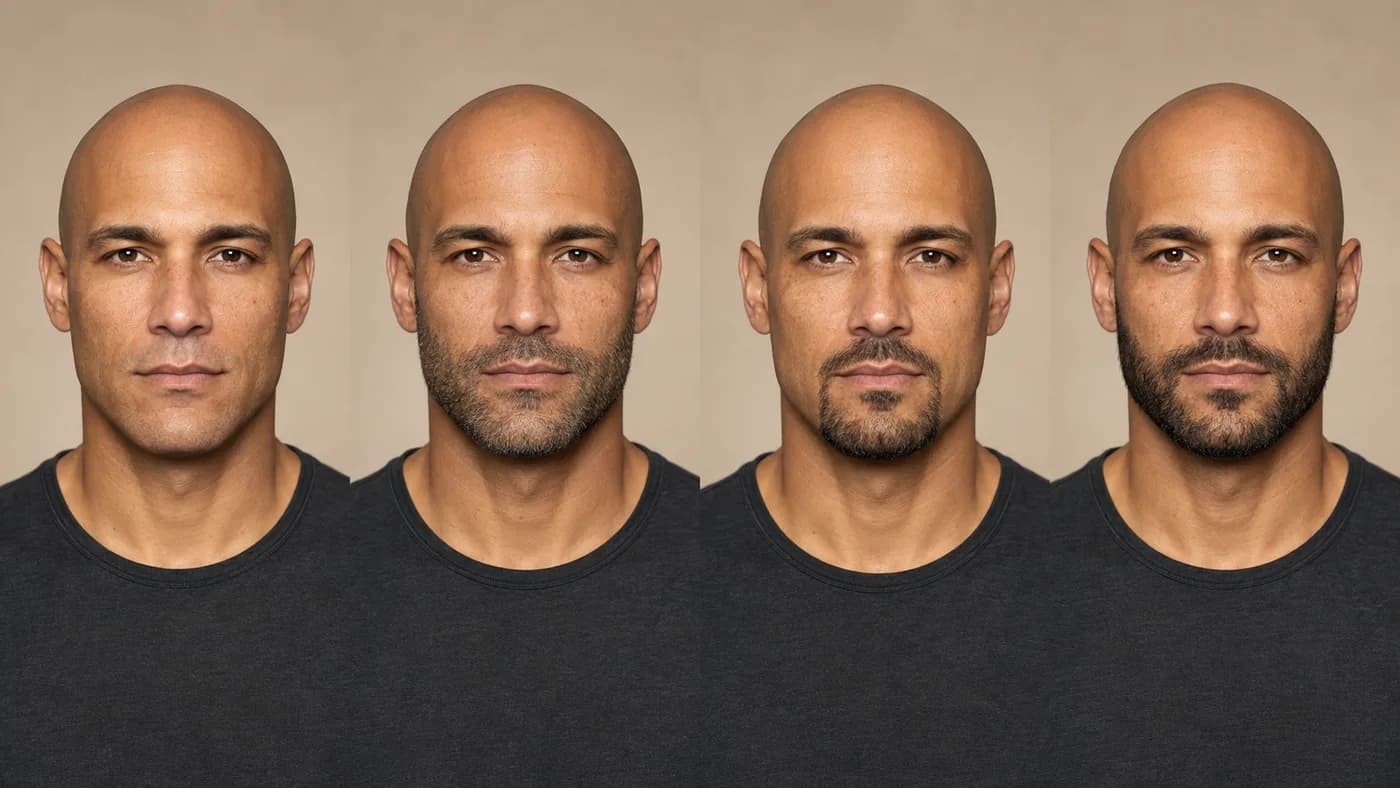
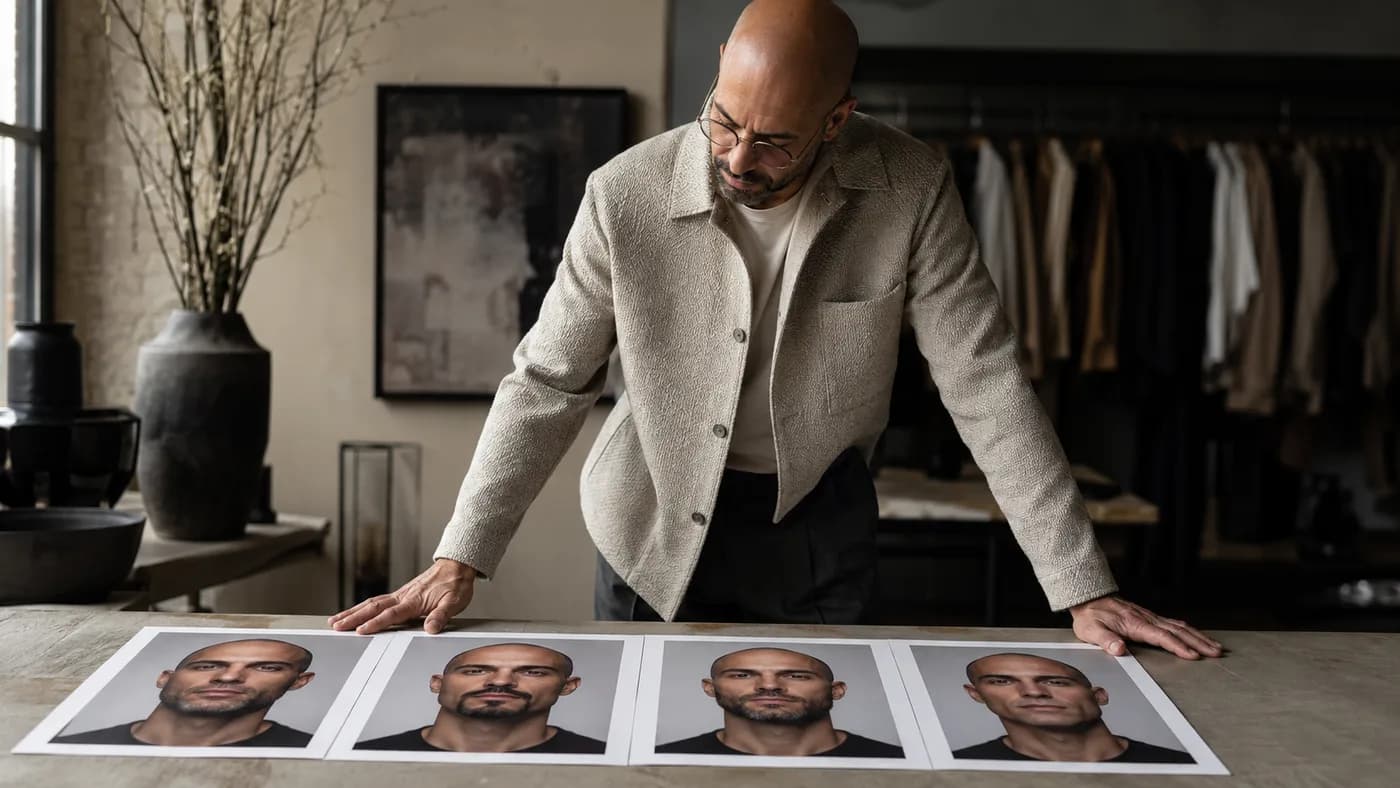
Put clean-shaven, stubble, a goatee, and a short beard next to one another with the same photo, angle, and lighting.
The best preview is not useful if your growth pattern or skin will not support the trimming routine it needs.
Quick answer: an AI beard simulator is most useful on a bald or buzzed preview
A standard beard filter answers, “What would I look like with facial hair?” A bald beard simulator answers the more useful follow-up: “What facial hair makes my bald or buzzed look feel complete?”
That distinction matters because the head and beard are one composition. The scalp creates a clean upper silhouette; facial hair adds contrast below it. When you change both variables at once, you can see whether the beard:
- gives a soft jaw more definition,
- balances a larger forehead or exposed scalp,
- makes a round face look wider or more structured,
- competes with bold glasses,
- or simply adds visual clutter where a clean-shaven look would be sharper.
Use the BaldLooks Free Analysis when you need a first opinion on the bald direction from one photo. Once you know the base is worth exploring, BaldLooks paid plans are built for the fuller comparison: different beard options, angles, outfits, and locations—not just one face-filter result.
Preview one variable at a time
Keep your expression, angle, glasses, and outfit the same while comparing beard styles. If every result changes at once, you cannot tell whether you prefer the beard or the rest of the image.
Why the bald base changes the beard decision
Before a head shave, hair and beard share the work of framing your face. After it, proportion is more obvious: a little stubble may be enough to create lower-face definition, while a wide full beard can make the silhouette feel bottom-heavy.
Growth pattern matters too. Genetics influence facial-hair thickness and distribution, and beard density can continue developing through the late teens and twenties. A simulator should help you decide what to test, not promise that every generated full beard will grow exactly that way. Cleveland Clinic explains the role of genetics and age in beard development.
The four beard styles to try first
If you have no clue where to start, compare these four. They cover the biggest visual shifts without sending you down a rabbit hole of tiny style variations.
Heavy stubble is the safest first answer because it adds definition without demanding perfect cheek density. A full beard is worth testing when growth is dense, but compare it with a short boxed version before growing it long; width and an untidy neckline quickly look bottom-heavy. A goatee can be deliberate—not a fallback—when cheek growth is patchy or you want chin emphasis. A mustache is more style-sensitive, so test it with light stubble rather than alone.
For more style-specific help, see Bald Men With Beards, Bald With Beard vs No Beard, and Bald With a Goatee.
How to get a realistic result from your photo
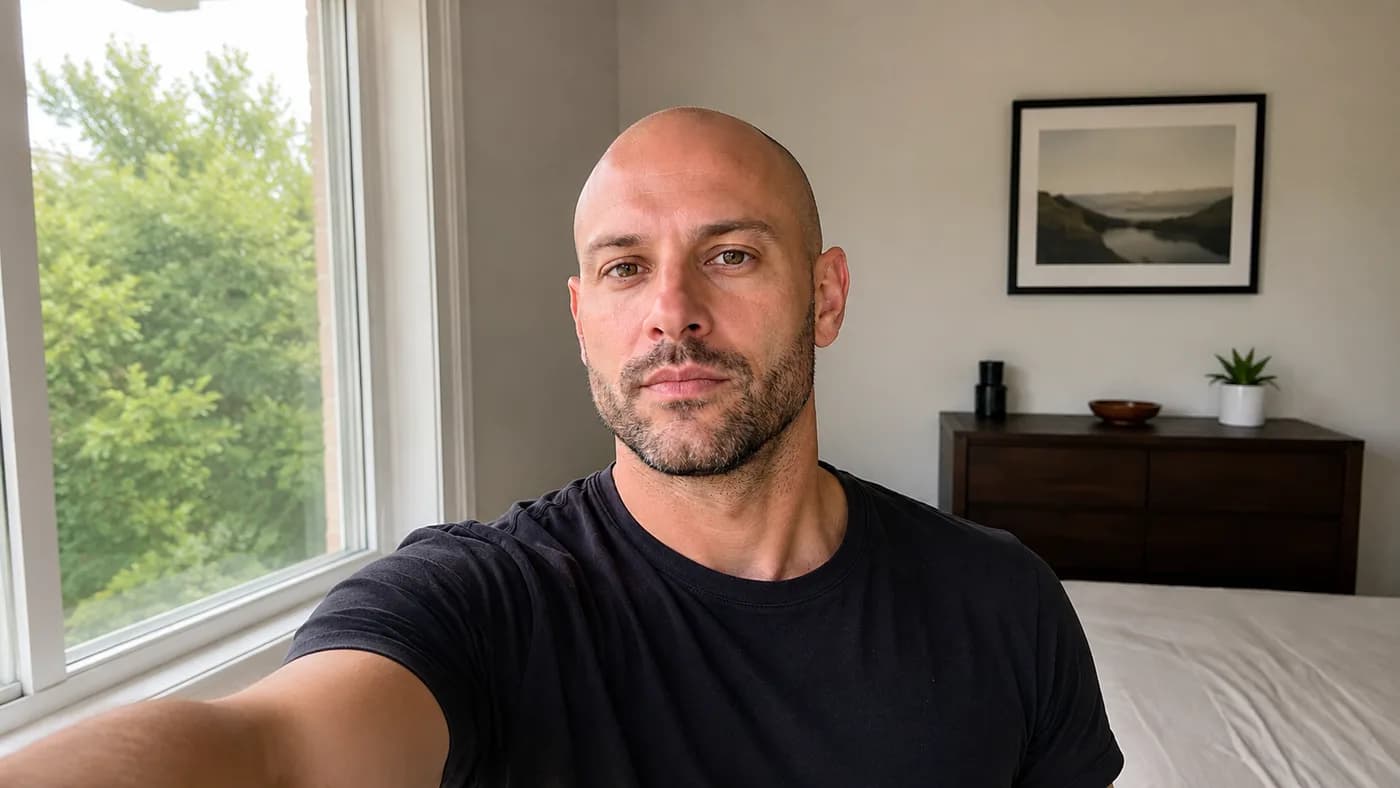
Use a sharp, front-facing photo with the cheeks, upper lip, chin, jaw, and neckline visible:
- Face the camera with your head level and your full jaw in frame.
- Use soft daylight or even indoor light; avoid hard sunlight from one side.
- Remove hats, sunglasses, hands, and anything covering the lower face.
- Keep your expression relaxed. A wide grin stretches the cheeks and changes beard placement.
- Add a three-quarter photo when you need to judge jaw depth and sideburn transitions.
Treat the output as a decision aid, then validate the winner in natural light and from a few angles.
Compare the whole look, not only your beard
When you review previews, zoom out. Ask:
- Does the beard make the jaw look clearer at normal viewing distance?
- Does it add balance, or does it pull all the attention toward the chin?
- Does the neckline look deliberate in a three-quarter view?
- Would this still work with your usual glasses and clothes?
- Does the result feel like you, only more intentional?
Keep the grooming decision realistic
A preview can show you what to aim for; maintenance determines whether it keeps looking good. If close shaving causes irritation or razor bumps, factor that into your choice. The American Academy of Dermatology recommends softening hair and skin, using shaving cream, shaving in the direction of growth, and using a clean sharp blade. Their practical shaving guidance is here.
Final answer: use the simulator to narrow the right beard, not invent a new face
An AI beard simulator is most valuable when you use it as a comparison tool. Start with the bald or buzzed base. Then test clean-shaven, heavy stubble, a goatee, and a short beard under the same conditions. Look for balance, not maximum facial hair.
For most bald men, stubble or a short boxed beard is the sensible first test. A goatee can be a strong answer for patchier cheeks or a smaller chin; a full beard can work brilliantly when density and grooming support it. The photo that wins is the one that still looks like you—and looks intentional from more than one angle.