
Best Sunglasses for Bald Men: Frames by Face Shape
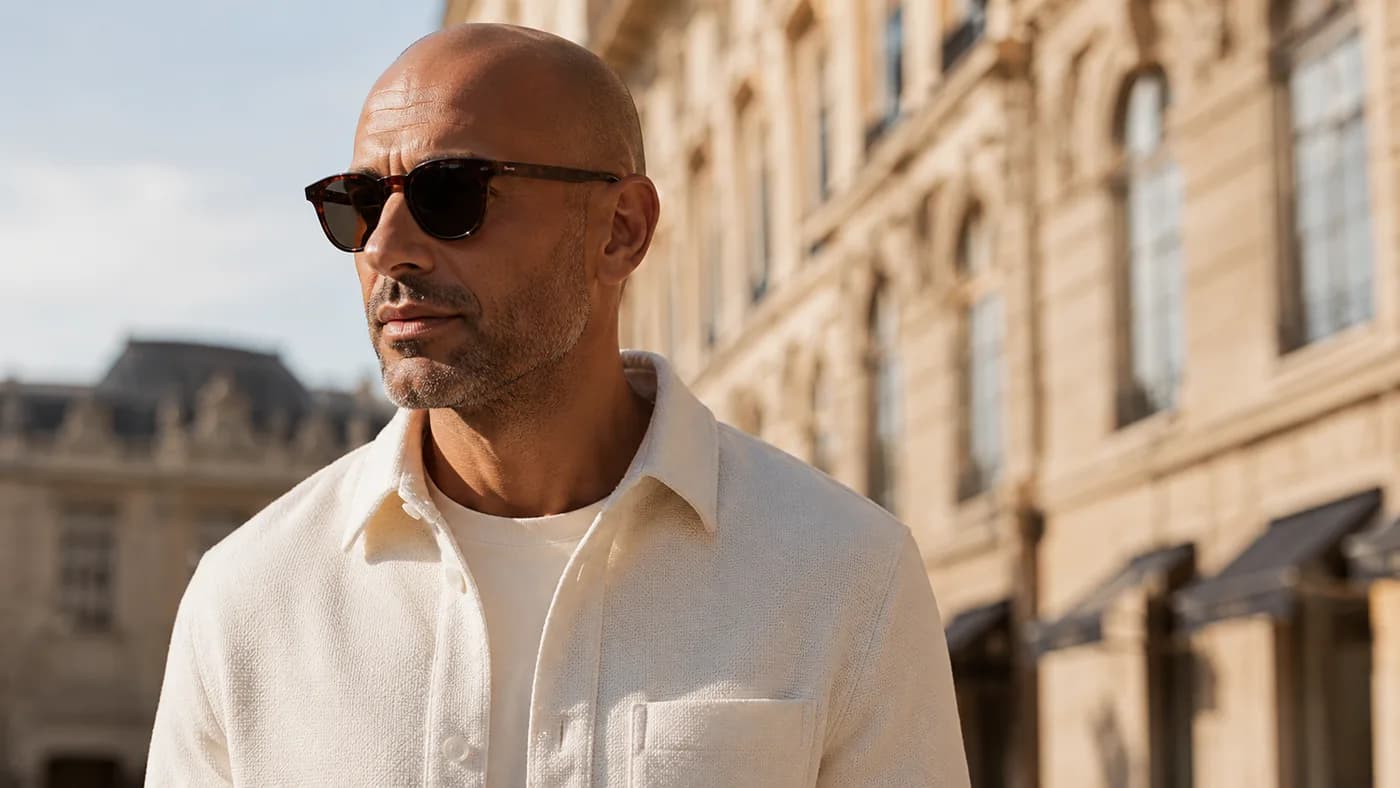
The best sunglasses for bald men add structure around the eyes without becoming the entire look. Start with a frame that fits your face well, has enough visual presence to register, and works with your beard or clean-shaven face. Then choose lens color and coverage for the conditions you actually spend time in.
Once you shave your head, sunglasses do more than block glare. With less hair framing the top of the face, the brow line, eyes, jaw, and eyewear become more visible. A good pair can make an outdoor look feel deliberate. A poorly fitted pair can sit too low, crowd the cheeks, or look like it is wearing you.
That does not mean bald men need one prescribed “bald-guy” frame. The useful question is simpler: what does this pair add to the full frame of your face? This guide helps you answer it without turning face shape into a rulebook.
Quick read
A frame that sits securely, matches your face width, and does not touch the cheeks will look better than a trendier pair with the wrong proportions.
Medium frame weight is the easiest starting point; go bolder only when your features, beard, and outfit can support it.
Dark lenses and polarization do not automatically mean UV protection. Look for 99–100% UVA and UVB coverage or UV400.
Quick answer: the safest sunglasses for a shaved head
If you want one reliable first pair, try a medium-width, softly squared or rectangular frame in dark tortoiseshell, smoke, olive, or black. Keep the frame approximately as wide as your face, make sure it sits clear of your cheeks, and avoid an overly tall lens unless that is a deliberate style choice.
This is not the only good option. Aviators, wayfarer-style frames, rounded acetate, and wrap styles can all look right on a bald head. But a medium-presence frame is easier to judge because it adds definition without forcing a dramatic identity on the rest of your outfit.
Before spending money, check the practical baseline. The CDC advises choosing sunglasses that block 99 to 100% of UVA and UVB radiation, while the American Optometric Association notes that dark tint alone does not guarantee adequate protection (CDC vision guidance, AOA UV-protection guidance). Style is more fun when the pair also does its job.
Sunglasses should frame the face, not hide it
A pair can create a strong outdoor look, but it is still useful to have photos where your eyes are visible. Treat sunglasses as one styling option, not the only way to feel confident with a shaved head.
Why sunglasses matter more when you are bald
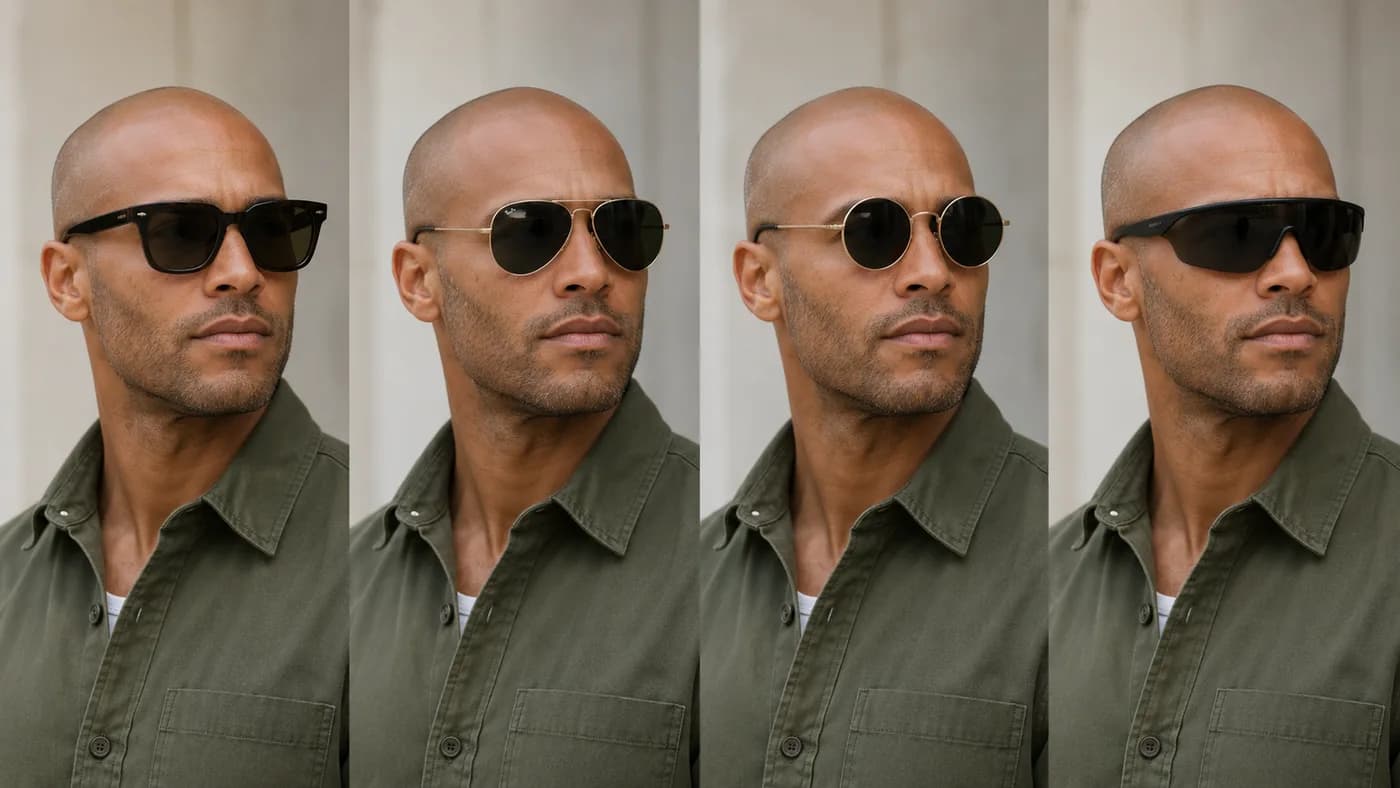
Hair used to provide texture above the eyes. With a shaved scalp, the upper face is cleaner and more exposed, which makes eyewear more noticeable. Sunglasses can add a brow-level anchor, introduce contrast, or soften a sharper head-and-jaw outline.
They also change by angle. A pair that seems understated from the front can look very thick from three-quarter view. Temple width, arm height, and how far the lenses sit from the face matter just as much as the outline you see in a mirror.
The same principle appears with clear lenses. Our guide to Bald With Glasses covers prescription-frame balance in more depth. Sunglasses are a different decision because lens tint, outdoor light, coverage, and a more relaxed wardrobe all enter the picture.
Choose frame shape by what you want to balance
Face shape is a starting language, not a verdict. Your brow, nose bridge, cheekbones, beard, and personal taste can change the answer. Use the table to narrow a few styles, then let fit and daylight make the final call.
| Face shape | Strong starting frames | What to watch for | Best styling move |
|---|---|---|---|
| Round | Soft squares, rectangles, browline shapes | Tiny round lenses that add more softness | Use a clear top line and moderate width to add definition |
| Square | Aviators, rounded rectangles, soft panto shapes | Very thick square frames that make the jaw feel blocky | Keep some curve in the lens or corners |
| Oval | Most medium-proportion styles | Frames that are extremely narrow or comically oversized | Experiment, but keep lens depth proportional |
| Long or rectangular | Wider frames with moderate lens depth | Narrow, tall lenses that add even more vertical emphasis | Favor width and a stable brow line |
| Heart or diamond | Medium-width aviators, rounded acetate, softer squares | Top-heavy frames that exaggerate forehead width | Choose a balanced lower rim and avoid excessive upper bulk |
There is no need to “correct” your face. A round face can wear round sunglasses if that is the look you want; a square face can wear a strong square frame. The tradeoff is simply more intensity. If the frame exaggerates a feature, decide whether that feels intentional or distracting when you see the full outfit.
Get width, bridge, and temple thickness right
Most disappointing sunglasses are a fit problem before they are a color problem.
Start with frame width
The outside edge of the frame should generally feel close to the widest part of your face, without creating a narrow pinched look or extending so far that the temples dominate from the front. Frames that are too narrow can make a bald head look larger by contrast. Frames that are too wide can look detached from the face.
Check where the bridge sits
The bridge should feel stable without squeezing or sliding down when you look down. If the frame sits low, the top bar can cut across the eyebrows and the lenses can touch your cheeks when you smile. That is a comfort issue, but it also makes even a great style read as awkward.
Do not ignore the side view
Thick temples create a stronger, more rugged or fashion-forward line. Slim metal temples feel lighter and can keep a dense beard or bold collar from becoming too visually busy. Try on the frames, turn your head, and take a normal phone photo; the side angle catches proportion problems the mirror often misses.
Lens tint and color: choose the mood, then the light
Lens color changes the feeling of a pair, while UV rating determines protection. A gray lens usually gives the most neutral color perception; the AOA lists gray lenses among its recommendations for proper color recognition. Brown, amber, green, and smoke tints can all be valid style choices when the glasses have verified UV protection.
- Gray or smoke: clean, versatile, and easy with black, navy, white, olive, and tailored outfits.
- Brown or tortoiseshell: warmer and softer; especially useful if black feels too severe beside your skin tone or beard color.
- Green or olive: understated but more distinctive than black; works well with casual utility jackets and neutral summer clothes.
- Gold metal with brown or green lenses: a lighter, more polished option for men whose look benefits from warmth rather than heavy contrast.
- Mirrored or high-color lenses: best treated as a deliberate sport or festival choice, not a universal upgrade.
Polarized lenses reduce reflected glare from surfaces such as water, roads, and snow, but that feature is separate from UV filtering. For long periods outdoors, close-fitting wraparound frames or side coverage can also reduce light reaching the eyes from the sides, according to the CDC (CDC travel sun-exposure guidance).
Balance sunglasses with beard, skin tone, and clothes
Sunglasses are part of a full frame: scalp, brows, facial hair, neckline, and shoulders. You do not need to change every variable, but you should not choose frames as if the rest does not exist.
If you are clean-shaven
A medium or slightly bolder frame can provide useful structure around the eyes. This is often a clean, modern pairing with a firm crew neck, knit polo, or open-collar shirt. If your features are already very sharp, a softer lens shape or tortoiseshell frame may keep the look from becoming too severe.
If you wear stubble
Stubble and sunglasses usually make an easy match because each adds controlled contrast in a different place. Keep at least one of them moderate: light stubble can handle a stronger acetate frame, while heavier stubble often looks best with a less bulky frame. See Bald With Stubble for the beard side of that decision.
If you wear a fuller beard
The beard already supplies visual weight below the face. That often makes medium frames the safer choice, especially in black or thick acetate. A lighter metal frame, warm tortoiseshell, or less aggressive lens shape can prevent the top and bottom halves from competing. Our Bald With Full Beard guide can help with beard proportions and lines.
A five-minute sunglasses fitting check
Use this before you keep a new pair or remove the tags:
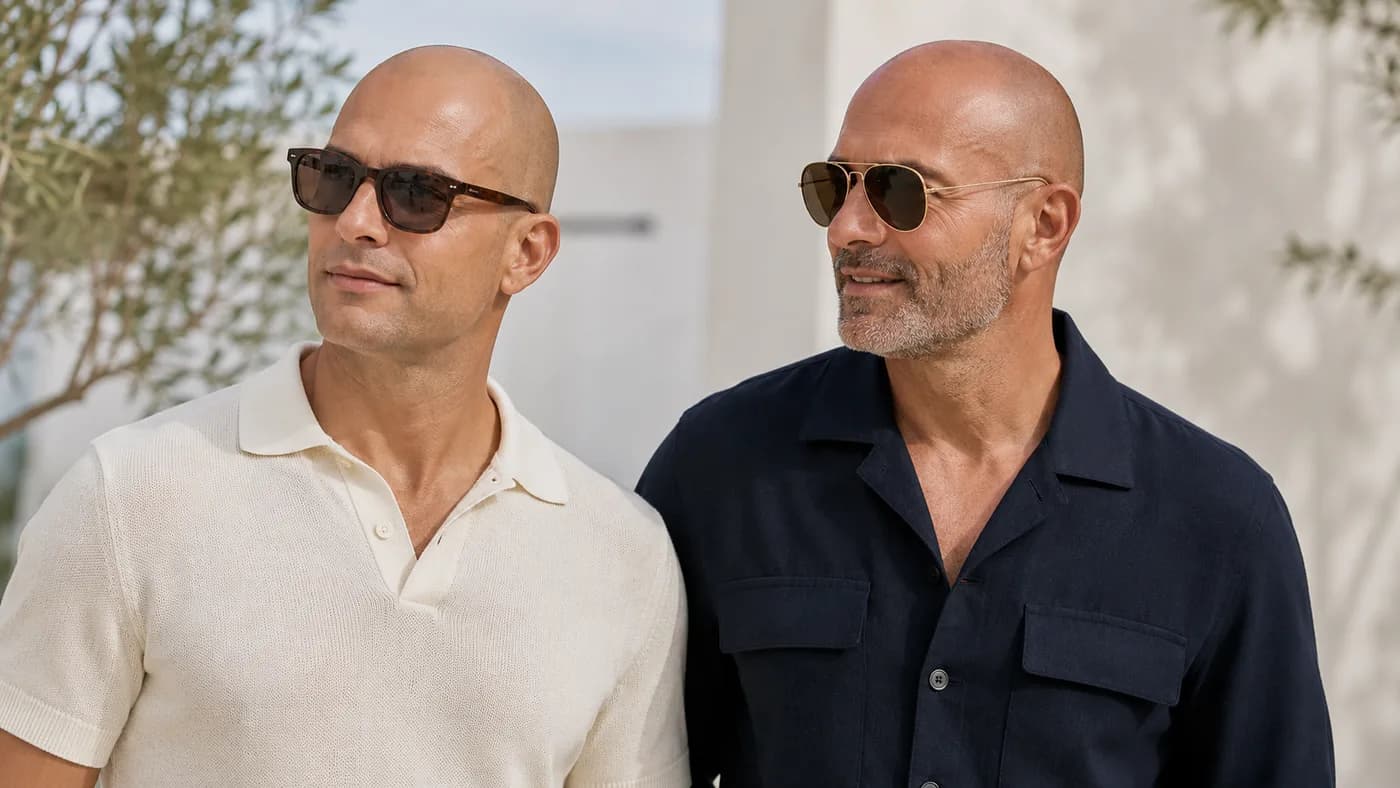
If you are choosing between several directions, take one daylight photo with each pair from the front and three-quarter angle. BaldLooks Free Analysis can give you a bald-look report from one photo; BaldLooks plans let you compare outdoor versions of your shaved look across angles, outfits, and locations. Use it to narrow the visual direction, then check fit and UV labeling in person.
The best sunglasses are the pair you will wear well
For most bald men, the answer is not an extreme pair of black frames or a special frame type reserved for shaved heads. It is a well-fitted pair with enough presence to frame the eyes, a shape that supports rather than overwhelms the face, and UV protection you can trust.
Start in the middle: medium width, a balanced lens shape, and a color that works with your beard and clothes. Check it in daylight from more than one angle. Then decide whether you want to move lighter, bolder, sportier, or warmer. That process will get you much closer to sunglasses that feel like part of your style—not a disguise.