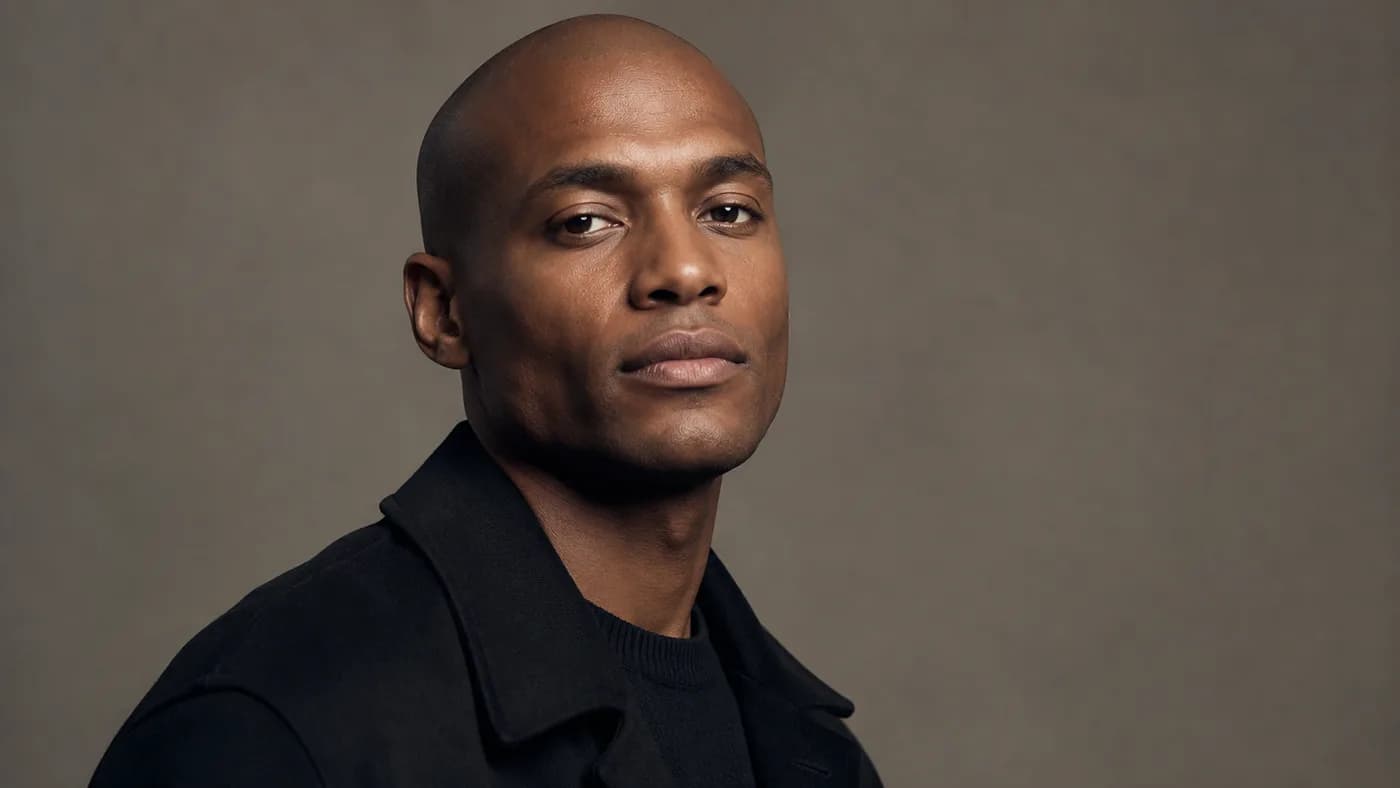
If you are asking whether a shaved head makes your jawline look better, the honest answer is: it can make your jawline more noticeable, but it does not remodel your face. What changes is the visual balance.
Hair adds height, texture, and movement above the face. Removing it makes the forehead, eyes, cheekbones, mouth, chin, and jaw work together more directly. For some men that reads as cleaner and sharper immediately. For others, it reveals that a little stubble, a more deliberate beard shape, or glasses would make the finished look feel more balanced.
That is not a bad outcome. It simply means a shaved head is a whole-look decision, not a head-only decision. The goal is not to manufacture a different jawline. It is to use proportion, grooming, and an honest preview to see whether your face looks more intentional with hair gone.
Quick read
Your jaw stays the same. A shaved head removes a major visual frame, so the lower face can become easier to notice.
Jawline, chin, beard density, glasses, neck grooming, and your current hair pattern all contribute to the result.
The useful test is bald clean-shaven versus bald with stubble or beard—not a guess based on somebody else's face.
Quick answer: when a shaved head can make your jawline look better
A shaved head often looks strongest when your current hair is thinning, receding, or demanding too much styling. In that situation, removing uneven hair can make the whole face read as more deliberate—jawline included. The improvement comes from reducing distraction and contrast, not from suddenly gaining a sharper jaw.
It can also work well if you already have a clear jaw or chin, because there is less hair competing with the facial structure. But a prominent jaw is not a prerequisite. A softer chin, a rounder face, or less dramatic jaw definition can still look excellent bald when the lower-face styling is appropriate.
Research on appearance perception suggests that shaved heads and facial hair can affect social impressions, including perceived dominance and masculinity, but those are group-level findings—not a promise about anyone's attractiveness. One study found shaved heads were perceived as more dominant; facial-hair research also shows that beard and face shape interact in observers' judgments. Treat that as a reason to test combinations, not as a rating system for your face. Shorn Scalps and Perceptions of Male Dominance and this PubMed study on facial masculinity and beardedness are useful context.
A stronger-looking jaw is often a cleaner overall signal
When thinning or receding hair is pulling attention upward, shaving can remove the visual conflict. The jaw may seem stronger because the entire face looks more coherent—not because a razor changed the shape of your bones.
Why going bald shifts attention to the lower face
With more hair, the eye often starts at the hairline and hairstyle. With a shaved head, the eye reaches your facial features faster. That naturally brings more attention to your brow, eyes, cheekbones, facial hair, chin, and jaw.
This is why two men can have opposite reactions to the same shave. One may feel his jawline suddenly looks more defined because his old hair had become thin, wispy, or uneven. Another may feel exposed at first because he was used to using fringe, volume, or a specific haircut as part of his identity. Neither reaction is a verdict. It is simply a different distribution of visual weight.
If male-pattern hair loss is part of the equation, remember that it commonly develops as recession, thinning, or a bald spot around the crown. Those patterns can create their own contrast between the top and sides. The American Academy of Dermatology's overview of male-pattern hair loss is a good medical starting point; a haircut or shave is a style choice, not medical treatment.
Strong jawline, softer chin, or rounder face: what to test
The most practical question is not “Is my jawline good enough to go bald?” It is “Which version of the bald look best supports my proportions?”
If your jawline is already pronounced
Going bald may make your face feel more graphic: the brow, cheekbones, mouth, and jaw have less competition from hair. You may prefer the simplicity of a clean-shaven face or the small amount of contrast that stubble provides. Do not grow a full beard automatically just because bald-and-bearded is a familiar formula. If your jaw already carries the look, extra bulk may be unnecessary.
If your chin feels less prominent
A softer chin does not mean you cannot shave your head. It means your best version may benefit from lower-face definition. Heavy stubble is a low-risk first test. If you want more focus at the center, a compact goatee can help; if you want a little chin and jaw support, a short boxed beard is often the more balanced option.
The detailed Bald With a Weak Chin guide breaks down those beard shapes without treating a facial feature as something to hide.
If your face is rounder
The shaved head can make a round face look clean and intentional, but beard width matters. Keep the cheeks and neck tidy. If you have the density, a slight increase in chin length can introduce vertical definition; a beard that is wide and fluffy at the sides usually does the opposite. See Bald With a Round Face for a fuller style guide.
Beard support: useful, optional, and easy to overdo
A beard works by changing contrast and outline around the lower face. That can make a jawline feel clearer, especially when the beard has a tidy cheek line and neckline. It is not corrective surgery, and “more beard” is not the goal.
Start with the least complicated change that gives you useful information:
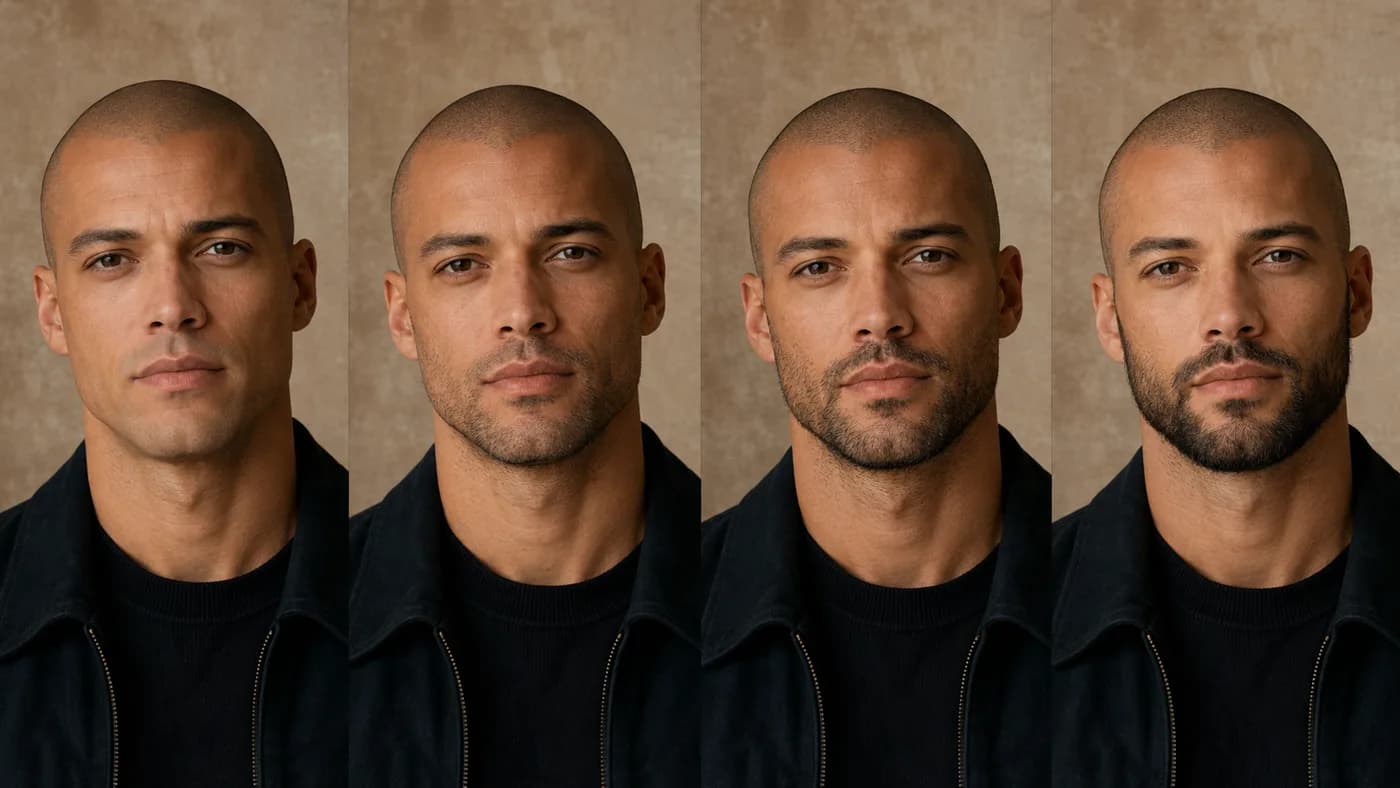
- Clean-shaven bald: establishes your real baseline.
- Even heavy stubble: adds contrast without changing your face's silhouette much.
- Compact goatee or short boxed beard: useful if you want more chin focus or jaw framing.
- Fuller beard: only if your beard grows evenly and the shape still looks deliberate from the side.
The best result should look good on an ordinary Tuesday, not just in a dramatic mirror selfie. Keep the scalp and beard on compatible grooming schedules. A fresh shaved head with an unplanned neckbeard looks accidental; a controlled beard beside a clean scalp reads as one coordinated choice.
Where glasses and clothing fit in
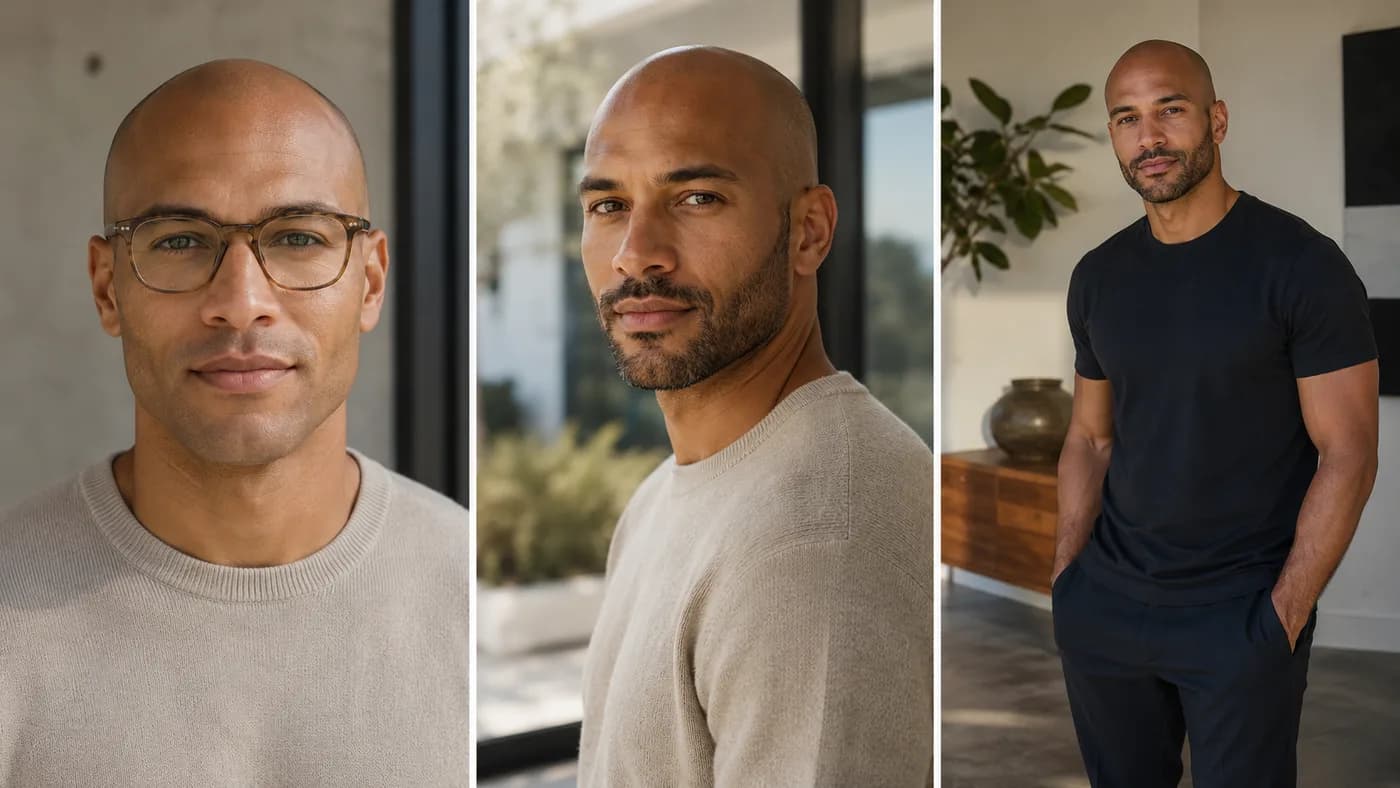
Glasses can be a helpful frame when you shave your head. They add structure around the eyes and upper face, which can balance the clean space above the brow and the weight of facial hair below. The right pair is proportional to your face; extremely heavy frames used only to hide behind can distract more than they help. If you wear glasses already, compare your bald preview with the frames you use most often. Bald With Glasses covers the practical combinations.
Clothing matters more through fit than through costume. A clean collar, a structured overshirt, or a simple well-fitting T-shirt can make the bald look feel cohesive. You do not need a leather jacket or a gym transformation to “earn” a shaved head. The consistent grooming and fit are doing the work.
A five-minute preview checklist before you shave
Final answer: a shaved head can highlight your jawline, not guarantee it
A shaved head can make your jawline look better when it removes distracting or uneven hair and lets your facial features read more clearly. But it does not create a new jawline, and it is not only a strong-jaw look. A softer chin, a rounder face, or patchy beard growth can all work with a shaved head when you choose the version that creates balance instead of following a one-size-fits-all rule.
Use the clean-shaven bald look as your baseline. Then compare stubble, beard, and glasses only if they add something useful. BaldLooks Free Analysis is a quick first step from one photo; when you want more confidence before committing, the paid previews let you see your shaved head from multiple angles with different facial-hair, outfit, and location choices.
For the broader decision, read Will I Look Good Bald? and How to Look Good Bald. They will help you assess the full look rather than one feature in isolation.