
9 Bald Style Mistakes That Make Your Look Feel Unfinished
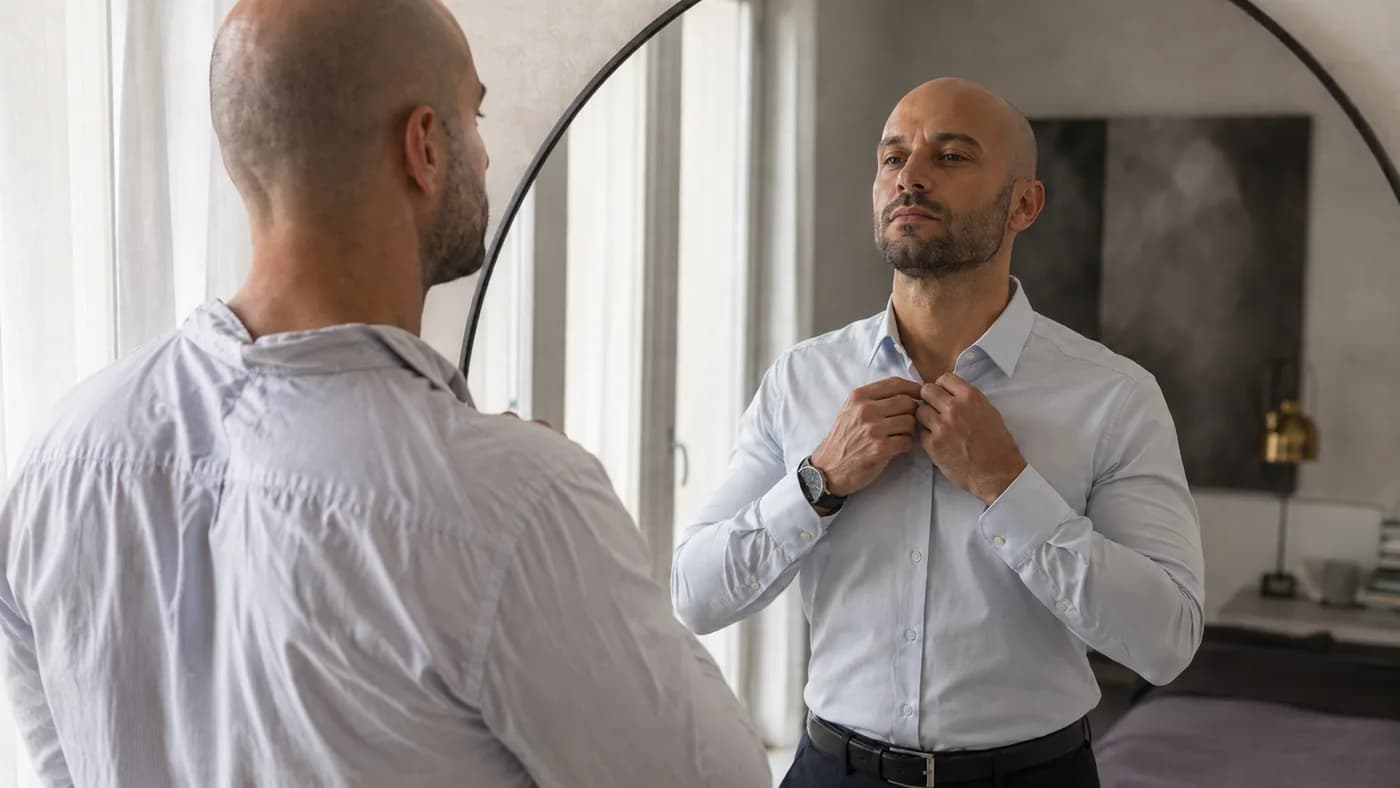
A shaved head does not look unfinished because it is bald. It looks unfinished when the visible details around it feel accidental: an irritated scalp, beard lines that drift, a collar that has lost its shape, or a photo that makes a considered outfit look flat.
That is good news, because the most common bald men style mistakes are fixable without pretending you need a new body, a beard, designer clothes, or a completely different personality. The goal is not perfection. It is a coherent frame: scalp, face, neckline, clothes, accessories, and photographs all pointing in the same direction.
Quick read
A comfortable, even scalp finish and intentional facial-hair choice have more impact than buying another accessory.
Clean-shaven, stubble, and beard looks can all work; the problem is usually an in-between version you do not actively maintain.
Collar fit, contrast, clean glasses, posture, and lighting often decide whether a bald look reads as deliberate.
Quick answer: why a bald look can feel unfinished
The fastest way to look better bald is to correct the details closest to the face. Keep the scalp calm and protected, choose a repeatable shave or stubble length, clean up facial-hair edges if you wear it, and wear tops that sit well at the neck and shoulders. Then judge the result in soft daylight rather than from one bathroom mirror or harsh selfie.
Start with the mistakes below in order of visibility. You may only need to fix two or three. A clean-shaven face does not need a beard, and a simple outfit does not need to become flashy; it just needs to look chosen.
1. Treating scalp irritation as the price of looking sharp
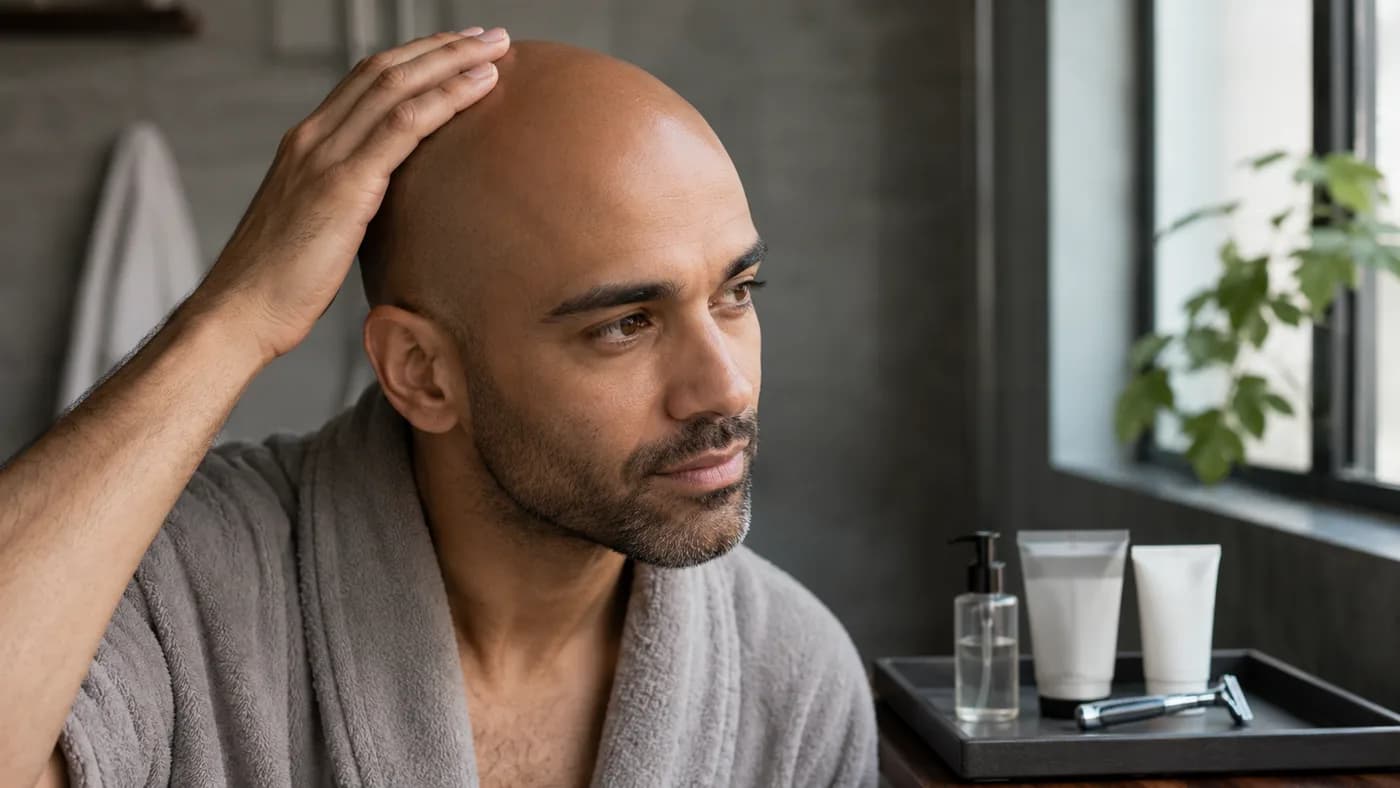
Redness, flakes, bumps, or a tight dry feeling pull attention upward immediately. Repeatedly shaving closer, scrubbing harder, or using a drying product to chase a perfectly matte finish can make the situation more visible, not less.
Use the shaving finish your skin handles well: razor-smooth, foil-shaved, or short and even stubble. The American Academy of Dermatology recommends softening hair and skin before shaving, using shaving cream or gel, shaving in the direction of growth, rinsing the blade, and replacing it regularly to help reduce irritation (AAD shaving guidance). If bumps or persistent irritation keep returning, it is worth speaking with a dermatologist rather than escalating your home routine.
For day-to-day care, exposed scalp is skin. A gentle cleanser, a moisturizer that does not leave you uncomfortable, and broad-spectrum, water-resistant SPF 30 or higher for outdoor exposure are a better foundation than aggressive drying. The AAD also recommends applying sunscreen before going outside and reapplying it during extended outdoor time (AAD sunscreen guidance). For the full routine, see Bald Head Care Routine.
Healthy reflection is not a style failure
A shaved scalp naturally catches light. Before you treat every highlight as a problem, check whether it is excess oil, heavy product, or simply a small hard light above you. Calm skin and better lighting nearly always beat harsh scrubbing or over-powdering.
2. Letting the shave or head stubble become accidental
There is nothing wrong with a little head stubble. The issue is a finish that looks uneven because the schedule has no intention behind it.
Decide what you are maintaining. If you want a smooth look, use the cadence your skin tolerates. If you prefer stubble, choose a guard or foil finish that leaves a consistent appearance. Your hair color, density, and scalp tone will affect how quickly it reads as shadow, so judge it in normal daylight and from more than one angle. How Often Should You Shave Your Head? and Freshly Shaved vs Head Stubble can help you choose a practical rhythm.
3. Wearing beard lines that do not match the beard
A beard is optional, but if you have one, its edges are part of the silhouette. A sharp cheek line with a fuzzy neckline, an overgrown mustache, or a beard length that varies wildly from side to side can look more distracting than sparse growth ever would.
Choose the simplest shape your growth supports. Short even stubble needs a clear neckline; a fuller beard needs cheeks, mustache, and bulk kept in proportion. Do not force a dense full-beard template onto patchy growth. Use Bald With a Patchy Beard, Bald With Stubble, or Bald With Beard vs No Beard to compare the options.
4. Assuming a beard is required to balance baldness
The opposite mistake is growing facial hair only because you think bald men are supposed to have it. If you dislike the upkeep, the beard does not suit your growth pattern, or it makes your face feel heavier, it will not become convincing through obligation.
A clean-shaven face can look strong with a calm scalp, tidy brows, good collar structure, and—if you wear them—well-fitting glasses. Treat beard or no beard as a visual preference, then make that choice complete. Bald With No Beard is a useful companion if you want to build the clean-shaven version on purpose.
5. Ignoring the collar, shoulders, and neckline
When hair is no longer framing the head, the upper edge of your clothes matters more. A stretched crew neck, collapsing polo collar, too-tight shirt neck, or sloping shoulder seam can make a shaved head feel disconnected from the outfit. This is a fit issue, not a reason to buy expensive clothes.
Check three things: the shoulder seam should sit close to your natural shoulder, the collar should hold its shape, and the neckline should neither choke nor droop. A heavier crew neck, knit polo, Oxford, overshirt, or light jacket can add structure. For complete outfit formulas, read How to Dress When Bald.
6. Using color with no contrast or no intention
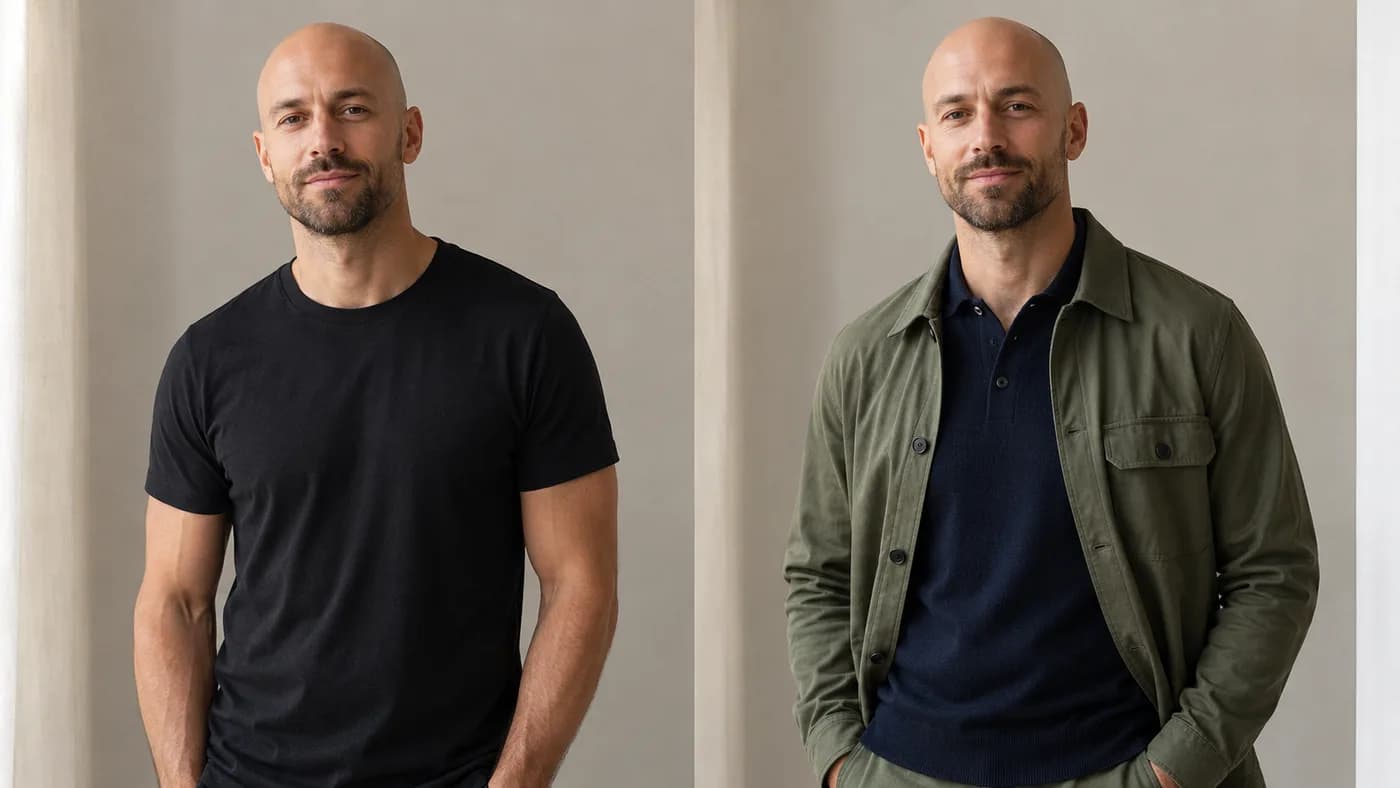
All-black is not automatically a bald style mistake. Neither is a plain neutral outfit. The problem comes when the color near your face makes the whole image look flat, especially under dim indoor light. The same can happen with a shirt too close to your skin or beard color, leaving no separation in a photo.
Instead of following a universal palette, test contrast. Try a navy, olive, charcoal, cream, muted blue, or richer earth tone near your face and compare it with your usual black or gray. Beard color, glasses, tan, and setting all change the result. One contrast point—a shirt, overshirt, frame, or jacket—is usually enough. The goal is a readable frame, not loud color.
7. Wearing glasses that are dirty, slipping, or visually out of scale
Glasses can provide useful structure around the eyes, but smudged lenses, slipping frames, or oversized styles can make the result feel less deliberate.
If glasses are part of your look, clean them and have the fit adjusted before buying another pair. Then look at scale: a frame should relate to the width of your face, brows, beard or stubble, and collar. A stronger frame may work beautifully with a clean-shaven face; a quieter frame may balance a fuller beard. Bald With Glasses has a practical guide to this balance.
8. Treating grooming as separate from the outfit
An immaculate beard cannot carry a wrinkled, worn-out top. Great clothes cannot fully offset dry scalp or an untrimmed mustache. The eye reads the frame as one system, so small conflicts add up: rugged beard with a very delicate collar, athletic outfit with overly formal shoes, or polished office clothes with neglected lenses.
Before you leave, make one quick coordination decision. Is this look clean, rugged, professional, or athletic? Then make sure the beard, scalp finish, collar, and footwear belong to the same answer. The four directions in Bald Men Style Archetypes can help you create a repeatable base without turning it into a costume.
9. Judging the look only in bad photos
Harsh overhead light can create a bright scalp hotspot, a close phone lens can widen the face, and a slouched cropped selfie can hide all the work you put into an outfit. A poor photo is often a setup problem, not evidence that your bald look does not work.
Take a simple style check in soft window light or open shade: one front photo, one three-quarter photo, and one full-body photo. Keep your posture relaxed but upright, camera near eye height for portraits, and the background uncluttered. Clean your glasses and blot excess oil if you need to, but do not over-correct natural skin texture. Bald Men Photos explains the lighting and angle side in more detail.
Test the complete frame before making bigger changes
Test one version with your usual beard or clean shave, then change the outfit, glasses, or setting one at a time. BaldLooks Free Analysis can give you a low-pressure bald look report from one photo. A BaldLooks plan lets you compare outfits, facial-hair directions, locations, and several angles before spending on changes.
Final takeaway: intentional beats elaborate
The best fix for a bad bald look is rarely more. It is usually better coordination: calm scalp care, a repeatable shave, a facial-hair decision you actually like, stronger collar fit, a little contrast, clean glasses, and a photo that shows the result fairly.
Pick the two items above that are easiest to correct this week. Once the base feels deliberate, your bald look will read as a choice—not as something left unfinished.