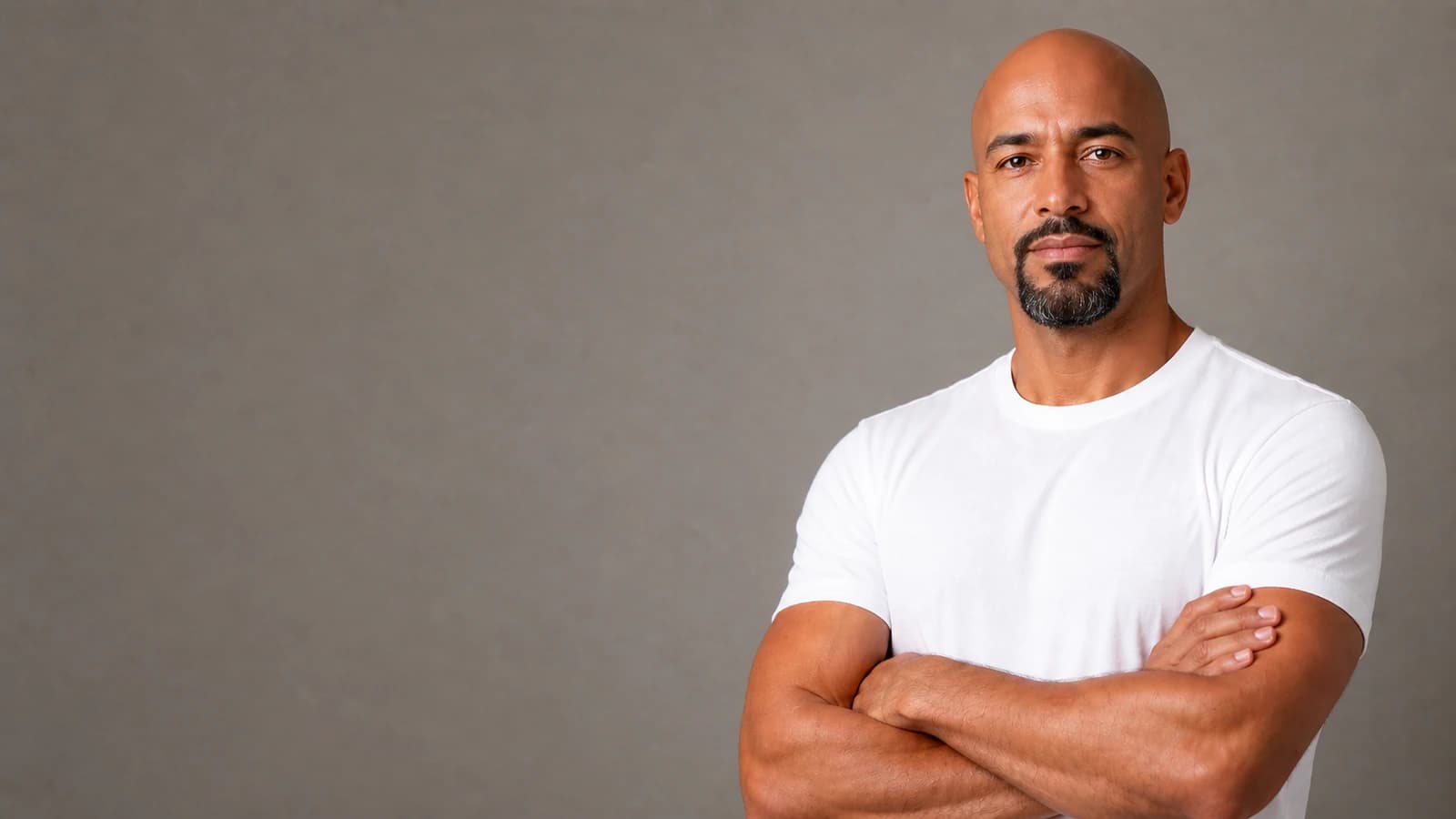
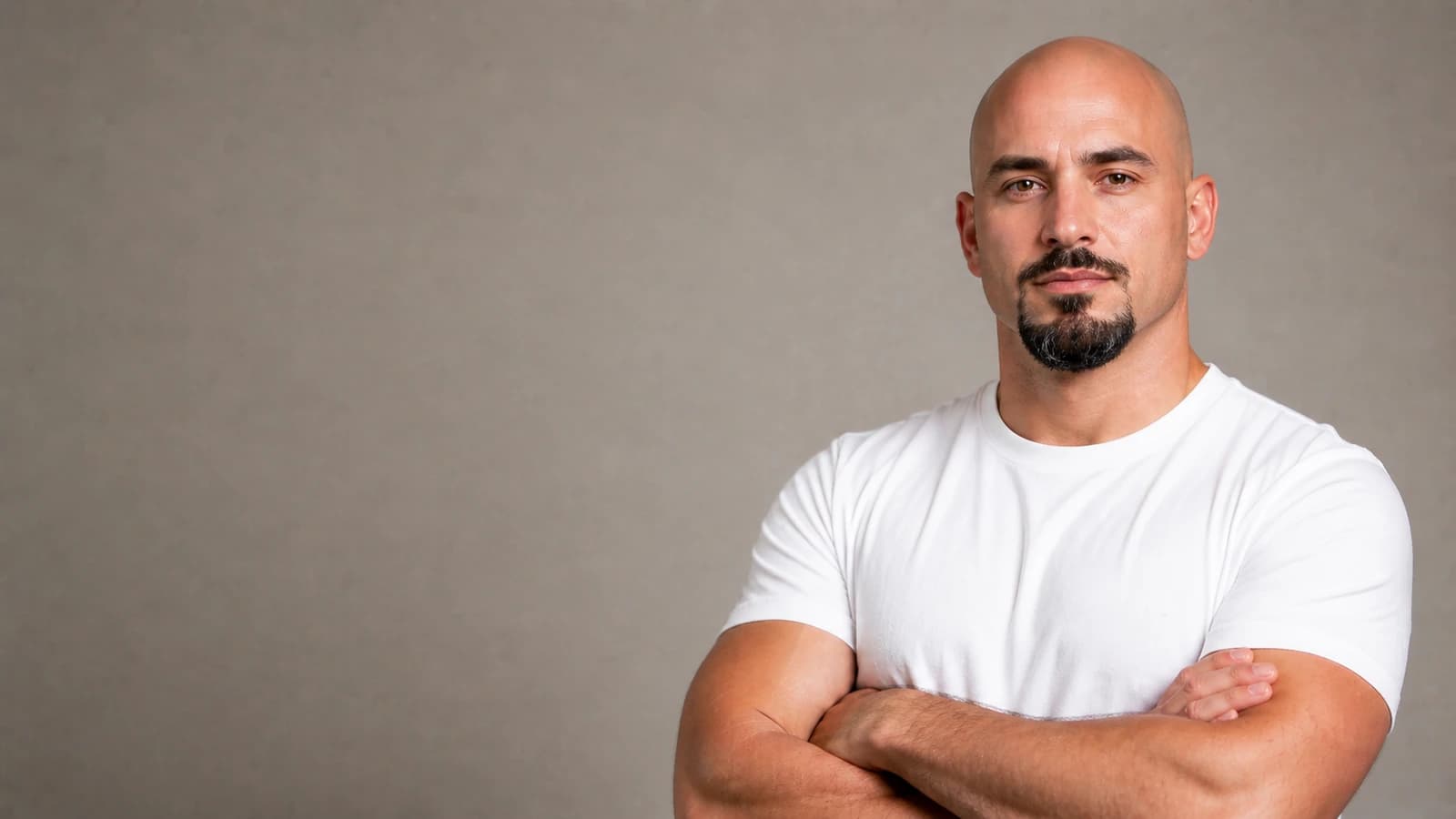
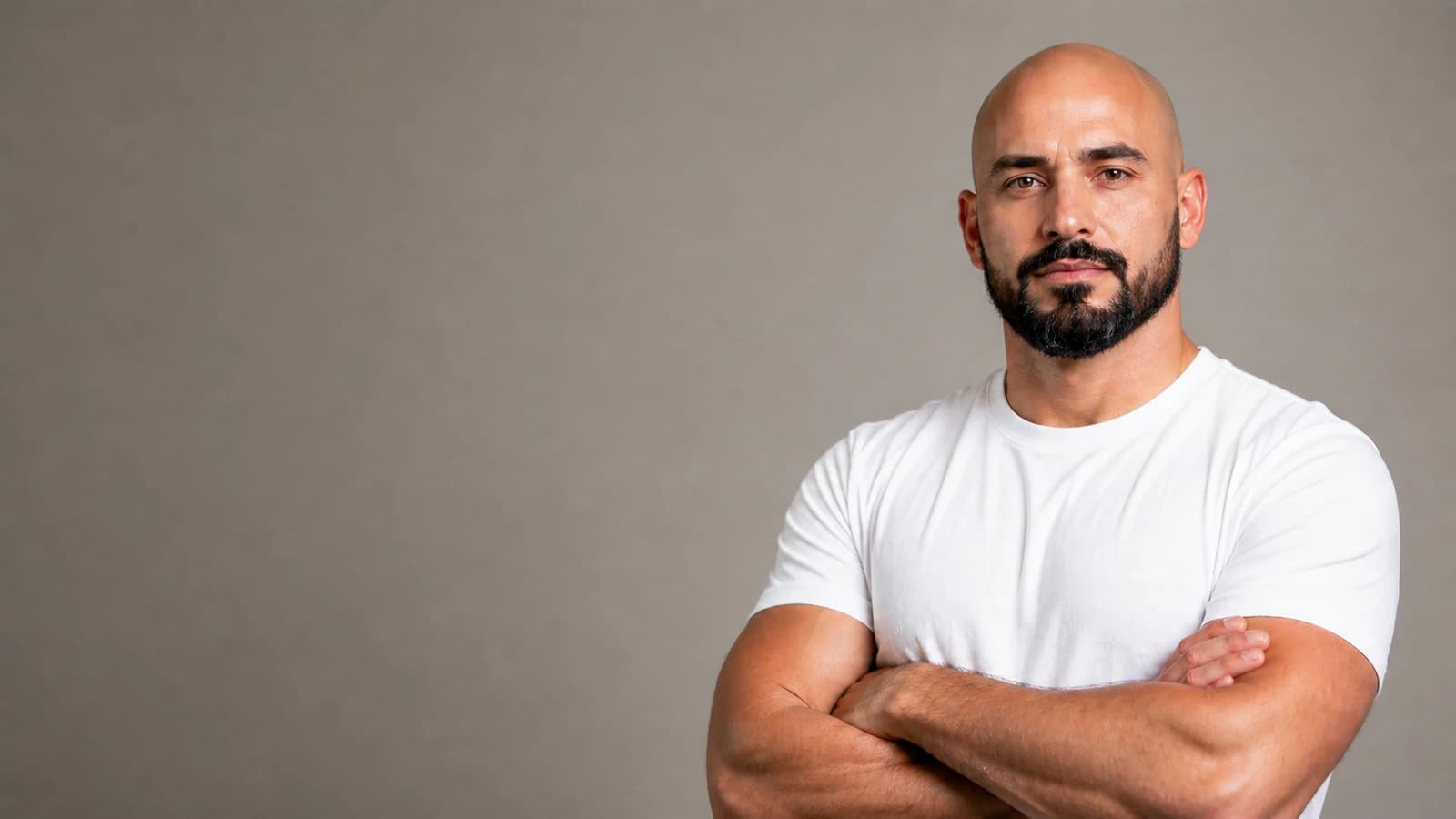
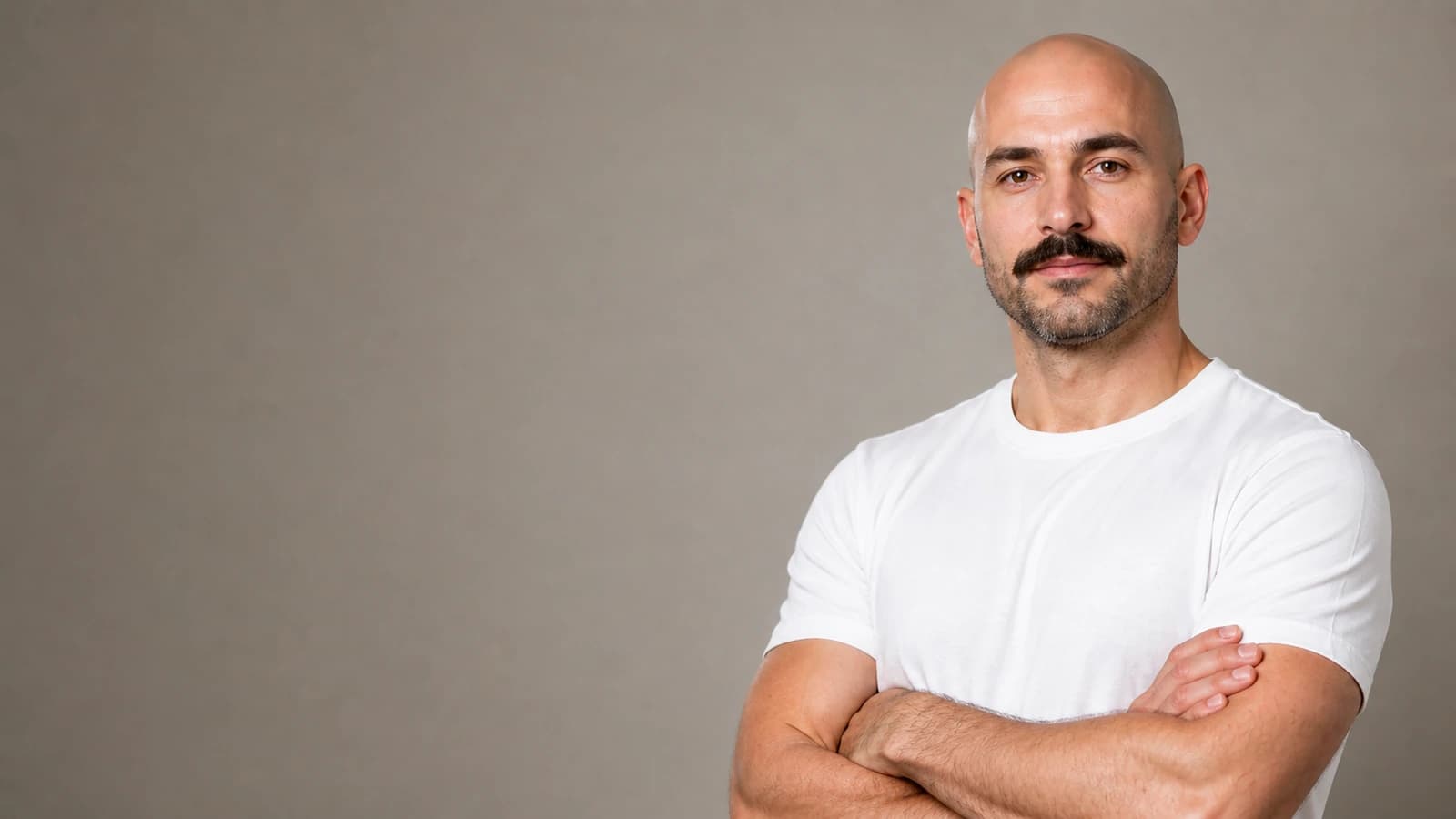
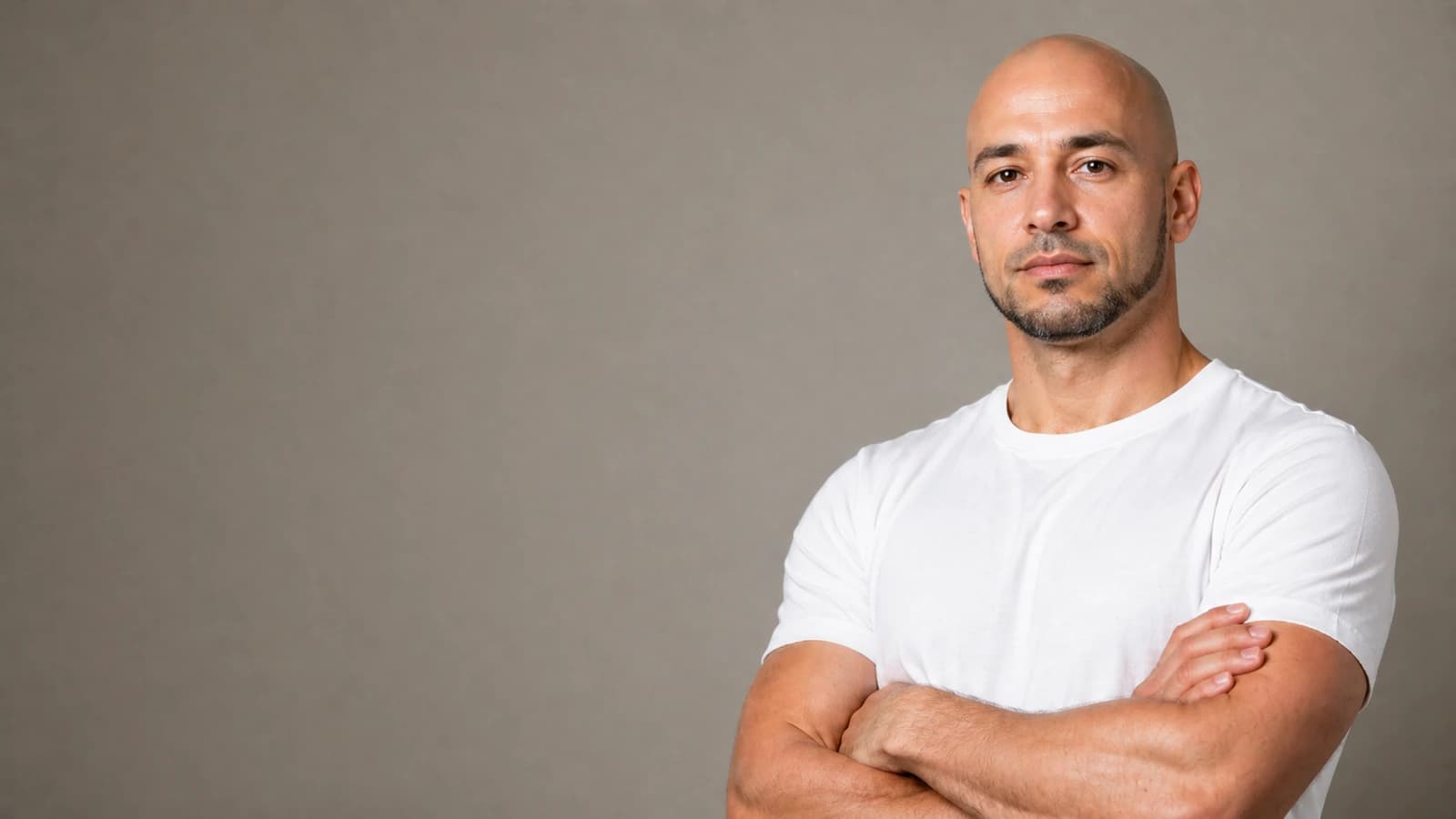
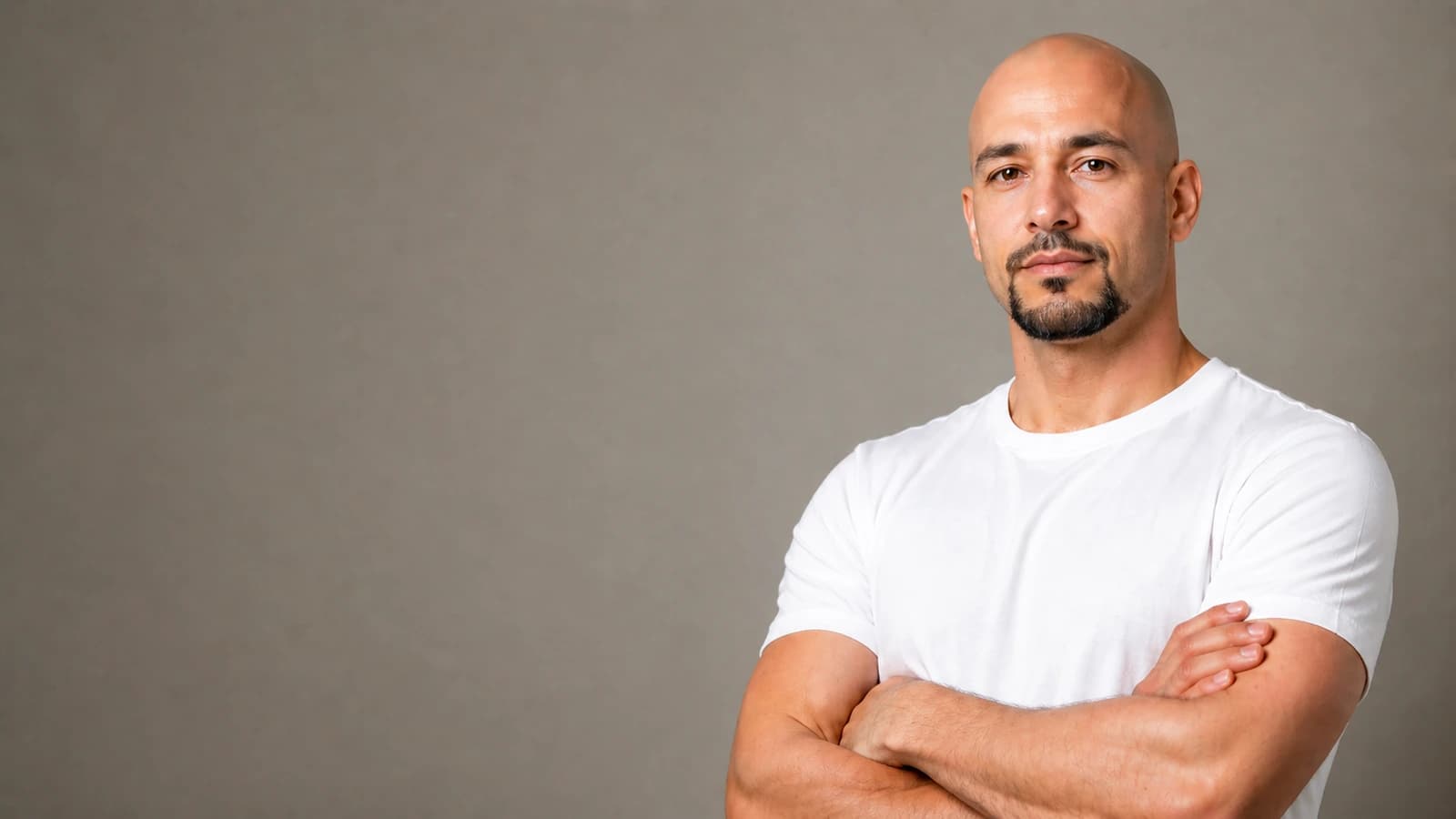
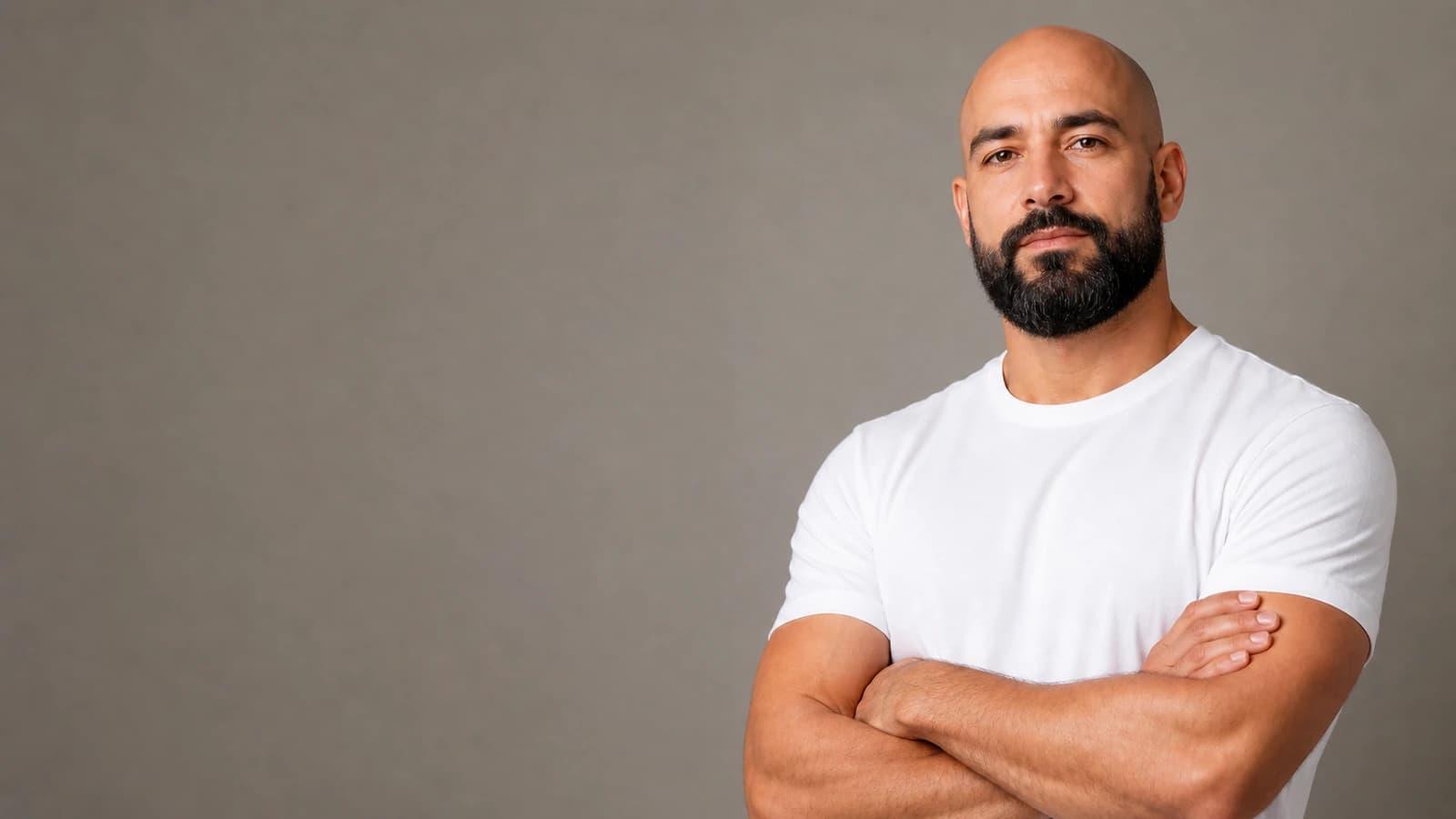
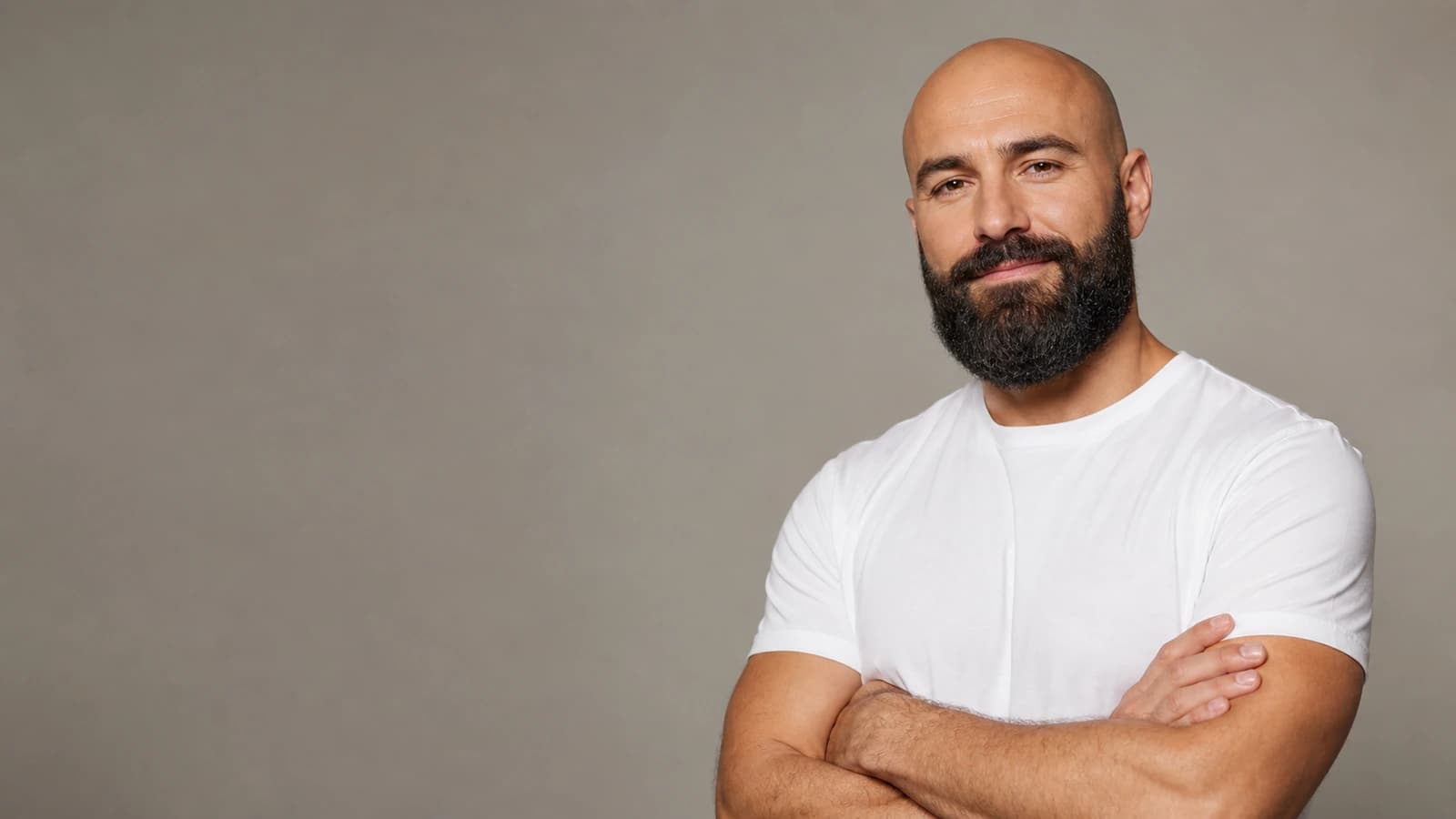
Bald with anchor beard
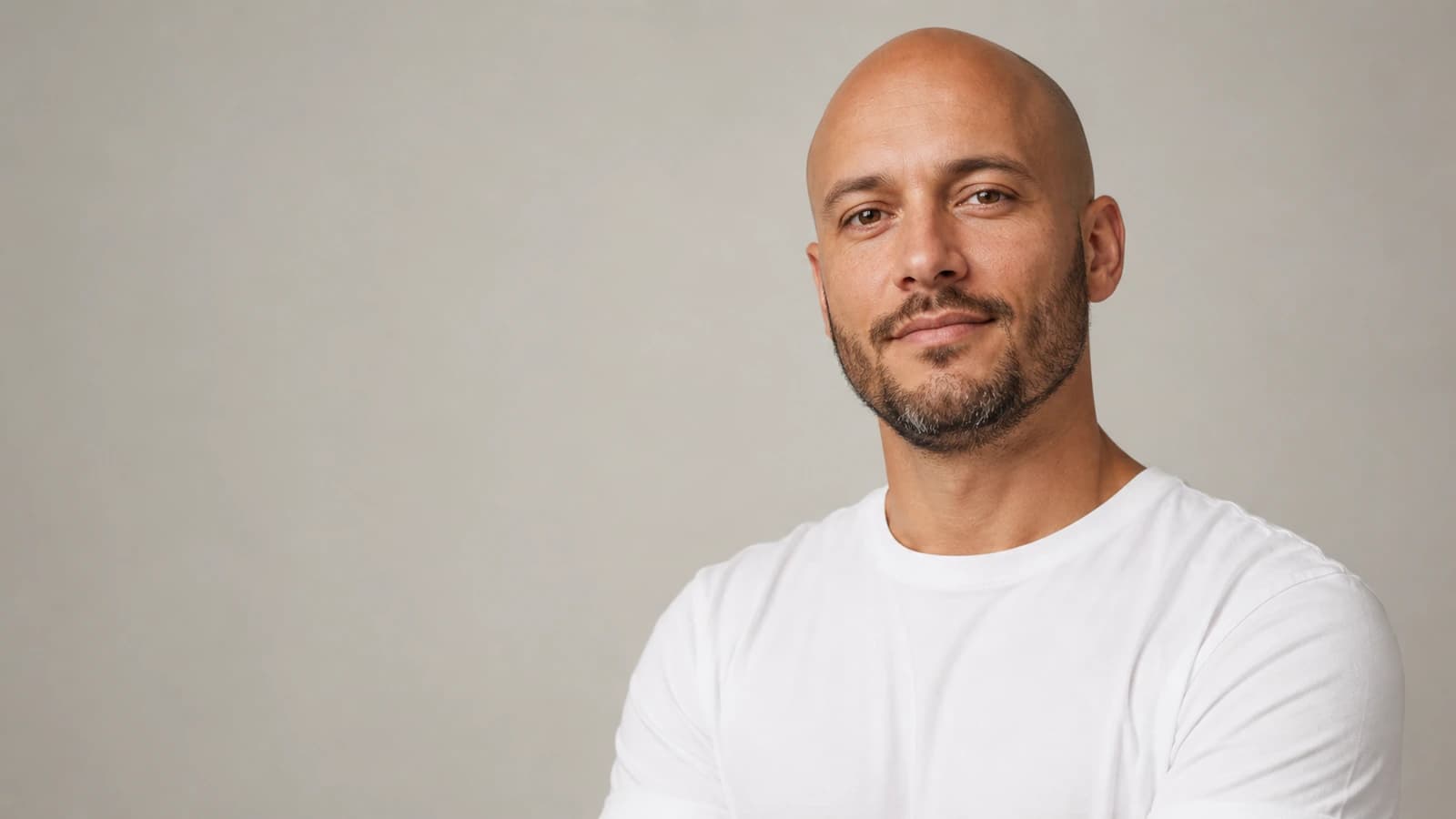
An anchor beard can sharpen a bald look by drawing attention to the chin and jaw. It is more styled than stubble or a short boxed beard, so it works best when the edges are clean and the shape matches your face.
Compare shaved-head looks by beard, glasses, stubble, no beard, and face shape before choosing the style that fits you.

An anchor beard can sharpen a bald look by drawing attention to the chin and jaw. It is more styled than stubble or a short boxed beard, so it works best when the edges are clean and the shape matches your face.

A bald head with a beard usually works because the beard replaces some of the visual frame that hair used to provide. The strongest versions look deliberate: clean scalp, tidy neckline, controlled cheek lines, and a beard length that fits the face instead of overpowering it.

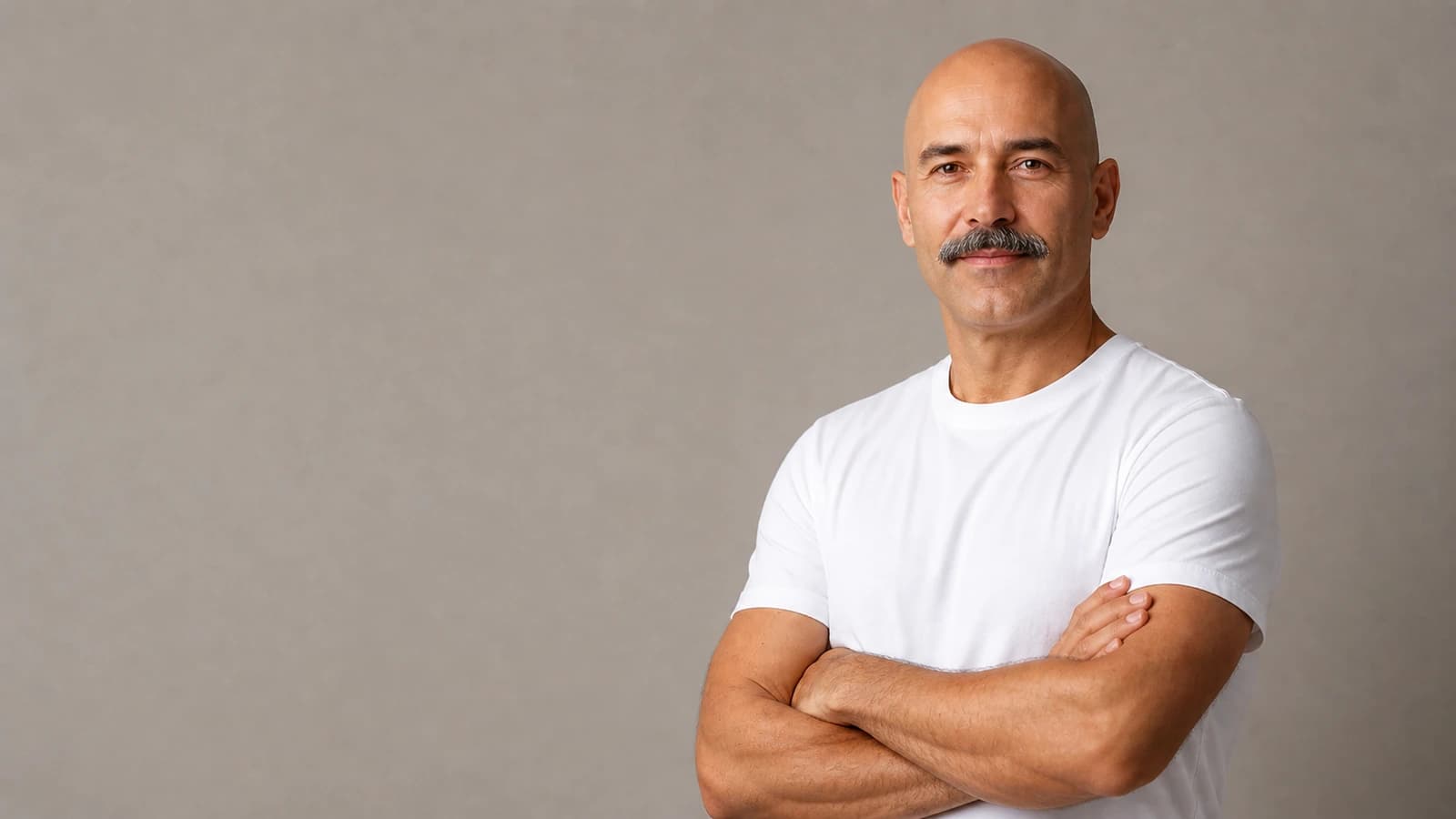
A beardstache keeps the mustache as the main feature while using short stubble to support the jaw. On a bald head, that extra stubble often makes the mustache easier to wear than a clean-cheek version.

A chin strap can define the jaw on a bald head, but it is one of the easiest beard styles to get wrong. The safest version is soft, short, and not too thin; the risky version looks like a hard outline drawn around the face.

A circle beard connects the mustache and chin beard, giving a bald head a neat frame around the mouth. It is usually softer and cleaner than a sharp goatee, especially when kept short.

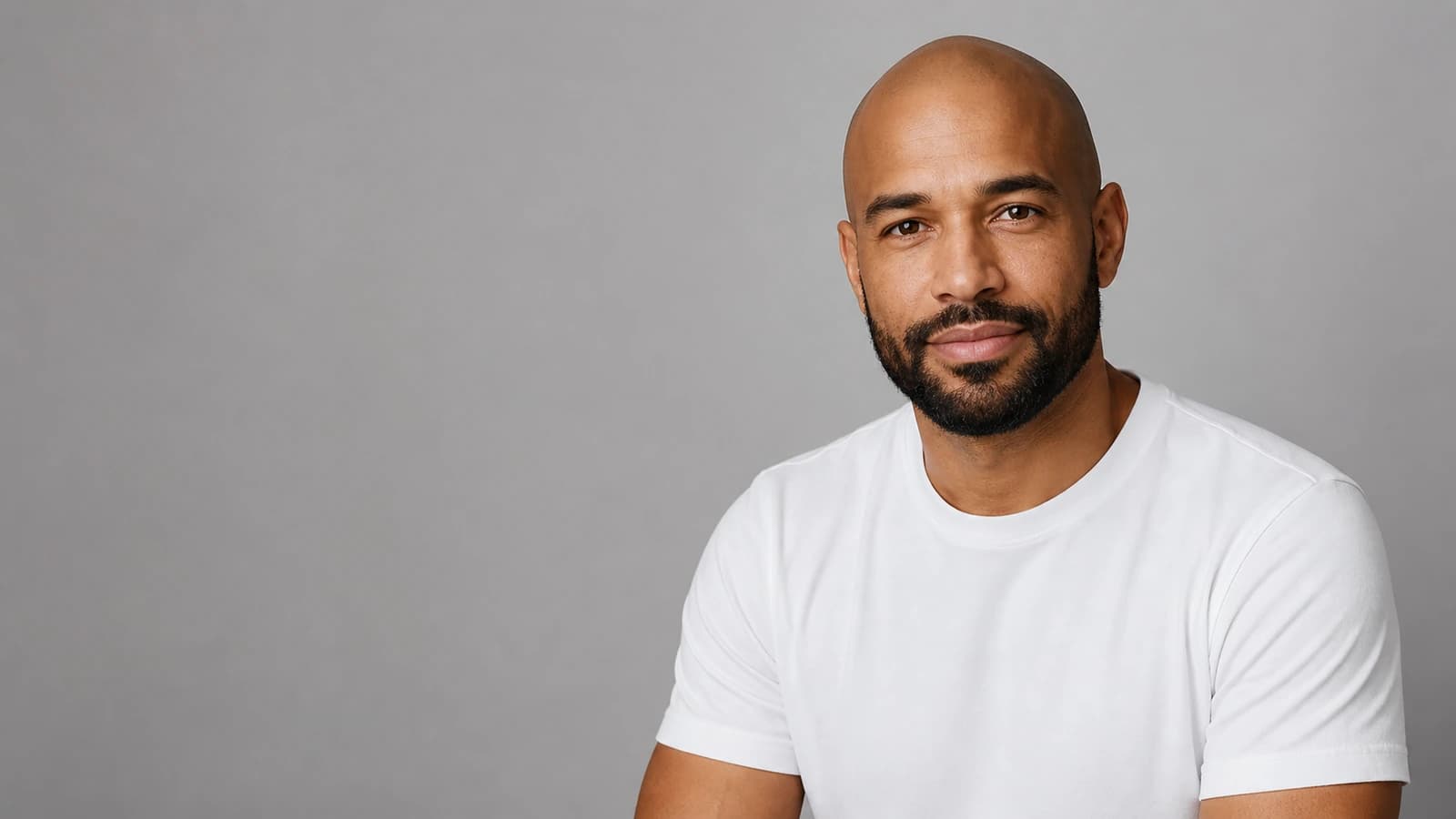
A full beard can make a bald head look strong and settled, but it has to be shaped. Without clean edges, the beard can overpower the face or make the whole look feel heavier than intended.

A goatee can work with a bald head when you want attention around the mouth and chin instead of the cheeks. The modern version is tidy, short, and connected to the rest of your grooming; the dated version is too thin, too pointy, or floating on its own.

A gray beard can look excellent with a bald head because the contrast feels mature and confident. The difference between sharp and tired usually comes down to beard shape, skin care, and how clean the edges are.

A mustache with a bald head is a strong style choice because it leaves the scalp and cheeks open while putting weight across the upper lip. It works best when the mustache is clearly groomed and the rest of the face looks cared for.

A patchy beard can still work with a bald head, but it usually looks better short, shaped, or redirected into a style that uses your strongest growth. The goal is not to hide every patch; it is to make the pattern look deliberate.

A short boxed beard is one of the easiest bald-head beard styles to get right. It adds jaw definition, keeps the cheeks controlled, and looks polished without requiring the density or patience of a full beard.

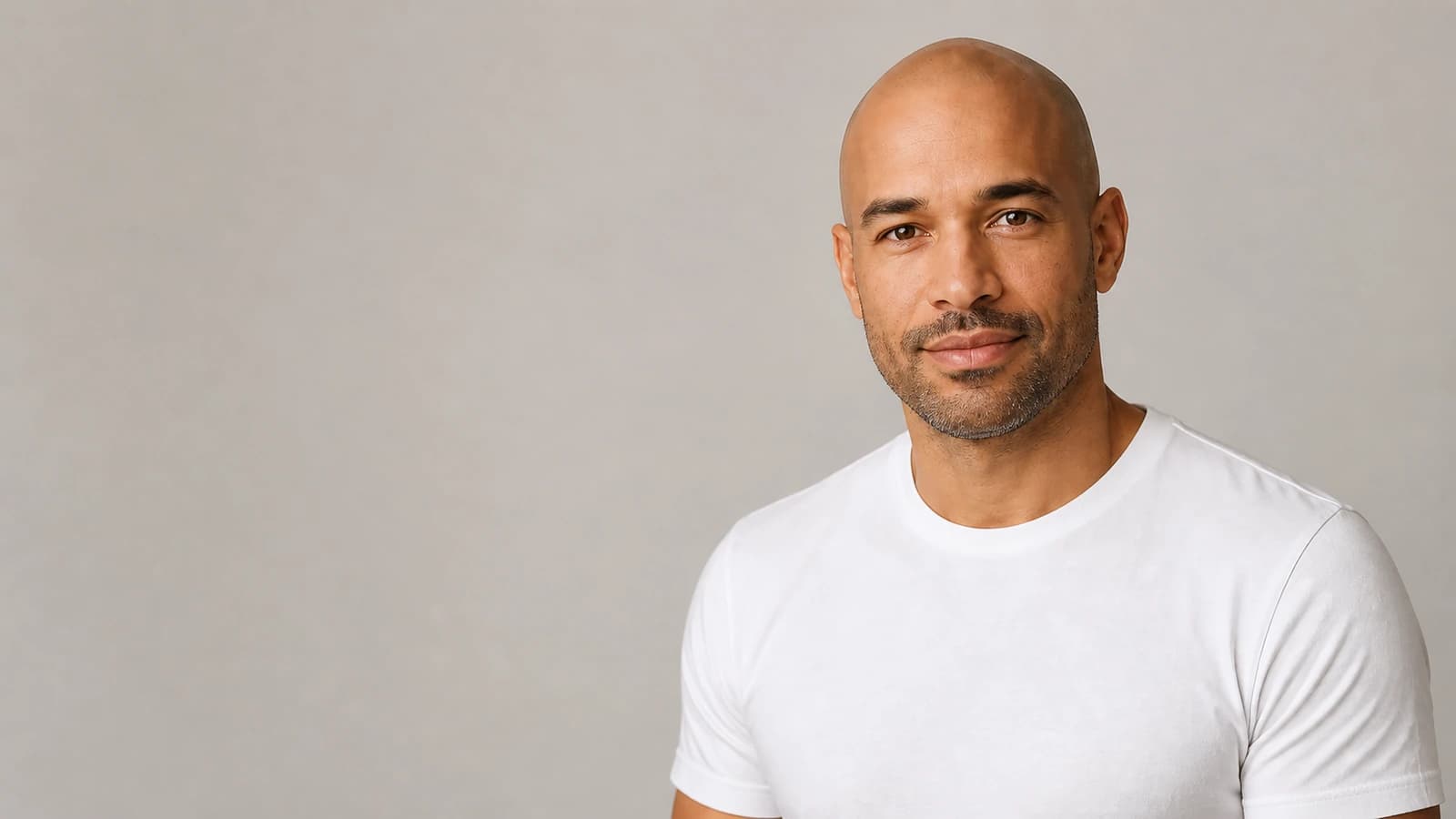
Stubble is the safest facial hair option for many bald looks because it adds definition without the commitment or weight of a full beard. It softens the transition from scalp to face while keeping the overall style clean.

A thick beard gives a bald head plenty of balance, but it can also take over. The best version uses the density for shape while keeping cheek width, neckline, and flyaways under control.

A Van Dyke beard is a bold choice with a bald head because it separates the mustache from the chin beard. It can look sharp and distinctive, but only when the shape is clean and the rest of the look is simple.
Use this table when you want the shortest path to the right guide.
| Style | Best use | Watch-out | Guide |
|---|---|---|---|
Bald with anchor beard | Your chin and jaw need a sharper visual line. | Too much point at the chin can stretch a long face. | Open |
Bald with beard | Men who want more weight and definition around the jaw. | Letting the beard grow wider than the skull, which can make the face look bottom-heavy. | Open |
Bald with beardstache | Your mustache grows stronger than the rest of your beard. | Too much stubble can turn the beardstache into an uneven beard. | Open |
Bald with chin strap | Your jaw needs a clear line but a full beard feels too heavy. | A razor-thin strap can look dated quickly. | Open |
Bald with circle beard | Your mustache and chin connect cleanly. | A circle beard that is too round can soften an already round face. | Open |
Bald with full beard | You have enough beard density for the shape to look full, not patchy. | Wide cheek bulk that makes the head and face look larger. | Open |
Bald with goatee | You grow stronger hair around the chin than on the cheeks. | A very thin outline can make the style feel older than you want. | Open |
Bald with gray beard | You want a mature look that feels calm and intentional. | Dry gray hair can look wiry beside a smooth scalp. | Open |
Bald with mustache | You can grow a clear mustache but do not want cheek or jaw beard. | A thin or uneven mustache can look accidental on a fully shaved head. | Open |
Bald with patchy beard | Your beard grows unevenly but has enough shadow to add jaw definition. | Growing patchy cheeks longer often makes the gaps more obvious. | Open |
Bald with short boxed beard | You want beard structure that still looks clean at work. | Letting the sides puff out wider than your head shape. | Open |
Bald with stubble | You are shaving for the first time and want the look to feel less bare. | Your stubble grows unevenly, which can look accidental faster than an intentional short beard. | Open |
Bald with thick beard | You have dense facial hair that can hold a clear shape. | Cheek width can make the face look broader than it is. | Open |
Bald with Van Dyke beard | Your mustache and chin growth are both strong enough to stand alone. | Overly long points can make the style feel costume-like. | Open |