
Going bald in your 20s: what to expect
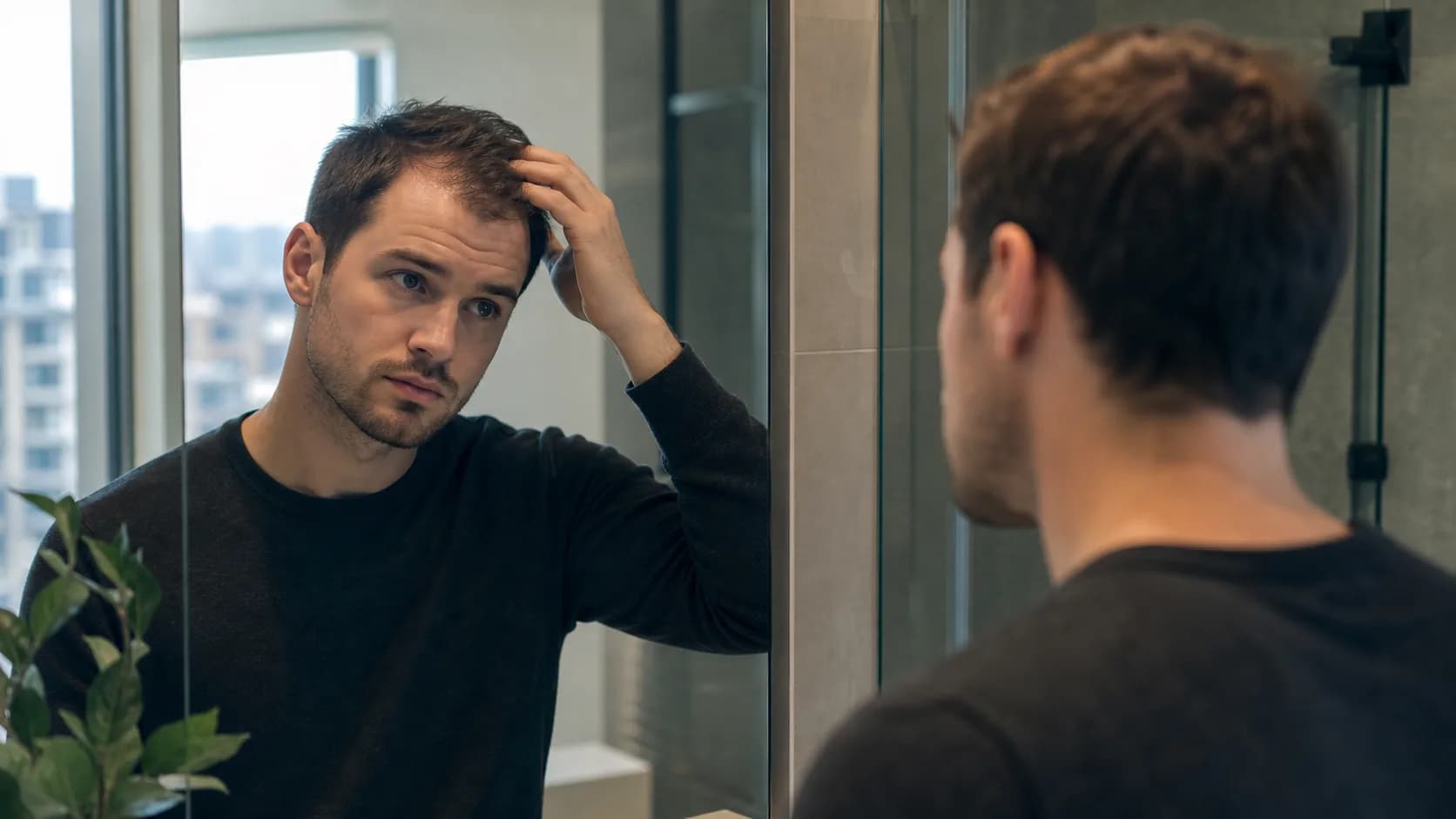
Going bald in your 20s can feel like you skipped a decade.
Your friends may still be experimenting with haircuts while you are checking temple recession, crown thinning, shower drain hair, and photos from every angle. You may wonder whether people notice, whether dating gets harder, whether you should start treatment, or whether shaving your head would make you look older than you are.
The good news: early hair loss gives you options. You can investigate the cause, treat it early if you want to keep hair, cut it shorter, improve the rest of your look, or shave and make the decision feel deliberate.
This guide is not here to tell every man in his 20s to shave. It is here to help you stop guessing and choose the next move from evidence.
Quick read
Male pattern hair loss can begin in the late teens or early 20s, so you are not uniquely broken.
Early action can mean treatment, better haircuts, photos for tracking, or a cleaner transition.
The worst move is spending years hiding a fragile style without making a real plan.
Is it normal to go bald in your 20s?
It is more common than it feels.
The Cleveland Clinic says male pattern baldness often starts in the 30s, but some people notice signs in the late teens or early 20s. It also notes that about 25% of men see the first signs before age 21. The American Academy of Dermatology similarly explains that male pattern hair loss can start in the late teens or early 20s and may develop slowly for years.
That does not make it easy. Hair loss in your 20s can feel unfair because it arrives while identity, dating, work confidence, and social life are still changing. But early hair loss is not a verdict on your attractiveness or masculinity. It is a grooming and self-image challenge that needs a plan.
First, confirm what kind of hair loss it is
Do not assume every shed hair means permanent balding.
Male pattern hair loss usually follows a pattern: temples move back, the front thins, the crown opens, or the top becomes weaker while the sides stay dense. It tends to be gradual.
Other hair loss can look different. Sudden shedding, round patches, itching, pain, scaling, redness, or fast diffuse thinning deserves a dermatologist visit. Stress, illness, medication changes, nutritional issues, scalp conditions, and autoimmune hair loss can all change what the right next step looks like.
If you want to keep your hair, a dermatologist is not a dramatic move. It is the practical move. They can confirm the cause, document the pattern, and explain what results are realistic.
Start with a baseline
Take clear photos before you change everything: front, both sides, crown, and a normal outfit photo in daylight. You need a baseline so you can tell the difference between real progression and daily anxiety.
What early balding usually feels like
The visual change is only part of it.
A 2021 systematic review in JAMA Dermatology found androgenetic alopecia was associated with impaired health-related quality of life and emotional impact, though not with an overall association with depressive symptoms. A 2024 systematic review focused on men in Psychology & Health Medicine found most evidence suggested a moderate quality-of-life impact and warned against overstating distress for every man.
That nuance matters. Hair loss may affect you, but it does not have to define you.
In your 20s, the hard parts are often practical:
- checking mirrors too often,
- comparing old photos,
- wearing hats as armor,
- avoiding bright rooms or windy days,
- feeling older than your friends,
- delaying dating photos,
- researching treatments at 2 a.m.,
- getting bad advice from people who still have full hair.
None of that means you are weak. It means the situation is emotionally loaded and visible.
The first 30 days: what to do
Do not make five decisions at once. Use a calm first-month plan.
Week 1: document and clean up
Take baseline photos in consistent light. Then get a haircut that removes obvious contrast. For many men, that means shorter sides and a shorter top, not more length to cover thinning.
Avoid extreme cover-ups. If the style only works with heavy product and one angle, it will keep you anxious.
Week 2: decide whether preserving hair matters
Ask a blunt question: do you actually want to treat hair loss, or do you only want to avoid feeling bald?
If preserving hair matters, book a dermatologist appointment early. The AAD notes that men tend to get better results from FDA-approved treatments when they start soon after noticing hair loss. It describes topical minoxidil as a daily treatment that can take 6 to 12 months to judge, and finasteride as a prescription medication that can slow further loss for many men but requires discussion of possible side effects.
Treatment is a commitment, not a weekend fix.
Week 3: test shorter hair
If you are unsure about shaving, test a buzz before the full leap. A number 2, number 1, no-guard buzz, or close electric shave can show whether less hair makes your face look cleaner.
Shorter hair often works better than a medium-length thinning style because it reduces contrast between dense sides and a weaker top.
Week 4: judge the whole look
Do not evaluate hair in isolation. Look at the full frame: scalp, eyebrows, facial hair, glasses, skin, clothing, posture, and photos.
That is the version other people see.
Treat, buzz, or shave?
There is no universal right answer. There is only the answer that fits your pattern, goals, budget, patience, and face.
Treat if keeping hair matters to you
Treatment makes the most sense when you notice hair loss early, care about preserving hair, and are willing to be consistent for months or years.
Be realistic. Minoxidil and finasteride are not magic. Results take time, stopping can reverse benefits, and side effects or irritation are possible. A dermatologist can help you weigh the upside and downside for your situation.
Monitor if the change is mild
If your hairline is only slightly mature, density is still strong, and your haircut works in normal life, you may not need a dramatic move.
Track monthly photos, keep your haircut clean, and avoid panic-scrolling. The goal is to notice real changes, not inspect yourself into a crisis.
Buzz if the current style feels fragile
A buzz cut is the best middle step for many men in their 20s. It is lower risk than shaving, but it shows your face more honestly than a cover-up style.
Buzzing also teaches you whether facial hair, glasses, or stronger clothing structure will help if you eventually shave.
Shave if managing hair costs more confidence than it gives
Shaving is worth considering when your hairstyle has become a daily negotiation.
If you avoid photos, fear wind, plan around lighting, or notice your hairline before your face every morning, a shaved head may feel like relief. It can make you look more intentional, not older, when the supporting details are right.
If you are deciding between buzz and shave, read the guide on when to shave a receding hairline.
How to avoid looking older
The fear is understandable: "If I shave at 24, will I look 34?"
Sometimes a bad shaved-head look can age you. But hair loss itself can age you too, especially when the style looks thin, tired, or defensive.
The fix is to make the bald or buzzed look fresh:
- keep the scalp even and clean,
- moisturize so it does not look dry,
- use SPF outdoors,
- trim facial hair deliberately,
- keep eyebrows tidy without over-shaping,
- wear fitted collars and structured layers,
- choose brighter, cleaner photos,
- stay lean enough that your jaw and neck still read clearly.
A shaved head with good skin, stubble, and fitted clothes often looks younger than thinning hair that you are trying to preserve from one angle.
Dating while going bald in your 20s
Dating is where many men overestimate the hair issue and underestimate the confidence issue.
Some people prefer hair. Some people like shaved heads. Most react to the overall photo and vibe: clear face, good light, style, expression, health, and whether you seem comfortable with yourself.
Do not hide the hair situation in every photo. One hat photo is fine. Five hat photos tells a story you probably do not want to tell.
Use at least one honest, well-lit portrait. If you buzz or shave, take new photos after you have cleaned up the supporting details. A tense bathroom selfie is not a fair test.
If you want to see the look before changing your dating profile, BaldLooks Free Analysis can give you a first read from one clear photo. Paid plans can show shaved-head versions from different angles, outfits, and locations, which is useful when dating photos are part of the decision.
What not to do
Avoid the traps that make early hair loss harder than it needs to be.
Do not grow the top longer only because you are scared. Longer thinning hair usually separates, exposes the hairline in motion, and makes the dense sides look even heavier.
Do not judge yourself under the worst lighting. Harsh bathroom light and front-camera distortion can make anyone look rough.
Do not buy every product you see online. Pick a medically grounded path if treating, and get professional advice before combining treatments.
Do not let one comment decide your identity. People adjust faster than you think when your look is consistent.
Do not postpone life until the hair situation is solved. Go on dates, take photos, train, dress well, and show up. Waiting until you feel perfect usually means waiting too long.

Frequently Asked Questions
Final answer: make a plan before hair loss makes one for you
Going bald in your 20s is not ideal, but it is not the end of your attractiveness, dating life, or confidence.
The key is to stop living in the vague middle. Confirm the cause. Take baseline photos. Decide whether you want to treat, monitor, buzz, or shave. Improve the full look around your face. Then give that choice enough time to feel normal.
Hair loss feels bigger when every day is a new negotiation. It gets smaller when you make a clear plan and start acting like the look belongs to you.