
Mustache Filter for Men: Try the Right Style First
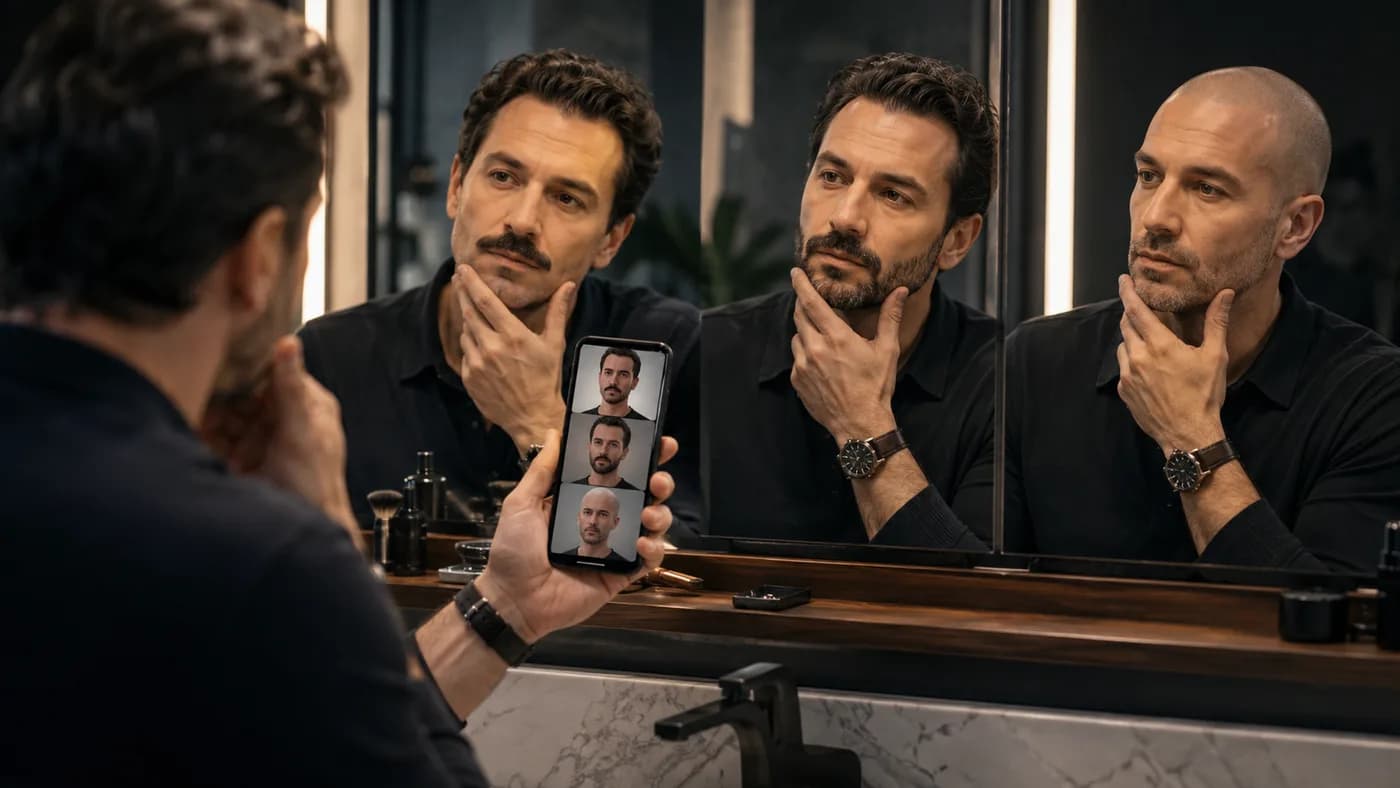
If you are searching for a mustache filter, you probably are not looking for a novelty app that drops a fake cartoon mustache on your face.
You are trying to answer a more useful question: would a mustache actually improve your look, or would a beardstache, goatee, or light stubble suit you better?
That is the real reason to use a mustache filter. A mustache is one of the most style-sensitive grooming choices a man can make. It can look sharp, confident, and intentional. It can also look thin, dated, or oddly disconnected from the rest of the face if the shape, density, or surrounding facial hair are wrong.
So the goal is not to "try a funny mustache." The goal is to compare the mustache-led versions that could realistically work on your face before you commit.
Quick read
Because the cheeks stay clean, the upper lip becomes the focal point fast. Small grooming mistakes show more than they do with fuller beard styles.
Most men are not choosing mustache versus nothing. They are choosing between mustache-only, beardstache, goatee, stubble, and clean-shaven.
A mustache that feels playful with hair on top can feel much stronger, or much riskier, once the scalp is buzzed or shaved.
What a mustache filter should help you decide
A useful mustache simulator should answer practical questions:
- does a solo mustache give you enough structure,
- do you actually look better with a beardstache,
- does a goatee support the chin more effectively,
- does light stubble balance the face better than a clean-cheek mustache,
- and if you are thinking about shaving your head, does the mustache still work once the top is gone?
That is why this kind of tool matters. A mustache is not a generic facial-hair upgrade. It redistributes attention upward, toward the lip, nose, and center of the face. That can be great if your mustache grows strongly and the rest of your features already hold the look together. It can be much less forgiving if your upper-lip growth is weak, your face needs more jaw support, or the mustache shape is too small for your features.
A mustache is less forgiving than most men expect
Beards can hide small growth weaknesses inside overall density. A mustache cannot. The viewer sees the exact outline, thickness, and balance almost immediately.
Why men use a mustache filter before trimming
The usual mistake is not choosing the wrong mustache style. It is assuming that a mustache is automatically the right category.
Sometimes the answer really is a neat solo mustache. Sometimes the better answer is a beardstache, where the mustache leads but short stubble keeps the face from feeling too bare. Sometimes the face needs a goatee or light stubble instead because the jawline wants more support than the upper lip can provide by itself.
That is why comparison matters more than inspiration. A celebrity mustache can tell you a style exists. It cannot tell you whether your lip line, jaw width, cheek growth, skin contrast, and scalp choice will make it work.
If your decision also overlaps with hair loss, the mustache question becomes even more important. Once there is less hair on top, your facial hair does more of the framing work.
The first styles to compare in a mustache filter
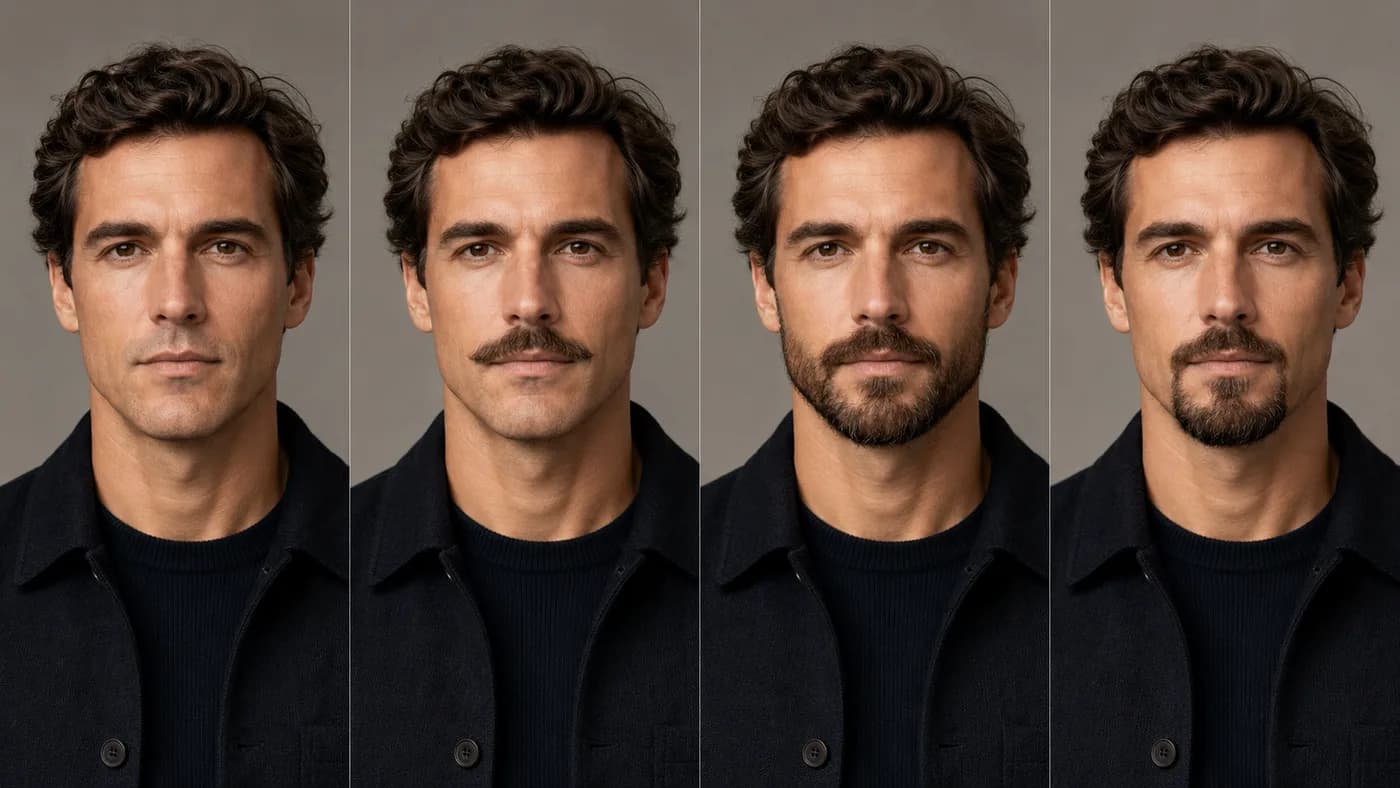
The word "mustache" is too narrow if you are actually making a style decision. Start with the options that compete most directly.
If you already know you want beard-led comparison more broadly, read Beard Filter. If your interest is specifically in the mustache-plus-stubble direction, Bald With Beardstache and the style preview for Bald with beardstache are the best next reads.
Mustache-only versus beardstache: the decision most men actually need
For most men, this is the real fork in the road.
A solo mustache asks more from your face. It leaves the cheeks and chin visually lighter, so the upper lip becomes the statement. A beardstache is usually easier because it lets the mustache lead while short beard or heavy stubble quietly supports the jaw.
That makes beardstache the safer choice when:
- your mustache is good but not exceptional,
- your jawline looks better with a little extra shadow,
- your face feels too bare with clean cheeks,
- or you want the character of a mustache without the full commitment of a solo version.
The solo mustache tends to work better when:
- your upper-lip growth is clearly strong,
- the corners stay clean rather than drooping,
- your features can carry contrast,
- and the rest of your grooming and clothes make the style feel intentional.
What face shapes usually respond best to mustache emphasis
A mustache filter is most useful when you stop asking whether mustaches are good in general and start asking what kind of face benefits from upper-lip emphasis.
Broadly speaking:
- oval faces usually have the most flexibility,
- square faces often handle a mustache well because they already have structure,
- rounder faces may need beardstache or stubble more than mustache-only if the lower face feels too soft,
- long faces should be careful with drooping or oversized mustaches that pull the eye downward,
- heart and diamond faces often need to decide whether the chin needs more support than a solo mustache provides.
The point is not that some face shapes cannot wear a mustache. It is that a mustache changes the center of gravity of the face, and some faces benefit more from that than others.
Which mustache shape should you test first?
Not every mustache shape creates the same effect. If your filter only gives you one cartoonishly thick option, it is not helping much.
Start with shapes that real men would actually wear:
- a neat classic mustache with clean corners,
- a slightly fuller chevron-style mustache if your growth is dense enough,
- a trimmed beardstache if you suspect the face needs more support,
- and a mustache plus light stubble version if you want a softer transition.
The classic version is usually the safest first test because it shows whether your upper lip can carry the look at all. If that already feels too bare, beardstache or light stubble is often the better direction. If the classic version works and your growth is stronger, you can test a fuller version next.
What you want to avoid early is jumping straight to extremes:
- oversized handlebar-style shapes,
- very droopy corners,
- mustaches that cover too much of the lip,
- or styles that are so thin they look accidental.
Those can be interesting personal choices later, but they are bad diagnostic starting points. The first job of a mustache filter is to answer whether mustache emphasis helps your face at all. Once that answer is yes, then you can get more specific about style personality.
Why the bald-head comparison matters so much
This is where a mustache filter for men becomes especially relevant for BaldLooks.
Many users are not just asking whether they should try a mustache. They are really asking something wider:
If I shave my head or move toward a shorter, balding-friendly style, what facial hair keeps the look balanced?
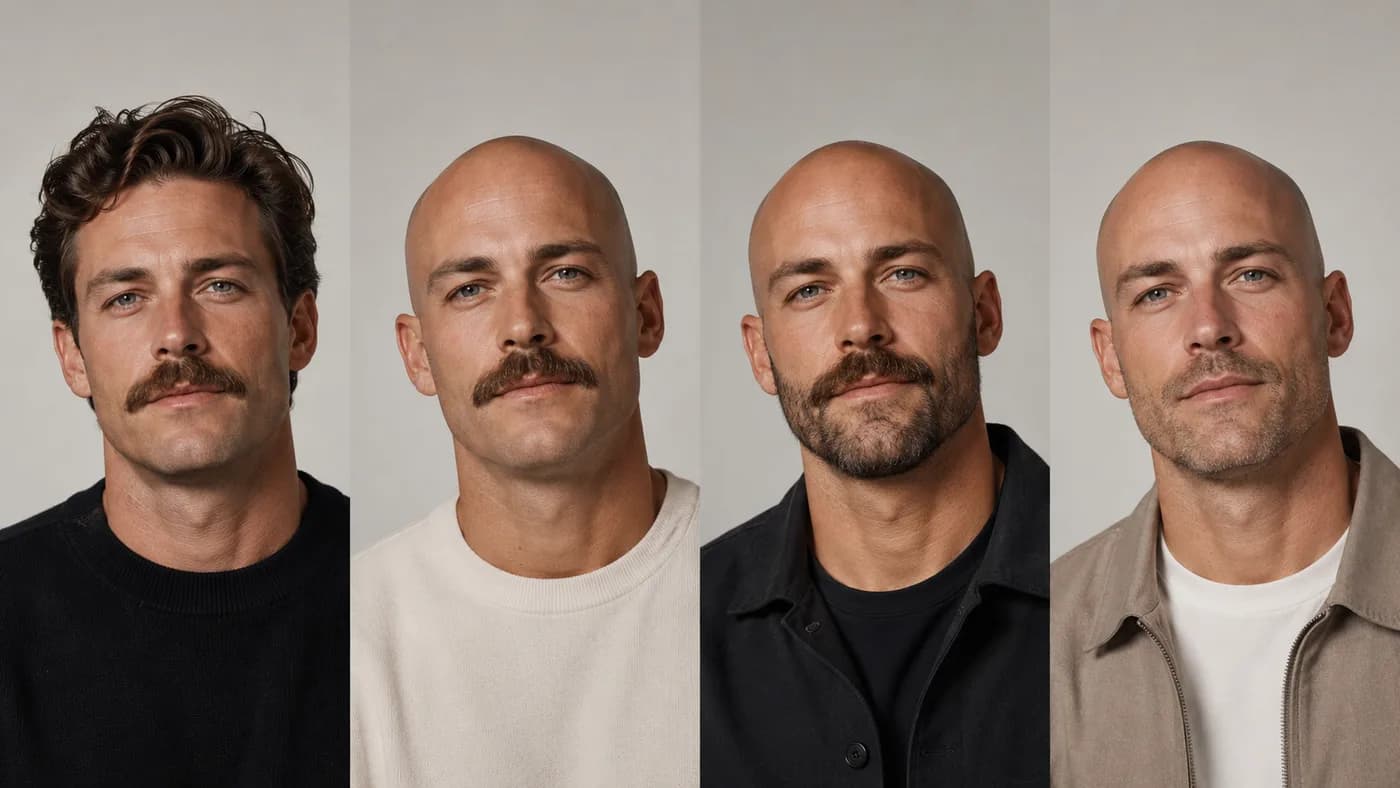
That is the right question. When the scalp is shaved or closely buzzed, there is no hairstyle doing framing work anymore. The mustache becomes more noticeable. That can be a major advantage if it is clean, strong, and deliberate. It can also expose weaknesses faster if the upper-lip growth is patchy or the rest of the face needs more structure.
That is why the smartest sequence is:
- compare your current hair with and without the mustache,
- compare bald or buzzed with and without the mustache,
- compare mustache-only against beardstache and stubble,
- then decide whether the mustache is actually the winner.
If the scalp question is still open, the BaldLooks Free Analysis is the right first step. If the bald base already looks promising, the paid BaldLooks plans are more useful because you can compare mustache, beardstache, goatee, outfits, and angles instead of relying on one mirror guess.
How to get a better mustache filter result from your photo
The preview quality depends heavily on the photo you feed it.
Use:
- a front-facing photo with neutral expression,
- even light across the upper lip and jaw,
- no heavy smile that distorts the mouth line,
- no hand covering the face,
- and enough resolution to show real mustache thickness.
If possible, compare a front view and a three-quarter view. The front tells you whether the mustache is symmetrical and properly scaled. The three-quarter view tells you whether the face still feels balanced once the chin and jawline come into play.
Bathroom lighting is one of the biggest reasons men misread mustaches. It can flatten the upper lip, exaggerate skin shine, and make thin areas look worse than they are. Daylight or soft even light gives a more trustworthy answer.
When a mustache is the wrong winner
Sometimes a mustache filter is useful because it tells you not to choose the mustache.
That is still a win.
If the mustache looks too weak on its own, if the face clearly improves with extra chin or jaw support, or if beardstache and stubble both outperform it, the filter did its job. It saved you from choosing the most fragile style just because it seemed interesting.
For a lot of men, the actual result is:
- mustache-only is the boldest option,
- beardstache is the most wearable option,
- stubble is the safest option,
- and goatee is the better option when the chin needs help.
Final answer
A mustache filter is worth using because a mustache is not just facial hair. It is a high-contrast style choice that changes how the center of your face reads.
The best use is not testing one mustache in isolation. It is comparing:
- mustache-only,
- beardstache,
- compact goatee,
- light stubble,
- and the bald or buzzed version if that change is also on your mind.
That is how you find out whether the mustache is truly the best option on your face, or just the most dramatic one.
For the next step, continue with Beard Filter, Goatee Filter, Bald With Beardstache, and the style previews for Bald with mustache and Bald with beardstache.