
Best Beard Styles for Bald Men With Round Faces
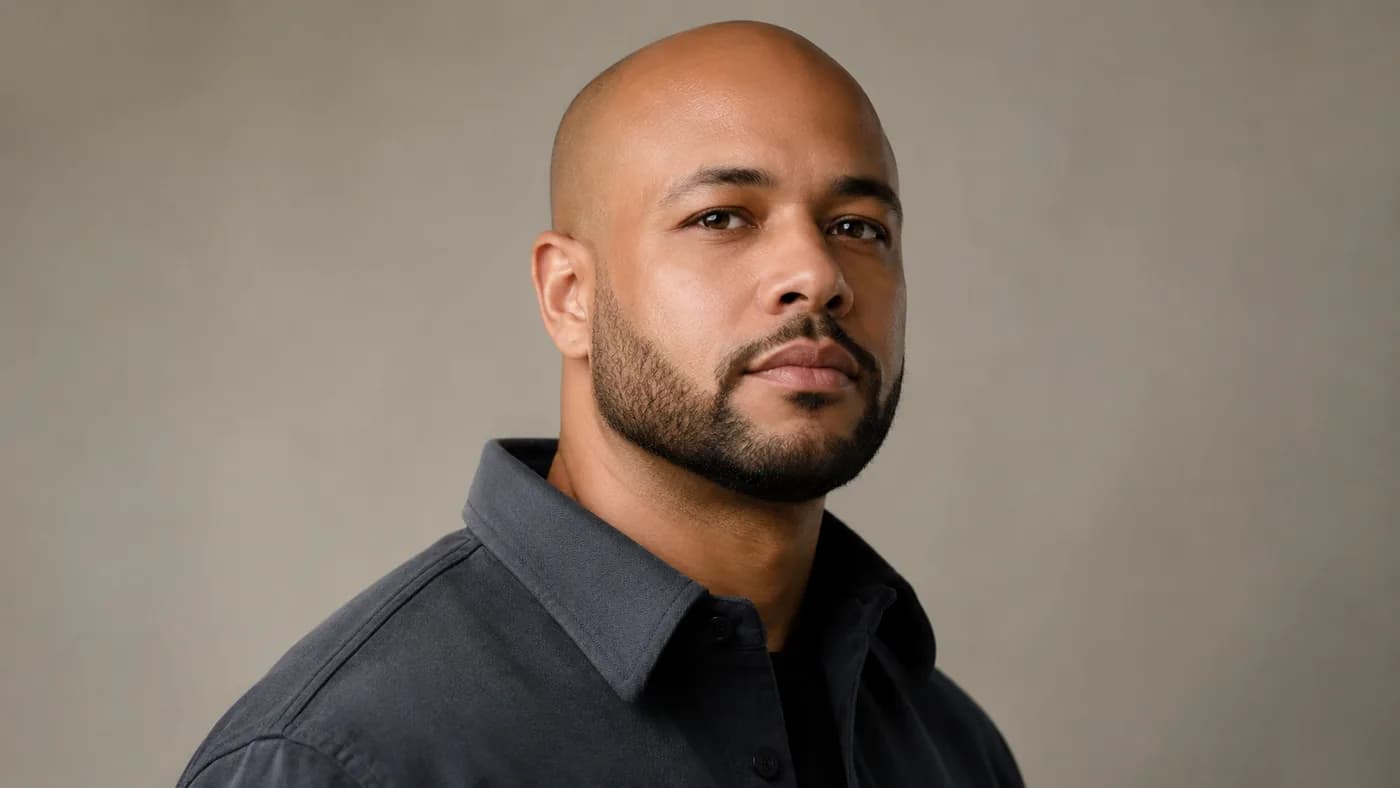
If you are searching for beard styles for bald men with round faces, you do not need a beard that disguises your face. You need one that gives the bald look a deliberate lower-face frame without adding so much width that everything feels softer or heavier.
The simple starting principle is this: keep the sides tidy, put definition near the jaw and chin, and let your own growth pattern decide how far you take it. That can mean a compact goatee, a beardstache, dense stubble, a narrow short boxed beard, or a carefully shaped full beard. It does not automatically mean growing the biggest beard you can.
A shaved head makes facial hair more noticeable because there is less visual weight above the face. That is useful: a beard is one of the easiest ways to test contrast and shape after you go bald. But it also means unplanned bulk at the cheeks shows up fast.
Quick read
A controlled silhouette is more useful than maximum growth. Add a little chin length only after checking whether it improves the whole profile.
Strong chin growth can support a goatee or beardstache; even cheeks can support a boxed beard. Sparse areas do not need to be forced full.
Your scalp, eyebrows, glasses, neckline, and usual clothes all affect whether a beard variation feels balanced.
Quick answer: what is the best beard for a bald round face?
For most men, start with heavy stubble, a compact goatee, or a short boxed beard with tidy sides. These styles can add visible structure without creating a broad block along the cheeks.
GQ's face-shape beard guide suggests that rounder faces often benefit from a longer, narrower beard shape: keep the sides short and allow more presence below the chin. That is a good direction, not a law. A small amount of chin emphasis can be enough; a long pointed beard is not automatically better. Beard density, jaw shape, and what feels like you matter more than chasing an "ideal" outline.
| If you want… | Start with | Keep an eye on |
|---|---|---|
| The lowest-commitment definition | Heavy stubble | Letting the neck and cheeks blur into unplanned fuzz |
| Strong chin focus with patchy cheeks | Compact goatee or circle beard | Overly thin lines or a point that is longer than your growth supports |
| A polished everyday beard | Narrow short boxed beard | Too much width at the cheeks or sideburns |
| More drama with dense growth | Shaped full beard | A beard that becomes wider than it is long |
First, make sure “round” is actually the useful description
A round face is usually close in width and length, with fuller cheeks and a softer jawline. It is not the same as having a round head, a higher body weight, or simply disliking one close-up selfie. In fact, phone cameras held too close can exaggerate the middle of the face and make a balanced face seem wider.
Take one front-facing photo at a normal distance in daylight, then one three-quarter photo. Look at the relationship between forehead, cheekbones, jaw, and chin. If the cheeks are the widest point and the jaw is gently curved rather than sharply angled, these beard recommendations are a sensible first test.
For the bigger shaved-head decision—including glasses, scalp silhouette, and clothing—read Bald Round Face: Does a Shaved Head Suit You?. This article stays focused on the part you can change most easily: facial hair.
Think “controlled outline,” not “slimmer face”
A beard cannot change your bone structure, and it does not need to. Its job is to change visual emphasis: a cleaner cheek line, a more defined jaw shadow, and a little intentional weight at the chin can make a bald look feel more finished.
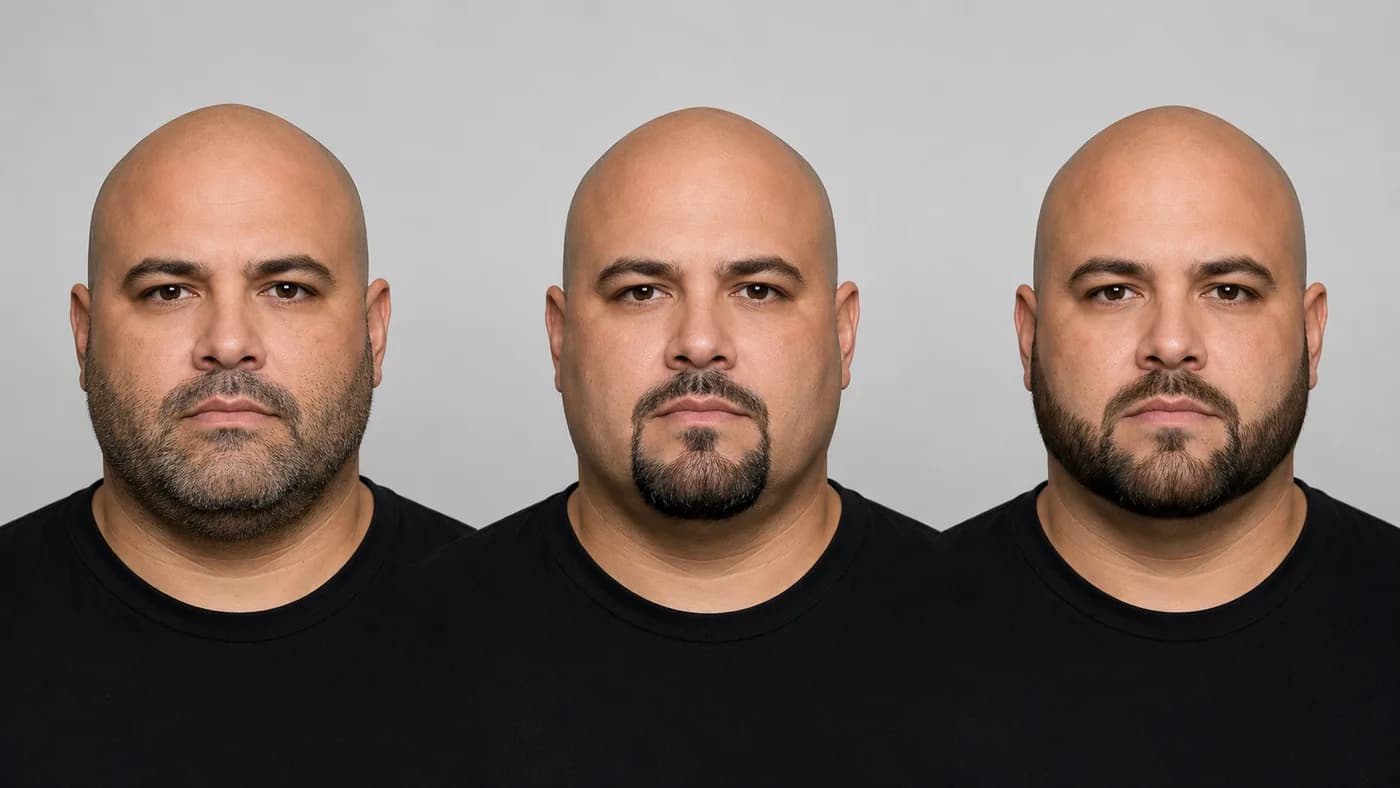
The five beard styles worth trying first
1. Heavy stubble: the safest starting point
Heavy stubble gives a shaved head some lower-face contrast while keeping your natural jaw and cheeks visible. It is especially useful if your beard grows evenly but not densely enough for a fuller shape, or if you are unsure whether you even want facial hair long term.
Keep it even, clean the neckline, and remove stray growth high on the cheeks. The aim is shadow and definition, not an invisible beard that looks like you skipped shaving. If the result feels too soft, you can either sharpen the lines or let the chin grow slightly longer before you add side volume.
2. Compact goatee or circle beard: best when cheeks are patchy
A compact goatee focuses attention around the mouth and chin instead of the widest part of the face. That makes it one of the most practical bald with beard styles when your mustache and chin grow better than your cheeks.
GQ notes that a circle beard combines a mustache and rounded goatee to create a structured shape around the mouth. Keep it compact and symmetrical. A goatee does not need to be long or sharp to work; a modest, clean shape usually looks more current and is easier to maintain than an exaggerated pointed tip.
If you want a variation with a little more personality, compare it with Shaved Head With a Goatee or an anchor-beard preview on the Anchor Beard style page.
3. Beardstache: character without cheek bulk
A beardstache puts the mustache in charge while surrounding it with short stubble. It can work well if your mustache is dense, your cheeks are lighter, or you want the bald look to feel less conventional without committing to a full beard.
For a round face, keep the stubble tight and the mustache intentional but not so wide that it becomes the broadest visual line across your face. The Bald Beardstache guide is a good next read if you have the growth for it. It is also worth comparing against a simple mustache in photos: personality can be a strength, but the cleanest option may still be a compact beard.
4. Narrow short boxed beard: the polished default
If you have reliable cheek and jaw growth, the short boxed beard is often the most flexible choice. It provides a clear edge below the face while staying compact enough for work, dates, and everyday maintenance.
For a bald round face, ask for—or trim toward—controlled sides, a neat cheek line, and just a touch more length toward the chin if it suits you. Do not square the whole beard into a wide horizontal shelf. The beard should follow your jaw without extending it outward unnecessarily.
Gillette's neckline guidance makes an important grooming point: a distinct neck line helps a beard look maintained rather than patchy or accidental. Set yours above the Adam's apple and check it in a three-quarter view, where a neckline that sits too high or too low is easier to spot.
5. Shaped full beard: strong, but only when it stays intentional
A full beard can look excellent with a shaved head and round face, especially if your growth is dense and even. It creates an unmistakable top-and-bottom contrast. The risk is not fullness itself; it is uncontrolled width. If the beard gets widest at the cheeks and stays short below the chin, it can make the lower face feel broader.
Keep the cheek sides trimmed inward, remove puffiness at the jaw corners, and grow the bottom gradually. A rounded or softly tapered finish is generally easier to wear than a sharp triangular point. If your beard looks better after every small increase in chin length, keep experimenting. If it starts to look like the beard arrived before you did, take some bulk away.
The shapes that usually make a round face look wider
There are no forbidden beard styles, but a few patterns are worth testing cautiously. The common issue is width without a defined lower line.
- Untrimmed cheek bulk: Hair expanding outward at the cheeks can make the face read wider before the jaw gets any definition.
- Wide sideburn-to-jaw blocks: A large square silhouette can look heavy when there is no extra length below the chin.
- A mustache much wider than the beard: It can put the strongest horizontal line at the face's widest area.
- A disconnected, overly sharp chin point: Too much length from weak growth can look less balanced than a shorter, denser shape.
These are starting cautions, not a ban. If you love a big beard, keep it. Just shape it with a purpose, then review it from normal social distance—not an inch from the bathroom mirror.
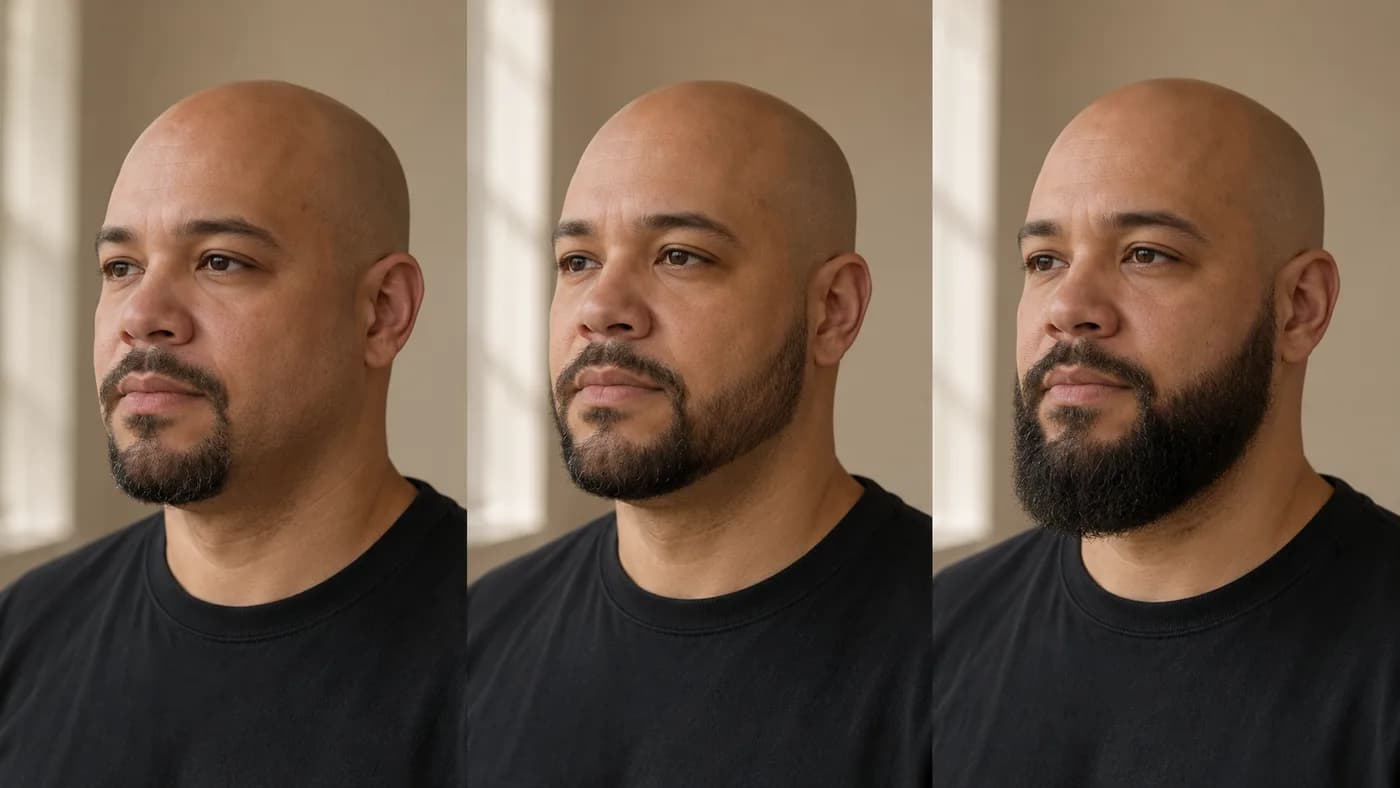
A five-minute grooming routine that makes the style work
The difference between a good beard choice and a good-looking beard is usually maintenance. You do not need a complicated kit, but you do need a repeatable routine.
- Choose a baseline length. Start shorter than your end goal. A few millimeters of stubble or a short boxed beard lets you see the outline before bulk hides it.
- Set the cheek line conservatively. Remove obvious strays; do not carve an unnaturally high or dramatic line just to create angles.
- Define the neckline. Keep the transition from beard to neck clean. A consistent neckline makes stubble, a goatee, and a full beard all look more intentional.
- Trim the sides before the chin. On a round face, reducing cheek width is usually the more useful first adjustment. Only then decide whether the chin needs more length.
- Check in daylight once a week. Look at a front and three-quarter photo with your usual glasses and clothes. The mirror is useful for trimming; the photo is better for judging balance.
Preview it before you commit to months of growth
Style advice can tell you what to test, but it cannot tell you whether the result suits your exact face, scalp shape, beard density, and wardrobe. A generic bald-beard reference photo is only vocabulary. Your own photo is the decision tool.
Start with BaldLooks Free Analysis for a first read from one clear photo. If you are deciding between clean-shaven, stubble, goatee, a short boxed beard, or a fuller beard, BaldLooks paid plans let you compare your bald look across different angles, outfits, and locations. That makes it easier to separate "this is unfamiliar" from "this is not my best balance."
The bottom line
The best beard styles for bald men with round faces are not about hiding your face or forcing a dramatic transformation. They are about choosing a clean lower-face frame: controlled sides, honest density, and enough definition around the jaw and chin to make the bald look feel intentional.
Start with stubble, a compact goatee, beardstache, or narrow short boxed beard. If you can grow a full beard, shape it before you make it bigger. Then compare the result in realistic photos with your normal glasses, clothes, and posture. The right beard is the one that looks like a confident version of you—and that you will actually enjoy maintaining.