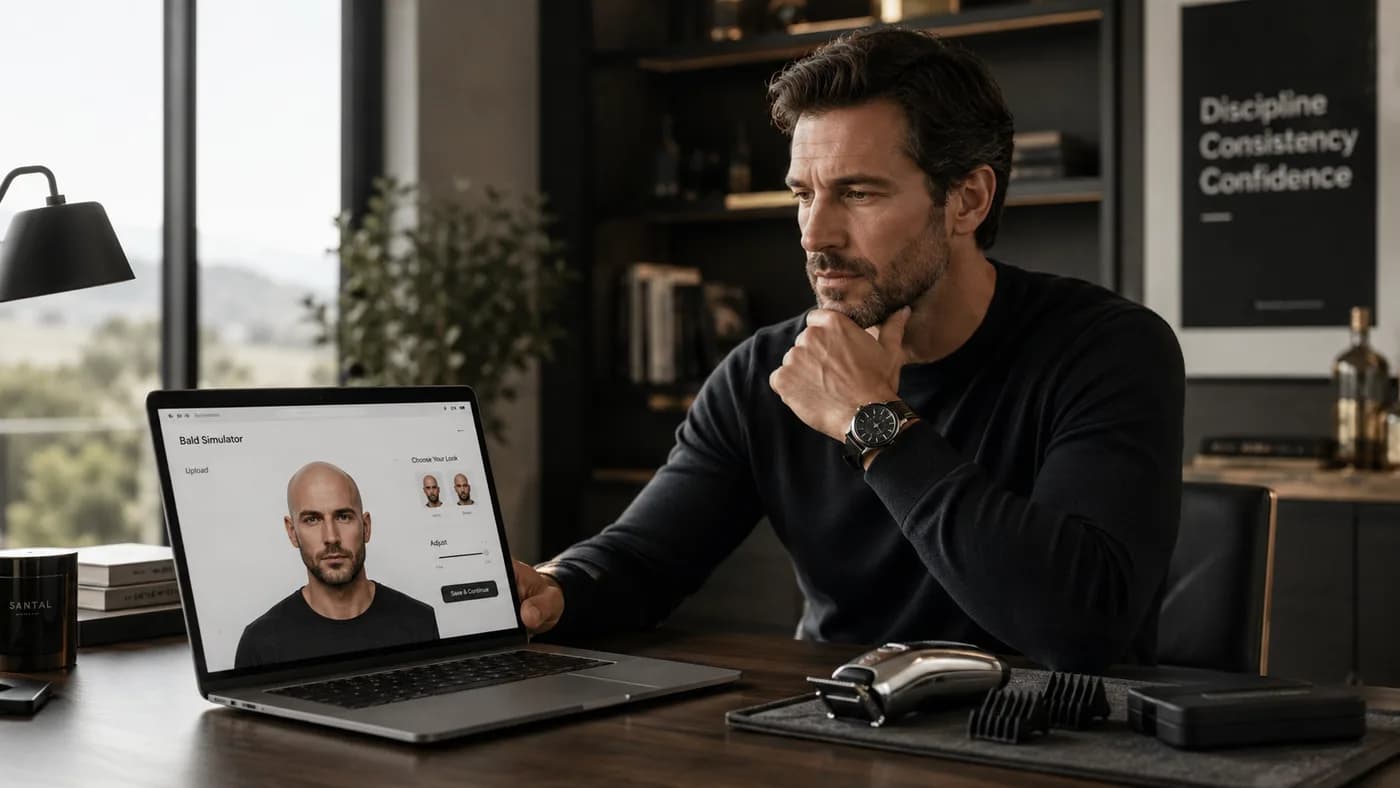
Bald Simulator vs Bald Filter: What Looks More Real?
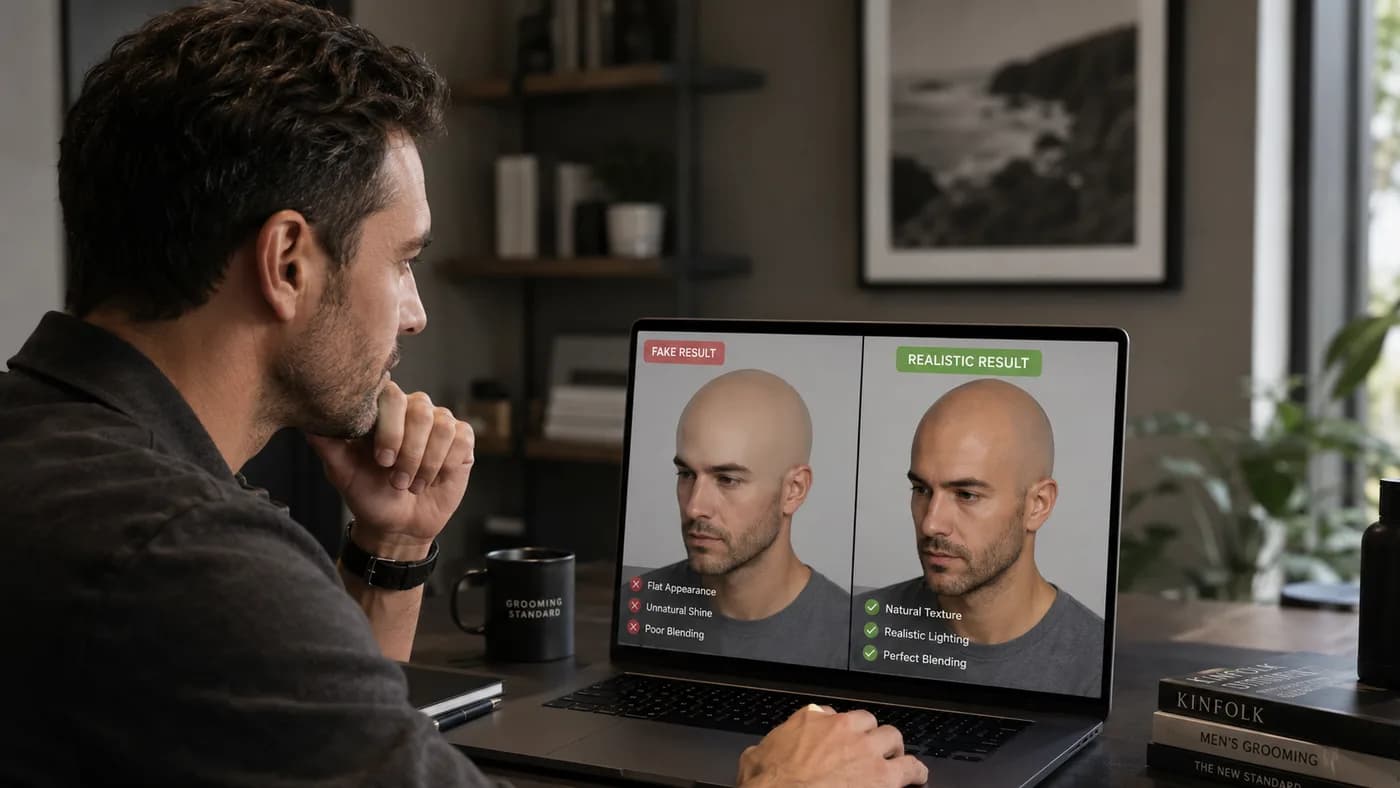
If you are comparing a bald simulator vs bald filter, you are probably past the joke stage.
You do not only want to see hair disappear from a photo. You want to know whether the result is realistic enough to help you decide what to do in real life.
That is the core difference.
A bald filter sounds quick. It promises a fast preview, often free, often online, often good enough for curiosity. A bald simulator sounds more serious. It suggests a result that is closer to decision-making: something you can use to judge scalp shape, beard balance, face framing, and whether shaving your head would actually look cleaner than your current hair.
If you are seriously considering shaving, buzzing shorter, or comparing style directions before a visible change, the simulator mindset is usually the better one.
Quick read
A bald filter is useful when you want a quick first look and low-friction curiosity.
A bald simulator is better when you need a more realistic preview to support an actual grooming decision.
Lighting, scalp shape, beard match, and multiple visual contexts matter more than the simple act of removing hair.
Why the word "simulator" matters more than people think
When people search for a bald filter, they are often asking, "Can I see myself bald right now?"
When people search for a bald simulator or shaved head simulator, the intent is usually stronger:
- they are closer to shaving,
- they do not trust novelty filters,
- they want a more believable version of themselves,
- and they want help making a real decision, not only satisfying curiosity.
That difference matters because a weak preview can push you in the wrong direction. A fake result may make your head look flatter than it is, make your forehead look larger than it would in reality, or ignore beard balance completely. Then you end up judging the wrong thing.
The best preview is not the one that looks dramatic. It is the one that helps you ask useful questions:
- Does bald look cleaner than my current recession or thinning?
- Would stubble or a beard improve the balance?
- Is a buzz cut enough, or does fully shaved look stronger?
- Would this feel easier to maintain than the hair I am trying to preserve?
That is why "simulator" usually wins if the decision actually matters.
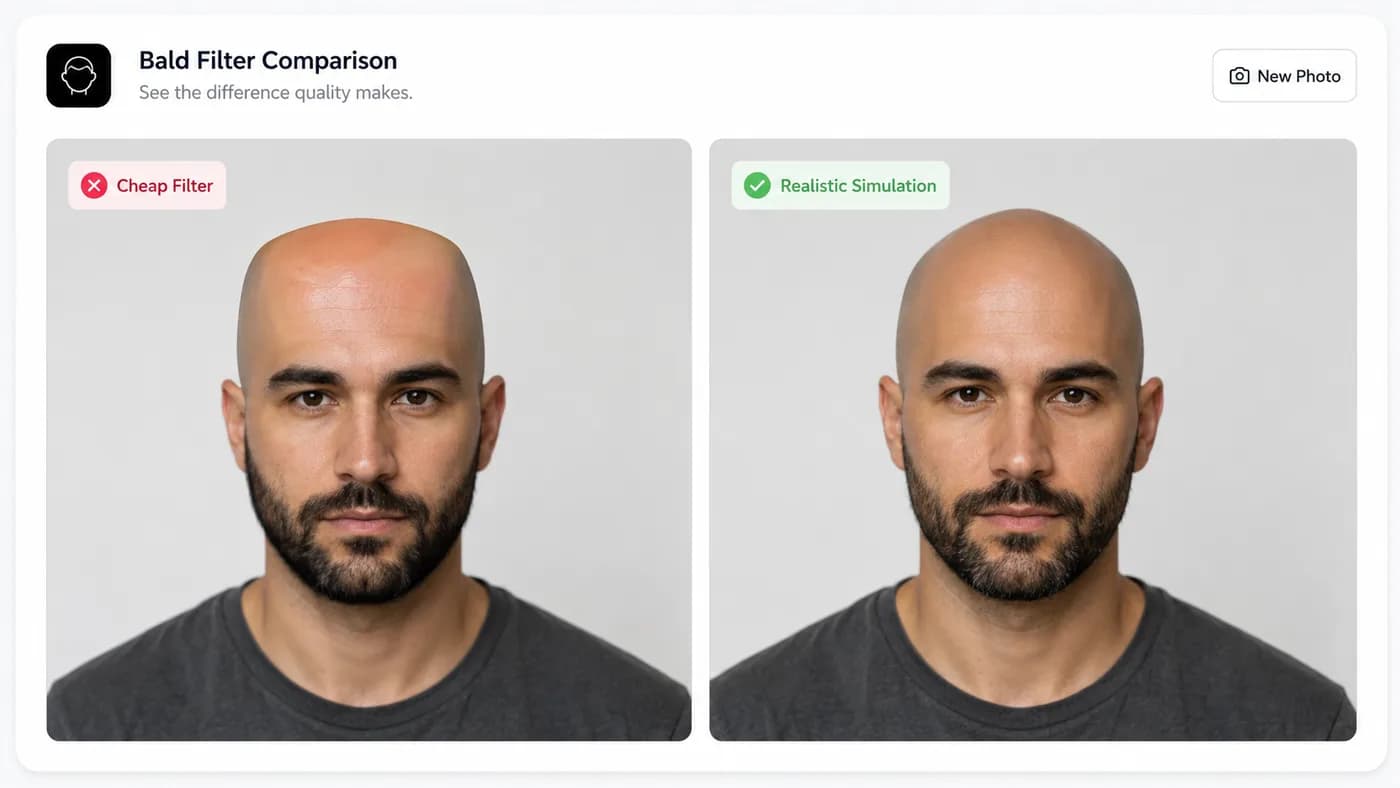
Bald filter vs bald simulator: the practical difference
The easiest way to compare them is to think about what each tool is optimized for.
| Tool type | What it usually does well | What it often misses | Best for |
|---|---|---|---|
| Bald filter | Fast result, easy sharing, low-friction curiosity, often free | Head shape realism, beard matching, lighting continuity, style comparison | Quick first look |
| Bald simulator | Better realism, stronger decision value, more useful for comparing options | May require a more deliberate workflow or paid step | Serious shaving decision |
This does not mean every filter is bad or every simulator is perfect. It means the goal is different.
A filter often treats the result like an effect.
A simulator treats the result like a decision tool.
That difference shows up in five areas that matter most.
1. Realism at the scalp line
The first thing most people notice is whether the top of the head looks believable.
A weak realistic bald filter claim often falls apart here. The tool may blur away the hairline, flatten the scalp, or create a smooth plastic-looking finish that does not resemble real skin or real head shape. It technically removes the hair, but it does not give you a trustworthy preview.
A better bald head simulator tries to preserve:
- natural forehead depth,
- believable scalp shading,
- the transition from temple to crown,
- and a head outline that still looks like you.
This matters because most pre-shave fear is really fear of the unknown top shape. If the tool fakes that part badly, the whole preview becomes less useful.
2. Beard matching and lower-face balance
Hair on top is only half the story.
Many men look better bald with some lower-face definition, whether that is stubble, a short beard, or a goatee. A weak filter may ignore this and leave you with a preview that feels too plain or too harsh. Then you conclude that bald does not suit you, when the real issue is that the preview failed to balance the face.
A better simulator helps you judge whether:
- clean-shaven works,
- stubble sharpens the look,
- a beard restores balance,
- or glasses and beard together frame the face more effectively.
If beard pairing is one of your concerns, Bald Men With Beards is the natural follow-up. If you are deciding between fully shaved and very short, Buzz Cut vs Bald is the better comparison than guessing from one filter.
3. Lighting and skin tone continuity
Bad previews often fail because they ignore the lighting conditions of the original photo.
If the source image has soft daylight but the generated scalp looks shiny, gray, or airbrushed, your brain reads it as fake immediately. The same goes for harsh shadow transitions, mismatched skin tone, or an unnatural forehead highlight.
This is one reason some men think they would "look weird bald" after trying a filter. They may actually be reacting to poor image logic, not to the shaved look itself.
A fake result creates fake fear
If the preview breaks lighting, skin tone, or face balance, do not treat your reaction as a verdict on bald. Treat it as a verdict on that specific tool.
4. Multiple style paths, not only one bald output
This is where a true shaved head simulator becomes much more useful than a one-click filter.
Most men are not really choosing between "hair" and "bald." They are choosing between:
- current hairstyle,
- shorter haircut,
- buzz cut,
- fully shaved head,
- and sometimes different beard pairings or outfit contexts.
A filter gives you one abrupt answer.
A simulator is more valuable when it helps you compare paths.
That is also where BaldLooks is positioned differently. The free BaldLooks analysis is a low-friction first answer from one photo. The paid plans are for the deeper comparison stage, where you want to see yourself with a shaved head from more angles and in more contexts, including different outfits and locations. That makes it much closer to a decision tool than a novelty effect.
5. Outfit and scenario context
This point is underrated.
A shaved head does not exist in isolation. It changes how your clothes, glasses, beard, posture, and overall presence read. A preview that only shows one tight portrait may still leave you uncertain, especially if the real concern is how bald would feel at work, on dating apps, or in daily life.
This is why "simulator" better matches serious intent. If you can see the shaved look across more than one context, the result becomes easier to trust.
For example:
- a bald look may feel stronger with a clean jacket and stubble,
- more professional with glasses and a tidy beard,
- or more natural outdoors than under harsh bathroom lighting.
That does not mean you need endless variations. It means more context usually leads to a calmer decision.

When a bald filter is enough
A bald filter is still useful in a few situations.
Use a simple filter if:
- you are only curious,
- you want a fast first reaction,
- you are not close to changing your hair yet,
- or you only need a rough answer to decide whether the topic deserves more attention.
That can still be valuable. A quick filter often helps people move from vague anxiety to a more concrete question.
If the rough preview already makes the shaved option look promising, that is usually the point where a stronger simulator becomes worthwhile.
When a bald simulator is the better choice
Use a bald simulator when:
- you are actively considering shaving,
- you want something more realistic than a social-media effect,
- you care about beard, glasses, or outfit balance,
- you want to compare buzzed vs shaved,
- or you know one image will influence a real haircut decision.
This is especially true if you have a receding hairline or thinning crown and you are trying to judge whether fully shaved would look more intentional than your current style. In those cases, a weak filter can mislead you because small realism errors feel much bigger when the decision is already emotional.
So which should you choose?
If you only want a quick answer, start with the filter mindset.
If you want a realistic answer, move to the simulator mindset as fast as possible.
That usually means:
- get a low-friction first read,
- decide whether the bald idea seems plausible,
- then use a more realistic tool if you are close to making a real change.
That is exactly where BaldLooks fits:
- the free analysis helps answer whether the bald direction is worth exploring,
- the paid plans help you compare more serious shaved-head simulations and broader style scenarios before you commit.
For most men, that is the right sequence. Do not pay for depth before you need it. But do not trust a novelty filter with a serious grooming decision either.
Final answer: a filter shows the idea, a simulator supports the decision
A bald filter is about speed. A bald simulator is about confidence.
If your only goal is curiosity, a filter is enough. If your goal is to decide whether you should actually shave your head, a simulator is usually the better tool because it handles the details that change the outcome: scalp shape, beard matching, lighting, multiple style paths, and real-life context.
That is the real test.
Not whether a tool can remove hair from a photo, but whether it helps you make a better call on your own face.